
The Kelvin (K) scale, a fundamental unit of thermodynamic temperature, might seem out of place when discussing interior illumination. Yet, in the realm of modern lighting technology, it is the primary metric for defining the color appearance of a light source, often referred to as Correlated Color Temperature (CCT). Far from measuring the actual heat generated by a bulb, Kelvin in lighting quantifies the warmth or coolness of the light emitted, profoundly influencing the atmosphere, functionality, and even the biological impact of illuminated spaces. Understanding Kelvin is crucial for anyone seeking to optimize their lighting environment, from homeowners designing a comfortable living room to engineers specifying lighting for complex industrial facilities.
The Kelvin Scale and Correlated Color Temperature (CCT)
At its core, the Kelvin scale measures absolute temperature, with 0K representing absolute zero (-273.15°C). Its application to light color stems from the phenomenon of black body radiation. Imagine a theoretical “black body” — an object that absorbs all electromagnetic radiation — heated to increasing temperatures. As this object heats up, it begins to glow, first a dim red, then orange, yellow, white, and finally a brilliant blue-white. Each of these colors corresponds to a specific temperature on the Kelvin scale.
From Heat to Light: Black Body Radiation
This scientific principle forms the basis for how we categorize light color. While modern LEDs and fluorescent lamps don’t operate by literally heating a filament to these extreme temperatures, their light output is matched to the color temperature that a theoretical black body would emit at a given Kelvin value. This correlation allows for a standardized way to describe light color across different technologies. For instance, a light source described as 2700K produces light that visually approximates the color of a black body heated to 2700 Kelvin.
Correlated Color Temperature (CCT) Explained
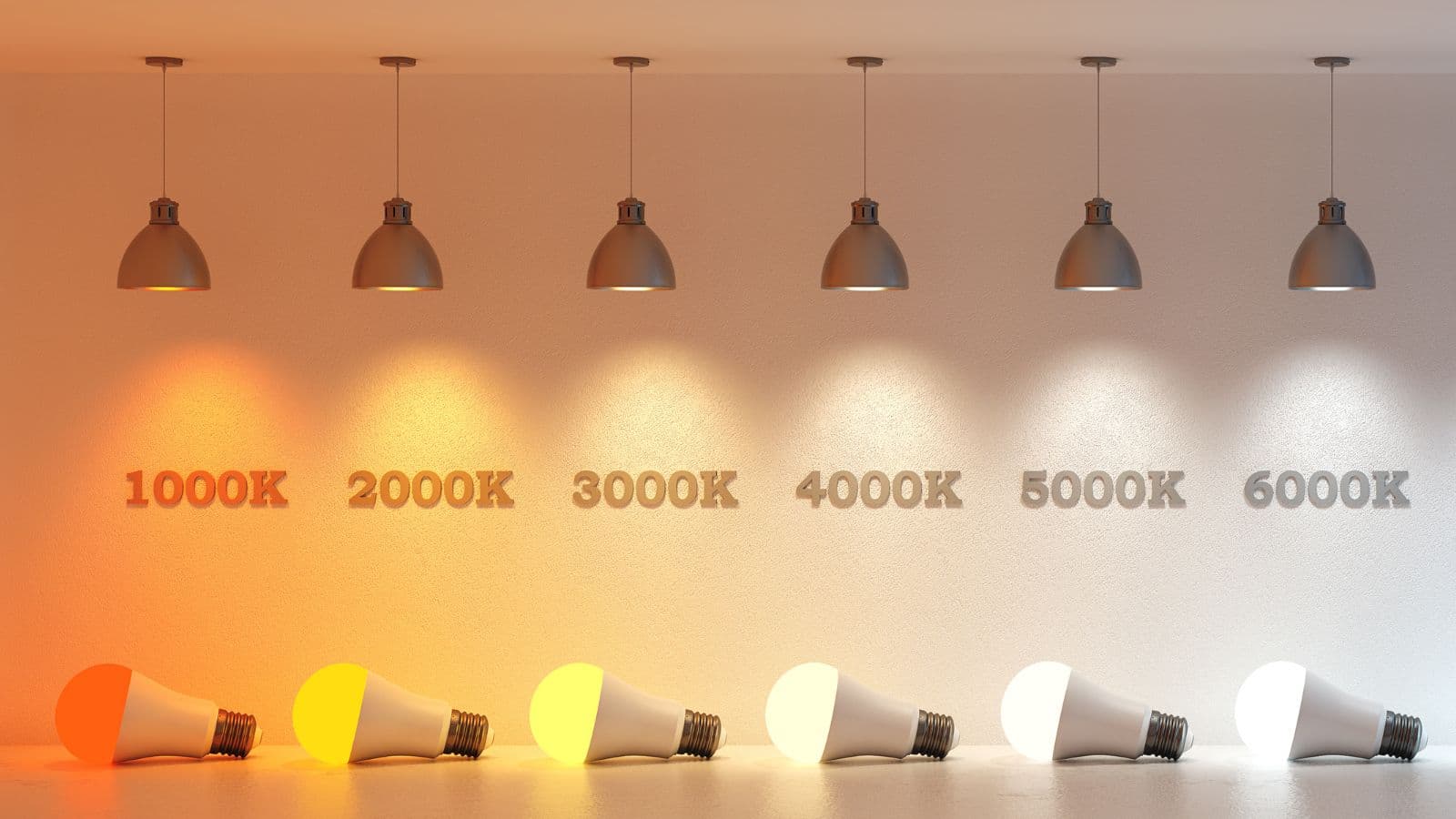
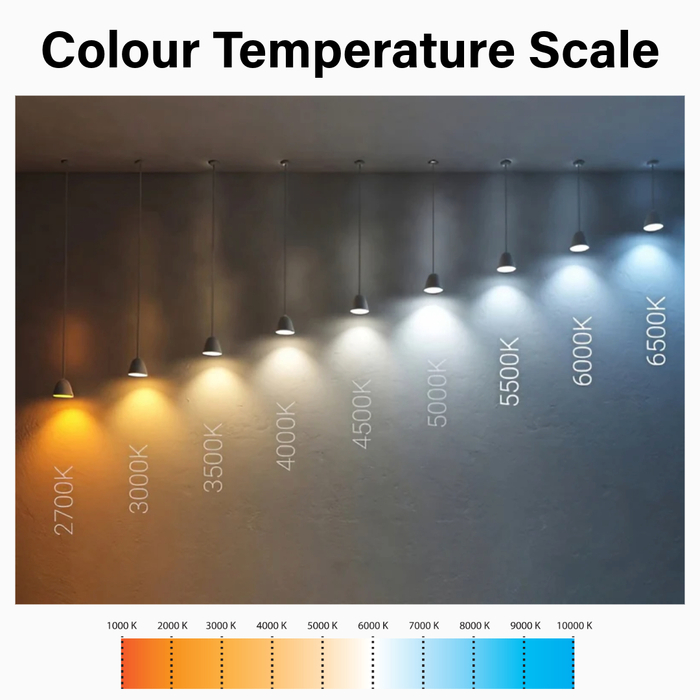
CCT is the practical metric used in lighting to indicate how “warm” or “cool” the light from a lamp appears. Lower Kelvin values (e.g., 2000K-3000K) correspond to “warm” light, characterized by yellowish-red tones, akin to candlelight or an incandescent bulb. As the Kelvin value increases (e.g., 4000K-5000K), the light appears more “neutral” or balanced, often described as pure white. At higher Kelvin values (e.g., 5000K-6500K and above), the light takes on a “cool” or bluish-white appearance, resembling natural daylight on a clear sky. It is imperative to remember that “warm” and “cool” in this context refer purely to the color appearance of the light, not its actual thermal properties; an LED bulb at 6500K does not run hotter than one at 2700K.
Decoding the Light Spectrum: Kelvin Values and Visual Perception
The range of CCTs available in modern lighting fixtures allows for a remarkable degree of control over visual environments. Each segment of the Kelvin spectrum imparts distinct characteristics to a space, influencing everything from perceived comfort to visual acuity.
Warm White (Below 3000K)
Light sources in the 2000K to 3000K range are categorized as warm white. At the lower end (2000K-2400K), the light is exceptionally warm, mimicking the soft, amber glow of firelight or very early incandescent bulbs. This creates an inviting, cozy, and intimate atmosphere. Moving up to 2700K-3000K, the light still has a distinctly yellowish-white hue, similar to traditional incandescent lamps, evoking comfort and relaxation. These CCTs are ideal for living rooms, bedrooms, dining areas, and restaurants where the goal is to foster a sense of ease and well-being. They can make colors appear richer and skin tones more flattering, contributing to a welcoming ambiance.
Neutral White (3000K-4500K)
Often referred to as “soft white” or “bright white,” the 3000K to 4500K range offers a more balanced and crisp light. At 3500K, the light is less yellow than warm white but avoids a strong blue tint, providing a natural and clean appearance. As it approaches 4000K-4500K, it becomes a pure, vibrant white. This range is highly versatile and frequently used in kitchens, bathrooms, offices, retail spaces, and workshops. It enhances clarity and visibility without being overly stark, promoting alertness and facilitating tasks that require visual focus. Neutral white light is often preferred for general illumination where both comfort and functionality are desired.
Cool White/Daylight (Above 4500K)
Light sources with CCTs from 5000K upwards are considered cool white or daylight. At 5000K, the light closely resembles midday natural daylight, appearing very bright and clean with minimal yellow or blue tint. As the CCT increases to 6000K-6500K, the light takes on a noticeable bluish-white cast, similar to an overcast sky or north-facing window light. These higher Kelvin values are energizing and help to maximize visual acuity. They are commonly employed in environments where high visibility, alertness, and attention to detail are paramount, such as hospitals, laboratories, manufacturing plants, garages, outdoor security lighting, and certain commercial retail displays where products need to appear vibrant. While effective for task-oriented environments, such high CCTs can feel harsh or clinical in residential settings designed for relaxation.
Psychological and Biological Impacts
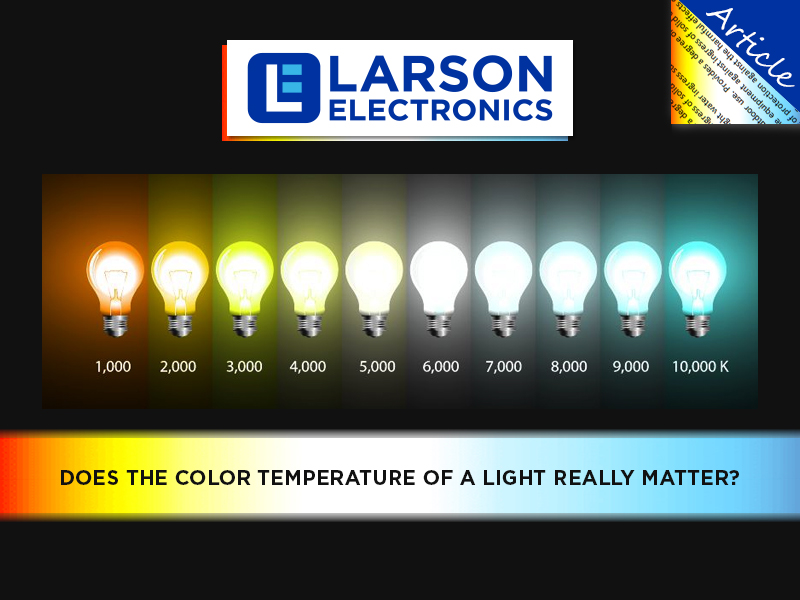
Beyond mere aesthetics, the CCT of light has significant psychological and biological effects. Warmer light (lower K) tends to promote relaxation and feelings of warmth, making it suitable for evening environments as it minimally interferes with melatonin production. Conversely, cooler, bluer light (higher K) can boost alertness, concentration, and mood during the day by suppressing melatonin, aligning with our natural circadian rhythms. This understanding forms the basis of human-centric lighting (HCL), a cutting-edge approach in lighting design that dynamically adjusts CCT and intensity to support human health, well-being, and performance throughout the day, particularly in office and institutional settings.
Strategic Lighting Design: Choosing the Right Kelvin for Every Environment
Selecting the appropriate CCT is a critical decision in any lighting project, profoundly impacting the functionality and user experience of a space. A thoughtful approach considers the purpose of the area, the desired mood, and the activities performed within it.
Residential Spaces: Crafting Ambiance
In residential environments, CCT is primarily used to craft specific moods and enhance comfort. For bedrooms, living rooms, and dining areas, warm white light (2200K-2700K) is almost universally preferred for its ability to create a cozy, relaxing, and inviting atmosphere. It promotes unwinding and social interaction. For kitchens and bathrooms, which are often task-oriented but still within a home, a neutral white (3000K-4000K) offers a balance of clarity and comfort, ensuring good visibility for cooking, grooming, or cleaning without feeling overly sterile. Utility areas like laundry rooms or basements might benefit from slightly cooler light (4000K-5000K) for enhanced visibility during specific tasks.
Commercial & Industrial Settings: Enhancing Productivity and Safety
Commercial and industrial spaces prioritize functionality, productivity, and sometimes, a specific brand image. Offices, retail stores, and educational institutions often opt for neutral to cool white lighting (3500K-5000K). This range provides the visual clarity necessary for reading, working on computers, and performing detailed tasks, helping to maintain alertness and focus among employees or students. In retail, CCT choice can highlight product colors and create a specific shopping experience; for instance, warm lighting for boutique clothing stores versus cooler light for electronics. In industrial settings, warehouses, and manufacturing floors, high CCTs (5000K-6500K) are frequently deployed to maximize visibility, reduce eye strain, and improve safety by mimicking bright daylight conditions, crucial for operating machinery or inspecting goods.
Specialized Applications: Art, Photography, and Horticulture
Beyond general illumination, CCT plays a specialized role in niche applications. Art galleries and museums often use a specific CCT, usually 3000K-4000K, combined with a high Color Rendering Index (CRI), to ensure artworks are viewed in a light that accurately reveals their true colors without distortion. Photographers and videographers depend on calibrated CCTs (often 5500K for daylight balance) in their studio lighting to achieve consistent and natural color reproduction. In horticulture, LED grow lights are engineered with precise CCTs and spectral compositions (often with specific red and blue wavelengths, which don’t directly map to traditional CCTs but are designed for photosynthetic efficiency) to optimize plant growth cycles, demonstrating how light characteristics are scientifically tailored for specific biological outcomes.
Advanced Lighting Technology: Dynamic CCT and Beyond
The evolution of LED technology has not only made a wide range of CCTs accessible but has also enabled dynamic control over light color, introducing unprecedented flexibility and sophistication into lighting design.
Tunable White Lighting Systems
One of the most significant advancements is tunable white lighting. These systems, utilizing multiple LED chips (e.g., warm white and cool white), allow users to seamlessly adjust the CCT of their lighting from warm to cool, and often anywhere in between, via a dimmer switch, remote control, or smart device app. This capability empowers users to adapt the light color to the time of day, specific tasks, or desired mood. For example, an office worker might start their day with a bright, cool white (5000K) to enhance alertness, transition to a neutral white (4000K) for general tasks, and dim to a warm white (2700K) in the late afternoon for a more relaxed evening atmosphere. Tunable white is a cornerstone of human-centric lighting, promoting occupant well-being by mirroring natural daylight cycles.
The Role of Smart Home Integration
The integration of tunable white lighting with smart home platforms has revolutionized personal and commercial lighting control. Systems like Philips Hue, Google Home, Apple HomeKit, and others allow users to schedule CCT changes, create custom lighting scenes, and even automate adjustments based on external factors like sunrise/sunset times or occupancy. This level of granular control over Kelvin settings means that lighting can intelligently respond to user needs and environmental conditions, moving beyond simple on/off functionality to become an integral part of an intelligent building ecosystem. This capability transforms static illumination into a dynamic, adaptive element of interior design and functionality.
CCT and Other Metrics: A Holistic View
While Kelvin (CCT) is a critical parameter, it is not the sole determinant of light quality. For a holistic understanding, other technical specifications must be considered. The Color Rendering Index (CRI) is another crucial metric, measuring how accurately a light source reveals the true colors of objects compared to a natural reference light source. A high CRI (typically 80+ for general applications, 90+ for critical tasks) ensures that colors appear vibrant and lifelike, regardless of the CCT. Lumen output (brightness), beam angle (light distribution), and efficacy (lumens per watt) are also vital specifications that, when considered alongside CCT and CRI, provide a comprehensive picture of a lighting product’s performance and suitability for a given application. Modern lighting technology, particularly LEDs, allows for precise engineering across all these metrics, enabling designers and consumers to create highly customized and effective illumination solutions.
aViewFromTheCave is a participant in the Amazon Services LLC Associates Program, an affiliate advertising program designed to provide a means for sites to earn advertising fees by advertising and linking to Amazon.com. Amazon, the Amazon logo, AmazonSupply, and the AmazonSupply logo are trademarks of Amazon.com, Inc. or its affiliates. As an Amazon Associate we earn affiliate commissions from qualifying purchases.