
In the world of competitive software and online gaming, few acronyms carry as much weight, prestige, or frustration as “K/D.” Specifically within the Call of Duty (COD) ecosystem, this metric serves as the primary yardstick by which individual skill is measured, compared, and debated. Whether you are navigating the high-stakes environments of Warzone or the fast-paced skirmishes of Modern Warfare III, understanding K/D is essential for any player looking to transition from a casual hobbyist to a competitive enthusiast.
From a technical perspective, K/D—or Kill-to-Death ratio—is a data point that reflects a player’s efficiency in combat. However, its implications extend far beyond simple arithmetic. It influences software-driven matchmaking algorithms, dictates team recruitment in professional circuits, and fuels the multi-billion dollar industry of gaming peripherals and optimization tools.
Understanding the Fundamentals: The Mathematics of K/D
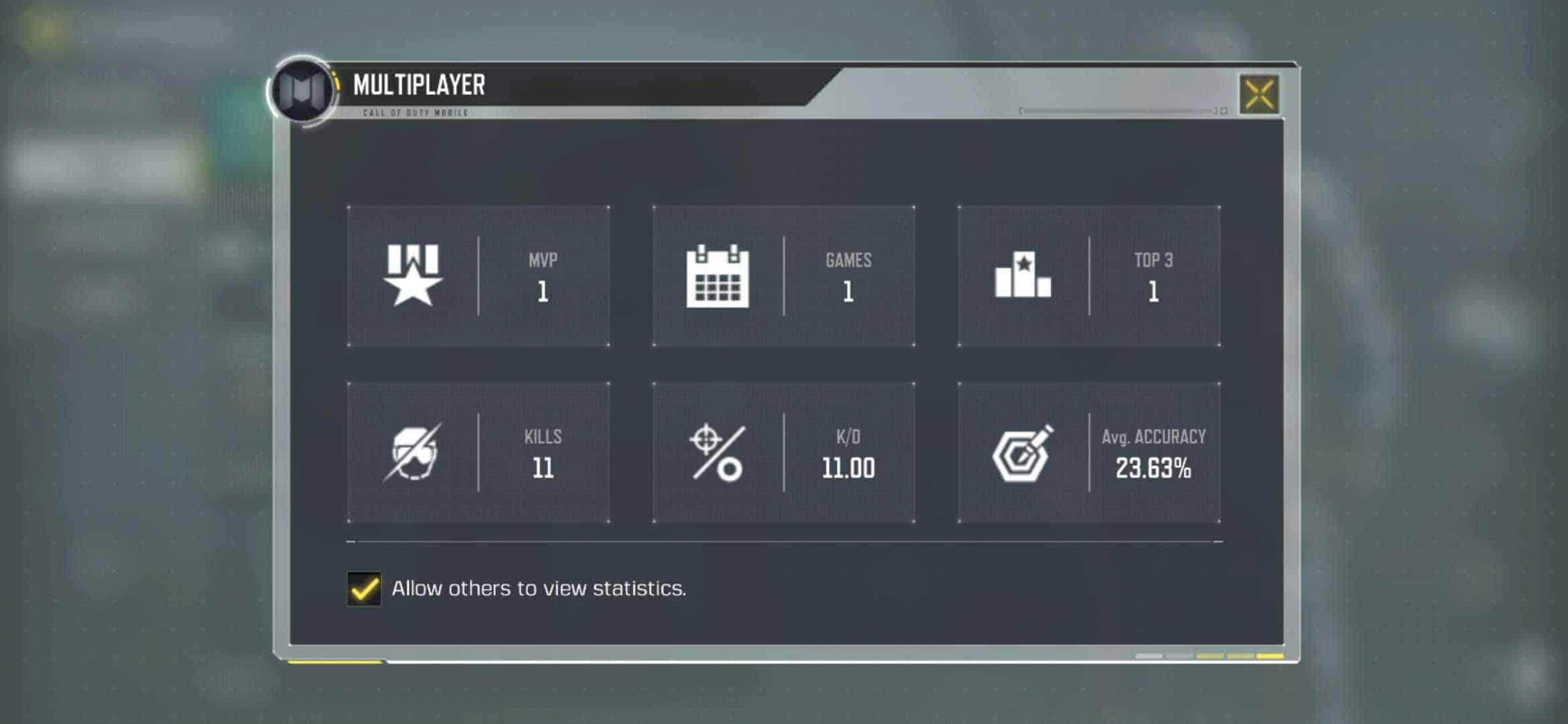
At its most basic level, the K/D ratio is a mathematical representation of how many opponents a player eliminates for every time they are eliminated themselves. The calculation is straightforward: divide the total number of kills by the total number of deaths.
The Core Calculation
If a player finishes a match with 20 kills and 10 deaths, their K/D for that round is 2.0. This signifies that, on average, they took out two enemies before being sent back to the respawn screen. Conversely, if a player records 5 kills and 10 deaths, their K/D is 0.5, indicating they were eliminated twice for every kill they secured.
In the broader context of player statistics, the software tracks two main types of K/D:
- Match K/D: The performance within a single instance or session.
- Lifetime K/D: The cumulative average of every kill and death recorded across the player’s entire history within a specific title.
Global vs. Seasonal K/D
Modern Call of Duty titles have introduced more granular data tracking. Seasonal K/D resets with each new content update, allowing players to track their improvement as they master new weapon tuning, maps, and software patches. This is particularly useful for players who may have started with a steep learning curve but have since refined their mechanical skills.
The Technical Infrastructure: How K/D Influences Matchmaking
While players view K/D as a badge of honor, the software developers at Activision and its various studios (Infinity Ward, Treyarch, Sledgehammer) view it as a critical data input for their backend infrastructure. This brings us to one of the most discussed topics in gaming tech: Skill-Based Matchmaking (SBMM).
The Role of Skill-Based Matchmaking (SBMM)
SBMM is a complex algorithmic system designed to ensure that players are matched with opponents of a similar skill level. While the exact parameters of the “black box” algorithm remain a trade secret, K/D is widely recognized as a primary coefficient.
When the software detects a rising K/D ratio, the matchmaking engine recalibrates. It moves the player into higher-tier “lobbies” where the competition is stiffer. From a software engineering standpoint, the goal is to maximize player retention by preventing “pub-stomping”—a scenario where highly skilled players dominate beginners, leading the latter to quit the game. However, this creates a technical paradox for high-level players, as their K/D often plateaus or even drops as they face increasingly difficult opponents.
Data Integrity and Tracking APIs
The importance of K/D has given rise to a secondary market of statistical tracking software. Websites and apps utilize Call of Duty’s Application Programming Interface (API) to pull real-time data from game servers. These tools provide deep-dive analytics, such as K/D trends over the last 100 matches, heat maps of where deaths occur most frequently, and weapon-specific K/D ratios. For the tech-savvy player, these platforms are essential for identifying technical weaknesses in their gameplay.
Factors Influencing Your K/D Ratio: Hardware and Software Optimization

Achieving a high K/D is not merely a matter of “getting good.” In the modern era of cross-play gaming, the technical specifications of your setup play a pivotal role in your performance. In a game where the “Time to Kill” (TTK) is measured in milliseconds, technical latency can be the difference between a 2.0 K/D and a 0.8 K/D.
Hardware and Connectivity
The hardware used to run the Call of Duty software is the foundation of performance. High-end PC builds and current-generation consoles (PS5, Xbox Series X) offer features that directly impact K/D:
- Frame Rate (FPS): A higher frame rate allows for smoother motion and more up-to-date visual information. Running COD at 144Hz or 240Hz provides a distinct advantage over opponents locked at 60Hz.
- Input Latency: This is the delay between pressing a button and the action appearing on screen. Low-latency monitors and wired peripherals (controllers or mice) are essential for maintaining a competitive edge.
- Network Stability: Often referred to as “ping,” network latency determines how quickly your actions are communicated to the game server. A high ping leads to “ghost bullets” or being killed before an enemy even appears on your screen, devastating a player’s K/D.
Software Settings and Performance Tuning
Beyond hardware, optimizing the game’s internal software settings is a standard practice for high-K/D players. This includes:
- Field of View (FOV): Increasing the FOV allows a player to see more of the battlefield, reducing the chances of being flanked.
- Audio Tuning: Modern COD titles utilize sophisticated spatial audio. Using software “equalizers” to boost the frequencies of enemy footsteps while muffling ambient noise like explosions is a common tactic to improve survivability.
- Aim Assist and Sensitivity Curves: For controller players, the software provides various “Aim Assist” algorithms. Finding the right technical balance between look sensitivity and response curves is vital for consistent kill participation.
Is K/D Still the Ultimate Metric?
As Call of Duty has evolved from a simple arena shooter into a complex, objective-based tactical experience, some critics argue that K/D is an outdated metric. The shift toward objective-based modes like Hardpoint, Domination, and the massive scale of Warzone has introduced new variables into the skill equation.
Objective-Based Play vs. Kill Hunting
A player might have a 3.0 K/D in a match but lose the game because they ignored the objectives. In the professional community, “Winning Percentage” and “Score Per Minute” (SPM) are often considered more holistic indicators of a player’s value to a team. However, K/D remains the most visible and easily understood stat, maintaining its status as the default social currency in the gaming community.
The Rise of E/D and Performance Scores
In recent iterations, Call of Duty has experimented with “Eliminations” rather than “Kills.” The Eliminations-to-Deaths (E/D) ratio is more forgiving; it grants an “elimination” to any player who dealt damage to an enemy before they were killed, even if they didn’t land the final shot. This software-side change is designed to reward teamwork and reduce the frustration of “kill stealing,” though purists still refer back to the traditional K/D as the true measure of lethality.
Strategic Implications of Maintaining a High K/D
For those focused on technical mastery, maintaining a high K/D requires a strategic approach to how the software is engaged. It isn’t just about fast reflexes; it’s about risk management and situational awareness.
Loadout Optimization
The “Meta”—short for Most Effective Tactic Available—refers to the specific combination of weapons, attachments, and perks that provide a statistical advantage. Developers frequently release software patches to “nerf” (weaken) or “buff” (strengthen) certain items. Players who stay informed on these technical updates can maintain a higher K/D simply by utilizing the most mathematically efficient tools available in the current game build.
Map Knowledge and Positioning
High-K/D players treat the game maps like a software grid. They understand “power positions,” spawn logic, and “lines of sight.” By positioning themselves in areas where they have a geographical advantage, they minimize their exposure (deaths) while maximizing their opportunities for engagement (kills). This level of map awareness is often what separates a 1.0 player from a 2.5 player.

The Future of Performance Metrics in Gaming
As AI and machine learning continue to integrate with gaming software, the way we track K/D is likely to transform. We are already seeing the emergence of AI-driven coaching platforms that analyze gameplay footage to provide feedback on crosshair placement, movement efficiency, and decision-making.
In the future, a “High K/D” might be broken down into sub-metrics, such as “K/D under pressure” or “Clutch K/D,” providing an even more granular look at player performance. Regardless of how the technology evolves, the core concept of the Kill-Death ratio will remain the heartbeat of the Call of Duty experience. It is the ultimate digital scoreboard, a reflection of technical precision, and the goal toward which millions of players strive every time they load into a match.
aViewFromTheCave is a participant in the Amazon Services LLC Associates Program, an affiliate advertising program designed to provide a means for sites to earn advertising fees by advertising and linking to Amazon.com. Amazon, the Amazon logo, AmazonSupply, and the AmazonSupply logo are trademarks of Amazon.com, Inc. or its affiliates. As an Amazon Associate we earn affiliate commissions from qualifying purchases.