
In today’s rapidly evolving technological landscape, the ability to efficiently manage and retrieve data is paramount. Whether you’re building a cutting-edge AI application, optimizing your personal finance tracking, or crafting a compelling brand identity, the underlying mechanisms for storing and accessing information play a crucial role. Amidst the vast array of tools and concepts available to developers and tech enthusiasts, the Java HashMap stands out as a fundamental and incredibly powerful data structure. But what exactly is a Java HashMap, and why is it so vital in the world of software development and beyond?
This article will demystify the Java HashMap, exploring its core principles, its practical applications across various domains like technology, branding, and finance, and its significance in building robust and performant systems.
The Essence of Key-Value Pairs: Understanding HashMap Fundamentals
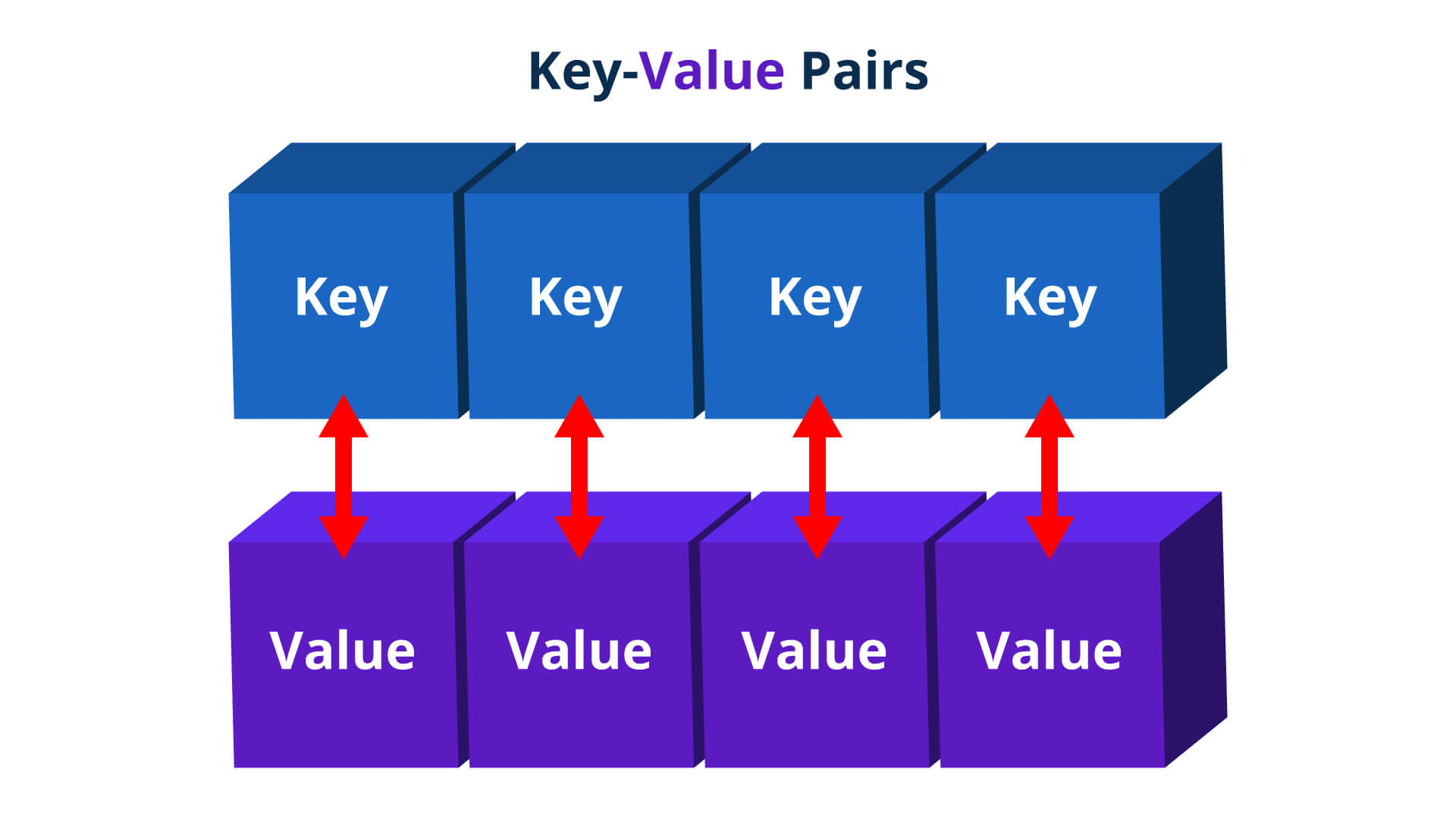
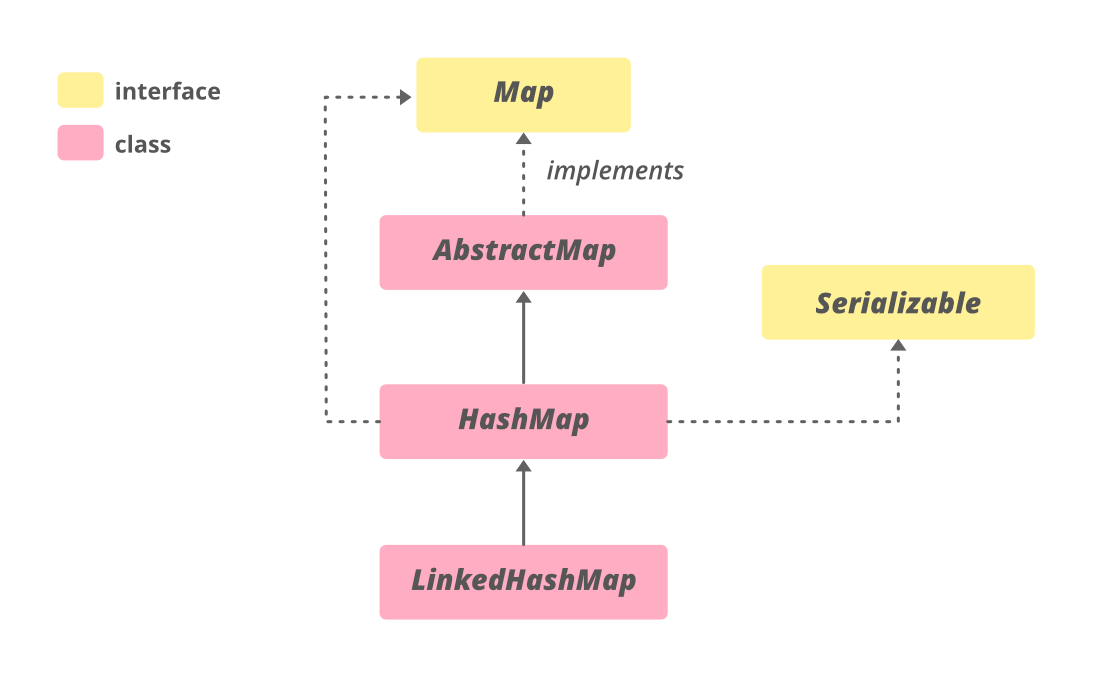
At its heart, a Java HashMap is an implementation of the Map interface in Java. The Map interface, in general, represents a collection of key-value pairs. Think of it like a real-world dictionary: you have a word (the key) and its definition (the value). To find the definition of a word, you look it up using the word itself. Similarly, in a HashMap, you use a unique “key” to associate with a specific “value.” This key-value association is the cornerstone of the HashMap’s utility.
How Does it Work Under the Hood? The Magic of Hashing
The “Hash” in HashMap is not just a quirky name; it refers to the underlying mechanism that makes HashMaps so efficient. When you add a key-value pair to a HashMap, the system takes the key and passes it through a “hash function.” This hash function computes an integer value, known as a hash code. This hash code is then used to determine where in the internal storage of the HashMap the corresponding value should be placed.
The brilliance of this approach lies in its speed. Ideally, a good hash function distributes keys evenly across the available storage, allowing for near-constant time complexity (O(1)) for common operations like insertion (put), retrieval (get), and deletion (remove). This means that as your dataset grows, the time it takes to perform these operations remains remarkably consistent, a critical factor for performance in large-scale applications.
However, the real world isn’t always ideal. Sometimes, different keys can produce the same hash code. This phenomenon is called a “hash collision.” HashMaps employ strategies to handle collisions, most commonly through a technique called “separate chaining.” In separate chaining, each “bucket” in the HashMap’s internal array can hold a linked list (or, in more modern Java versions, a balanced tree for very large chains) of key-value pairs that hash to the same index. When a collision occurs, the new key-value pair is simply added to the list (or tree) at that index. While this can slightly degrade performance in the worst-case scenario of many collisions, the overall efficiency remains high due to effective hash functions and good distribution.
Key Characteristics of Java HashMaps
Before diving into its applications, let’s summarize some key characteristics that make Java HashMaps so popular:
- Unordered: Unlike data structures like
TreeMaporLinkedHashMap, a standardHashMapdoes not guarantee any specific order for its elements. The order in which you iterate through the keys or values might not be the order in which they were inserted. - Mutable: HashMaps are mutable, meaning you can add, remove, and modify elements after the map has been created.
- Allows Null Keys and Values: A
HashMapcan contain at most one null key and multiple null values. This flexibility can be useful in certain scenarios. - Single Threaded:
HashMapis not thread-safe. If multiple threads access aHashMapconcurrently, and at least one of the threads modifies the map structurally, it must be synchronized externally. For thread-safe map operations, consider usingConcurrentHashMap. - No Duplicate Keys: Each key in a HashMap must be unique. If you attempt to
puta value with a key that already exists, the old value associated with that key will be replaced by the new value.
HashMaps in Action: Powering Technology Trends and Software Development
The efficiency and flexibility of HashMaps make them indispensable in a wide range of technological applications. From the core of operating systems to sophisticated AI algorithms, HashMaps are working diligently behind the scenes.
Building Performant Applications and APIs
In software development, HashMaps are the go-to choice for implementing lookup tables, caches, and configuration settings.
- Caching: Imagine an application that frequently needs to fetch data from a database or an external service. Instead of repeatedly querying the source, you can store frequently accessed data in a
HashMap. The data is keyed by a unique identifier, allowing for lightning-fast retrieval. This significantly reduces latency and improves the overall responsiveness of the application. - Configuration Management: Many applications rely on configuration files to define their behavior. A
HashMapcan be used to store these configurations, where the configuration parameter name acts as the key and its value as the value. This makes it easy to load, access, and modify application settings dynamically. - Web Server Request Routing: When a web server receives an incoming request, it needs to determine which code should handle it. A
HashMapcan map URL paths (keys) to the corresponding request handler functions (values), enabling rapid routing of requests to the appropriate logic.
Powering Artificial Intelligence and Machine Learning
The burgeoning field of AI and machine learning heavily relies on efficient data structures for processing vast amounts of information.
- Feature Extraction and Representation: In machine learning, data often needs to be represented in a numerical format. HashMaps can be used to store and map categorical features to numerical IDs, or to represent sparse data where only a few features have non-zero values. For instance, in natural language processing, a
HashMapcan map words to their corresponding vector representations. - Model Parameters and State: During the training of machine learning models, parameters and intermediate states need to be stored and accessed efficiently. HashMaps can be employed to manage these parameters, allowing for quick updates and retrieval during the training process.
- Knowledge Graphs and Ontologies: Representing complex relationships between entities is crucial for knowledge graphs. HashMaps can be a foundational element in storing these relationships, where entities act as keys and their associated properties or connections as values.
Enhancing User Experience with Apps and Gadgets
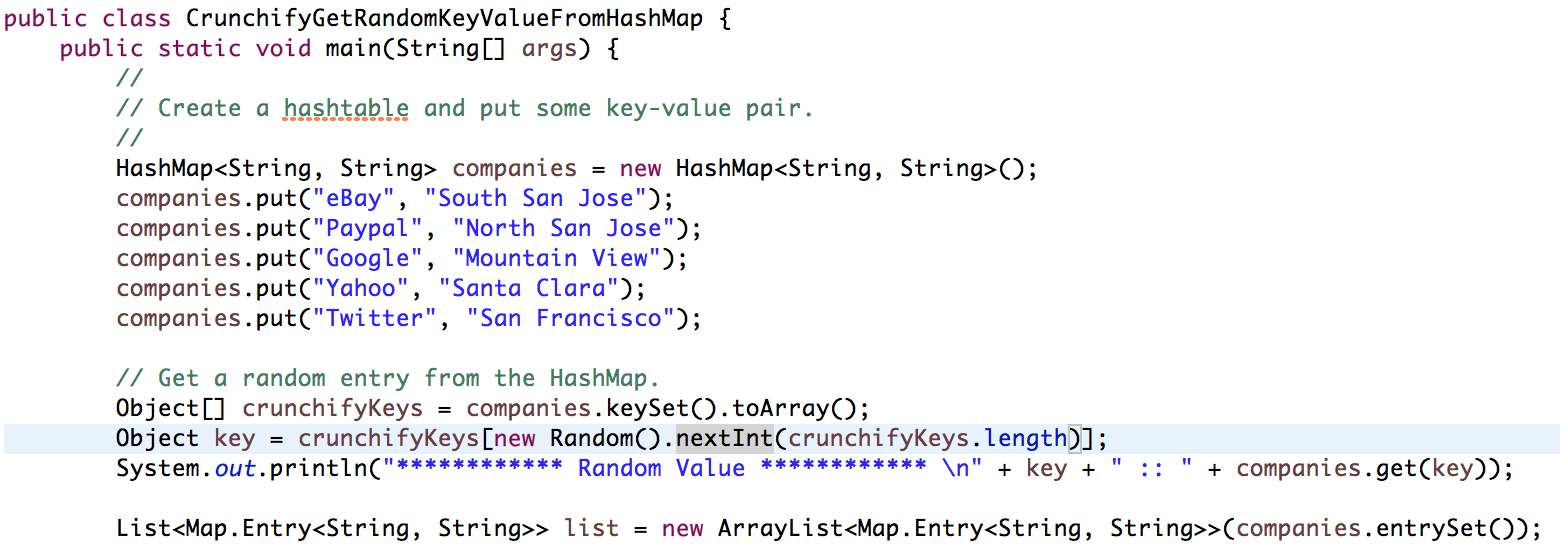
Even the apps and gadgets we use daily benefit from the efficient data management provided by HashMaps.
- Contact Lists and User Profiles: Your smartphone’s contact list is essentially a massive database of names (keys) and their associated phone numbers, addresses, and other details (values). HashMaps are an ideal choice for managing such lists, allowing for quick searching and retrieval of contact information.
- In-App Data Storage: Mobile applications often need to store user preferences, game scores, or temporary data. HashMaps provide a lightweight and fast way to manage this data locally.
- Device Settings and Preferences: The settings you configure on your smart devices, from your thermostat to your smart TV, are often stored using key-value pairs, with HashMaps being a common implementation.
Branding and Marketing: Leveraging Data for Impact
While often associated with pure coding, the principles of efficient data management extend to the world of branding and marketing. Understanding how to store and retrieve information effectively can lead to more targeted campaigns, deeper customer insights, and stronger brand identities.
Personalization and Customer Segmentation
In today’s data-driven marketing landscape, personalization is key to engaging customers.
- Customer Data Platforms (CDPs): CDPs collect and unify customer data from various sources. HashMaps can be used to store and organize this information, allowing marketers to segment their audience based on demographics, purchase history, browsing behavior, and other attributes. For example, a
HashMapcould store a customer’s unique ID as the key and aMapof their preferences and interactions as the value. - Targeted Advertising: By understanding customer segments, marketers can deliver personalized advertisements. HashMaps can facilitate the matching of ad content to specific user profiles, ensuring relevance and maximizing campaign effectiveness.
- Recommendation Engines: E-commerce sites and streaming services use recommendation engines to suggest products or content. HashMaps can store user behavior patterns and item metadata, enabling algorithms to identify connections and make intelligent recommendations.
Brand Reputation Management and Analytics
Monitoring and understanding brand perception is crucial for any successful brand.
- Sentiment Analysis: Analyzing customer feedback from social media, reviews, and surveys often involves storing and categorizing sentiments (positive, negative, neutral). HashMaps can be used to map keywords or phrases to their associated sentiment scores, aiding in rapid analysis and reporting.
- Website Analytics: Tracking website traffic, user engagement, and conversion rates involves storing a lot of data. HashMaps can be instrumental in organizing this data, allowing for quick retrieval of key metrics like page views per user, bounce rates, and click-through rates. This data can then inform marketing strategies and website optimization.
- Content Performance Tracking: Marketers can use HashMaps to track the performance of their content marketing efforts. For instance, mapping content titles (keys) to metrics like shares, comments, and conversions (values) allows for a clear understanding of what resonates with the audience.
Personal Finance and Business: Making Informed Financial Decisions
The ability to organize and access financial data quickly and efficiently is critical for both individuals managing their money and businesses handling their finances.
Personal Finance Management
For individuals, keeping track of their financial life can be complex. HashMaps simplify this by providing structured data storage.
- Budgeting and Expense Tracking: Users can employ HashMaps to categorize their expenses. For example, the expense category (e.g., “Groceries,” “Utilities,” “Entertainment”) can be the key, and a list of transactions within that category, or the total amount spent, can be the value. This allows for easy summarization and analysis of spending habits.
- Investment Portfolios: Tracking various investments, their performance, and allocation can be managed using HashMaps. The investment asset (e.g., stock ticker symbol, bond name) can be the key, and its current value, purchase price, and quantity can be the associated value.
- Bill Reminders and Due Dates: HashMaps can store upcoming bills, with the bill name or payee as the key and the due date and amount as the value. This helps in creating timely payment reminders.
Business Finance and Operations
For businesses, efficient financial management is the backbone of sustainable growth.
- Inventory Management: Businesses often need to track their inventory. A
HashMapcan map product IDs or SKUs (keys) to details like current stock levels, reorder points, and supplier information (values). This enables real-time inventory monitoring and facilitates efficient restocking. - Sales and Revenue Tracking: Tracking sales by product, region, or salesperson is essential. HashMaps can store this data, allowing for quick generation of reports and performance analysis. For instance, mapping product names to their sales figures provides immediate insights into best-selling items.
- Accounting and Ledger Systems: While complex accounting systems often use more sophisticated database structures, the underlying principles of key-value mapping are still relevant. HashMaps can be used in smaller applications or specific modules for managing accounts, transactions, and balances.
- Financial Modeling and Forecasting: When building financial models, HashMaps can be used to store assumptions, variables, and projected outcomes. This allows for easy manipulation of inputs and rapid recalculation of forecasts.
Conclusion: The Ubiquitous Power of the Java HashMap
From the intricate algorithms driving artificial intelligence to the everyday apps on our smartphones, and even to the strategic decisions in branding and personal finance, the Java HashMap proves to be an incredibly versatile and powerful tool. Its ability to store and retrieve data with remarkable efficiency, thanks to the principles of hashing, makes it a cornerstone of modern software development.
Understanding the fundamentals of HashMaps, including how they handle collisions and their key characteristics, empowers developers, tech enthusiasts, marketers, and individuals alike to build more robust systems, make data-driven decisions, and ultimately, navigate the complexities of our increasingly digital world with greater confidence and efficacy. As technology continues to advance, the humble HashMap will undoubtedly remain a vital component in the ongoing quest for efficient and intelligent data management.
aViewFromTheCave is a participant in the Amazon Services LLC Associates Program, an affiliate advertising program designed to provide a means for sites to earn advertising fees by advertising and linking to Amazon.com. Amazon, the Amazon logo, AmazonSupply, and the AmazonSupply logo are trademarks of Amazon.com, Inc. or its affiliates. As an Amazon Associate we earn affiliate commissions from qualifying purchases.