
In the hyper-competitive landscape of global cosmetics, where legacy giants and “indie” startups vie for a sliver of consumer attention, few brands have maintained a mystique as potent and consistent as IPSA. Often whispered about in the same breath as high-end Japanese mastery, IPSA represents more than just a skincare line; it is a masterclass in brand strategy, minimalist design, and the psychological shift from “mass-market” to “individualized” luxury.
To understand what IPSA is, one must look beyond the physical product. It is a brand built on the philosophical bedrock of “Ipse”—the Latin root for “self” or “of one’s own.” In an era where “personalization” has become a marketing buzzword, IPSA stands as a pioneer that operationalized the concept decades before it became a digital trend. This article explores the brand’s identity, its strategic positioning within the Shiseido Group, and the unique marketing architecture that continues to define its success.

The Genesis of “Ipse”: Philosophical Roots and Corporate Identity
IPSA was established in 1986 as a premium brand under the umbrella of Shiseido, the Japanese conglomerate. However, from its inception, IPSA was designed to be the antithesis of the traditional, monolithic beauty counter. While other brands were pushing a “standard of beauty,” IPSA was founded on the belief that beauty is not something bestowed upon a customer by a brand, but something that the brand helps the customer discover within themselves.
The Latin Foundation of Identity
The choice of the name “IPSA” is a calculated branding move. By grounding the brand in the concept of “self,” the company immediately shifted the power dynamic from the brand-as-authority to the consumer-as-protagonist. This strategic choice aligns with the broader shift in corporate identity seen in the late 20th century, moving away from authoritarian “push” marketing toward a “pull” strategy centered on consumer empowerment.
Separation from the Mother Brand
A critical component of IPSA’s brand strategy is its semi-autonomous identity. While it benefits from Shiseido’s world-class R&D and supply chain, IPSA’s branding is distinct. It does not carry the Shiseido name on its primary packaging. This “house of brands” strategy allows IPSA to cultivate a niche, boutique feel that appeals to consumers who might find traditional department store brands too stifling or dated. It allows the brand to maintain a “cult” status while backed by institutional stability.
Personalization as a Brand Moat: The “Recipe” Concept
While most brands categorize consumers into broad buckets—oily, dry, or combination—IPSA introduced the concept of the “Recipe.” This is the core of their brand strategy: they do not sell products; they co-create personalized skincare regimens. This approach creates a high “switching cost” for consumers, as the product is uniquely calibrated to their specific skin data.
The IPSALYZER and Data-Driven Branding
Central to the IPSA experience is the IPSALYZER, a proprietary diagnostic tool used at their counters. This isn’t just a gadget; it is a touchpoint in the customer journey that bridges the gap between scientific credibility and personalized service. By measuring moisture levels, sebum, transparency, and skin elasticity, IPSA transforms the shopping experience into a consultation.
From a marketing perspective, the IPSALYZER serves as a “trust engine.” It removes the guesswork from the purchase, reducing the cognitive load on the consumer while positioning the brand as a data-backed authority. This blend of “high-tech” and “high-touch” is a hallmark of premium Japanese brand strategy.
The Human Element: The “Recipes” and Counseling
At IPSA, the sales staff are not referred to as clerks, but as “Recipes Counselors.” This terminology is a deliberate choice in personal branding. It reframes the interaction from a transaction to a collaborative dialogue. The “Recipe” is a physical and digital document that the customer takes home, reinforcing the brand’s commitment to the individual’s unique journey. This strategy fosters deep brand loyalty, as the customer feels “seen” and “understood” rather than just marketed to.
The Aesthetics of Minimalism: Visual Identity and Design Strategy

In the world of branding, visual identity is the silent ambassador of the product. IPSA’s design language is a radical departure from the ornate, gold-trimmed packaging often associated with luxury skincare. Instead, it embraces a “Clean, Minimalist, and Scientific” aesthetic that has become its signature.
Architectural Packaging
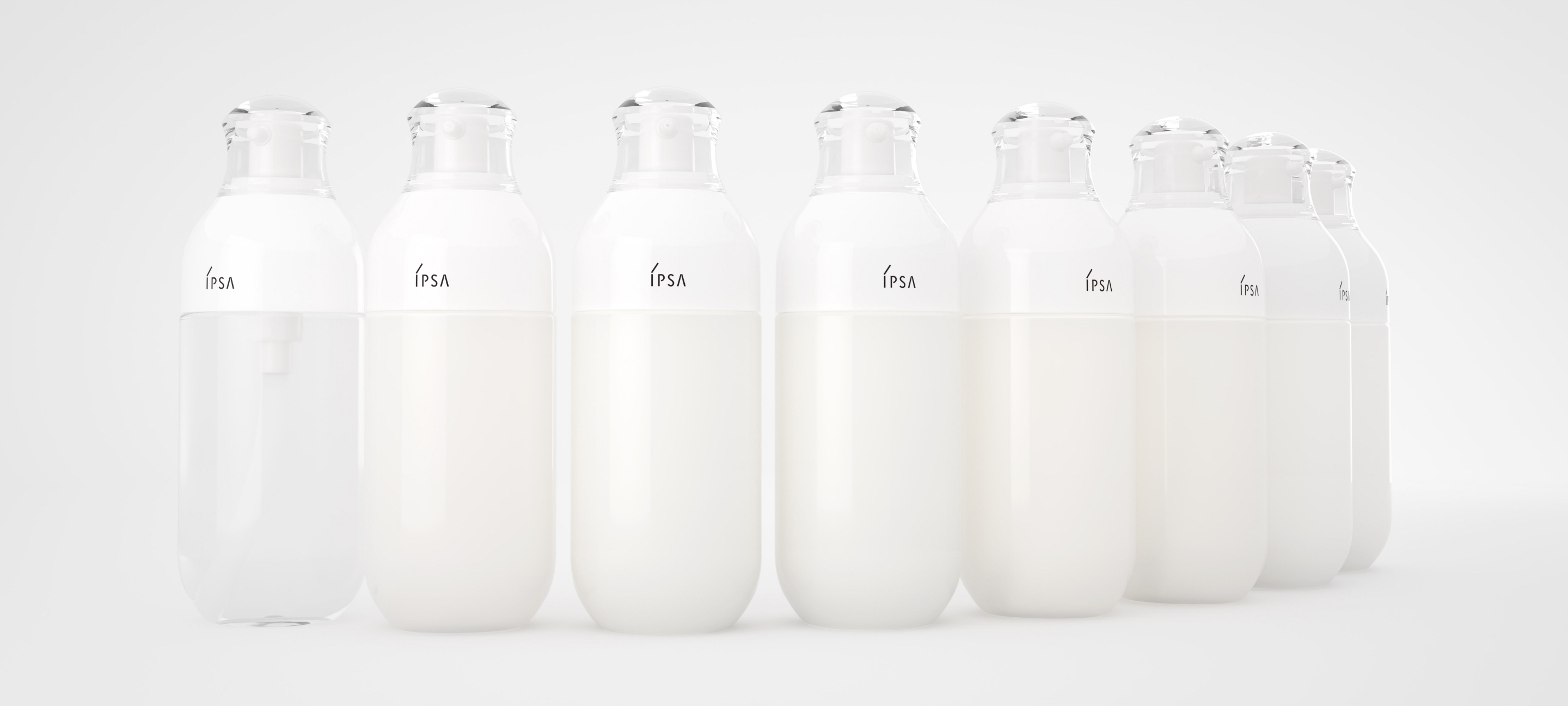
The most iconic IPSA product, the “ME” (Metabolizer) emulsion, is housed in a bottle that resembles a laboratory vessel or a futuristic architectural piece. The design is stark: white or translucent, with clean lines and sans-serif typography. This visual identity communicates transparency, purity, and modernism.
In a crowded retail environment, this minimalism acts as a “visual palette cleanser.” It signals to the consumer that the value lies inside the bottle, not in the decorative flourishes of the packaging. This design strategy has allowed IPSA to remain timeless; a bottle from 1990 looks just as contemporary on a vanity today as it did thirty years ago.
Retail Experience and Environmental Design
IPSA’s physical counters are designed to reflect this minimalist philosophy. Often featuring metallic finishes, soft lighting, and open spaces, the retail environment is meant to feel like a “studio” rather than a shop. This environment encourages the “co-creation” process. The absence of clutter reinforces the brand’s focus on the individual. Every element of the design—from the weight of the testers to the texture of the consultation tables—is curated to reinforce a brand identity of quiet, confident sophistication.
Global Market Positioning and the Future of Individualized Marketing
As IPSA expands beyond Japan into markets like China, Southeast Asia, and the West, its brand strategy faces new challenges and opportunities. The global beauty market is currently obsessed with “clean beauty” and “customization,” fields that IPSA has played in for decades.
Competitive Strategy in a Saturated Market
IPSA positions itself in the “Masstige” to “Prestige” category. It is more expensive than drugstore brands but often more accessible than ultra-luxury labels like Clé de Peau Beauté. This positioning is strategic: it captures the “aspirational” consumer who is looking for professional-grade results and a personalized experience without the prohibitive price tag of heritage luxury houses.
To maintain this position, IPSA focuses heavily on “Brand Salience”—ensuring that when a consumer thinks of personalized skincare, IPSA is the first name that comes to mind. They achieve this through selective distribution, maintaining presence only in high-end department stores and premium digital platforms, thereby preserving the brand’s aura of exclusivity.
Digital Transformation and the Virtual “Recipe”
The rise of e-commerce posed a significant threat to a brand built on face-to-face consultation. However, IPSA has successfully pivoted by integrating digital skin diagnostics and AI-driven “recipes” into their online platforms. The challenge for the brand moving forward is to translate the “high-touch” physical experience of the IPSALYZER into a seamless digital interface.
By leveraging data analytics, IPSA can now track a customer’s skin evolution over years, creating a “lifetime value” (LTV) that is much higher than that of a standard skincare brand. This shift from selling products to managing skin health is the ultimate evolution of their brand strategy.
Conclusion: Lessons from the IPSA Model
IPSA is more than a name on a bottle; it is a sophisticated blueprint for how a brand can thrive by putting the individual at the center of its universe. Through a combination of Latin-inspired philosophy, data-driven personalization, and minimalist visual identity, IPSA has carved out a unique space in the global market.
For brand strategists and marketers, IPSA offers several key takeaways:
- Philosophy Matters: A name rooted in a core belief (the self) provides a foundation that survives trends.
- Product as a Service: By framing skincare as a “recipe” and a consultation, the brand moves from being a commodity to being a partner.
- Visual Consistency: Minimalism isn’t just an aesthetic; it’s a communication tool that signals modernism and transparency.
- Strategic Autonomy: Large corporations can successfully nurture niche brands by allowing them to maintain a distinct, separate identity from the parent company.
In conclusion, “What is IPSA?” is a question with a multi-layered answer. It is a skincare brand, yes. But more importantly, it is a testament to the power of personalized branding—a reminder that in an age of mass production, the most valuable thing a brand can offer is a return to the “self.”
aViewFromTheCave is a participant in the Amazon Services LLC Associates Program, an affiliate advertising program designed to provide a means for sites to earn advertising fees by advertising and linking to Amazon.com. Amazon, the Amazon logo, AmazonSupply, and the AmazonSupply logo are trademarks of Amazon.com, Inc. or its affiliates. As an Amazon Associate we earn affiliate commissions from qualifying purchases.