
In the landscape of modern analytical technology, few instruments are as vital to the maintenance of industrial standards and environmental safety as the Ion Chromatograph. Ion Chromatography (IC) is a sophisticated form of liquid chromatography used to separate and quantify ions—atoms or molecules with a net electric charge—based on their interactions with a resin-coated stationary phase. While it may sound like a purely chemical endeavor, modern IC has evolved into a high-tech discipline that integrates advanced fluid dynamics, precision hardware engineering, and complex software algorithms.
As industries move toward greater automation and more stringent data requirements, the technology behind ion chromatography has transformed. It is no longer just a benchtop chemistry tool; it is a critical component of the digital laboratory ecosystem, utilizing Artificial Intelligence (AI) for predictive modeling, Internet of Things (IoT) connectivity for remote monitoring, and robust digital security protocols to ensure data integrity.
The Technological Foundations of Ion Chromatography Systems
To understand what ion chromatography is, one must look at the high-performance hardware that drives the process. A modern IC system is a marvel of precision engineering, designed to detect substances at concentrations as low as parts-per-trillion (ppt). This level of sensitivity requires a seamless synchronization between mechanical components and electronic sensors.
High-Performance Fluidics and Pumping Technology
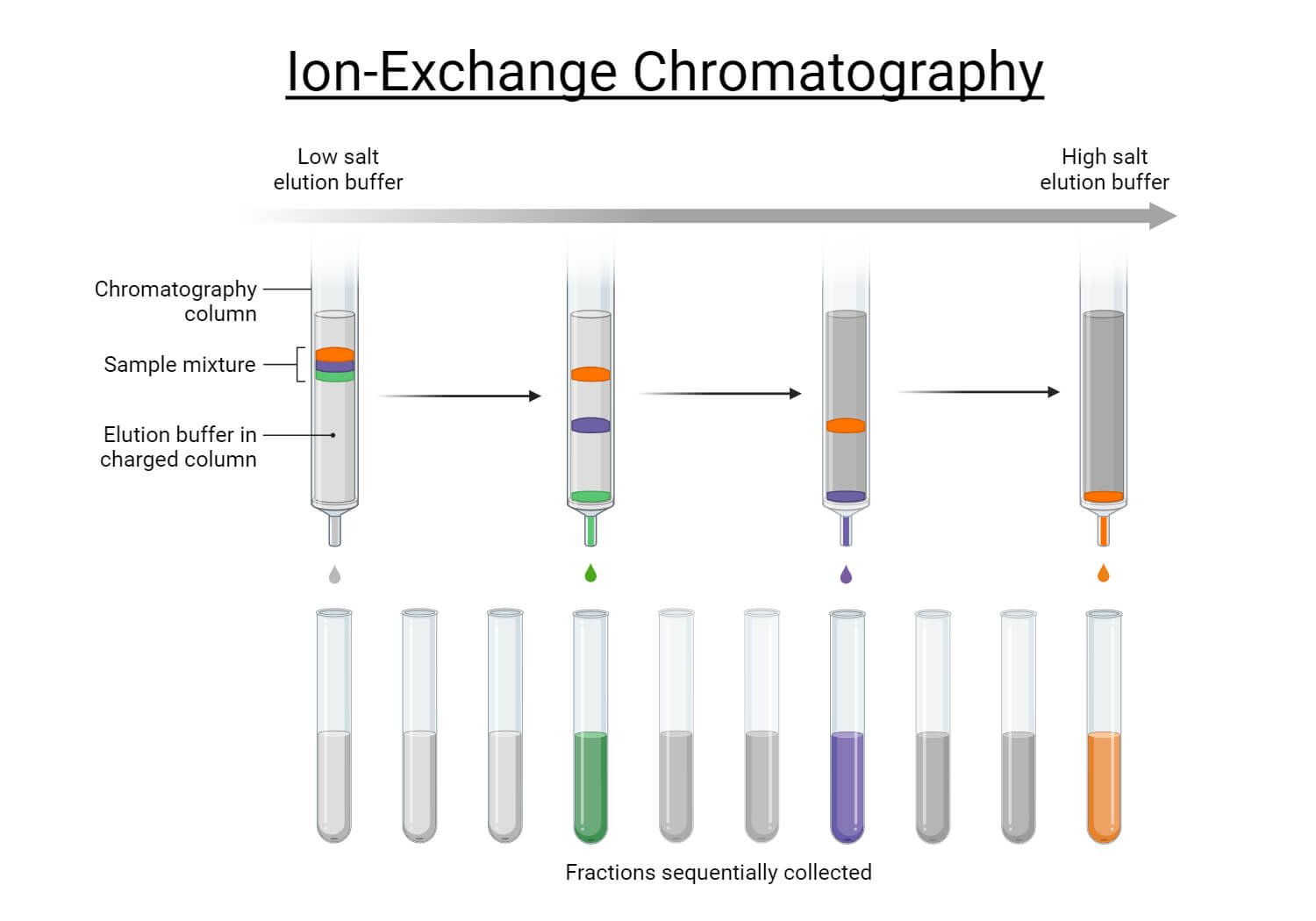
At the heart of every IC system is the pumping mechanism. Unlike standard consumer-grade fluid systems, IC pumps must provide a pulsation-free, constant flow of eluent (the mobile phase) under high pressure. Modern tech trends in IC have seen the shift toward “metal-free” fluid paths. In these systems, components are constructed from high-performance polymers like Polyetheretherketone (PEEK). This prevents metal contamination from the instrument itself, which is crucial when the goal is to measure trace metals in a sample.
Furthermore, advanced pumps now utilize dual-piston designs and sophisticated electronic control systems to compensate for changes in eluent viscosity or temperature. This automation ensures that the retention times—the “digital fingerprint” of a specific ion—remain consistent across thousands of test runs.
The Stationary Phase: Advanced Material Science
The separation of ions happens within the chromatography column, which is packed with resin beads. These beads are engineered using cutting-edge material science, featuring specialized functional groups that attract or repel ions based on their charge density. The technology behind column manufacturing has transitioned toward smaller particle sizes and more uniform surface chemistry. This allows for faster analysis times and higher resolution, much like how increasing the pixel density on a monitor provides a clearer image. The ability to distinguish between two chemically similar ions is a direct result of the precision with which these columns are manufactured.
Eluent Generation and Suppression Technology
One of the most significant technological leaps in IC is the development of electrolytic eluent generation. Instead of manually mixing chemicals, modern systems use “Reagent-Free” Ion Chromatography (RFIC) technology. Through the process of electrolysis, the instrument generates the required eluent concentrations in situ. This reduces human error, improves reproducibility, and aligns with the trend of lab automation.
Complementing this is the suppressor, a device that reduces the background conductivity of the eluent while simultaneously increasing the signal of the analytes. Modern suppressors are micro-membrane devices that operate with digital precision, allowing for the detection of anions and cations with unparalleled clarity.
Software Ecosystems and the Digitalization of Analytical Data
In the current tech era, the hardware is only half of the story. The software that manages an ion chromatograph, known as a Chromatography Data System (CDS), has become a sophisticated enterprise platform. These software suites handle everything from instrument control to complex data interpretation and reporting.
The Chromatography Data System (CDS) as a Tech Hub
A modern CDS is far more than a simple driver for the instrument. It serves as a centralized hub that can manage hundreds of instruments across a global network. This software is designed with high-level UX/UI principles to allow lab technicians to visualize complex 3D chromatograms, overlay historical data, and automate repetitive tasks. The trend toward cloud-based CDS solutions allows for real-time data access, where a researcher in London can analyze a sample run occurring in a facility in Singapore.
AI-Driven Method Optimization and Peak Recognition
Artificial Intelligence and Machine Learning (ML) are beginning to redefine the “Tutorial” aspect of ion chromatography. Traditionally, developing a method—choosing the right eluent concentration, flow rate, and temperature—required weeks of trial and error. New AI tools can now simulate these variables, predicting the outcome of a separation with high accuracy before a single drop of liquid is even pumped.

Moreover, ML algorithms are being deployed for “Auto-Peak Integration.” In the past, analysts had to manually draw baselines to measure the area under a curve to determine concentration. AI-driven software can now recognize peak patterns, ignore baseline noise, and provide consistent results that are free from human bias. This automation is a significant trend in digital lab efficiency.
Critical Applications in High-Tech Manufacturing and Environmental Infrastructure
Ion chromatography is a foundational technology for several of the world’s most advanced sectors. Its ability to detect impurities is a “silent guardian” for the gadgets and infrastructure we rely on daily.
Safeguarding the Semiconductor Supply Chain
The semiconductor industry is perhaps the most demanding user of IC technology. In the fabrication of microchips, even the smallest ionic impurity in the ultra-pure water (UPW) used to wash silicon wafers can cause a short circuit in a multimillion-dollar batch of chips. IC systems are integrated into the “Smart Factory” architecture of semiconductor plants, providing real-time, automated monitoring of trace anions like chloride, sulfate, and nitrate. This is a prime example of how IC serves as a critical quality control tool in the tech manufacturing stack.
Smart City Water Management and Real-Time Monitoring
As cities become “smarter,” their utility infrastructures are increasingly digitized. Ion chromatography plays a role here through automated environmental monitoring stations. These systems can be deployed at water treatment plants to monitor for regulated ions such as fluoride, bromide, and nitrate. By integrating these instruments with city-wide IoT networks, utilities can receive instant alerts if contaminant levels spike, allowing for rapid response and the protection of public health.
Security, Compliance, and Data Integrity in the Digital Lab
As laboratory equipment becomes more connected, the focus on digital security and data integrity has intensified. In regulated industries like pharmaceuticals, the data generated by an ion chromatograph is a legal record.
Cyber-Physical Security for Lab Instrumentation
Since modern IC systems are often connected to corporate networks, they are subject to the same cybersecurity threats as any other IoT device. Tech-savvy labs are now implementing firewalls, encrypted data transmission, and multi-factor authentication (MFA) for instrument access. Protecting the “raw data” from unauthorized modification is essential to preventing corporate espionage or the falsification of safety results.
Cloud Integration and Remote Laboratory Management
The shift toward the cloud has enabled “Remote Lab Management.” Technicians can now monitor the health of their IC systems via mobile apps. If a pump seal fails or a column pressure exceeds a certain threshold, the system sends a push notification to the technician’s gadget. This proactive approach to maintenance, powered by cloud analytics, reduces downtime and ensures that high-tech manufacturing lines never stop.
The Road Ahead: Miniaturization, IoT, and Next-Gen Sensors
The future of ion chromatography lies in the same trends that define the broader tech world: making things smaller, smarter, and more connected.
Lab-on-a-Chip and Field-Deployable IC Tech
We are seeing a move toward the miniaturization of IC components, often referred to as “Lab-on-a-Chip” technology. By using microfluidic channels etched into silicon or plastic, researchers are working to shrink a 50-pound benchtop instrument into a handheld gadget. These portable IC units could be used by environmental scientists to test water quality in remote locations, providing instant results that are uploaded via 5G to a central database.

Predictive Maintenance via IoT Connectivity
The integration of IoT sensors within the IC hardware allows for “digital twins” of the equipment. By analyzing vibrations, heat signatures, and pressure fluctuations, the manufacturer’s AI can predict when a part is likely to fail before it actually does. This shift from reactive to predictive maintenance is a hallmark of Industry 4.0, ensuring that the critical data provided by ion chromatography is always available when needed.
Ion chromatography is much more than a method for separating ions; it is an evolving technological ecosystem. From the high-pressure hardware to the AI-enhanced software and the digital security protocols that protect the data, IC stands as a testament to how traditional science can be revolutionized by the digital age. Whether it is ensuring the purity of a smartphone’s processor or the safety of a city’s drinking water, this technology remains an indispensable part of our modern, tech-driven world.
aViewFromTheCave is a participant in the Amazon Services LLC Associates Program, an affiliate advertising program designed to provide a means for sites to earn advertising fees by advertising and linking to Amazon.com. Amazon, the Amazon logo, AmazonSupply, and the AmazonSupply logo are trademarks of Amazon.com, Inc. or its affiliates. As an Amazon Associate we earn affiliate commissions from qualifying purchases.