
In the rapidly evolving landscape of technology, where change is the only constant, the concept of “invariance” stands as a cornerstone for stability, reliability, and predictability. Derived from mathematics, where it denotes properties that remain unchanged under specific transformations, invariance in the realm of computing and digital systems refers to characteristics or conditions that hold true despite variations, operations, or external disturbances. Understanding and leveraging invariants is fundamental to building robust software, intelligent AI systems, resilient architectures, and secure digital environments.
The Foundational Role of Invariance in Computing
At its core, invariance provides a powerful tool for reasoning about complex systems. For decades, computer scientists have applied this mathematical concept to ensure the correctness and reliability of software. By identifying properties that must remain constant throughout the execution of a program or the lifetime of a system, developers can build more predictable and verifiable technologies.

Ensuring Program Correctness: Loop Invariants
One of the most classical and critical applications of invariance in computer science is in proving the correctness of algorithms, particularly those involving iterative processes like loops. A loop invariant is a condition that is true before the loop begins, remains true after each iteration of the loop, and helps to establish the correctness of the algorithm upon termination.
Consider a simple algorithm to sum the elements of an array. A loop invariant for this might be: “At the beginning of each iteration i, the sum variable holds the total of all elements from index 0 to i-1.”
- Initialization: Before the loop starts (
i=0),sumis 0, which correctly represents the sum of zero elements. The invariant holds. - Maintenance: Assuming the invariant holds before an iteration (
i), the loop addsarray[i]tosumand incrementsi. The newsumnow correctly represents the total of elements up toi(the newi-1). The invariant is maintained. - Termination: When the loop terminates, say
iequals the array lengthN, the invariant tells us thatsumholds the total of elements from0toN-1, which is the desired outcome of the algorithm.
By rigorously defining and verifying loop invariants, developers can mathematically prove that their algorithms will always produce the intended result, making software development more reliable and reducing the incidence of subtle bugs that can be difficult to detect through testing alone. This principle extends beyond simple loops to more complex recursive algorithms and concurrent programming paradigms, where invariants help manage the state and interactions of multiple threads or processes.
Data Structures and System Stability
Beyond individual algorithms, invariance is crucial for the integrity and performance of fundamental data structures. Many efficient data structures rely on maintaining specific invariants to guarantee their operational characteristics. For instance:
- Binary Search Trees (BSTs): The invariant is that for any node, all values in its left subtree are less than its own value, and all values in its right subtree are greater. This invariant allows for efficient search, insertion, and deletion operations. If this invariant is violated, the tree loses its properties, and operations degrade.
- Heaps: A min-heap maintains the invariant that the value of each node is less than or equal to the values of its children. This property ensures that the smallest element is always at the root, enabling efficient priority queue operations.
- Relational Databases: Transactions in database systems often adhere to ACID properties (Atomicity, Consistency, Isolation, Durability), where “Consistency” implies that a transaction brings the database from one valid state to another, maintaining all defined invariants (e.g., unique keys, referential integrity constraints).
At a broader system level, invariants help ensure the stability and predictable behavior of distributed systems and network protocols. Identifying properties that must hold true across different nodes or under varying network conditions is vital for designing resilient and fault-tolerant architectures. For example, a protocol might define an invariant that “every message sent must eventually be acknowledged,” even if multiple retransmissions are required.
Invariance in Artificial Intelligence and Machine Learning
In the rapidly advancing fields of Artificial Intelligence and Machine Learning, the concept of invariance takes on a new dimension. Here, the challenge is often to enable systems to perceive, understand, and act upon data in the real world, which is inherently noisy, varied, and subject to countless transformations. AI models frequently strive to learn representations that are invariant to irrelevant variations in input data, focusing instead on the underlying, meaningful characteristics.
Robustness Through Invariant Features
One of the primary goals in building robust AI systems is to extract features that are truly indicative of a concept, regardless of how that concept is presented. This is often referred to as learning “invariant features.” For example:
- Image Recognition: When identifying a cat in an image, the system should ideally be invariant to the cat’s position (translation), size (scaling), orientation (rotation), lighting conditions, or even minor occlusions. Early computer vision techniques explicitly engineered such invariants (e.g., using SIFT or HOG features). Modern deep learning, particularly Convolutional Neural Networks (CNNs), achieve a degree of translation invariance through their architectural design (shared weights, pooling layers) and extensive training data. Research continues into building networks that are inherently invariant to other transformations, like rotations or viewpoints.
- Speech Recognition: A speech recognition system needs to identify spoken words regardless of the speaker’s accent, pitch, speaking speed, or background noise. The system attempts to learn features of phonemes and words that are invariant to these individual speaker variations.
- Natural Language Processing: For sentiment analysis or topic classification, the core meaning or sentiment of a sentence should be invariant to minor changes in wording, synonym usage, or sentence structure. Embeddings and attention mechanisms in transformer models attempt to capture these deeper semantic invariants.
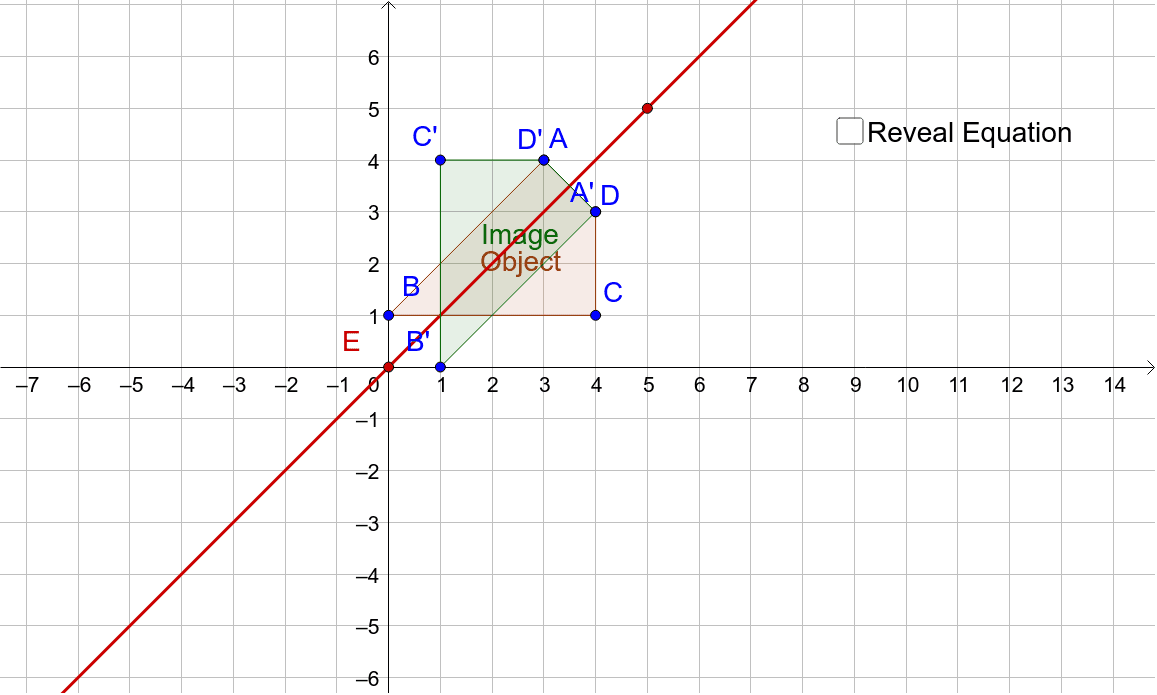
By focusing on representations that are invariant to extraneous factors, AI models can generalize better from their training data to unseen real-world examples, leading to more reliable and adaptable intelligent systems.
Generalization and Transfer Learning
The ability to learn invariant representations is intrinsically linked to an AI model’s capacity for generalization. A model that has learned truly invariant features is less likely to overfit to specific training examples and more likely to perform well on new, diverse data. This is crucial for deploying AI in dynamic environments where the exact input conditions cannot be perfectly replicated from the training set.
Furthermore, invariance plays a significant role in transfer learning. If a model can learn general, invariant features that are relevant across a broad range of tasks (e.g., edge detection or texture recognition in images), these features can be transferred and fine-tuned for new, related tasks with less data. This avoids starting from scratch for every new problem, accelerating AI development and deployment. The pursuit of “foundational models” in AI is, in essence, a quest for highly generalizable, invariant representations of data that can be adapted to a multitude of downstream applications.
Architectural Invariants and Digital Security
Beyond individual algorithms and AI models, the concept of invariance extends to the design and security of entire software systems and infrastructure. Identifying and maintaining architectural invariants is critical for building scalable, maintainable, and secure digital platforms.
Design Principles for Evolving Systems
In software architecture, invariants often relate to core design principles, contracts, or fundamental properties that must hold true throughout the system’s lifecycle, even as components are added, removed, or updated. For example:
- API Contracts: A well-designed API (Application Programming Interface) establishes an invariant contract between different software components. While the internal implementation of a service might change, the external behavior and expected inputs/outputs of its API should remain invariant to ensure compatibility with other services.
- Data Consistency Rules: In distributed databases or microservices architectures, ensuring data consistency across multiple replicas or services is a key invariant. Mechanisms like eventual consistency or transactional guarantees aim to maintain these invariants even under network partitions or failures.
- Scalability Patterns: Designing systems to scale might involve invariants related to statelessness or idempotent operations, allowing any instance of a service to handle a request without relying on previous state, thereby simplifying horizontal scaling.
By deliberately identifying and preserving these architectural invariants, organizations can build systems that are more resilient to change, easier to maintain, and less prone to introducing cascading failures as they evolve.
Detecting Anomalies with Behavioral Invariants
In cybersecurity, invariance provides a powerful framework for anomaly detection and threat intelligence. Establishing a baseline of “normal” or invariant behavior for users, systems, and networks allows security analysts and automated tools to quickly identify deviations that could signal a security breach, insider threat, or system malfunction.
- User Behavior Analytics (UBA): Systems learn typical user activity patterns (e.g., login times, accessed resources, data transfer volumes). Deviations from these learned invariants—like an employee logging in at an unusual hour from a foreign IP address and accessing sensitive files—trigger alerts.
- Network Intrusion Detection: Network invariants might include typical traffic patterns, protocol adherence, or communication flows between specific services. Anomalies such as unusually high outbound traffic, connections to known malicious IPs, or violations of protocol specifications can indicate an attack.
- System Integrity Monitoring: Maintaining invariants about system files, configurations, and running processes helps detect tampering or malware. Any unauthorized change to a critical system file, for instance, violates a known invariant and flags a potential compromise.
Leveraging machine learning algorithms, security systems can continuously learn and adapt these behavioral invariants, improving their ability to detect sophisticated and novel threats that deviate from established norms.

The Future of Invariant-Aware Tech
The concept of invariance, while rooted in mathematics, is increasingly permeating every facet of technology. From proving the absolute correctness of critical software to enabling AI systems to perceive the world with human-like robustness, and from designing fault-tolerant architectures to securing our digital lives, understanding and leveraging invariants is paramount.
As technology continues to become more complex, autonomous, and integrated into our daily existence, the ability to identify, maintain, and reason about what remains constant amidst profound change will be ever more vital. Research continues to explore novel ways to discover invariants automatically, encode them into learning algorithms, and build systems that are inherently more resilient and trustworthy. The quest for invariants is, in essence, the pursuit of fundamental truths within the dynamic digital realm, ensuring that our technological foundations remain solid as the world around them transforms.
aViewFromTheCave is a participant in the Amazon Services LLC Associates Program, an affiliate advertising program designed to provide a means for sites to earn advertising fees by advertising and linking to Amazon.com. Amazon, the Amazon logo, AmazonSupply, and the AmazonSupply logo are trademarks of Amazon.com, Inc. or its affiliates. As an Amazon Associate we earn affiliate commissions from qualifying purchases.