
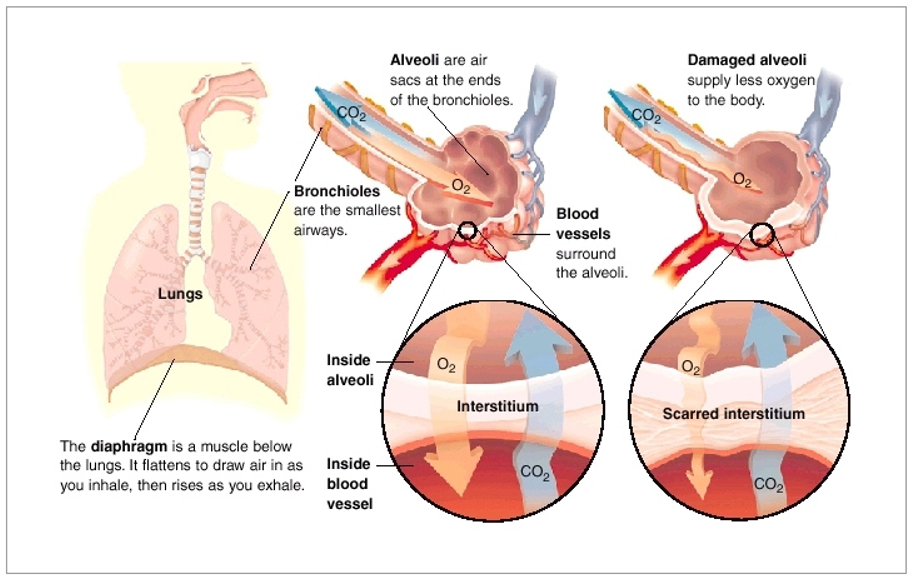
In the physical world, “interstitial space” refers to the gaps between things—the space between cells in a body or the structural voids between the floors of a skyscraper. In the realm of technology, this concept is becoming one of the most critical frontiers for innovation. As our digital ecosystems become more complex, the value is no longer just found in the “nodes” (the devices, the apps, the databases) but in the “interstices”—the connective tissue, the transitions, and the invisible layers that facilitate communication between systems.
Understanding interstitial space in technology is essential for software architects, UX designers, and system engineers. It is the realm where data resides in transit, where user experiences are made or broken during transitions, and where the next generation of edge computing is finding its home.

Defining Interstitial Space in Digital Ecosystems
To understand the interstitial space in technology, we must look beyond the primary functional components of a system. If a smartphone is a node and a cloud server is another node, the interstitial space is the vast, invisible infrastructure that allows them to synchronize in real-time.
From Architecture to Code: A Conceptual Shift
In traditional software development, the focus was often on the “state”—the data stored in a database or the current screen a user is viewing. However, as we moved toward distributed systems and microservices, the “space between” became the primary area of concern. Interstitial space in code represents the protocols, the message brokers, and the asynchronous signals that travel between isolated services. It is the “liminal” phase of computing where a request has been sent but not yet received.
Optimizing this space is the difference between a sluggish, fragmented application and a seamless digital experience. By treating the gap as a first-class citizen in system design, developers can create more resilient architectures that handle failure gracefully.
The Invisible Glue of Middleware and APIs
The most tangible manifestation of interstitial space in tech is middleware. Middleware acts as the “glue” that connects disparate software components or applications. Whether it is an API (Application Programming Interface) gateway or a message-oriented middleware (MOM) like RabbitMQ or Kafka, these tools inhabit the gaps.
In this niche, the interstitial space is where data transformation, security authentication, and traffic routing occur. Without this sophisticated “in-between” layer, modern enterprise tech stacks would collapse under the weight of their own complexity. The modern tech mantra has shifted: it’s not just about what your software does; it’s about how well it communicates across the interstitial void with other software.
Interstitial Space in UI/UX: The Power of Transitions
In User Experience (UX) design, interstitial space refers to the moments between user actions. It is the fraction of a second between clicking a button and the next page loading. While many designers view this as “dead time,” elite product designers recognize it as an opportunity to reinforce brand logic and reduce cognitive load.
Micro-interactions and User Psychology
The interstitial moments in an app are often filled with micro-interactions—small animations, progress bars, or haptic feedback. These are not mere aesthetic choices; they serve a functional purpose within the interstitial space. They tell the user that the system is working, preventing the “uncertainty gap” that leads to user frustration.
When a user pulls down to refresh a feed, the animation that plays in that “in-between” space is a crucial piece of communication. By focusing on these tiny gaps, tech companies can create an “illusion of speed,” making an app feel faster than its actual processing time by keeping the user engaged during the transition.
Managing “Dead Space” for Enhanced Engagement
Interstitial ads are a well-known, if sometimes controversial, use of this space. These are the full-screen advertisements that appear during natural transition points in an app, such as between game levels. However, the concept of managing dead space goes far beyond advertising.
Modern OS design (like iOS or Android) uses interstitial transitions to give users a sense of spatial orientation. When an app “zooms out” into a multitasking view, the transition provides a mental map of where the app “lives” within the device. By carefully designing the interstitial space, developers prevent “change blindness,” ensuring users don’t feel lost when the interface shifts from one state to another.
Data Interstices: Latency, Edge Computing, and Synchronization
On a hardware and networking level, the interstitial space is where the battle against latency is fought. As we move toward a world of Autonomous Vehicles, IoT, and AR/VR, the distance between the data source and the processor—the interstitial gap—must be minimized.
Solving the Latency Gap at the Network Edge
The “Cloud” was the first major revolution in digital space, but it created a massive interstitial gap. Sending data from a sensor in a factory to a centralized server thousands of miles away takes time—time that a self-driving car or a robotic surgeon doesn’t have.
This has led to the rise of Edge Computing. Edge computing is essentially an attempt to fill the interstitial space with processing power. By placing servers closer to the “edge” of the network (in cell towers, routers, or local hubs), we are shrinking the gap. The goal is to move the computation into the very interstices where data is generated, reducing the round-trip time to near-zero.
Data in Transit: Security Challenges in the Interstitial Void
One of the most dangerous aspects of interstitial space is security. Historically, data was most secure when “at rest” (stored on a disk) or “in use” (being processed). The space between—Data in Transit—is where hackers find their greatest opportunities.
The interstitial space of the internet is a series of hops across various routers and switches, many of which are outside a company’s direct control. This is why End-to-End Encryption (E2EE) and Transport Layer Security (TLS) are so vital. They treat the interstitial space as a hostile environment, wrapping data in a protective layer as it traverses the gaps between secure nodes. In the modern tech landscape, securing the “in-between” is just as important as securing the destination.
The Future of the “In-Between”: AI and Predictive Environments
As we look toward the future, the interstitial space in technology is being populated by Artificial Intelligence. AI is no longer just a tool we query; it is becoming a proactive layer that sits in the gaps of our digital lives, anticipating our needs before we explicitly state them.
AI as the Navigator of Unstructured Spaces
Large Language Models (LLMs) and generative AI excel at operating in the “latent space”—the mathematical interstitial space between known data points. In practical tech applications, AI is being used to fill the gaps in human-to-machine communication. Natural Language Processing (NLP) allows a computer to understand the “gray areas” of human intent, bridging the interstitial gap between rigid code and fluid human thought.
In software development, AI “copilots” are filling the interstitial spaces of the workflow. They provide the connective logic between a developer’s high-level intent and the low-level execution of code, effectively acting as an intelligent bridge that speeds up the creative process.
Building Resilient Systems Through Interstitial Optimization
The ultimate goal of modern technology is to create a “frictionless” experience. This requires a total optimization of all interstitial spaces. We are moving toward a paradigm of Predictive Computing, where the system uses the “in-between” time to pre-load data, anticipate the next user move, and self-heal network disruptions before they are even noticed.
In this future, the distinction between “app,” “network,” and “user” will continue to blur. The value will reside in the seamless flow of information through the interstices. Companies that master the art of the “in-between”—whether through ultra-low latency networking, seamless UI transitions, or robust middleware—will be the ones that define the next decade of the digital age.

Conclusion
The “interstitial space” is the new frontier of the tech industry. It is no longer enough to build powerful standalone tools; the modern challenge is to perfect the gaps between those tools. From the micro-interactions that make a mobile app feel “alive” to the edge computing nodes that make real-time automation possible, the focus of innovation has shifted.
By recognizing that the “in-between” is a space of immense potential rather than just a void to be ignored, tech leaders can build systems that are more secure, more responsive, and more deeply integrated into the fabric of daily life. The future of technology isn’t just in the things we build, but in the invisible spaces that connect them.
aViewFromTheCave is a participant in the Amazon Services LLC Associates Program, an affiliate advertising program designed to provide a means for sites to earn advertising fees by advertising and linking to Amazon.com. Amazon, the Amazon logo, AmazonSupply, and the AmazonSupply logo are trademarks of Amazon.com, Inc. or its affiliates. As an Amazon Associate we earn affiliate commissions from qualifying purchases.