
The ancient Tabernacle, a portable sanctuary meticulously detailed in sacred texts, is often viewed through theological or architectural lenses. However, a deeper examination reveals it as a monumental undertaking of early resource allocation, a significant communal investment, and a central hub for economic activity within its society. Peering “inside the Tabernacle” from a financial standpoint uncovers not just sacred objects, but a profound blueprint for understanding ancient economics, the value placed on collective spiritual capital, and the complex interplay between material wealth and societal governance.
The Material Wealth and Investment in Sacred Structures
The construction of the Tabernacle represented an unprecedented mobilization of resources, labor, and precious materials. Far from a simple tent, it was a sophisticated, highly valuable structure, indicative of immense societal investment. Understanding its contents requires appreciating the sheer economic expenditure involved, effectively functioning as an early form of communal capital investment.

Precious Metals and Artisanship: A Capital Investment
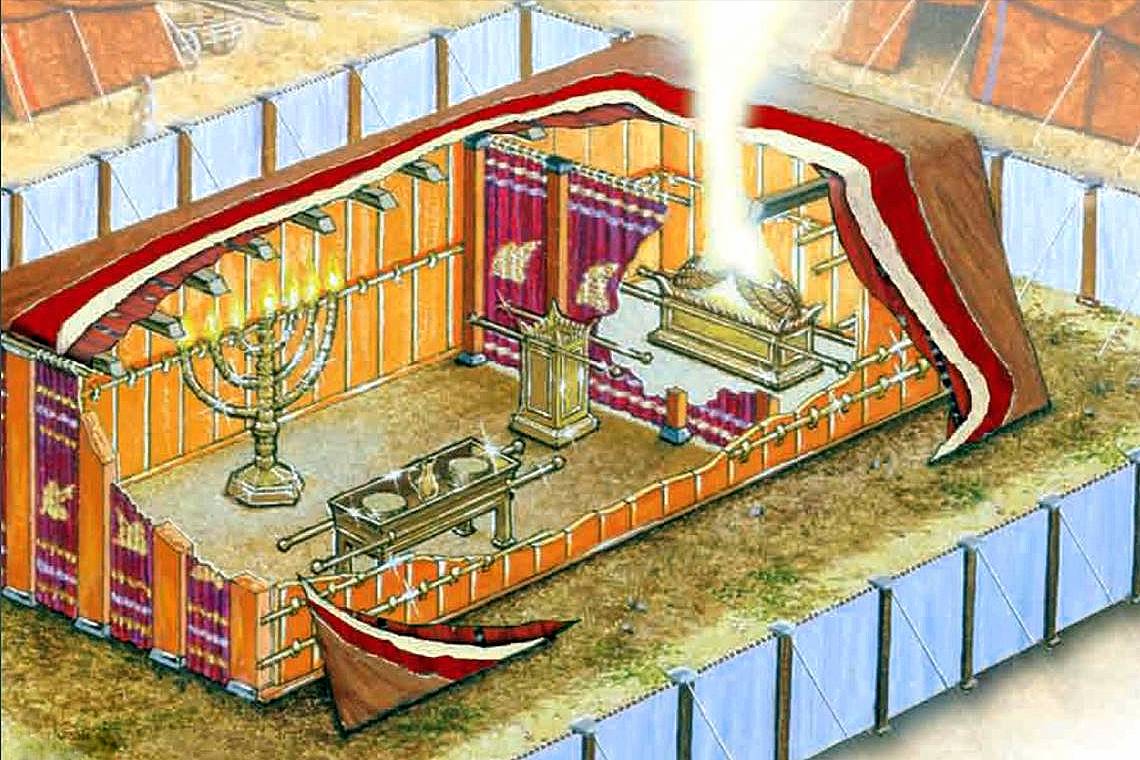
At the core of the Tabernacle’s internal design was an extraordinary reliance on precious metals, primarily gold and silver. The Ark of the Covenant, its mercy seat and cherubim, the showbread table, the lampstand (menorah), and the altar of incense were all specified to be made of pure gold or overlaid with gold. The very structure itself, with its wooden frames overlaid with gold, and silver sockets forming the foundation, signified a colossal accumulation of wealth.
Consider the Ark of the Covenant: crafted from acacia wood and overlaid with pure gold, both inside and out. Its lid, the “Mercy Seat,” was solid gold, surmounted by two golden cherubim. This wasn’t merely decorative; it represented an intrinsic value, a significant portion of the community’s accumulated wealth funneled into a single, central artifact. The menorah, fashioned from a single talent of pure gold (approximately 75-100 pounds), further emphasizes this massive capital outlay. In today’s terms, a talent of gold would be valued in the millions of dollars, representing an astonishing concentration of wealth for a nomadic society.
These items weren’t just objects; they were the product of specialized, highly skilled labor – jewelers, metalworkers, weavers, and embroiderers – whose expertise would have commanded a premium. The investment in these artisans, their training, and the time expended, adds another layer to the economic cost. This collective pooling of resources and skills for a singular, communal purpose speaks to a sophisticated understanding of project finance and resource management, albeit within a pre-modern context. The Tabernacle, therefore, functioned as a community’s most valuable asset, a tangible manifestation of its economic capacity and collective ambition.
The Cost of Divinity: Resources Beyond Measure
Beyond the gold and silver, other valuable materials formed the “contents” and structure of the Tabernacle. Fine linen, spun with extraordinary skill, was used for curtains and garments, alongside blue, purple, and scarlet yarns – dyes that were themselves costly and labor-intensive to produce in ancient times. Animal skins (rams’ skins dyed red, badger skins) provided durable outer coverings, requiring extensive processing. Even the wood, acacia, had to be sourced and transported, adding logistical and labor costs.
The sum total of these components—the raw materials, the skilled labor, the logistical effort—represents an immense expenditure. This expenditure was not a luxury; it was framed as a necessity for establishing a divine presence among the people. From an economic perspective, it was an investment in societal cohesion, moral governance, and a shared future. The willingness to commit such a significant portion of collective wealth underscores the perceived economic return on this “divine investment,” perhaps in terms of order, prosperity, and protection. This early form of public infrastructure investment, channeled into a religious edifice, highlights how profoundly interconnected faith and finance were in ancient communities.
Ritual Economy: Offerings, Tithes, and Sustenance
The Tabernacle was not merely a static repository of wealth; it was the dynamic center of a ritual economy that dictated the flow of resources, sustained a specialized workforce, and managed communal assets. Its “contents” included not just the physical items within, but also the continuous stream of offerings and contributions that powered its operation and the broader society it served.
The System of Contribution: Sustaining the Sacred Economy
A critical component of the Tabernacle’s operational finance was the mandated system of offerings and tithes. These contributions were not optional; they were an intrinsic part of the societal contract and religious observance. Offerings included grain, oil, wine, and animals for sacrifice, representing tangible economic assets from each household’s productive capacity. The “redemption money” for firstborns, the half-shekel temple tax, and various voluntary donations provided a steady stream of currency and valuable goods.
This system effectively established a centralized economic mechanism. It ensured the maintenance of the Tabernacle, the provision of necessary materials for daily rituals, and, crucially, the sustenance of the Levitical priesthood. The Levites, consecrated to service within the Tabernacle, were deliberately not allotted a tribal land inheritance. Their livelihood was entirely dependent on the tithes and offerings from the other tribes. This model created a unique economic class dedicated to the religious and administrative functions of the community, wholly supported by collective contributions. It was a sophisticated system for funding public services and specialist roles without direct taxation in the modern sense, relying instead on a religiously mandated, distributed contribution model.
Management of Offerings: Early Forms of Communal Wealth
The management of these offerings required considerable organizational skill. The priests and Levites were responsible for receiving, classifying, storing, and distributing the diverse range of goods. Grain, wine, and oil would have been stored in designated chambers, representing a communal food and resource reserve. The sale of sacrificial animals or portions not consumed by the priests could have also circulated wealth within the community.
This system can be viewed as an early form of communal wealth management and redistribution. Excess produce from individual families was channeled into a central repository, from which a specialized workforce (the priesthood) drew its sustenance, and communal rituals, which bound society together, were funded. This not only ensured the spiritual functioning of the community but also created a buffer against individual hardship, as surplus resources were collectively managed. The “contents” of the Tabernacle, in this sense, extended to the dynamic ebb and flow of goods and services that supported its very existence and the economy around it.
Symbolic Capital and Intangible Value: Beyond Material Wealth
While the material wealth inside the Tabernacle was immense, its true “contents” also included significant symbolic and intangible capital. These non-monetary assets played a profound role in shaping the economic behaviors, social trust, and overall stability of the community, influencing financial decisions and collective endeavors.
The Ark of the Covenant: Ultimate Value and Economic Influence
The Ark of the Covenant, housing the tablets of the Ten Commandments, was the ultimate embodiment of symbolic capital. Its value transcended its golden construction; it represented the covenant, the law, and divine presence. This intangible value had direct economic consequences. The adherence to the laws contained within, particularly those pertaining to honesty, justice, and property rights, formed the bedrock of a stable economic environment. Without trust in contracts, fair dealings, and secure ownership, a thriving economy cannot exist.
The Ark, therefore, was a powerful tool for enforcing economic morality and ensuring societal order. The concept of divine oversight discouraged fraud, theft, and unjust practices, which are essential for fostering a reliable commercial ecosystem. Its presence within the Tabernacle provided a constant, omnipresent reminder of the moral framework that underpinned all economic interactions. Investing in and revering this symbolic content was, in effect, investing in the very fabric of an economically stable and trustworthy society.
The Priesthood’s Role: Administrators of Spiritual and Material Assets
The priesthood, supported by the communal economy, served as more than just religious officiants. They were the administrators of both spiritual and material assets. They interpreted the law, which included civil and economic statutes. They oversaw the system of offerings and tithes, effectively managing the community’s most valuable tangible and intangible resources.
Their role in dispute resolution, particularly concerning property and financial matters, further cemented their economic importance. By providing a neutral, divinely sanctioned authority, they reduced transaction costs associated with legal disputes and reinforced adherence to economic principles. The integrity and authority of the priesthood, derived from their association with the Tabernacle’s sacred contents, directly contributed to economic stability by providing a framework for ethical business practices and conflict resolution. This specialized administrative function, vital for a coherent economy, was sustained by the financial model of the Tabernacle.
Long-Term Economic Impact and Legacy
The systems and values established by the Tabernacle’s existence and its “contents” had a profound and lasting impact on the economic norms and practices of the community, setting precedents for financial management and societal organization that extended far beyond its physical dismantling.
Establishing Economic Norms: Tithes and Charity
The Tabernacle system codified the practices of tithing and charitable giving as fundamental economic obligations. The concept of returning a portion of one’s income or produce to a central communal purpose became deeply ingrained. This wasn’t merely a religious act; it was an economic policy that fostered social welfare and communal solidarity. The portions of tithes dedicated to the poor, the stranger, and the widow established an early social safety net, mitigating extreme poverty and promoting a more equitable distribution of resources.
This institutionalization of giving transformed individual economic actions into collective responsibilities, creating a society where wealth was not solely privatized but also leveraged for collective benefit. The “contents” of the Tabernacle, interpreted as its guiding principles and operational mechanisms, thus laid the groundwork for an enduring economic ethos centered on communal responsibility and mutual support.

A Precedent for Centralized Resource Management
The Tabernacle served as a powerful early example of centralized resource management. It demonstrated how a community could pool significant wealth, labor, and precious materials for a shared, long-term objective. This model of collective investment and specialized labor allocation provided a blueprint for future large-scale projects and institutionalized financial governance.
The experience of constructing and sustaining the Tabernacle offered invaluable lessons in logistics, project management, and communal finance. It showed how a highly organized system of contributions and disbursements could support a complex, ongoing institution. This precedent, deeply embedded in the societal memory, influenced later economic structures and public finance strategies, highlighting the Tabernacle’s “contents” not just as static artifacts, but as a dynamic and foundational economic curriculum for a nascent nation.
aViewFromTheCave is a participant in the Amazon Services LLC Associates Program, an affiliate advertising program designed to provide a means for sites to earn advertising fees by advertising and linking to Amazon.com. Amazon, the Amazon logo, AmazonSupply, and the AmazonSupply logo are trademarks of Amazon.com, Inc. or its affiliates. As an Amazon Associate we earn affiliate commissions from qualifying purchases.