
The concept of legacy, both in terms of personal history and financial assets, is a profound one. When a loved one passes away, the emotional toll is immense, and navigating the practicalities of their estate can feel overwhelming. Among the assets that may be passed down, an Inherited Individual Retirement Arrangement (IRA) holds a unique position, blending the principles of retirement savings with the complexities of estate distribution. This article will demystify the Inherited IRA, exploring its fundamental nature, the crucial distinctions that define it, and the strategic financial considerations involved for beneficiaries. We’ll delve into how this specialized financial tool fits within broader discussions of personal finance, investing, and even the strategic branding of one’s financial future.
Understanding the Core Concept: Beyond a Simple Transfer
At its heart, an Inherited IRA is precisely what its name suggests: an IRA that has been passed down from the original account owner to a beneficiary upon their death. It’s not simply a matter of transferring funds; the IRS has specific rules and regulations governing how these accounts must be managed, primarily to ensure that the tax-deferred growth inherent in IRAs is eventually accounted for.
The Original IRA vs. The Inherited IRA: Key Distinctions
To truly grasp the essence of an Inherited IRA, it’s vital to distinguish it from the original account from which it originates. The original IRA belongs to the individual who funded it and enjoyed its tax benefits during their lifetime. Upon their death, the account’s status transforms. The primary difference lies in distribution rules. The original owner could withdraw funds (subject to age-based penalties if under 59 ½) or leave them to grow. The beneficiary, however, inherits a set of rules that dictate how and when they must withdraw the funds.
Another critical distinction is ownership. While the beneficiary now controls the assets, they are doing so under the specific framework of the Inherited IRA, not as the original owner. This distinction impacts how the funds can be managed, reinvested, and ultimately taxed.
The Beneficiary Designation: The Architect of Your Inheritance
The foundation of an Inherited IRA is the beneficiary designation made by the original account owner. This is a critical component of estate planning that often gets overlooked. When opening an IRA, account holders are prompted to name one or more beneficiaries. This designation overrides any instructions in a will regarding the distribution of these specific assets.
- Primary vs. Contingent Beneficiaries: Typically, an individual will name a primary beneficiary who will receive the IRA assets. They may also name contingent beneficiaries, who will inherit if the primary beneficiary predeceases the account owner.
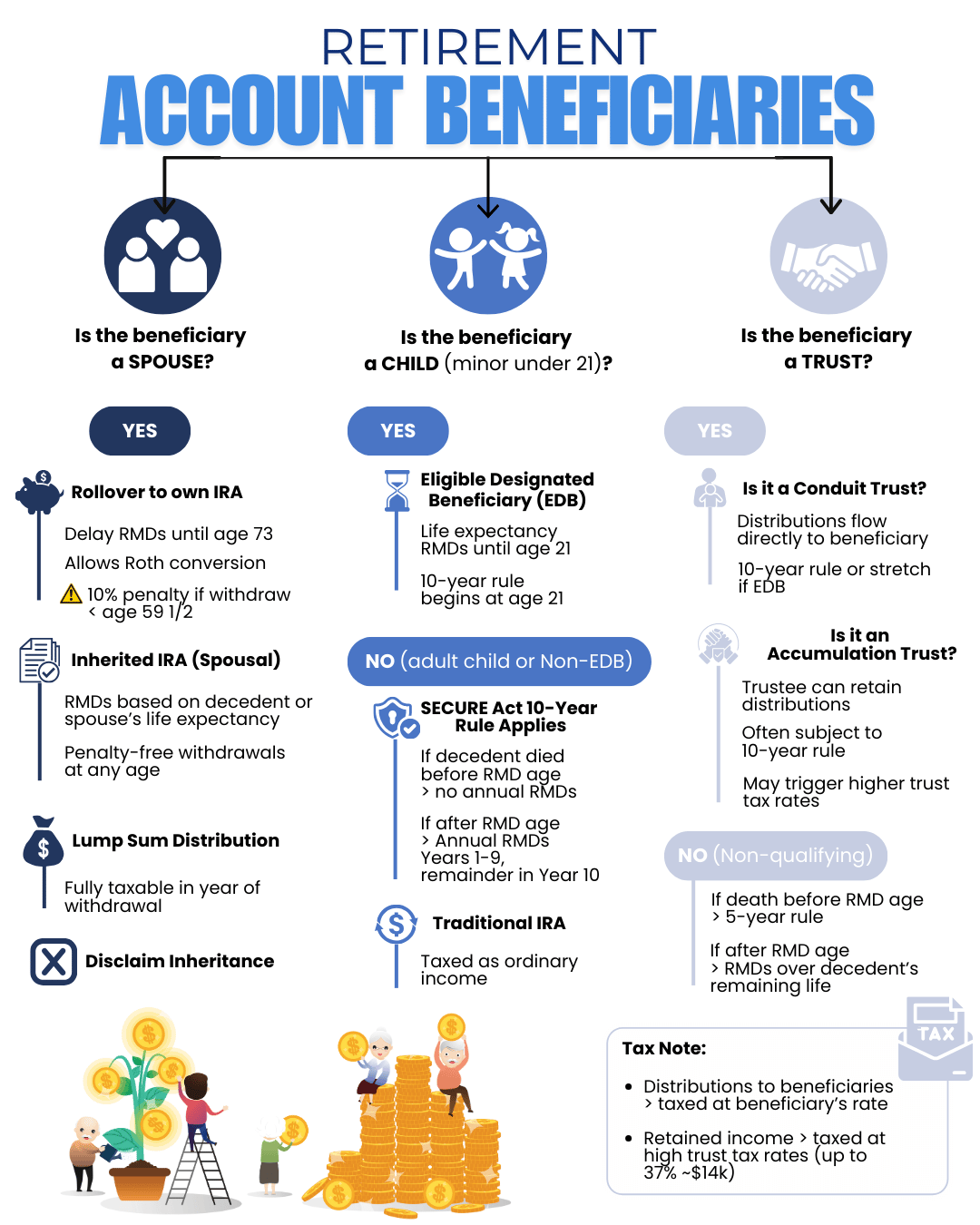
- Spousal vs. Non-Spousal Beneficiaries: The relationship of the beneficiary to the original owner significantly impacts the rules. Spouses often have more flexibility in how they handle an Inherited IRA, including the option to treat it as their own. Non-spousal beneficiaries face more stringent distribution requirements.
The clarity and accuracy of these designations are paramount. Ambiguities or outdated information can lead to complex legal battles and unintended tax consequences. This highlights the importance of proactive estate planning and regular review of beneficiary designations, aligning with the broader principle of sound financial strategy.
Navigating the Distribution Landscape: Rules for Different Beneficiaries
The rules governing withdrawals from an Inherited IRA are complex and depend heavily on whether the beneficiary is a spouse or a non-spouse, and the age of the deceased at the time of their passing. Understanding these rules is crucial for avoiding penalties and making informed financial decisions.
Spousal Beneficiaries: The Path to Flexibility
Surviving spouses have a unique advantage when inheriting an IRA. They have two primary options, offering a significant degree of control and potential tax deferral:
- Treating the Inherited IRA as Their Own: A surviving spouse can choose to roll over the inherited IRA assets into their own existing IRA or establish a new IRA in their name. This essentially allows them to continue contributing to and managing the account as if it were their original retirement savings. This option provides the greatest flexibility in terms of withdrawal timing and contribution potential. However, it also means the surviving spouse is now subject to their own withdrawal rules and potential RMDs (Required Minimum Distributions) based on their age.
- Keeping it as an Inherited IRA: The surviving spouse can also choose to keep the account as an Inherited IRA. In this scenario, they will need to take Required Minimum Distributions (RMDs) based on their life expectancy, according to IRS tables. This option can be beneficial if the surviving spouse is already taking RMDs from their own IRA and wishes to consolidate or manage distributions differently.
The decision for a spousal beneficiary hinges on their individual financial situation, retirement goals, and tax bracket. Consulting with a financial advisor is highly recommended to determine the most advantageous path.
Non-Spousal Beneficiaries: A More Defined Path
Non-spousal beneficiaries, such as children, grandchildren, or other designated individuals, face more rigid distribution rules. The primary objective for the IRS in these cases is to ensure that the tax-deferred status of the IRA is not enjoyed indefinitely.
The Five-Year Rule: A Simplified Distribution Framework
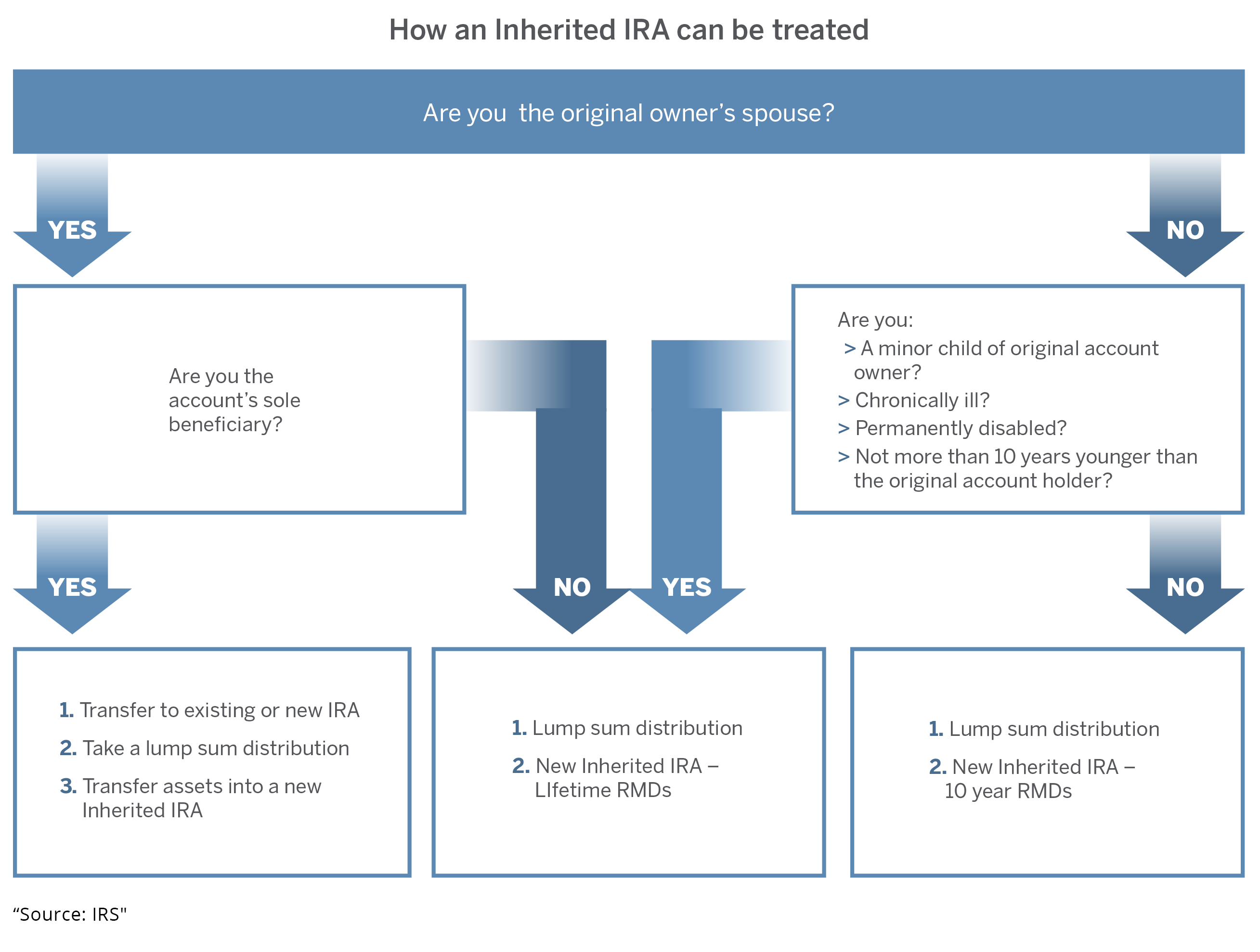
For beneficiaries who inherit an IRA from someone who died before their Required Beginning Date (generally April 1st of the year after they turn 73), the IRS offers two primary distribution methods:
- The Five-Year Rule: The beneficiary can withdraw all the assets from the Inherited IRA by December 31st of the fifth year following the original owner’s death. There are no required minimum distributions during these five years, allowing for some flexibility in timing withdrawals. However, the entire balance must be distributed by the end of the fifth year. This can be advantageous if the beneficiary anticipates higher income in later years and wants to spread out the tax liability, or if they don’t need the funds immediately.
- The Single Life Expectancy Rule (Stretch IRA): This rule allows non-spousal beneficiaries to stretch distributions over their own lifetime. They must begin taking RMDs by December 31st of the year following the original owner’s death. The amount of each annual RMD is calculated by dividing the account balance as of December 31st of the previous year by the number of years of their single life expectancy, as determined by IRS tables. This “stretch” provision can allow the funds to continue growing on a tax-deferred basis for many years, significantly increasing the potential longevity of the inheritance. This is often the preferred method for maximizing the long-term benefit of the inheritance.
The Significance of the Death Prior to the RMD Age
The age of the deceased at the time of their death plays a critical role in determining the applicable distribution rules for non-spousal beneficiaries.
- Death Before RMD Age: If the original IRA owner died before they reached their Required Beginning Date for RMDs (currently age 73), the beneficiary has the choice between the Five-Year Rule or the Single Life Expectancy Rule, as described above.
- Death After RMD Age: If the original IRA owner died on or after their Required Beginning Date, the distribution rules for the beneficiary become more accelerated. The beneficiary generally must continue taking RMDs based on the deceased’s remaining life expectancy or their own, whichever results in faster distribution. The specific calculations become more intricate, and it is crucial to consult IRS Publication 590-B, “Distributions from Individual Retirement Arrangements (IRAs),” or a qualified tax professional for precise guidance.
The “stretch” IRA, when applicable, represents a powerful tool for intergenerational wealth transfer, allowing a significant portion of retirement savings to pass to heirs with continued tax advantages. However, understanding the nuances of RMD calculations and deadlines is paramount to avoid costly penalties.
Strategic Financial Management and Planning
Inheriting an IRA is not just a financial event; it’s an opportunity to engage in strategic financial planning, aligning with broader principles of wealth management and even personal branding as a responsible steward of assets.
Tax Implications: Understanding the Landscape
The primary benefit of an IRA is its tax-deferred growth. When funds are withdrawn from an Inherited IRA, they are generally taxed as ordinary income, just as they would have been for the original owner. However, the timing and method of withdrawal can significantly impact the overall tax burden.
- Ordinary Income Tax: Most distributions from traditional IRAs (both original and inherited) are subject to ordinary income tax.
- Roth IRAs: If the inherited IRA is a Roth IRA, qualified distributions are generally tax-free. However, the rules for inheriting Roth IRAs can also have specific requirements, so it’s important to understand those as well.
- Penalties for Early Withdrawal: If a beneficiary withdraws funds before the stipulated deadlines or fails to take required minimum distributions, they may face a penalty of 50% of the amount that should have been withdrawn. This underscores the importance of adherence to IRS regulations.
Investment Strategy: Preserving and Growing the Legacy
Once the distribution rules are understood, beneficiaries must consider how to invest the inherited funds. This is where the principles of investing and financial tools come into play.
- Diversification: Just like any retirement portfolio, an Inherited IRA should be diversified across various asset classes to mitigate risk and maximize potential returns.
- Risk Tolerance: The beneficiary’s own age, risk tolerance, and financial goals will dictate the investment strategy. A younger beneficiary may opt for a more aggressive growth-oriented portfolio, while an older beneficiary might lean towards more conservative investments.
- Professional Advice: Given the complexities of Inherited IRAs and investment management, seeking guidance from a qualified financial advisor is highly recommended. They can help navigate the distribution rules, develop an appropriate investment strategy, and ensure compliance with IRS regulations.
Record Keeping and Compliance: Essential for Peace of Mind
Meticulous record-keeping is essential when managing an Inherited IRA. This includes:
- Keeping track of all distributions and their tax implications.
- Noting RMD deadlines and ensuring they are met.
- Maintaining documentation of the original account owner’s death and the beneficiary designation.
This diligent approach to record-keeping not only ensures compliance with IRS regulations but also provides a clear financial history, which can be beneficial for future financial planning and even for establishing a reputation for fiscal responsibility – a key aspect of personal and even corporate branding.

Conclusion: A Financial Inheritance with Strategic Implications
An Inherited IRA is more than just a sum of money; it’s a financial inheritance governed by a distinct set of rules and offering unique strategic opportunities. By understanding the fundamental differences between original and inherited accounts, navigating the specific distribution requirements for spousal and non-spousal beneficiaries, and approaching the investment and tax implications with a strategic mindset, beneficiaries can effectively manage and grow their inherited financial legacy. This process, while sometimes complex, ultimately empowers individuals to honor the financial foresight of the loved one they have lost and to build a more secure financial future for themselves and their own families. Proactive engagement with these financial tools aligns with the broader themes of responsible money management, informed investing, and the strategic cultivation of one’s financial well-being.
aViewFromTheCave is a participant in the Amazon Services LLC Associates Program, an affiliate advertising program designed to provide a means for sites to earn advertising fees by advertising and linking to Amazon.com. Amazon, the Amazon logo, AmazonSupply, and the AmazonSupply logo are trademarks of Amazon.com, Inc. or its affiliates. As an Amazon Associate we earn affiliate commissions from qualifying purchases.