
Artificial Intelligence (AI) has transitioned from a niche academic pursuit into the foundational architecture of modern technology. Whether you are interacting with a chatbot, unlocking your phone with facial recognition, or receiving a personalized movie recommendation, you are witnessing the power of AI in action. However, behind the curtain of these seamless user experiences lies a critical distinction that often confuses those outside the software engineering sphere: the difference between “training” an AI and AI “inference.”
In the simplest terms, inference is the “live” phase of an artificial intelligence model. If training is the process of teaching a student, inference is the student applying that knowledge to solve a real-world problem during an exam. As businesses and developers pivot toward deploying AI at scale, understanding the mechanics, optimization, and hardware requirements of inference has become a cornerstone of the modern tech landscape.
The Mechanics of Inference: How AI Models “Think”
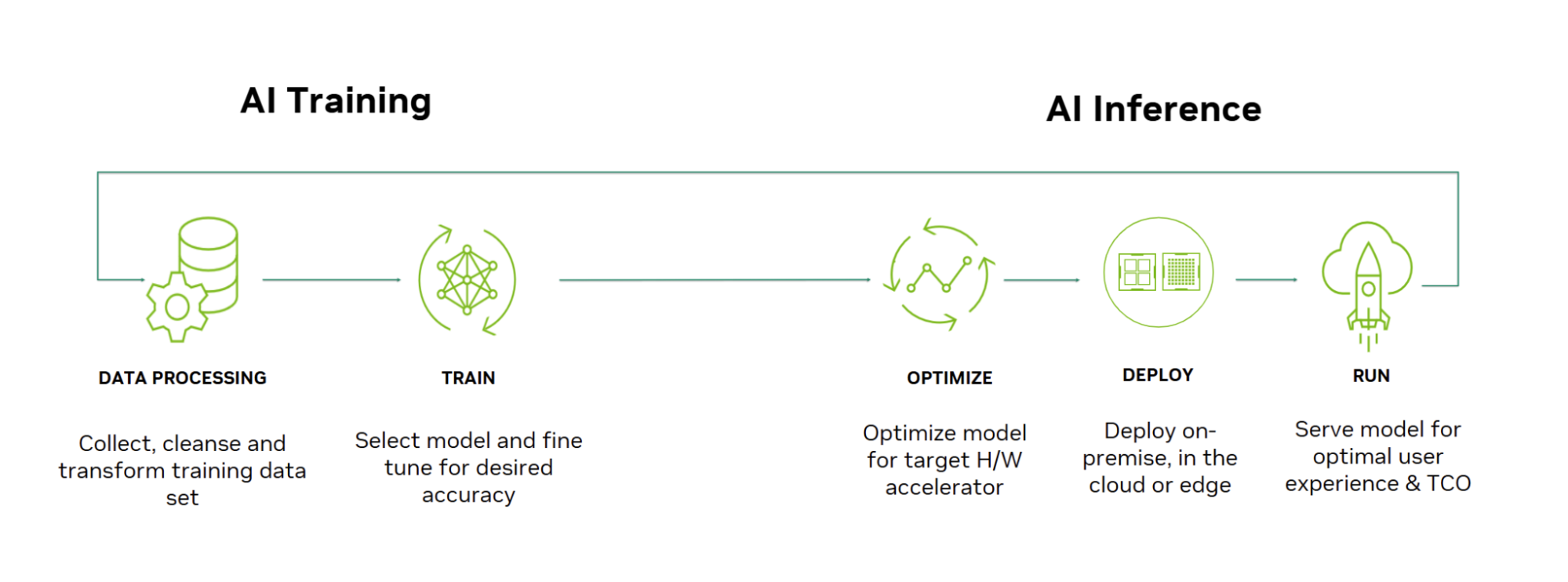
To understand inference, one must first understand the state of a model after it has completed its training. During the training phase, a neural network is fed massive datasets—terabytes of text, images, or code. Through a process called backpropagation, the model adjusts its internal parameters, known as weights and biases, to minimize errors. Once this process is complete, the model is “frozen” and ready for inference.
The Transition from Training to Production
When a model moves into the inference phase, it is no longer learning. Instead, it is a static mathematical function designed to take a specific input and produce a logical output. In a production environment, this means the model is deployed to a server, a mobile device, or an “edge” gadget. The goal shifts from accuracy-seeking through trial and error to efficiency-seeking through execution.
Input Data and Feature Extraction
The inference process begins when a user provides input data—a query in a search bar, a voice command, or a pixelated image. The AI does not “see” these inputs the way humans do. Instead, the software converts the input into numerical tensors. During inference, the model performs “feature extraction,” identifying specific patterns within the data that correspond to the lessons learned during training. For instance, in an image recognition model, the first layers of inference might detect edges, while deeper layers identify complex shapes like eyes or wheels.
The Role of Weights and Biases
Inference is essentially a massive series of matrix multiplications. The input data passes through the layers of the neural network, where it is multiplied by the “weights” established during training. These weights represent the importance of certain features. If the model is trying to identify a cat, certain weights will be “tuned” to react more strongly to pointed ears or whiskers. The final layer of the inference engine then produces a probability score—for example, a 98% certainty that the image contains a feline.
Training vs. Inference: Understanding the Fundamental Differences
While training and inference share the same underlying architecture, their operational requirements are vastly different. In the tech industry, distinguishing between these two is vital for resource allocation, hardware selection, and software architecture.
Computational Intensity and Hardware Requirements
Training is an incredibly resource-heavy process. It requires massive clusters of High-Performance Computing (HPC) units, usually GPUs (Graphics Processing Units) or TPUs (Tensor Processing Units), running for weeks or months. It consumes enormous amounts of electricity and memory because the system must store all the intermediate mathematical states of the model as it learns.
In contrast, inference is computationally lighter. Because the model is not updating its weights, it requires significantly less memory and processing power. While training almost always happens in the cloud or on massive on-premise servers, inference can happen on a smartphone, a smart camera, or even a low-power microcontroller.
Learning vs. Application
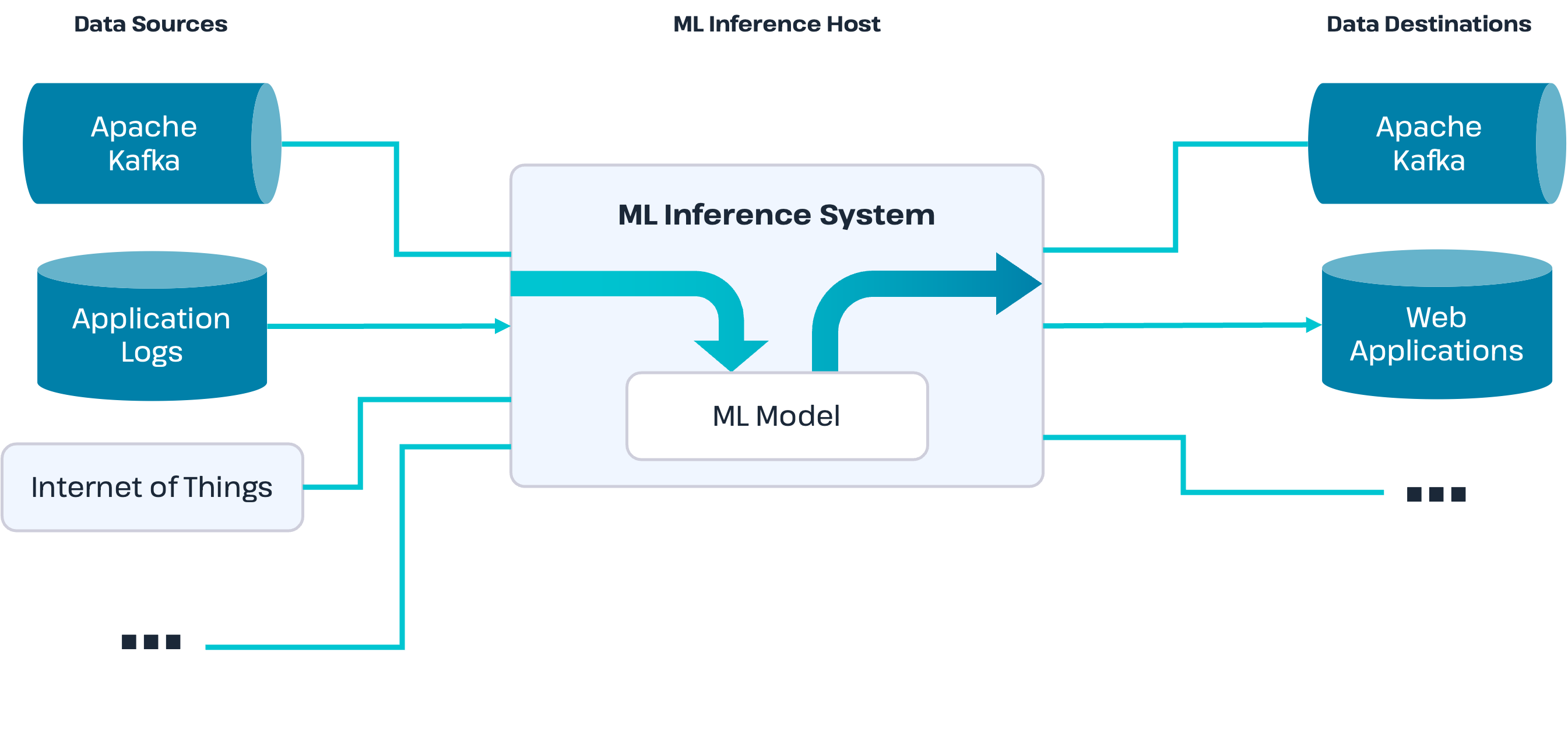
The fundamental difference lies in the direction of data flow. Training involves a two-way street: data goes in (forward pass), the error is calculated, and information flows back through the model to adjust it (backward pass). Inference is a one-way street. Data flows in, passes through the layers, and an answer comes out. There is no feedback loop during standard inference; the model does not “get smarter” from a single inference task unless a separate “reinforcement learning” or “fine-tuning” cycle is initiated later.
Iterative Processes vs. Immediate Output
Training is an iterative process of refinement. Developers might run the same dataset through a model thousands of times (epochs) to reach the desired level of accuracy. Inference, however, is judged by “latency”—the time it takes to produce a single result. In the tech world, a delay of even a few milliseconds in inference can ruin a user experience, such as in autonomous driving where an inference delay could lead to a collision.
Optimizing Inference for Real-World Applications

As AI tools move from experimental labs to consumer apps, “Inference Optimization” has become its own sub-discipline within software engineering. Raw AI models are often too “heavy” to run efficiently on standard consumer hardware, leading developers to use several technical strategies to streamline them.
Model Quantization and Pruning
Quantization is the process of reducing the precision of the numbers used in the model’s weights. During training, high-precision numbers (like 32-bit floats) are used to capture subtle nuances. For inference, these can often be converted to 8-bit integers without a significant loss in accuracy. This reduces the model’s size and allows it to run much faster. Pruning, on the other hand, involves identifying and removing “dead” neurons or connections within the neural network that do not significantly contribute to the output, further lightening the computational load.
Edge Computing vs. Cloud-Based Inference
A major debate in tech today is where inference should happen. Cloud-based inference sends data to a powerful remote server, which processes the request and sends the answer back. This allows for very large models (like GPT-4) to be used. However, “Edge Inference” performs the calculation directly on the user’s device. This is preferred for applications requiring high privacy (like health data) or low latency (like augmented reality), as it eliminates the need to transmit data over the internet.
Latency, Throughput, and Real-Time Performance
In tech reviews and benchmarks, you will often hear about “tokens per second” (for LLMs) or “frames per second” (for vision models). These are measures of inference throughput. For a voice assistant to feel natural, the inference latency needs to be below 200 milliseconds. Developers spend significant time optimizing “inference engines”—specialized software libraries like NVIDIA’s TensorRT or Apple’s Core ML—to ensure the software talks to the hardware as efficiently as possible.
Practical Use Cases: Where Inference Happens Every Day
Inference is the invisible engine behind almost every modern digital convenience. By examining specific niches, we can see how varied the requirements for inference truly are.
Natural Language Processing (NLP) and LLMs
When you type a prompt into an AI like ChatGPT, the model is performing inference. It takes your string of text and, based on its training, predicts the most likely next “token” (word or part of a word). This process repeats until a full response is generated. Because Large Language Models (LLMs) have billions of parameters, this type of inference is currently very expensive and usually requires high-end server GPUs.
Computer Vision in Autonomous Systems
In a self-driving car, inference happens dozens of times per second. The vehicle’s cameras feed video frames into a vision model that must perform inference to identify pedestrians, stop signs, and other vehicles. In this tech stack, reliability and speed are paramount. If the inference engine lags, the car’s ability to react to a sudden obstacle is compromised.
Personalized Recommendation Engines
Streaming services and e-commerce platforms use inference to curate your “Recommended for You” feed. When you open the app, an inference model takes your recent history as input and runs it through a recommendation algorithm to output an ordered list of content. This must happen for millions of users simultaneously, requiring high-throughput inference architectures.
The Future of AI Inference: Trends and Innovations
The next decade of technology will be defined by how we scale inference. As the “AI gold rush” continues, the focus is shifting from how we build models to how we run them affordably and sustainably.
Specialized AI Hardware (TPUs and NPUs)
General-purpose CPUs are not very good at the heavy math required for inference. While GPUs have filled the gap, we are seeing a rise in specialized silicon. Apple’s “Neural Engine” and Google’s “Tensor” chips are dedicated Neural Processing Units (NPUs) designed specifically to handle inference tasks with minimal power consumption. This specialized hardware is what allows modern smartphones to perform complex photo editing and voice translation locally.
On-Device AI and Privacy
As consumers become more concerned about data privacy, there is a technical push toward “local inference.” By running models entirely on-device, tech companies can guarantee that sensitive data—such as personal photos or private messages—never leaves the user’s hardware. This trend is driving the development of “Small Language Models” (SLMs) that are compact enough to run on a laptop without an internet connection.
The Rise of TinyML
TinyML is a burgeoning field that focuses on bringing AI inference to the smallest possible devices, such as sensors, wearables, and IoT (Internet of Things) gadgets. Imagine a water pipe with a tiny sensor that uses inference to detect the “sound” of a leak before it happens, running for years on a single coin-cell battery. This represents the ultimate frontier of inference: making intelligence ubiquitous, invisible, and incredibly efficient.
In conclusion, while “AI” is the buzzword that captures headlines, “inference” is the practical application that delivers value. As we move forward, the ability to optimize, secure, and accelerate inference will be the primary factor that determines which AI technologies succeed in the real world and which remain confined to the lab. Understanding inference is not just about understanding code; it’s about understanding the very fabric of the next digital revolution.
aViewFromTheCave is a participant in the Amazon Services LLC Associates Program, an affiliate advertising program designed to provide a means for sites to earn advertising fees by advertising and linking to Amazon.com. Amazon, the Amazon logo, AmazonSupply, and the AmazonSupply logo are trademarks of Amazon.com, Inc. or its affiliates. As an Amazon Associate we earn affiliate commissions from qualifying purchases.