
When a consumer looks at a tin of infant formula, they see a list of chemical compounds, vitamins, and minerals. However, from a financial and business perspective, the “ingredients” of infant formula are far more complex. The industry is not merely built on bovine whey and vegetable oils; it is constructed from high-barrier R&D, intricate global supply chains, massive regulatory moats, and some of the most resilient profit margins in the consumer packaged goods (CPG) sector.
Valued at over $50 billion globally and projected to grow steadily, the infant formula market is often referred to as “white gold.” To understand what this industry is truly made of, one must look past the nutritional label and into the economic machinery that powers one of the most recession-proof sectors in the world.

The Raw Economic Ingredients: Cost Structures and Profit Margins
At its most basic level, infant formula is a value-added dairy product. However, the financial delta between the raw materials and the retail price is significant. The “recipe” for formula, from a business standpoint, is a masterclass in turning low-cost commodities into high-value specialized goods.
Dairy Commodities and Specialized Oils
The base of most formulas is skimmed milk and demineralized whey powder. These are traded on global commodity markets, meaning manufacturers are subject to the price fluctuations of the dairy industry. To mimic the fat profile of human breast milk, companies blend these with vegetable oils—palm, soy, coconut, and sunflower.
From a margin perspective, the “secret sauce” lies in the micro-ingredients. Arachidonic acid (ARA) and docosahexaenoic acid (DHA), along with Human Milk Oligosaccharides (HMOs), represent the highest cost per gram. While they make up a fraction of the volume, they justify the “Premium” and “Super-Premium” price tiers that drive corporate profitability.
The R&D Premium: Investing in Synthetic Replication
What truly makes infant formula expensive is not the milk, but the science required to prove it is a safe substitute for breast milk. Companies like Nestlé, Reckitt (Mead Johnson), and Abbott Nutrition spend hundreds of millions of dollars on clinical trials.
These investments act as a “sunk cost” that protects the profit margins of established players. A new entrant cannot simply mix powder and sell it; they must fund years of research to achieve regulatory approval. This R&D spend is the primary “ingredient” that transforms a 50-cent blend of powder into a $40 retail product.
Market Monopolies and the “Big Formula” Business Model
The infant formula industry is one of the most concentrated markets in the global economy. In the United States, for example, just three companies control the vast majority of the market. This concentration is not accidental; it is a structural component of the industry’s financial DNA.
Barriers to Entry: Regulatory Moats
The manufacturing of infant formula is perhaps the most heavily regulated food production process in the world. Facilities must meet pharmaceutical-grade standards. For an investor or an entrepreneur, the “ingredients” for a new formula brand include not just capital, but an immense tolerance for regulatory risk.
These strict standards create a “moat” that prevents smaller, more agile competitors from disrupting the market. The high cost of compliance ensures that only “Big Formula” can afford to stay in the game, allowing these firms to maintain pricing power even during economic downturns. Parents will cut spending on almost any other household category before they switch to a cheaper, unproven brand of formula.
Brand Loyalty as a Financial Asset
In the world of personal finance and marketing, “Customer Acquisition Cost” (CAC) is a vital metric. For formula companies, the CAC is high, but the “Lifetime Value” (LTV) is unparalleled.
The business model relies heavily on “medical detailing”—marketing directly to hospitals and pediatricians. When a hospital uses a specific brand in the maternity ward, parents are statistically likely to continue using that brand for the remainder of the child’s first year. This “first-mover advantage” is a core ingredient of the industry’s recurring revenue model, creating a predictable cash flow that is the envy of other CPG sectors.

Global Supply Chains and the High Cost of Resilience
The 2022 infant formula shortage in the United States provided a stark look at the “ingredients” of the supply chain. It revealed that the industry is made of a fragile, “just-in-time” manufacturing philosophy that prioritizes efficiency over redundancy.
The Fragility of JIT (Just-in-Time) Manufacturing
For decades, formula manufacturers optimized their balance sheets by reducing inventory and concentrating production in a few massive plants. While this maximized “Return on Assets” (ROA) in the short term, it created a single point of failure. When the Sturgis plant in Michigan shut down, the entire American economic ecosystem for formula collapsed.
From a business finance perspective, this has forced a rethink. The “ingredients” of the industry are shifting from “lean” to “resilient.” Companies are now forced to invest in geographic diversification and higher inventory buffers, which may compress margins in the coming years but protect the long-term viability of the brand.
Import Tariffs and Cross-Border Arbitrage
The economics of formula are also shaped by international trade policy. High tariffs and strict FDA labeling requirements have historically protected domestic manufacturers from European competition.
However, a “gray market” has emerged where parents pay a significant premium—often double the retail price—to import European brands like HiPP or Holle. This indicates a massive “unmet demand” for premiumization, showing that the “brand value” of European organic standards is higher than the domestic regulatory gold standard in the eyes of the high-net-worth consumer.
Future Growth: The Investment Landscape for Alternative Formulas
As we look toward the next decade, the “ingredients” of the infant formula industry are being disrupted by venture capital and biotechnology. The sector is moving from simple dairy blending to high-tech bio-manufacturing.
VC Funding for Lab-Grown Human Milk
Some of the most exciting “Money” stories in this space involve startups like BioMilq and Helaina. These companies are raising tens of millions of dollars in VC funding to produce “cell-cultured” human milk.
Instead of using cows as the “bioreactor,” they are using human mammary cells to grow milk in a lab. From an investment perspective, this represents a shift from a commodity-based business model to an Intellectual Property (IP)-based model. If these companies can scale, the “ingredient” list will shift from agricultural outputs to patented biotechnological processes.
Emerging Markets and the Middle-Class Expansion
The real growth engine for formula investors isn’t the West; it’s the Asia-Pacific region. As the middle class expands in countries like Vietnam, Indonesia, and India, the “financial ingredients” of the market change.
In these regions, formula is marketed as a status symbol and a tool for upward mobility. The business strategy here is “premiumization”—selling the idea that more expensive formula leads to higher cognitive development and better future economic outcomes for the child. This narrative allows companies to maintain high margins even in markets with lower average disposable incomes.
Conclusion: The “White Gold” Standard
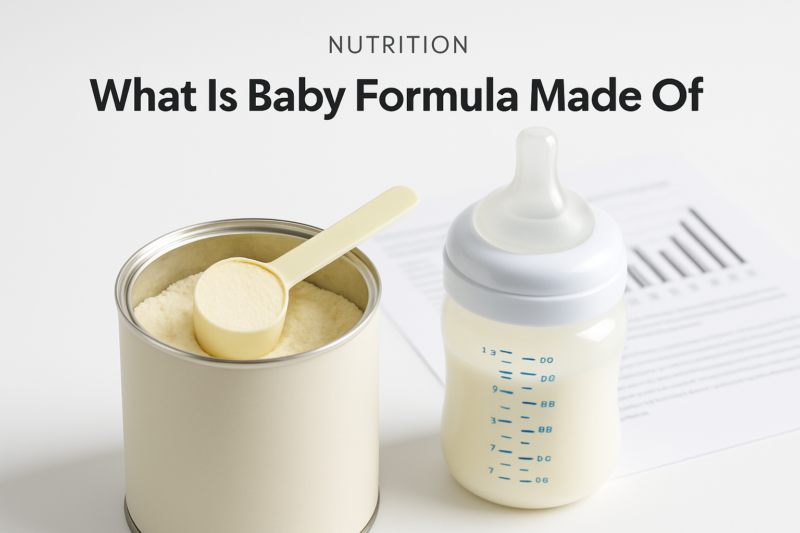
What is infant formula made of? To a scientist, it is a miracle of nutritional engineering. But to a business analyst or investor, it is a sophisticated financial product.
It is made of inelastic demand, where consumers will pay almost any price to ensure their child’s health. It is made of regulatory barriers that stifle competition and protect the dominant players. It is made of high-risk supply chains that are currently being redesigned for a more volatile global economy. And finally, it is made of biotechnological innovation that promises to redefine the category entirely.
For those looking at the money behind the milk, the infant formula industry remains one of the most complex and rewarding sectors in the global market. While the liquid in the bottle provides the foundation for life, the economic structures behind it provide a masterclass in modern corporate strategy and financial resilience.
aViewFromTheCave is a participant in the Amazon Services LLC Associates Program, an affiliate advertising program designed to provide a means for sites to earn advertising fees by advertising and linking to Amazon.com. Amazon, the Amazon logo, AmazonSupply, and the AmazonSupply logo are trademarks of Amazon.com, Inc. or its affiliates. As an Amazon Associate we earn affiliate commissions from qualifying purchases.