
When investors discuss the “stock market” in a general sense, they are often referring to the S&P 500 or the Dow Jones Industrial Average. However, for those focused on growth, innovation, and the digital economy, one ticker symbol stands above the rest: QQQ. The Invesco QQQ Trust is one of the oldest, most liquid, and most popular exchange-traded funds (ETFs) in the world. But to truly understand its power and its risks, one must look under the hood to see exactly what is inside.
QQQ is designed to track the Nasdaq-100 Index. This index represents 100 of the largest non-financial companies listed on the Nasdaq Stock Market based on market capitalization. Because the Nasdaq has historically been the home of the world’s most influential technology firms, QQQ has become the de facto benchmark for the “New Economy.” In this article, we will break down the components, the sector weightings, and the strategic financial implications of holding this powerhouse fund in your portfolio.

Decoding the Composition of the Invesco QQQ Trust
To understand what is in QQQ, we must first understand the rules of the Nasdaq-100. Unlike the S&P 500, which is curated by a committee, the Nasdaq-100 is rules-based and transparent. This transparency is a major draw for institutional and retail investors alike who want to know exactly how their capital is being deployed.
Understanding the Nasdaq-100 Index
The primary defining characteristic of the Nasdaq-100—and by extension, QQQ—is the exclusion of financial companies. You will not find banks like JPMorgan Chase or Goldman Sachs in this fund. Instead, the index focuses on “industrial” companies in the broadest sense of the word, which in the 21st century translates to technology, biotechnology, retail, and telecommunications. This exclusion of the financial sector fundamentally changes the risk profile of the fund, making it less sensitive to interest rate spreads and more sensitive to corporate earnings and innovation cycles.
The Methodology of Market Capitalization Weighting
QQQ is a modified market-capitalization-weighted fund. This means that the larger a company’s total market value, the larger its share in the ETF. If Apple’s market cap grows, its percentage of QQQ increases accordingly. This “winners-win” strategy ensures that the fund is always heavily invested in the most successful companies of the era. However, the “modified” part of the weighting is crucial; the index employs certain capping rules to prevent a single stock from dominating the entire fund to a dangerous degree, maintaining a level of diversification despite the heavy concentration at the top.
A Deep Dive into Top Holdings and Sector Weights
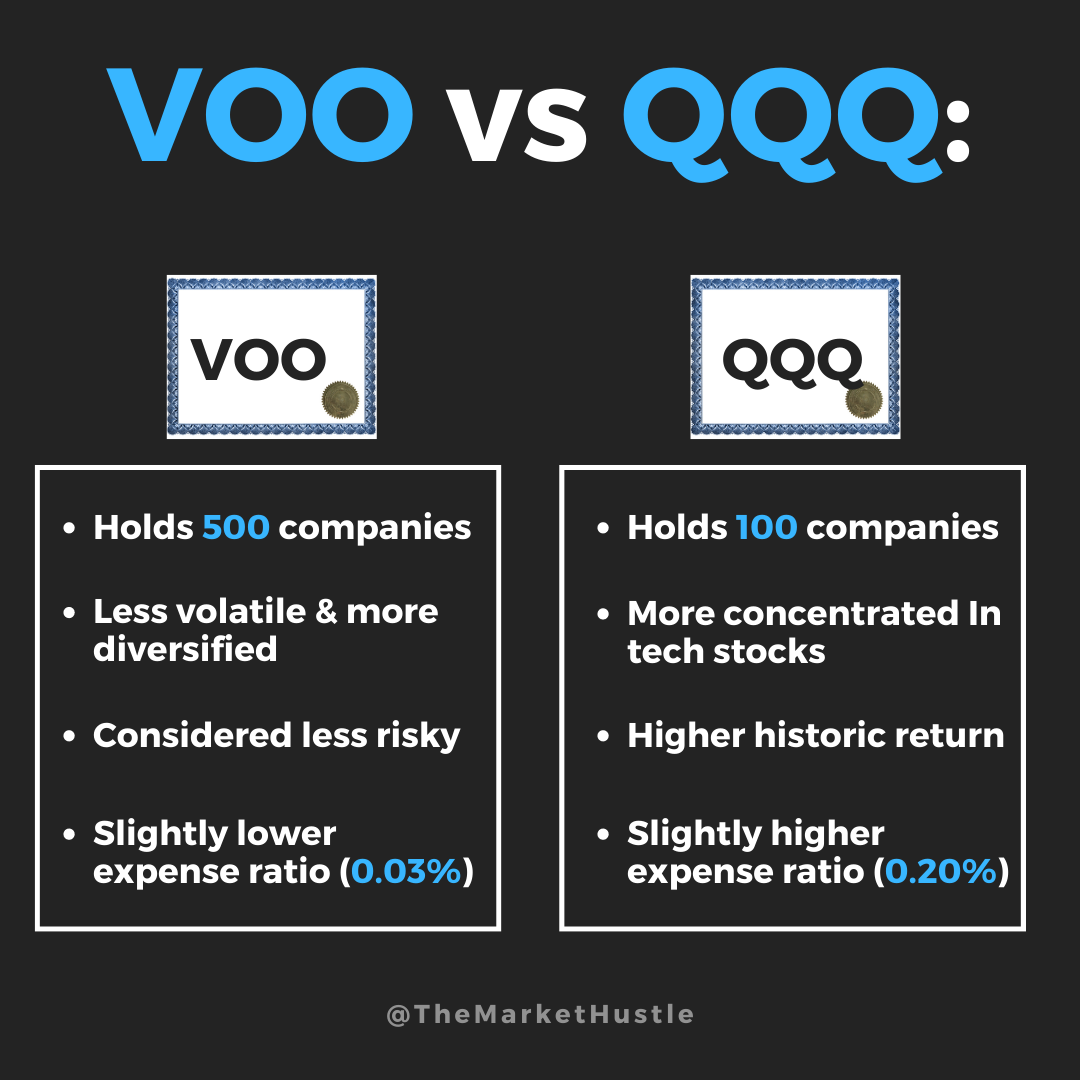
When you buy a share of QQQ, you are essentially buying a slice of the global leaders in innovation. While the fund contains 100 companies, the top ten holdings typically account for a significant portion of the total assets—often exceeding 40%. This concentration is why QQQ is often referred to as a “heavy hitter” portfolio.
The “Magnificent Seven” and Their Dominance
As of current market dynamics, the core of QQQ is dominated by the “Magnificent Seven”: Apple, Microsoft, Alphabet (Google), Amazon, Nvidia, Meta (Facebook), and Tesla. These companies are the primary drivers of the fund’s performance.
- Microsoft and Apple: These two often fight for the top spot, representing the backbone of both enterprise and consumer technology.
- Nvidia: With the explosion of Artificial Intelligence (AI), Nvidia has surged to become a critical component of QQQ, representing the hardware layer of the future economy.
- Amazon and Alphabet: These firms dominate e-commerce and digital advertising, respectively, providing QQQ with a massive footprint in how global consumers spend money and find information.
Sector Diversification: Beyond Just Software
While many label QQQ as a “Tech Fund,” that is technically a misnomer. According to the Global Industry Classification Standard (GICS), the fund is diversified across several sectors, though Technology remains the largest.
- Information Technology: Usually making up about 50% of the fund, this includes software, hardware, and semiconductors.
- Communication Services: Including companies like Meta and Netflix, this sector focuses on how we connect and consume media.
- Consumer Discretionary: Amazon and Tesla fall here. This sector tracks the health of the high-end consumer.
- Health Care: QQQ includes biotech giants like Amgen and Gilead Sciences, offering a hedge through medical innovation.
Performance Metrics and Risk Factors

From a financial perspective, the reason QQQ has gathered hundreds of billions of dollars in assets is its historical performance. Over the last decade, it has frequently outperformed the broader S&P 500. However, high rewards never come without commensurate risks.
Historical Returns vs. the S&P 500
The “alpha” (excess return) generated by QQQ over the past 10 to 15 years has been remarkable. During the bull market of the 2010s and the post-pandemic tech surge, QQQ’s focus on high-margin, scalable software and internet businesses allowed it to grow at a pace far exceeding traditional value-tilted indices. For a personal finance enthusiast, QQQ represents a “growth” engine. If you had invested in QQQ during the depths of the 2008 financial crisis, the compounding effect of the tech revolution would have turned a modest investment into a life-changing sum.
Volatility and Concentration Risk
The flip side of QQQ’s performance is its volatility. Because it is so concentrated in the technology sector, it is prone to “drawdowns” (price drops) that are sharper than the broader market. When the “Tech Bubble” of 2000 burst, the Nasdaq-100 lost a staggering percentage of its value. While the companies in QQQ today are far more profitable than the dot-com firms of 1999, the fund still experiences significant swings during periods of rising interest rates. Inflation and high rates tend to hurt growth stocks more than value stocks because growth stocks’ valuations are based on future cash flows, which are worth less when discounted at higher rates.
Strategic Allocation: Who Should Invest in QQQ?
In the world of personal finance, the question isn’t just “what is in QQQ,” but “does QQQ belong in my portfolio?” The answer depends on your time horizon, risk tolerance, and existing exposures.
Cost Efficiency and the Expense Ratio
For long-term investors, the cost of holding an ETF is a critical factor. QQQ carries an expense ratio of 0.20%. This means for every $10,000 invested, you pay $20 annually in management fees. While there are cheaper total-market funds available (like VTI or VOO), 0.20% is considered very low for a fund that provides such targeted exposure to high-growth leadership. This low cost makes it an efficient tool for building wealth over decades.
Long-term Growth vs. Short-term Speculation
QQQ is often used by day traders because of its high liquidity (it is easy to buy and sell in large quantities without moving the price). However, its true value lies in long-term wealth creation. It is a “buy and hold” candidate for someone who believes that technology will continue to take up a larger share of the global GDP. If you believe that AI, cloud computing, and digital transformation are still in their early innings, QQQ is a strategic way to capture that growth without having to pick individual stock winners and losers.
Alternatives and Variations: QQQM and QQQJ
As the QQQ brand has grown, Invesco has introduced variations to help different types of investors optimize their strategy. Understanding these alternatives is essential for a sophisticated financial plan.
The Rise of QQQM for Long-term Savers
A common insider secret in the investing world is the existence of QQQM (Invesco Nasdaq 100 ETF). QQQM tracks the exact same index as QQQ—it holds the same companies in the same proportions. However, it has a lower expense ratio (0.15%) compared to QQQ’s 0.20%. Why does QQQ still exist? Because QQQ is more “liquid” for big institutional traders. But for a retail investor looking to hold for 20 years, QQQM is the more “money-smart” choice, as those 5 basis points in savings compound significantly over time.
Exploring the “Next Generation” with QQQJ
For those who feel the top 100 companies are already “too big” to provide explosive growth, there is QQQJ (Invesco NASDAQ Next Gen 100 ETF). This fund tracks the 101st to the 200th largest companies on the Nasdaq. These are the “mid-cap” innovators—the companies that are striving to graduate into the Nasdaq-100. Investing in QQQJ is a play on the leaders of tomorrow rather than the giants of today, providing a different flavor of growth for a diversified portfolio.
In conclusion, “what is in QQQ” is a snapshot of modern capitalism’s most successful, innovative, and influential companies. It is a basket of the firms that define how we work, communicate, and live. While it carries the risk of concentration and volatility, its track record of capturing the upside of the digital revolution makes it one of the most important tools in a modern investor’s toolkit. Whether you choose the classic QQQ or the more cost-effective QQQM, you are placing a bet on the continued advancement of human ingenuity.
aViewFromTheCave is a participant in the Amazon Services LLC Associates Program, an affiliate advertising program designed to provide a means for sites to earn advertising fees by advertising and linking to Amazon.com. Amazon, the Amazon logo, AmazonSupply, and the AmazonSupply logo are trademarks of Amazon.com, Inc. or its affiliates. As an Amazon Associate we earn affiliate commissions from qualifying purchases.