
The world we navigate daily operates largely on a decimal system. From counting change to measuring distances, our intuition is rooted in base-10 mathematics. Yet, beneath the surface of our digital devices and the software that powers them, a different language reigns supreme: binary. Bridging this fundamental gap, translating our decimal understanding into binary logic, is a cornerstone of computer science and software engineering. Understanding “what is in decimal” from a computational perspective reveals the intricate mechanisms that allow machines to process, store, and display numbers with precision, enabling everything from complex scientific simulations to the exactitude demanded by financial applications.

The Essence of Decimal Representation in Computing
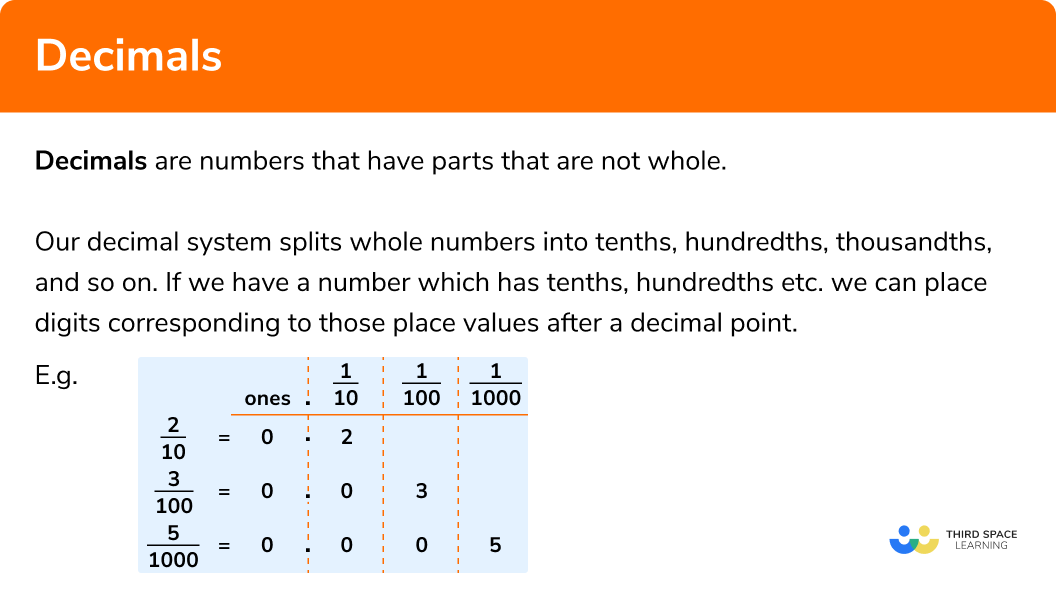
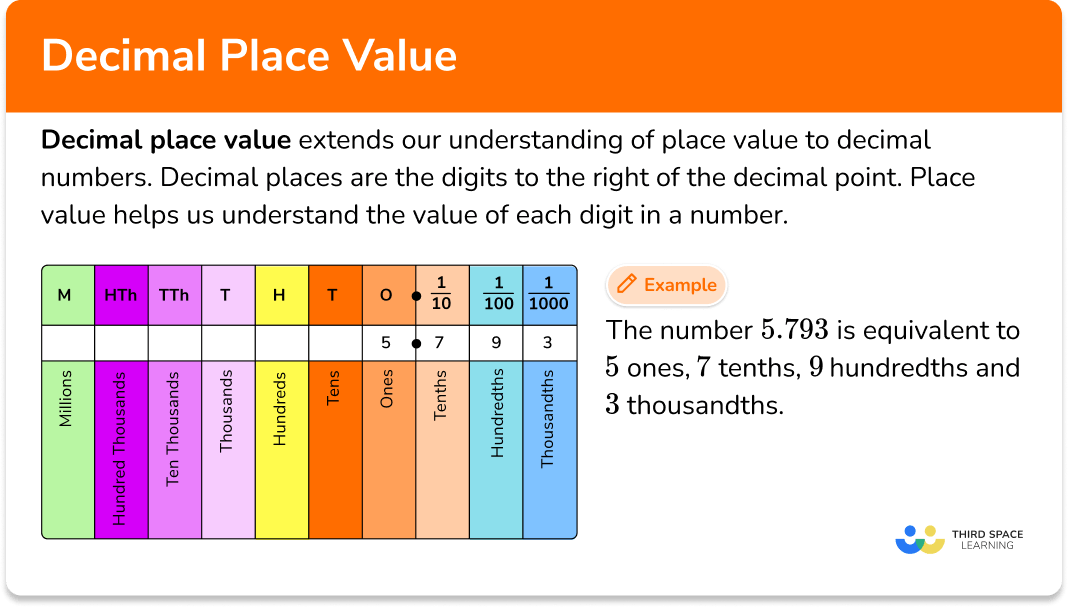
At its core, a decimal number is a way to represent quantities using ten distinct symbols (0-9), where the position of each digit determines its value based on powers of ten. When we ask what is in a decimal from a computing standpoint, we’re delving into how this familiar system is translated into the binary language of 0s and 1s that computers understand. This translation is far from trivial and involves critical design choices that impact accuracy, performance, and memory usage.
Base-10 vs. Binary: Bridging the Gap
Computers inherently operate in binary (base-2), using electrical signals or states (on/off, high/low voltage) to represent 0 or 1. Every piece of data, including numbers, text, images, and instructions, must ultimately be converted into this binary format. For whole numbers, this conversion is relatively straightforward. For decimal numbers that include fractional parts (e.g., 3.14), the process becomes more complex. How a computer handles the “point” and the digits that follow it determines its ability to accurately reflect real-world values. This foundational distinction necessitates specialized encoding methods to faithfully represent decimal values in a binary world, ensuring that software can manipulate these numbers correctly without losing crucial information.
Precision and Scale: Fixed-Point vs. Floating-Point
When representing decimals, two primary methodologies emerge: fixed-point and floating-point arithmetic.
Fixed-point representation allocates a predetermined, fixed number of bits for the integer part and a fixed number of bits for the fractional part. For instance, a system might decide that the last 8 bits of a 32-bit number always represent the fractional component. This approach offers simplicity and exact precision for numbers within its defined range, avoiding the subtle errors often associated with floating-point numbers. However, its rigidity means it has a limited range and scale; representing very large numbers or very small numbers with the same fixed allocation can lead to overflows or underflows.
Floating-point representation, conversely, is designed for flexibility, allowing numbers to span a much wider dynamic range, from incredibly tiny to astronomically large. It achieves this by storing numbers in a format analogous to scientific notation: a significand (or mantissa) and an exponent. This dynamic scaling is powerful but introduces its own set of challenges, particularly concerning precision, as not all decimal numbers can be perfectly represented in binary floating-point.
Understanding Floating-Point Numbers: IEEE 754 Standard
The vast majority of modern computing, from your smartphone to supercomputers, relies on the IEEE 754 standard for floating-point arithmetic. This standard defines how floating-point numbers are represented in binary, ensuring consistency across different hardware platforms and programming languages. It addresses “what is in decimal” by detailing how its components are digitally encoded.
Sign, Exponent, and Mantissa: Deconstructing a Decimal
Under the IEEE 754 standard, a floating-point number is conceptually divided into three parts:
-
Sign bit: A single bit indicating whether the number is positive (0) or negative (1).
-
Exponent: A set of bits representing the power of two by which the significand is multiplied. This determines the magnitude (scale) of the number. It’s often “biased” to allow for both positive and negative exponents without requiring a separate sign bit for the exponent itself.
-
Mantissa (or Significand): The significant digits of the number. In binary, this is represented as a fraction, typically normalized so that its leading digit is always 1 (which can then be implicitly assumed, saving a bit of storage). This part determines the precision of the number.
For example, a common single-precision (32-bit) floating-point number uses 1 bit for the sign, 8 bits for the exponent, and 23 bits for the mantissa (with an implicit leading 1, effectively providing 24 bits of precision). Double-precision (64-bit) extends these allocations for even greater range and precision.
The Inherent Challenges: Rounding Errors and Imprecision
While incredibly versatile, floating-point numbers come with an inherent limitation: many decimal fractions cannot be perfectly represented in binary. Just as 1/3 cannot be precisely represented as a finite decimal (0.333…), many common decimal fractions like 0.1 cannot be perfectly represented as a finite binary fraction. This leads to subtle rounding errors.
These errors accumulate over complex calculations. For example, summing 0.1 ten times might not exactly equal 1.0 when performed with floating-point numbers. Instead, it might result in a value like 0.9999999999999999 or 1.0000000000000001. While often imperceptible in graphical applications or general scientific computing, such discrepancies can be catastrophic in domains requiring absolute precision, such as financial transactions or critical control systems. Understanding these limitations is paramount for any developer designing robust software.
The Critical Role of Decimals in Software Development
The nuances of decimal representation directly influence the reliability and correctness of a vast array of software applications. From ensuring financial compliance to delivering accurate scientific results, how decimals are handled defines the quality and trustworthiness of digital systems.
Financial Applications: Ensuring Exactitude
In finance, every cent matters. Banking software, accounting systems, trading platforms, and e-commerce applications cannot tolerate even the smallest rounding errors. A discrepancy of a tiny fraction of a cent, if propagated across millions of transactions, can lead to significant financial losses or regulatory non-compliance. For these reasons, financial software often avoids standard binary floating-point numbers. Instead, developers frequently utilize specialized “decimal” or “money” data types (e.g., Decimal in Python, BigDecimal in Java, or decimal in C#). These types typically use a fixed-point approach or store numbers as an integer along with a scaling factor (e.g., 12345 cents represented as the integer 12345 and a scale of 2 for dollars and cents), ensuring exact arithmetic for a predefined number of decimal places.
Scientific Computing and Data Analysis: Balancing Speed and Accuracy
Scientific simulations, data analysis, machine learning algorithms, and engineering applications heavily rely on decimal numbers to represent measurements, probabilities, and complex calculations. Here, the trade-off between precision and computational speed becomes critical. While absolute exactitude might be unattainable or even unnecessary for certain simulations, ensuring sufficient precision to prevent error accumulation and maintain the integrity of results is vital. Researchers and developers must carefully choose between single-precision (faster but less precise) and double-precision (slower but more precise) floating-point types, and be aware of how numerical methods can mitigate or amplify rounding errors. AI tools, for instance, often leverage various floating-point precisions for model training and inference, optimizing for speed while managing accuracy requirements.
User Interfaces and Data Display: Clarity for the End-User
Beyond the backend calculations, how decimal numbers are presented to the end-user profoundly impacts usability and comprehension. Displaying too many decimal places can clutter an interface, while too few can obscure important details. Software design often involves careful rounding and formatting of decimal numbers for display purposes, ensuring they are readable and intuitive. This often means distinct logic for internal computation (which might maintain high precision) and external presentation (which rounds to a user-friendly number of decimal places, e.g., two decimal places for currency). Consistency in formatting across apps and gadgets enhances the user experience, reinforcing the importance of thoughtful decimal handling from core logic to final display.
Practical Implications: Optimizing Decimal Handling
Mastering decimal representation in computing is a critical skill for software developers and system architects. It underpins the reliability of everything from web applications to embedded systems. Thoughtful choices and strategies can significantly enhance the accuracy and robustness of digital solutions.
Choosing the Right Data Type
The first and most crucial step is selecting the appropriate data type for decimal numbers. For most general-purpose scientific or graphical computations where performance is key and small inaccuracies are tolerable, standard floating-point types (like float or double) are suitable. However, for any application where exact precision is non-negotiable—especially finance, legal, or other compliance-driven domains—dedicated decimal or fixed-point types are indispensable. Programming languages and libraries offer these alternatives precisely for scenarios where binary floating-point simply isn’t good enough.
Strategies for Error Mitigation
Even when using appropriate data types, developers must employ strategies to mitigate potential decimal errors. This includes:
-
Awareness of comparison issues: Directly comparing floating-point numbers for equality (
==) is often unreliable due to potential minor rounding errors. Instead, comparisons should check if numbers are “close enough” within a small epsilon value. -
Order of operations: The sequence of arithmetic operations can impact accumulated errors. Rearranging calculations to minimize intermediate rounding can sometimes improve accuracy.
-
Strategic rounding: Applying rounding at specific, necessary points (e.g., before display, after a series of calculations where precision isn’t critical but consistency is) rather than indiscriminately throughout the computation process.
-
Unit testing: Rigorous testing with edge cases and known exact results is essential to identify and rectify decimal handling issues before they manifest in production.
Security Considerations in Decimal Arithmetic
The precision and integrity of decimal calculations also have security implications. Exploiting subtle rounding errors or integer overflows resulting from improper decimal conversions can be a vector for vulnerabilities. For example, incorrect handling of large decimal inputs could lead to buffer overflows or incorrect financial calculations that are then exploited. Secure coding practices mandate careful validation of all numerical inputs, robust error handling for arithmetic operations, and strict adherence to established standards for decimal representation, particularly in digital security systems that rely on cryptographic calculations involving large numbers with specific precision requirements.
In conclusion, “what is in decimal” from a computing perspective is a sophisticated blend of mathematical theory and practical engineering. It encompasses the fundamental translation from human-centric base-10 to machine-centric binary, the elegant but imperfect design of floating-point numbers, and the critical design decisions developers must make to ensure their software is not only functional but also accurate, reliable, and secure. Mastering this understanding is foundational to building the next generation of robust and trustworthy digital tools.
aViewFromTheCave is a participant in the Amazon Services LLC Associates Program, an affiliate advertising program designed to provide a means for sites to earn advertising fees by advertising and linking to Amazon.com. Amazon, the Amazon logo, AmazonSupply, and the AmazonSupply logo are trademarks of Amazon.com, Inc. or its affiliates. As an Amazon Associate we earn affiliate commissions from qualifying purchases.