
In the competitive landscape of modern business, the word “impeccable” is often tossed around as a synonym for “good” or “high-quality.” However, within the realms of brand strategy and corporate identity, impeccability carries a much heavier weight. To be impeccable is to be faultless, to exist without flaw, and to maintain a standard of excellence that is so consistent it becomes invisible. When a brand is impeccable, the consumer no longer notices the mechanics of the service or the structure of the marketing; they simply experience the seamless fulfillment of a promise.
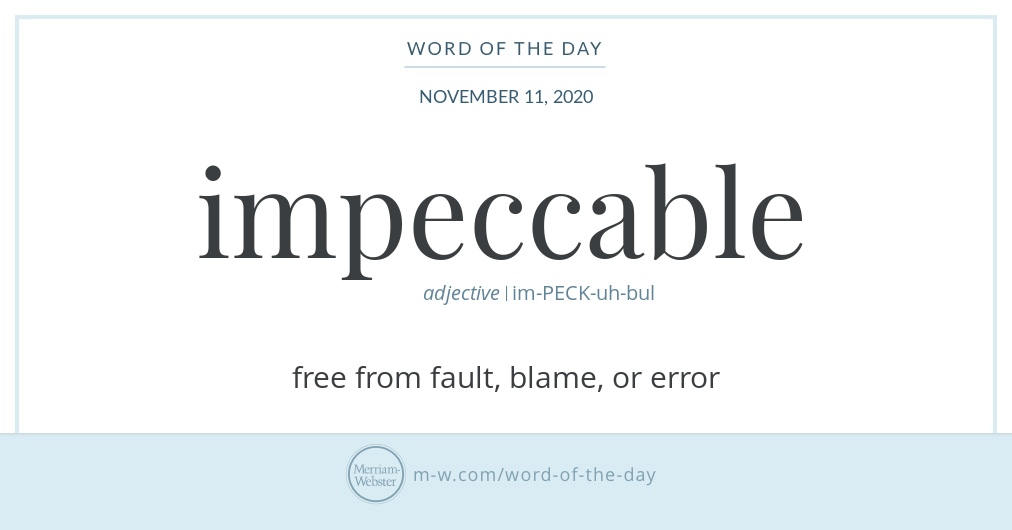
For a brand, being impeccable isn’t about achieving a static state of perfection—which is often unattainable—but rather about the relentless pursuit of precision in every touchpoint. It is a strategic commitment to eliminate friction, instill trust, and create a narrative that is coherent from the first social media interaction to the final post-purchase support call. Understanding what is impeccable in a branding context requires a deep dive into the psychology of consumer perception and the structural foundations of corporate identity.
The Foundations of an Impeccable Brand Identity
An impeccable brand identity is built on the bedrock of consistency. In an era where consumers are bombarded with thousands of marketing messages daily, the brands that stand out are those that present a unified front. This consistency acts as a shorthand for reliability. If a brand’s visual language, tone of voice, and value proposition are perfectly aligned, the consumer subconsciously trusts that the product or service will be equally reliable.
The Psychology of Coherence
Human beings are biologically wired to seek patterns and predictability. When we encounter a brand that changes its messaging or visual style frequently, it creates cognitive dissonance. This “friction” signals to the brain that the entity is unstable or untrustworthy. Conversely, an impeccable brand utilizes coherence to lower the barrier to entry for new customers. When every piece of collateral feels like it belongs to the same family, the brand builds “brand equity” without having to re-introduce itself at every turn.
The Strategic Alignment of Values
Impeccability starts internally. A brand cannot project a flawless exterior if its internal culture is fractured. Strategic alignment means that every employee, from the C-suite to the frontline, understands the core mission. This internal “purity” of purpose ensures that the brand’s actions always reflect its stated values. If a brand claims to be “customer-centric” but has a cumbersome return policy, the impeccability is broken. True impeccability requires an audit of every internal process to ensure it supports the external promise.
Eliminating Brand Friction
Friction is the enemy of the impeccable. It includes anything that slows down the customer’s journey or creates doubt. This could be a slow-loading website, a confusing checkout process, or a brand voice that feels forced and unnatural. Achieving an impeccable standard means identifying these points of friction and ruthlessly eliminating them. The goal is to create a “liquid” experience where the customer moves from interest to advocacy without ever feeling the “gears” of the business grinding.
Impeccable Visual Design: The Science of First Impressions
While strategy provides the skeleton, visual design is the skin of the brand. In a digital-first world, visual impeccability is often the deciding factor in whether a brand is perceived as a premium leader or a budget follower. This goes far beyond having a “pretty” logo; it involves the meticulous application of design principles to convey a specific emotional resonance.
The Power of Minimalist Precision
Many of the world’s most impeccable brands—think Apple, Leica, or Celine—utilize minimalism not just as an aesthetic choice, but as a statement of confidence. Minimalism is difficult to execute because there is nowhere to hide flaws. Impeccable visual design uses whitespace, balanced grids, and high-quality typography to signal that the brand pays attention to the details that others ignore. This attention to detail suggests to the consumer that if the brand is this careful with its kerning and color palettes, it is likely just as careful with its engineering or service delivery.
Typography and the Silent Narrative
Typography is often the most overlooked element of brand identity, yet it is one of the most powerful tools for establishing impeccability. An impeccable brand selects or designs typefaces that reflect its soul. Whether it is a sturdy serif that conveys heritage and trust or a sleek sans-serif that implies innovation, the typography must remain consistent across all platforms. Inconsistency in font usage—using a different font on a billboard than on a mobile app—is a hallmark of a brand that has not yet reached the level of impeccability.
Color Theory and Emotional Resonance
Color is the first thing a human brain perceives when interacting with a brand. Impeccable branding utilizes a disciplined color palette that triggers specific psychological responses. More importantly, it ensures that these colors are reproduced perfectly across different media. The “Tiffany Blue” or “Ferrari Red” are not just colors; they are intellectual property. Maintaining the integrity of these colors across digital screens, physical packaging, and environmental signage is a technical feat that defines visual impeccability.
Delivering an Impeccable Customer Experience

A brand is ultimately a promise kept. Therefore, the most critical arena for impeccability is the customer experience (CX). Even the most beautiful visual identity will crumble if the actual interaction with the brand is subpar. Impeccable CX is characterized by its anticipatory nature—solving problems before the customer even knows they exist.
The Architecture of the Touchpoint Map
To deliver an impeccable experience, a brand must map out every single interaction a customer has with them. This “Touchpoint Map” includes everything from the tone of an automated email to the way a physical product is unboxed. Impeccability is found in the “micro-moments.” It is the weight of the packaging, the speed of a customer service response, and the ease of navigation on a mobile site. By optimizing these micro-moments, a brand creates a cumulative effect of excellence.
Anticipatory Service and the Ritz-Carlton Standard
The gold standard for impeccable service is often cited as the Ritz-Carlton. Their philosophy of “Ladies and Gentlemen serving Ladies and Gentlemen” is built on the idea of anticipatory service. This means observing the customer’s unspoken needs and fulfilling them. In a brand strategy context, this translates to personalized marketing, intuitive user interfaces, and proactive communication. When a brand anticipates a need, it moves from being a vendor to being a partner, solidifying its impeccable reputation.
The Service Recovery Paradox
No brand is perfect, and mistakes are inevitable. However, an impeccable brand is defined by how it handles these failures. The “Service Recovery Paradox” suggests that a customer can actually become more loyal to a brand after a service failure, provided the recovery is handled impeccably. This requires a culture of accountability where the brand takes full ownership of the mistake, resolves it with surprising speed, and offers a gesture of goodwill that exceeds expectations. The “impeccable recovery” is a powerful tool for building lifelong brand advocates.
Personal Branding: The Executive Standard of Impeccability
In the modern business world, the lines between corporate brands and the individuals who lead them have blurred. Executives, founders, and thought leaders must now curate their own “impeccable” personal brands to lend credibility to their organizations. Personal impeccability is about the alignment of one’s public persona, professional output, and private integrity.
Thought Leadership and Intellectual Rigor
An impeccable personal brand is built on authority. This is achieved through the consistent sharing of high-value insights that demonstrate a deep understanding of one’s field. Intellectual rigor means that every article, speech, or social media post is researched, well-reasoned, and contributes something meaningful to the conversation. Shoddy thinking or “clickbait” content degrades personal impeccability and, by extension, the brand the individual represents.
The Halo Effect of Professional Presence
The “Halo Effect” is a cognitive bias where our overall impression of a person influences how we feel and think about their character in other areas. For a leader, maintaining an impeccable professional presence—through dress, speech, and digital footprint—creates a halo that benefits their entire company. When a leader presents themselves with precision and poise, stakeholders assume the company is run with the same level of care.
Authenticity vs. Managed Perception
There is a common misconception that being “impeccable” means being a “robot” or lacking personality. In fact, true impeccability requires authenticity. People can sense a manufactured persona from a mile away. An impeccable personal brand is one that is “curated but true.” It involves highlighting one’s genuine strengths and values while maintaining a professional standard that respects the audience. It is about being the best version of oneself, consistently.
Sustaining Impeccability in a Rapidly Changing Market
The final challenge of impeccability is sustainability. It is one thing to launch an impeccable brand; it is another to maintain that standard over decades. As markets shift, technologies evolve, and consumer tastes change, a brand must learn how to adapt without losing its core essence of perfection.
The Role of the Brand Audit
To sustain impeccability, a company must engage in regular brand audits. This involves a cold, hard look at every aspect of the brand to see where standards might be slipping. Is the messaging still relevant? Has the visual identity started to look dated? Are there new points of friction in the customer journey? An impeccable brand is never “finished.” It is a work in progress that requires constant pruning and refinement.
Scalability and the Dilution of Quality
The greatest threat to an impeccable brand is growth. As companies scale, the personal touch that once defined them can be lost in systems and hierarchies. Maintaining impeccability at scale requires a fanatical commitment to training and quality control. It means automating what can be automated without losing the “humanity” of the brand, and ensuring that as new team members join, they are indoctrinated into the culture of excellence.

The Long-Term ROI of an Impeccable Reputation
In the end, what is impeccable is also profitable. While it takes more time, effort, and capital to maintain an impeccable standard, the return on investment is found in brand loyalty, premium pricing power, and resilience. An impeccable brand does not have to compete on price because its reputation provides a value that goes beyond the functional. It becomes a symbol of trust in an uncertain world—a benchmark of quality that others can only hope to emulate. By striving for the impeccable, a brand transcends the noise of the marketplace and earns a permanent place in the minds and hearts of its audience.
aViewFromTheCave is a participant in the Amazon Services LLC Associates Program, an affiliate advertising program designed to provide a means for sites to earn advertising fees by advertising and linking to Amazon.com. Amazon, the Amazon logo, AmazonSupply, and the AmazonSupply logo are trademarks of Amazon.com, Inc. or its affiliates. As an Amazon Associate we earn affiliate commissions from qualifying purchases.