
For any cinephile, casual viewer, or industry professional, the acronym “IMDb” is as synonymous with cinema as “Hollywood” itself. But what does IMDb mean, and more importantly, how has it evolved from a simple hobbyist project into the world’s most authoritative technological archive for the entertainment industry? At its simplest, IMDb stands for the Internet Movie Database. However, in the context of modern technology, it represents one of the most sophisticated examples of data management, algorithmic ranking, and community-driven content curation in existence.
As we navigate an era defined by Big Data and streaming services, understanding the technical architecture and the functional utility of IMDb is essential. It is not merely a website; it is a global digital infrastructure that organizes the history of human storytelling through structured data.
The Technological Genesis: From Perl Scripts to a Global Database
To understand what IMDb means, one must first look at its origins, which are deeply rooted in the early culture of the internet. Unlike many modern tech giants that were born in Silicon Valley boardrooms, IMDb began as a decentralized effort among software enthusiasts.
From Usenet to the World Wide Web
In 1990, a computer programmer named Col Needham developed a series of Perl scripts to search a collection of movie lists curated by a Usenet group. This was the “rec.arts.movies” era of the internet, a time before visual browsers existed. The “database” was initially just a collection of text files. The transition from these primitive scripts to a searchable web-based interface in 1993 marked a significant milestone in the history of information technology. IMDb was one of the first large-scale databases accessible to the general public, predating even the most basic search engines we use today.
The Acquisition and Scalability of AWS Infrastructure
The meaning of IMDb shifted significantly in 1998 when it was acquired by Amazon.com. This move provided the financial and technical backing necessary to scale the platform. Today, IMDb operates within the Amazon Web Services (AWS) ecosystem, leveraging high-performance cloud computing to serve billions of queries every month. This infrastructure allows the platform to maintain high availability while managing a staggering amount of metadata, including millions of titles, cast and crew credits, and high-resolution multimedia content.
Decoding the IMDb Rating System: The Power of Algorithms
Perhaps the most culturally significant aspect of IMDb is its rating system. When people ask “What does the IMDb score mean?”, they are usually inquiring about the 1-to-10 star rating found on every title page. From a tech perspective, this is a masterclass in algorithmic filtering and data integrity.
The Weighted Average Mechanism
IMDb does not use a raw arithmetic mean to calculate its ratings. If it did, a small group of users could easily manipulate the score of a film. Instead, the platform uses a “weighted average” system. While the exact formula is a closely guarded trade secret—similar to Google’s search algorithm—it is designed to prioritize the votes of “regular voters.” This ensures that the ratings reflect a broad consensus rather than the skewed opinions of a vocal minority or automated bots.
Combating “Review Bombing” and Data Manipulation
In the modern digital landscape, “review bombing”—the practice of coordinated groups leaving negative reviews to lower a product’s score—is a constant threat. IMDb employs sophisticated detection algorithms to identify and neutralize these patterns. By analyzing user behavior, account age, and voting frequency, the system can distinguish between genuine audience sentiment and malicious interference. This technological gatekeeping is what allows IMDb to remain the gold standard for movie metadata and public opinion.
IMDb as a Digital Ecosystem: Features and API Integration
Beyond being a repository of trivia and ratings, IMDb functions as a vital tool for the global tech and media industry. Its meaning has expanded to include a suite of professional services and data-driven tools that power other platforms.
IMDbPro: The Professional Data Tier
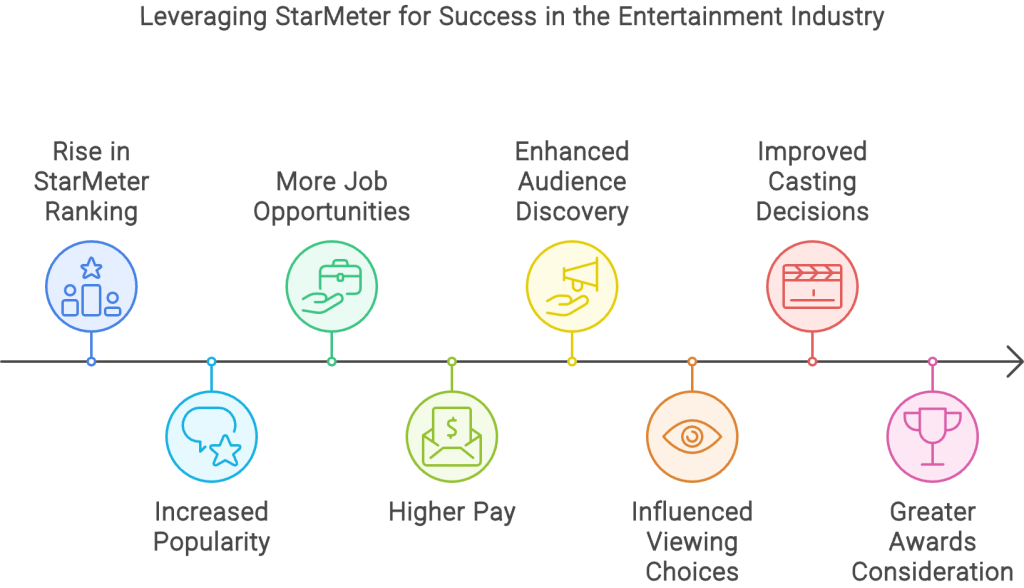
For those within the industry, IMDb translates to “IMDbPro.” This is a subscription-based SaaS (Software as a Service) model that provides deep-dive data into industry trends, talent representation, and project development. It uses a proprietary “STARmeter” and “MOVIEmeter” algorithm to track the popularity and “trending” status of individuals and films based on user traffic. This real-time data is used by casting directors and producers to gauge marketability, making IMDb a crucial component of the business intelligence landscape in entertainment.
Powering the Streaming World via APIs
Have you ever wondered how your smart TV or streaming box (like Amazon Fire TV or Apple TV) knows the cast of a movie the moment you pause it? In many cases, this is powered by IMDb’s API (Application Programming Interface). IMDb licenses its data to third-party developers and hardware manufacturers. This allows other apps to pull cast lists, synopses, and ratings directly into their own interfaces. In this sense, IMDb is the “back-end” for much of the entertainment metadata we consume across the internet.
The Future of Content Consumption: AI and Metadata Personalization
As we look toward the future, the meaning of IMDb continues to evolve alongside advancements in Artificial Intelligence (AI) and Machine Learning (ML). The database is no longer just a passive collection of facts; it is becoming an active engine for discovery.
Recommendation Engines and Predictive Analytics
IMDb leverages machine learning to power its recommendation engines. By analyzing millions of user “Watchlists” and historical ratings, the platform can predict with high accuracy what a user might enjoy next. This type of collaborative filtering is the same technology used by Netflix and Spotify, but IMDb has the advantage of thirty years of historical data to refine its predictions.
The Evolution of Video Metadata
With the rise of IMDb’s own streaming service (formerly IMDb TV, now Freevee), the platform has integrated its database directly into the viewing experience through “X-Ray” technology. This tech allows viewers to see actor bios and soundtrack information in real-time as they watch a scene. This requires frame-by-frame metadata synchronization, a complex technical feat that bridges the gap between a static database and dynamic video content.
Conclusion: The Ultimate Tech Repository for Storytelling
What is IMDb mean? It means the successful convergence of human passion and technological precision. What started as a few lines of code on a Usenet group has transformed into a global pillar of the digital age. It is the definitive archive of cinema, powered by sophisticated cloud infrastructure, protected by complex algorithms, and shared through expansive APIs.
For the user, IMDb is a digital guide to the world of stories. For the developer, it is a massive repository of structured metadata. For the industry, it is a vital source of business intelligence. As technology continues to advance, IMDb will likely remain the primary lens through which we view, rate, and discover the evolution of film and television. It stands as a testament to how technology can organize the vast complexity of human creativity into a single, accessible, and authoritative digital space.
aViewFromTheCave is a participant in the Amazon Services LLC Associates Program, an affiliate advertising program designed to provide a means for sites to earn advertising fees by advertising and linking to Amazon.com. Amazon, the Amazon logo, AmazonSupply, and the AmazonSupply logo are trademarks of Amazon.com, Inc. or its affiliates. As an Amazon Associate we earn affiliate commissions from qualifying purchases.