
In the realm of language, where words paint vivid pictures and evoke strong emotions, exaggeration plays a crucial role. One of the most common and impactful forms of this linguistic tool is hyperbole. Often misunderstood as mere falsehood, hyperbole is, in fact, a deliberate and strategic overstatement used for emphasis, humor, and persuasive effect. While the title of this exploration might suggest a singular, dry definition, the reality of hyperbole is far richer, weaving its way through our everyday conversations, marketing campaigns, and even technological narratives.
This article will delve into the multifaceted nature of hyperbole, exploring its core definition, its various applications across different domains, and how understanding this figure of speech can offer valuable insights, especially within the dynamic landscapes of Tech, Brand, and Money.
The Essence of Exaggeration: Defining Hyperbole
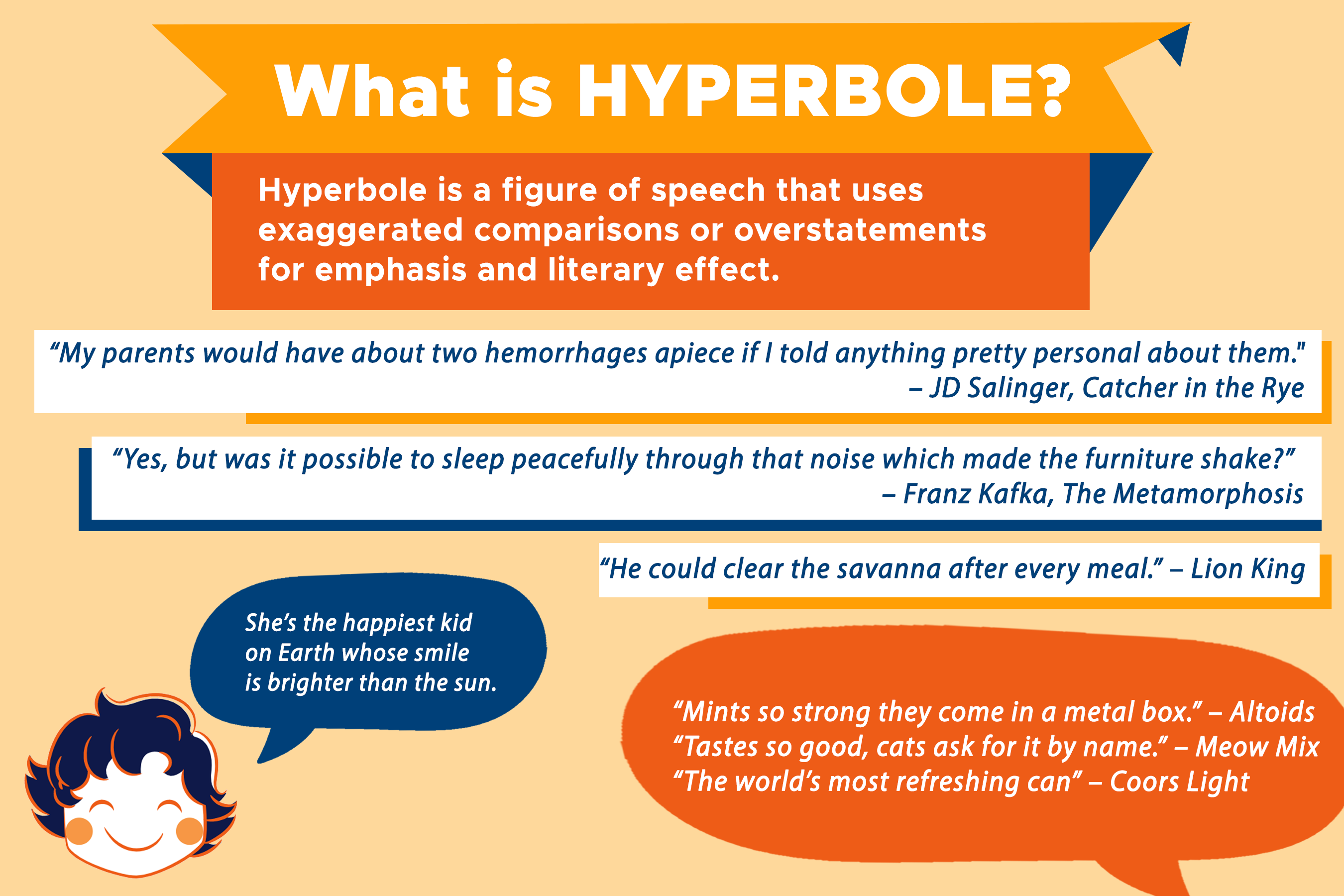
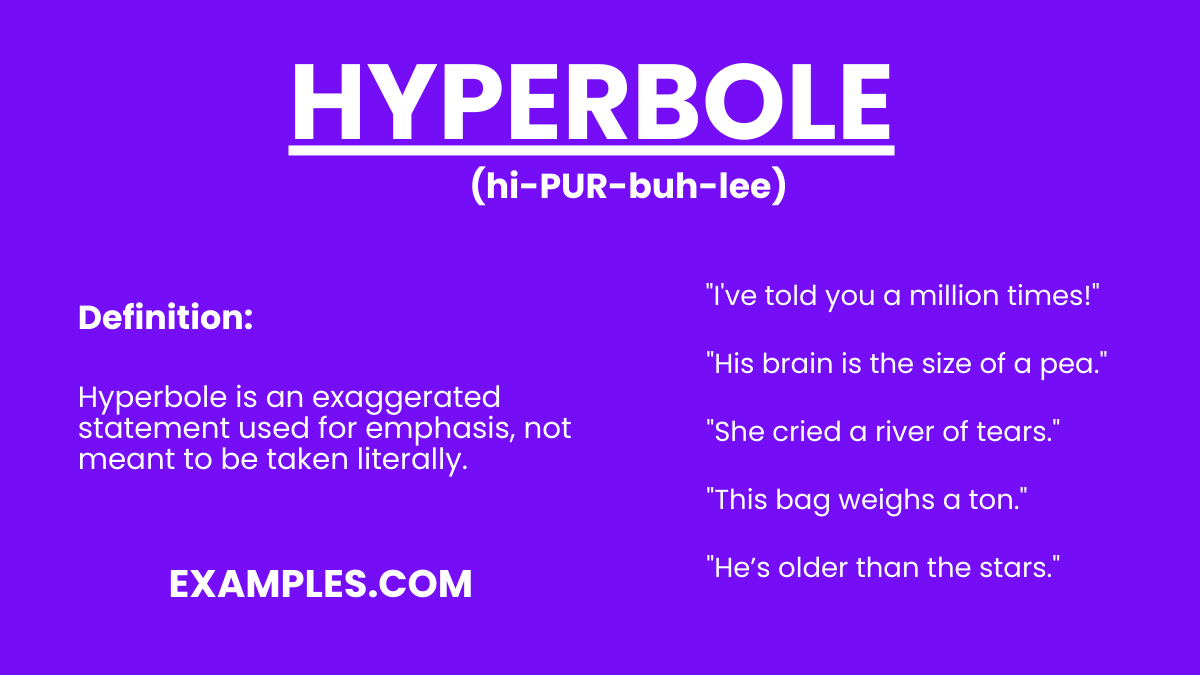
At its heart, hyperbole is a figure of speech that involves intentional and obvious exaggeration for emphasis or effect. It’s not about lying; it’s about amplifying a point to make it more memorable, impactful, or entertaining. Think of it as turning up the volume on an idea to ensure it’s heard and felt.
The etymology of the word “hyperbole” itself offers a clue to its meaning. It originates from the Greek words “hyper” (meaning “over”) and “ballein” (meaning “to throw”). Thus, hyperbole literally means “to throw over” or “to overreach.” This perfectly captures the essence of pushing beyond the literal to achieve a greater communicative purpose.
Key characteristics of hyperbole include:
- Intentionality: The exaggeration is conscious and deliberate, not an accidental misstatement.
- Obviousness: The exaggeration is usually so extreme that it’s clearly not meant to be taken literally. A listener or reader understands that the speaker or writer doesn’t actually believe the statement to be factually true.
- Purposeful: Hyperbole serves a specific communicative goal, whether it’s to add humor, create drama, express strong emotion, or make a point more forcefully.
- Figurative Language: It’s a form of figurative language, meaning its meaning goes beyond the literal interpretation of the words.
Consider these simple examples:
- “I’m so hungry I could eat a horse.” – No one literally intends to consume an equine. The exaggeration emphasizes extreme hunger.
- “This bag weighs a ton.” – The bag is undoubtedly heavy, but not literally 2,000 pounds. The hyperbole conveys its significant weight.
- “I’ve told you a million times!” – This is a clear exaggeration to express frustration or the feeling of having repeated something numerous times.
While seemingly simple, the power of hyperbole lies in its ability to resonate with our human experience of emotions and perceptions. We understand the feeling of being incredibly tired, deeply sad, or overwhelmingly excited, and hyperbole provides a linguistic shortcut to express these intense states effectively.
Beyond Literal Meaning: The Nuances of Hyperbole
Understanding hyperbole goes beyond simply identifying an exaggerated statement. It’s crucial to grasp why it’s used and how it functions. This involves recognizing the underlying emotion or sentiment being conveyed.
Emotional Amplification
One of the most prominent functions of hyperbole is emotional amplification. When we are overwhelmed by a feeling, literal language can sometimes fall short. Hyperbole allows us to express the magnitude of our emotions in a way that connects with others.
- Joy: “I’m on cloud nine!” This conveys an extreme state of happiness.
- Sadness: “My heart broke into a million pieces.” This illustrates profound grief.
- Anger: “I’m fuming! I could explode!” These express intense rage.
- Excitement: “This is the best thing that has ever happened to me!” This conveys unparalleled enthusiasm.
Humorous Effect
Hyperbole is a cornerstone of humor. The sheer absurdity of an exaggerated statement can be inherently funny. Comedians frequently employ hyperbole to create laughter by painting outlandish scenarios or describing ridiculous situations.
- A comedian might describe their tiny apartment as “so small, I have to go outside to change my mind.”
- A character in a sitcom might say, “I’ve been waiting for this moment my entire life!” to describe something mundane but eagerly anticipated.
The humor often arises from the contrast between the extreme statement and the mundane reality it’s describing.
Persuasive Power
In persuasion, hyperbole can be a potent tool, albeit one that needs to be used judiciously. By exaggerating the benefits of a product, the severity of a problem, or the importance of an idea, one can try to sway an audience.
- A salesperson might claim a product will “change your life forever.”
- A politician might warn of a “catastrophe of unimaginable proportions” if their opponent wins.
While effective, overuse or insincere hyperbole in persuasion can backfire, leading to distrust and skepticism.
Hyperbole in Action: Applications Across Domains
Hyperbole isn’t confined to casual conversation. Its strategic use is evident across various professional and creative fields. Understanding its application in Tech, Brand, and Money can offer valuable insights into how these sectors communicate and influence.
Hyperbole in Tech: Selling the Future and Solving Every Problem
The technology industry, with its rapid innovation and ambitious promises, is a fertile ground for hyperbole. The very nature of technological advancement often involves pushing boundaries and envisioning futures that might seem fantastical to today’s observer.
Hype and the Promise of Innovation
The launch of new gadgets, software updates, and revolutionary AI tools is often accompanied by language that borders on the hyperbolic. Companies strive to convey the groundbreaking nature of their offerings, and exaggeration becomes a tool to capture attention and create excitement.
- “This AI will revolutionize your workflow.” While the AI might significantly improve efficiency, “revolutionize” often implies a complete and utter transformation, a form of hyperbole to emphasize its impact.
- “Our new app is so intuitive, a child could use it.” This exaggerates the ease of use to appeal to a broad audience, implying zero learning curve.
- “This gadget will change the way you experience the world.” This lofty claim aims to generate awe and anticipation for a product’s capabilities.
The tech world thrives on the idea of “disruption” and “game-changing” products. These terms, while sometimes literal, are frequently employed hyperbolically to signal a significant leap forward. The constant quest for the “next big thing” encourages a language that emphasizes the extraordinary.
Addressing Challenges with Overstated Solutions
Conversely, hyperbole can also be used to frame the solutions that tech offers to complex problems. When discussing issues like digital security or productivity challenges, the proposed technological fixes might be presented with an exaggerated sense of their efficacy.
- “Our cybersecurity software offers impenetrable protection.” While the software may be highly secure, “impenetrable” is an absolute that is rarely achievable in practice, serving as hyperbole to inspire confidence.
- “This productivity app will give you back 100 hours a week.” This extreme promise aims to solve the universal problem of feeling overwhelmed and short on time.
The tech industry’s success often hinges on convincing consumers and businesses that their solutions are not just good, but indispensable and transformative. Hyperbole plays a significant role in crafting this perception, painting a picture of a future made better, more efficient, and more secure through technology.
Hyperbole in Brand: Crafting Identity and Capturing Attention
The world of branding is inherently about perception and emotion. Brands don’t just sell products; they sell stories, aspirations, and identities. Hyperbole is a powerful, yet subtle, tool in the brand builder’s arsenal.
The Art of Brand Promise
At its core, brand strategy is about communicating value and creating a connection with consumers. Hyperbole can be used to elevate a brand’s promise beyond the functional benefits of its products.
- “The taste that will transport you to paradise.” A food or beverage brand might use this to evoke an experience of extreme pleasure and escapism, far beyond the literal taste.
- “Unleash your inner champion with our sportswear.” This taps into aspirations for achievement and excellence, using hyperbole to suggest the brand’s apparel will unlock potential.
- “Experience luxury redefined.” High-end brands often employ such phrases to suggest an unparalleled level of quality and exclusivity.
These hyperbolic statements aim to create an emotional resonance, associating the brand with desirable feelings and outcomes. They tap into what consumers want to believe about themselves and the world.
Reputation Management and Storytelling
In corporate identity and reputation management, hyperbole can be used to build a narrative of success and leadership. While outright deception is harmful, strategically framed achievements can be amplified.
- “We are the undisputed leaders in our industry.” This positions the company as dominant, even if there are competitors. The exaggeration aims to inspire confidence in stakeholders.
- “Our innovation has changed the face of [specific field].” This highlights the company’s impact, often emphasizing the magnitude of its contributions.
However, brands must be cautious. If the hyperbole is too outlandish or demonstrably false, it can erode trust and damage reputation. The most effective brand hyperbole is often grounded in some truth but amplified to make it more compelling and memorable. It’s about creating a dream that consumers aspire to be a part of.
Hyperbole in Money: Aspirations, Warnings, and Opportunities
The world of finance and personal wealth is also rife with language that employs hyperbole, particularly when discussing opportunities, risks, and the pursuit of financial goals.
The Allure of Financial Freedom
When it comes to personal finance, investing, and online income, the language of aspiration is often hyperbolic. The promise of wealth, financial freedom, and lucrative side hustles can be presented with extreme optimism.
- “This investment strategy will make you a millionaire overnight.” This is a classic example of hyperbole used to entice individuals into investment opportunities, often preying on a desire for quick riches.
- “You can earn $10,000 a month from this simple side hustle.” While some individuals might achieve such figures, the generalized promise uses hyperbole to highlight the potential of the opportunity.
- “Achieve financial independence in five years, guaranteed!” The guarantee and the short timeframe are often hyperbolic exaggerations of what is realistically achievable for most.
These hyperbolic claims can be very effective in marketing financial products and services, tapping into deeply held desires for security and prosperity. However, they also carry a significant risk of misleading individuals, as the reality of wealth building often involves patience, discipline, and measured risk.
Highlighting Risks with Stark Warnings
On the flip side, hyperbole can also be used to underscore the dangers and risks associated with certain financial decisions or market conditions.
- “The market is about to crash, and all your savings will be wiped out.” This kind of alarmist language, while potentially hinting at genuine risks, often employs hyperbole to instill a sense of urgency and fear.
- “If you don’t act now, you’ll miss the biggest wealth-building opportunity in a century.” This creates a sense of FOMO (fear of missing out) through exaggeration, pushing for immediate action.
Financial advisors and analysts might use such language to emphasize the importance of diversification, risk management, or timely investment. The goal is to ensure their audience understands the gravity of the situation, even if the literal prediction is not an exact science.

Mastering the Art of Hyperbole
Understanding hyperbole is not just about identifying exaggeration; it’s about appreciating its purpose and potential impact. Whether you’re a consumer, a marketer, a technologist, or an investor, recognizing hyperbole can help you:
- Discern genuine value from inflated claims: By understanding that statements are often amplified, you can approach information with a critical eye.
- Appreciate the persuasive power of language: Hyperbole demonstrates how carefully chosen words can shape perception and drive action.
- Enhance your own communication: When used appropriately and ethically, hyperbole can make your own ideas more memorable and impactful.
In conclusion, hyperbole is more than just exaggeration; it’s a fundamental aspect of human communication that adds color, emotion, and emphasis to our language. From the futuristic promises of tech to the aspirational dreams of branding and the alluring possibilities of finance, hyperbole shapes how we understand and interact with the world around us. By understanding its definition and its pervasive presence, we can become more informed, more discerning, and more effective communicators ourselves.
aViewFromTheCave is a participant in the Amazon Services LLC Associates Program, an affiliate advertising program designed to provide a means for sites to earn advertising fees by advertising and linking to Amazon.com. Amazon, the Amazon logo, AmazonSupply, and the AmazonSupply logo are trademarks of Amazon.com, Inc. or its affiliates. As an Amazon Associate we earn affiliate commissions from qualifying purchases.