
Hi-Pot testing, a seemingly technical term, stands as a fundamental pillar in the realm of electrical safety and product reliability. Short for High Potential testing, it is a type of electrical stress test designed to verify the integrity of insulation within electrical and electronic devices. In essence, Hi-Pot testing determines if the insulation can withstand voltages significantly higher than its normal operating voltage, a crucial step in ensuring that a product is safe for users and will not fail prematurely due to electrical breakdown.
The rationale behind Hi-Pot testing is rooted in the principle of over-stressing. By applying a significantly elevated voltage for a controlled period, engineers can uncover weaknesses in insulation that might not be apparent under normal operating conditions. These weaknesses could arise from manufacturing defects, material degradation, or environmental factors. A successful Hi-Pot test indicates that the insulation is robust enough to prevent unintended electrical current leakage, which can lead to electric shock, equipment damage, and fire hazards.
This type of testing is not merely a regulatory checkbox; it’s a proactive measure that directly contributes to product quality, consumer safety, and brand reputation. For manufacturers, it’s an indispensable part of the design, development, and quality control processes. For consumers and businesses relying on these electrical products, it’s the unseen guardian of their safety.
The Principles and Purpose of Hi-Pot Testing
At its core, Hi-Pot testing is an insulation breakdown test. It’s designed to detect insulation faults that could lead to dangerous current leakage. The test involves applying a high AC or DC voltage, significantly above the normal operating voltage of the device under test (DUT), between conductors that are normally separated by insulation. This elevated voltage is applied for a specific duration, and during this time, the leakage current is measured.
Understanding Dielectric Strength and Insulation Breakdown
Every insulating material has a finite dielectric strength, which is the maximum electric field it can withstand before electrical breakdown occurs. When the electric field across an insulator exceeds its dielectric strength, the insulator can no longer resist the flow of current, and it begins to conduct. This breakdown can be temporary, where the insulator recovers its properties after the voltage is removed, or permanent, leading to significant damage and failure.
Hi-Pot testing deliberately pushes the insulation close to, or even slightly beyond, its operational limits to identify any subtle flaws. These flaws might include voids, contaminants, nicks in wires, or improper encapsulation. By applying a test voltage that is much higher than the expected operating voltage, the test can effectively expose these weaknesses. If the insulation fails to withstand the test voltage without excessive current leakage, it indicates a potential safety hazard or an imminent failure.
Differentiating Hi-Pot from Other Electrical Tests
It’s important to distinguish Hi-Pot testing from other common electrical tests.
- Continuity Testing: This test verifies that an electrical path exists between two points, ensuring that circuits are connected as intended. It’s about the presence of a connection, not the absence of unwanted connections or leakage.
- Ground Bond Testing: This test ensures a robust low-resistance path between the equipment chassis and the protective earth ground. It’s crucial for safety by providing a fault current path to trip protective devices, but it doesn’t directly assess the insulation between live parts and ground.
- Functional Testing: This involves operating the device under its normal working conditions to ensure it performs its intended function correctly. While important, it may not reveal insulation weaknesses that only manifest under elevated stress.
Hi-Pot testing specifically targets the quality and integrity of the insulation system. It’s a non-destructive (when performed correctly) or potentially destructive test, depending on the test parameters and the nature of the insulation flaw. The goal is to identify potential failures before the product reaches the end-user, thereby preventing potential harm and costly recalls.
The Hi-Pot Testing Process: From Setup to Analysis
The actual process of performing a Hi-Pot test involves several key steps, from setting up the equipment to interpreting the results. The specific parameters will vary depending on the device being tested, its intended operating voltage, and relevant safety standards, but the general methodology remains consistent.
Setting Up the Test Equipment and Device
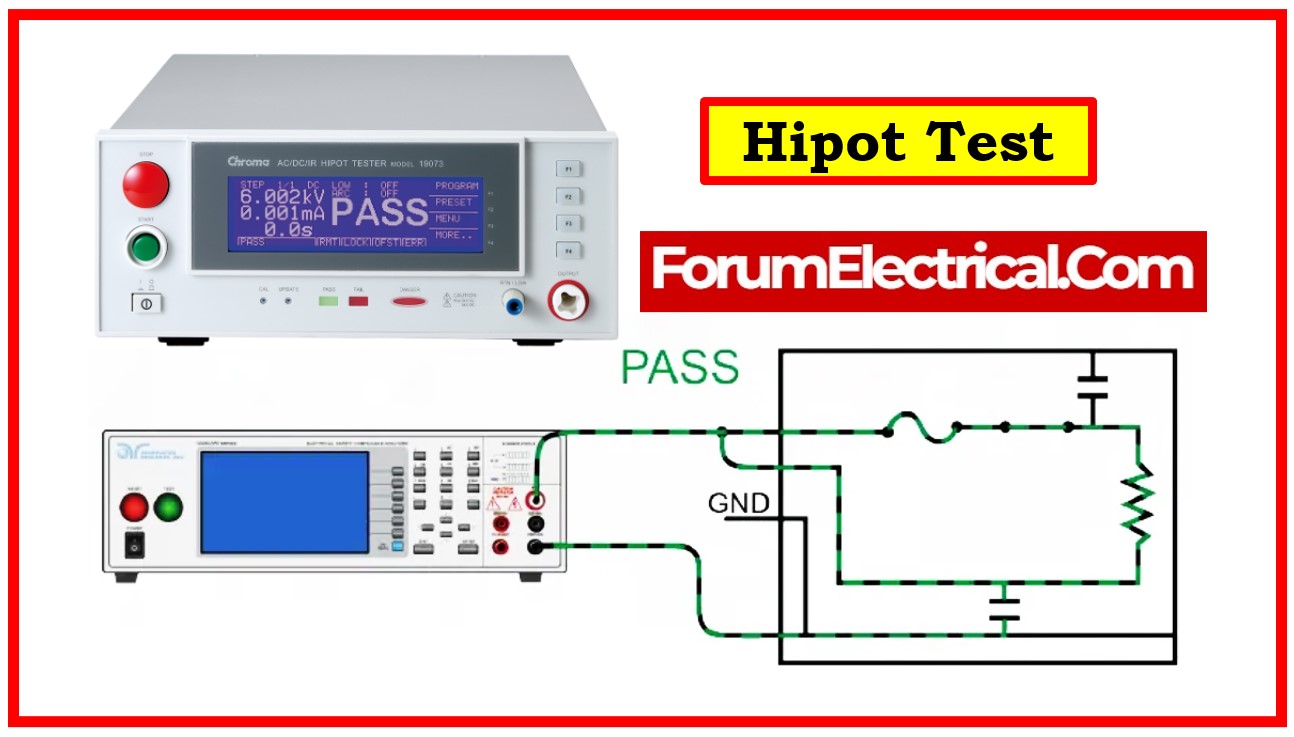
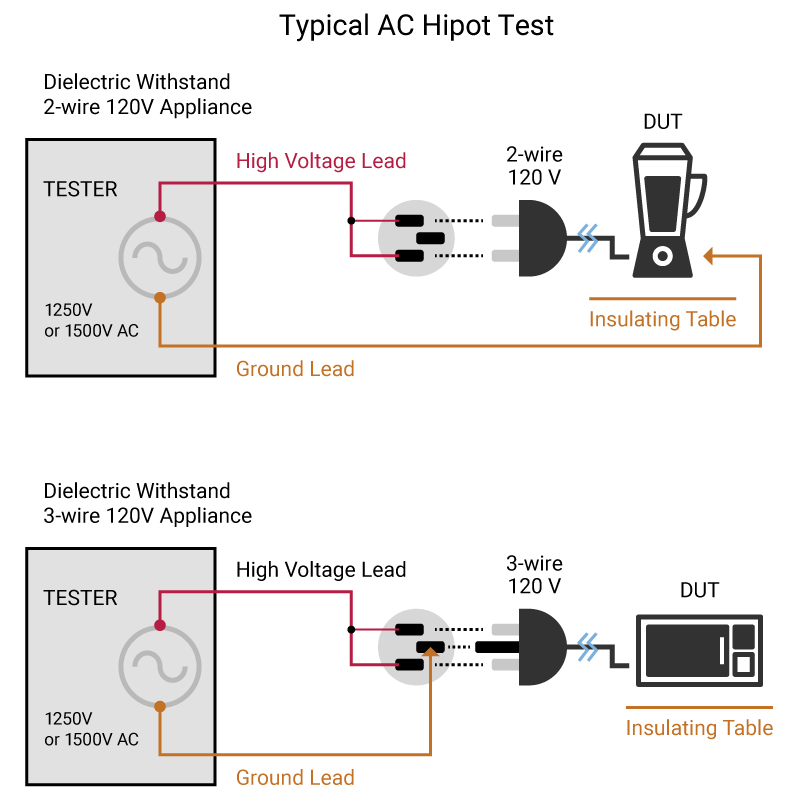
The core equipment for Hi-Pot testing is a Hipot tester. This device is capable of generating high AC or DC voltages and precisely controlling the test duration and leakage current limits. Before commencing a test, it’s essential to properly connect the tester to the device under test (DUT). This typically involves connecting one terminal of the Hipot tester to the conductor carrying the high voltage (e.g., the live wire) and another terminal to the conductive chassis or ground connection of the DUT. The specific connection points will depend on the insulation being tested. For example, to test the insulation between the internal circuitry and the external casing, the tester would connect to the internal live conductors and the outer metal enclosure.
It’s crucial to ensure that the DUT is properly isolated from any external power sources to prevent damage or safety hazards. The test environment should also be conducive to accurate measurements, free from excessive humidity or conductive dust that could influence leakage current readings.
Applying the Test Voltage and Monitoring Leakage Current
Once the connections are made, the Hipot tester is programmed with the specific test parameters. These parameters are derived from international and national safety standards (e.g., IEC, UL, CE) relevant to the product category. Key parameters include:
- Test Voltage: This is the elevated voltage applied to the insulation. It’s typically a multiple of the operating voltage (e.g., 2 times the operating voltage plus 1000V for AC testing, or a specific DC voltage).
- Test Duration: The length of time the test voltage is applied. This can range from a few seconds to several minutes, depending on the standard and the nature of the insulation.
- Leakage Current Limit: The maximum allowable current that can flow through the insulation during the test. This is a critical parameter for determining whether the insulation is acceptable.
The Hipot tester then gradually ramps up the test voltage to the specified level. During the dwell time (when the full test voltage is applied), the tester continuously monitors the leakage current flowing through the insulation. Modern Hipot testers are highly sophisticated and can measure leakage currents in the microampere range.
Interpreting the Results: Pass or Fail Criteria
The interpretation of Hi-Pot test results is straightforward:
- Pass: If the leakage current remains below the predefined limit for the entire test duration, the DUT is considered to have passed the Hi-Pot test. This indicates that the insulation is sufficient to prevent dangerous current leakage under elevated stress conditions.
- Fail: If the leakage current exceeds the specified limit at any point during the test, or if the tester detects an arc or breakdown, the DUT fails the Hi-Pot test. A failure signifies a potential insulation defect that needs to be identified and rectified before the product can be shipped.
When a failure occurs, further investigation is often required to pinpoint the root cause. This might involve visual inspection, continuity checks, or more detailed insulation resistance measurements. Understanding the failure mechanism is critical for improving the manufacturing process and preventing future failures.
Applications and Importance of Hi-Pot Testing Across Industries
Hi-Pot testing is not confined to a single sector; its importance spans a vast array of industries that produce or utilize electrical and electronic equipment. Its universal applicability stems from the fundamental need for electrical safety and product reliability in nearly all modern technologies.
Manufacturing and Quality Control
For manufacturers, Hi-Pot testing is an integral part of the quality control (QC) and quality assurance (QA) processes. It’s performed at various stages, including:
- Component Level: Testing individual components to ensure their insulation meets specifications.
- Sub-Assembly Level: Verifying the insulation integrity of partially assembled units.
- Final Product Testing: Conducting a final Hi-Pot test on the completed product before it is packaged and shipped.
By integrating Hi-Pot testing into their production lines, manufacturers can significantly reduce the risk of defective products reaching the market, thereby minimizing warranty claims, product recalls, and damage to their brand reputation. It’s a critical step in complying with safety certifications required by regulatory bodies worldwide.
Medical Devices
The medical industry is one of the most stringent when it comes to electrical safety. Medical devices, often used in direct contact with patients, must meet exceptionally high standards to prevent any risk of electric shock. Hi-Pot testing is a mandatory step in the certification and ongoing quality control of a wide range of medical equipment, including pacemakers, diagnostic imaging machines, and surgical instruments. The potential consequences of insulation failure in a medical setting are severe, making robust insulation testing paramount.
Aerospace and Defense
In aerospace and defense applications, reliability and safety are of utmost importance. Equipment used in aircraft, spacecraft, and military hardware operates under extreme conditions, including temperature fluctuations, vibration, and pressure changes, all of which can stress insulation materials. Hi-Pot testing ensures that critical electronic systems maintain their insulation integrity, preventing potential catastrophic failures in high-stakes environments.
Consumer Electronics and Appliances
From smartphones and televisions to washing machines and refrigerators, virtually every piece of consumer electronics and appliance that plugs into the mains or uses batteries undergoes Hi-Pot testing. This ensures that these everyday devices are safe for household use. Manufacturers rely on Hi-Pot testing to meet consumer expectations for safety and product longevity, which directly impacts customer satisfaction and brand loyalty.
Renewable Energy Sector
As the renewable energy sector grows, so does the importance of robust electrical safety. Solar inverters, wind turbine control systems, and energy storage solutions all involve high voltages and operate in diverse environmental conditions. Hi-Pot testing is crucial for ensuring the safety and reliability of these systems, preventing electrical hazards and ensuring continuous power generation.
Advancements and Future Trends in Hi-Pot Testing
While the fundamental principles of Hi-Pot testing remain constant, the technology and methodologies are continually evolving to meet the demands of increasingly complex electronic devices and stricter safety regulations. These advancements aim to improve efficiency, accuracy, and the ability to test novel materials and designs.
Automation and Integration in Manufacturing
The trend towards smart manufacturing and Industry 4.0 is heavily influencing Hi-Pot testing. Testers are becoming increasingly automated and integrated into production lines. This allows for seamless testing of every unit as it moves through the manufacturing process, eliminating manual intervention and reducing the potential for human error. Integration with Manufacturing Execution Systems (MES) allows for real-time data collection, analysis, and traceability, providing manufacturers with comprehensive insights into their production quality.
Advanced Test Techniques and Signal Processing
New techniques are being developed to enhance the sensitivity and diagnostic capabilities of Hi-Pot testing. This includes:
- Partial Discharge (PD) Testing: This is a more advanced form of insulation testing that can detect and analyze small electrical discharges (partial discharges) that occur within an insulation system before a full breakdown. PD testing can identify the early signs of insulation degradation, offering a more proactive approach to preventing failures.
- Digital Signal Processing (DSP): Modern Hipot testers utilize sophisticated DSP algorithms to analyze leakage current waveforms more accurately. This can help differentiate between genuine insulation leakage and noise, leading to more reliable test results.
- Frequency Response Analysis (FRA): While more commonly used for transformer diagnostics, principles of FRA are being explored for evaluating insulation condition in a broader range of electrical equipment.
Testing of New Materials and Devices
The development of new insulating materials, such as advanced polymers and composite materials, necessitates the evolution of Hi-Pot testing methodologies. Similarly, the miniaturization and increasing complexity of electronic devices, including those utilizing high-frequency or high-voltage switching technologies, require more refined and targeted testing approaches. This includes developing specialized probes, higher voltage capabilities, and more nuanced leakage current analysis techniques.
In conclusion, Hi-Pot testing is an indispensable tool in ensuring the safety and reliability of electrical and electronic products. Its application spans across numerous industries, safeguarding consumers, critical infrastructure, and ultimately, the reputation of manufacturers. As technology advances, the techniques and capabilities of Hi-Pot testing will continue to evolve, remaining at the forefront of electrical safety assurance.
aViewFromTheCave is a participant in the Amazon Services LLC Associates Program, an affiliate advertising program designed to provide a means for sites to earn advertising fees by advertising and linking to Amazon.com. Amazon, the Amazon logo, AmazonSupply, and the AmazonSupply logo are trademarks of Amazon.com, Inc. or its affiliates. As an Amazon Associate we earn affiliate commissions from qualifying purchases.