
The term “heterodox” often conjures images of rebellion or a departure from established norms. In the vast and often rigid world of finance and economics, embracing a heterodox perspective means questioning the widely accepted, exploring alternative theories, and pursuing strategies that lie outside the mainstream consensus. It’s about recognizing that conventional wisdom, while comfortable, doesn’t always yield the best outcomes, and sometimes, the most profound insights and opportunities emerge from challenging the status quo.
This exploration into heterodoxy is not merely an academic exercise; it has tangible implications for how individuals manage their personal finances, how investors allocate capital, and how entrepreneurs build businesses. It encourages a deeper understanding of underlying economic forces, a more nuanced approach to risk, and an openness to innovation that traditional frameworks might overlook. By understanding what it means to be heterodox in finance, one can unlock new pathways to wealth creation, foster resilience in uncertain markets, and contribute to a more dynamic and inclusive financial ecosystem.
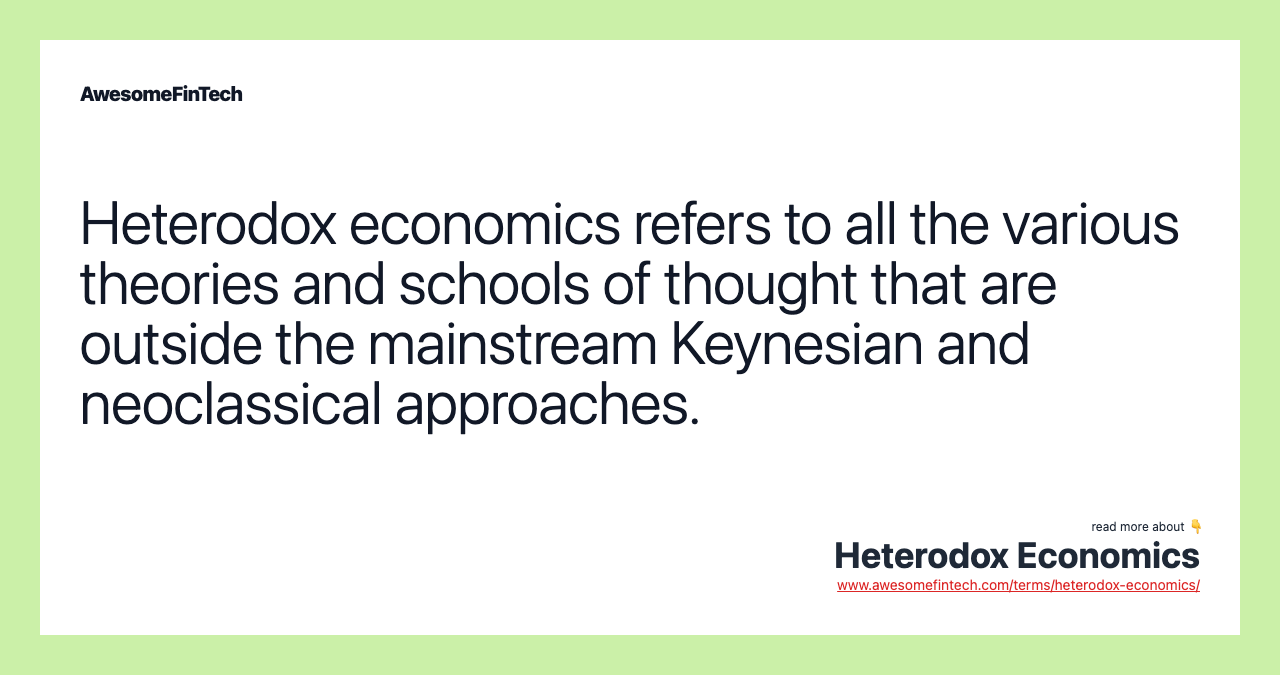
Beyond the Mainstream: Defining Heterodox Approaches in Finance
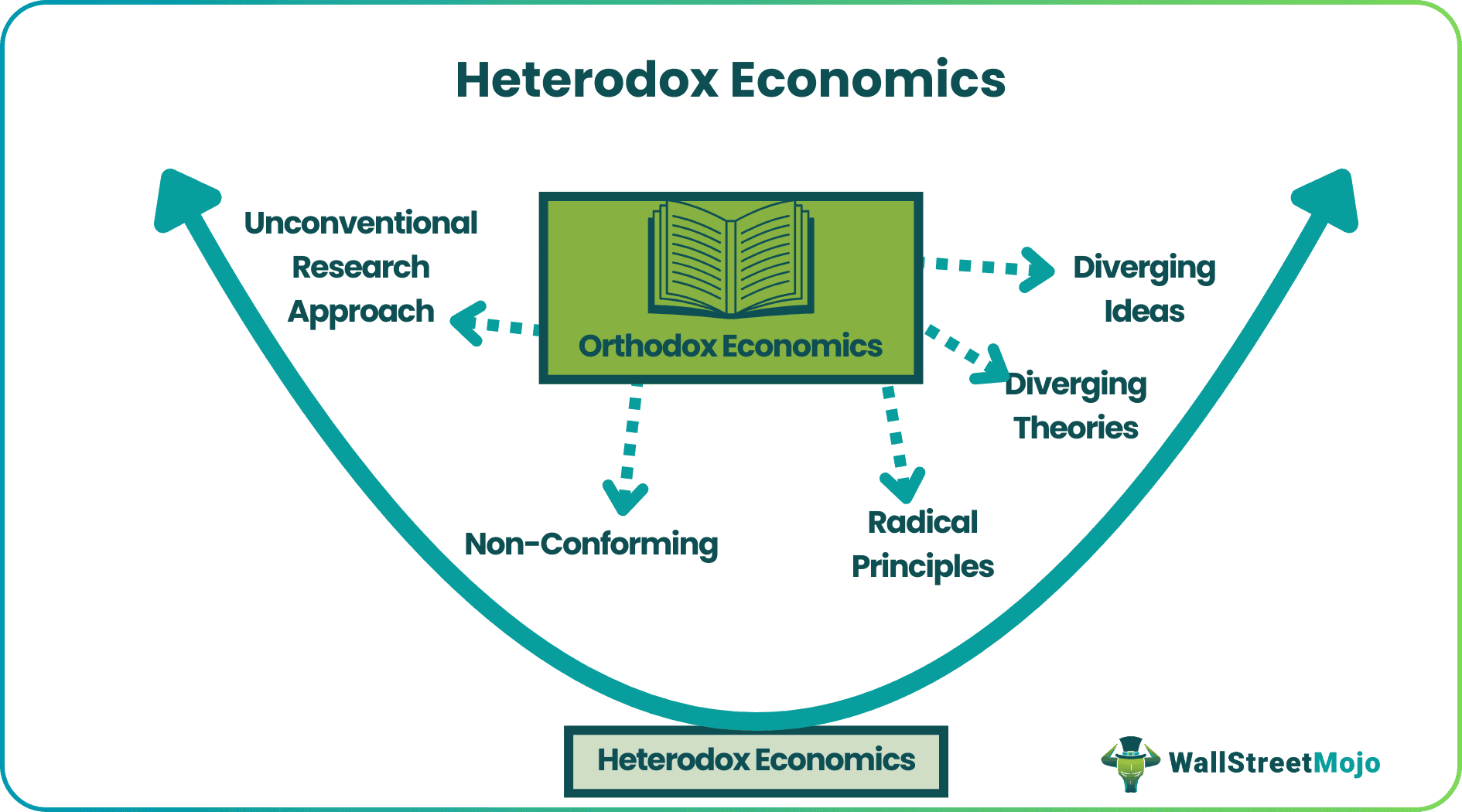
At its core, “heterodox” in a financial context refers to any approach, theory, or practice that deviates significantly from the dominant, or “orthodox,” paradigm. In mainstream economics, the neoclassical school often holds sway, emphasizing market efficiency, rational actors, and equilibrium models. However, a heterodox lens acknowledges that reality is far more complex, often driven by irrational behavior, systemic inequalities, and unpredictable events.
Challenging Conventional Wisdom
To be heterodox is to actively challenge conventional wisdom. This might involve questioning the efficiency of markets, doubting the predictive power of widely used economic models, or scrutinizing the underlying assumptions that drive popular investment strategies. For example, while many financial advisors might recommend a standard diversified portfolio of stocks and bonds based on modern portfolio theory, a heterodox thinker might delve into the historical limitations of such models during periods of extreme volatility, or explore asset classes and investment vehicles that are typically overlooked.
This challenge isn’t about contrarianism for its own sake; it’s about a rigorous examination of foundational principles. It asks: Are the prevailing metrics truly capturing value? Do market structures inherently favor certain players? Is economic growth inherently sustainable under current models? Such questions often lead to a more holistic understanding of financial systems, incorporating insights from behavioral economics, institutional economics, post-Keynesian economics, and ecological economics, among others. These various schools of thought offer different lenses through which to view economic phenomena, providing a richer tapestry of understanding than a single, dominant narrative.
The Roots of Divergence
The divergence from mainstream thought often stems from a recognition of persistent real-world problems that orthodox models struggle to explain or resolve. For instance, the recurring nature of financial crises, the widening wealth gap, or the environmental impact of unchecked economic growth are issues that heterodox economists and financial practitioners frequently highlight. They argue that if the accepted theories were truly comprehensive, these problems would either not exist or would be more easily addressed within the existing framework.
Historically, periods of significant economic upheaval have often given rise to heterodox thinking. The Great Depression, for example, spurred the development of Keynesian economics, which at the time was a significant departure from classical economic thought. More recently, the 2008 financial crisis illuminated the blind spots of many mainstream models, leading to renewed interest in theories that account for financial instability, speculative bubbles, and the interconnectedness of global markets. Understanding these roots helps contextualize why a heterodox approach isn’t just an alternative, but often a necessary counterpoint to prevailing narratives.
Heterodox Perspectives in Investing and Wealth Creation
Applying a heterodox mindset to investing and wealth creation can lead to strategies that are distinct, potentially more resilient, and sometimes offer superior long-term returns compared to following the herd. It requires courage to think independently and the discipline to conduct thorough research when stepping off the beaten path.
Value Investing and Contrarianism
While many mainstream investors chase growth stocks or rely on technical analysis, true value investing, pioneered by figures like Benjamin Graham and practiced by Warren Buffett, possesses a heterodox core. It involves buying assets for less than their intrinsic value, often when they are out of favor with the broader market. This inherently contrarian stance requires looking beyond current trends and media hype, instead focusing on fundamental strength, a practice often viewed as old-fashioned or too slow by those focused on rapid gains. A heterodox value investor might seek out overlooked industries, companies with strong balance sheets but temporary setbacks, or even undervalued alternative assets that the market is currently ignoring. This approach rejects the efficient market hypothesis in its strongest form, believing that mispricings do occur and can be exploited.
Impact Investing and ESG Beyond Lip Service
Environmental, Social, and Governance (ESG) investing has become increasingly mainstream. However, a heterodox approach to impact investing goes beyond simply screening out “bad” companies or buying into popular ESG funds. It involves a deeper commitment to generating measurable, positive social and environmental impact alongside financial returns. This might mean investing in community development financial institutions (CDFIs), venture funds focused on sustainable technologies, or microfinance initiatives that mainstream private equity might deem too small or too risky. It’s about recognizing that financial capital can be a powerful tool for systemic change, and that long-term societal well-being can create more stable and prosperous economic conditions, challenging the idea that profit must always come at the expense of purpose. It moves beyond “do no harm” to actively “do good.”
Alternative Assets and Unconventional Portfolios
Mainstream portfolios typically focus on public equities, bonds, and perhaps some real estate. A heterodox investor, however, might explore a broader range of alternative assets, not just for diversification, but for their unique risk-return profiles and their ability to hedge against traditional market fluctuations. This could include direct investments in private businesses, intellectual property, collectibles, rare earth minerals, agricultural land, or even emerging digital assets like specific cryptocurrencies or NFTs (when approached with deep understanding and caution). The key is not to chase novelty, but to understand the underlying value and risk of these assets, often through a lens that traditional financial models don’t readily accommodate. This requires extensive due diligence and an understanding that liquidity may be lower, but the potential for uncorrelated returns can be significant.
Business Models and Online Income: Embracing the Unorthodox
The digital age has opened unprecedented avenues for generating income and building businesses that defy traditional corporate structures and revenue models. A heterodox approach here involves identifying and capitalizing on these new paradigms, often by challenging established industry practices.
Disrupting Traditional Markets
Many successful startups are inherently heterodox in their business models. They don’t just innovate; they disrupt. Think of companies that have leveraged technology to bypass intermediaries (e.g., direct-to-consumer brands), offer services in entirely new ways (e.g., ride-sharing apps challenging traditional taxi services), or create new markets altogether. This requires a willingness to challenge industry giants, to identify overlooked consumer needs, and to build value propositions that defy existing categories. It’s about seeing where the traditional rules no longer apply or are creating inefficiencies that can be exploited for a competitive advantage.
Niche Dominance and Blue Ocean Strategies
While many businesses compete fiercely in crowded “red oceans,” a heterodox approach often seeks out “blue oceans”—untapped market spaces where competition is irrelevant. This involves creating new demand, often by redefining market boundaries or by offering unprecedented value. Examples include businesses that cater to highly specific, underserved niches, or those that combine elements from disparate industries to create a novel offering. Instead of trying to be slightly better than competitors, a heterodox business aims to be fundamentally different, creating its own category and attracting a loyal customer base that isn’t swayed by traditional alternatives. This requires a deep understanding of unmet needs and a creative vision to fulfill them in innovative ways.
The Creator Economy and Decentralized Finance
The rise of the creator economy exemplifies a heterodox shift in how individuals generate income. Rather than relying on traditional employment or large corporations, individuals leverage their unique skills, passions, and audiences to build independent revenue streams through content creation, online courses, digital products, and community building. This decentralized approach to work and income challenges the conventional employer-employee relationship.
Similarly, Decentralized Finance (DeFi) represents a truly heterodox movement within the financial sector. By leveraging blockchain technology, DeFi aims to recreate traditional financial services—lending, borrowing, trading, insurance—without the need for centralized intermediaries like banks or brokers. It challenges established financial institutions and regulatory frameworks, offering a vision of finance that is more transparent, accessible, and potentially more equitable, albeit with its own unique risks and complexities. Embracing these models means understanding new technological paradigms and being willing to navigate nascent, rapidly evolving ecosystems.
Practical Application: Cultivating a Heterodox Financial Mindset
Adopting a heterodox financial mindset isn’t about reckless experimentation; it’s about informed, independent thinking. It requires a specific set of intellectual tools and a disciplined approach to decision-making.
Critical Thinking and Due Diligence
The cornerstone of any heterodox approach is critical thinking. This means questioning assumptions, seeking out diverse perspectives, and rigorously scrutinizing data—especially data presented by those with vested interests in maintaining the status quo. For investment decisions, this translates into conducting exhaustive due diligence that goes beyond analyst reports or common narratives. It involves understanding the underlying mechanics of an asset, the motivations of market participants, and the broader economic context, rather than just following trends or relying on superficial metrics.
Risk Assessment and Diversification in Unconventional Ways
A heterodox investor or business owner understands that risk is multifaceted and not always captured by standard deviations or beta coefficients. They engage in a more nuanced risk assessment, considering systemic risks, regulatory changes, technological obsolescence, and even social and environmental factors that might not be priced into traditional models. Diversification, in this context, extends beyond asset classes to include different types of risk, different geographies, and even different philosophical approaches to investing, ensuring that a portfolio is robust against a wider range of potential shocks. It’s about building anti-fragility by embracing different kinds of exposure.
Long-Term Vision vs. Short-Term Gains
Perhaps one of the most significant aspects of a heterodox financial mindset is a strong emphasis on long-term vision. The mainstream often optimizes for short-term quarterly results, immediate profit maximization, or rapid market gains. A heterodox perspective, particularly in areas like value investing, impact investing, or building disruptive businesses, often requires patience and a willingness to forgo immediate gratification for substantial long-term value creation. It recognizes that true wealth compounding often takes time and that systemic change, whether economic or social, is rarely an overnight phenomenon.
The Future of Finance: Where Heterodoxy Leads
The financial world is in constant flux, driven by technological advancements, evolving societal values, and shifting global power dynamics. In such an environment, rigidly adhering to orthodox practices can lead to missed opportunities and increased vulnerability. Embracing a heterodox perspective is not just an alternative; it is an essential strategy for navigating complexity, fostering innovation, and building resilient financial futures.
As artificial intelligence reshapes traditional industries, as climate change demands new economic models, and as decentralized technologies empower individuals, the need for flexible, critical, and unconventional thinking in finance will only grow. Those who cultivate a heterodox mindset will be better equipped to identify emergent trends, challenge inefficient systems, and ultimately, lead the charge in shaping a more adaptable and equitable financial landscape for all. They will be the ones creating the “new orthodoxies” of tomorrow.
aViewFromTheCave is a participant in the Amazon Services LLC Associates Program, an affiliate advertising program designed to provide a means for sites to earn advertising fees by advertising and linking to Amazon.com. Amazon, the Amazon logo, AmazonSupply, and the AmazonSupply logo are trademarks of Amazon.com, Inc. or its affiliates. As an Amazon Associate we earn affiliate commissions from qualifying purchases.