
In the realm of technology, we are surrounded by invisible rhythms. From the flickering of a lightbulb to the lightning-fast calculations of a smartphone processor, everything operates on a pulse. At the center of this rhythmic universe is a single unit of measurement: the Hertz (Hz). While often associated with the basic physics of electricity, the concept of Hertz is the fundamental language of the digital age. It defines how our devices communicate, how our screens display images, and how the global power grid maintains its delicate balance.
To understand Hertz is to understand the “heartbeat” of technology. In its simplest form, one Hertz represents one cycle per second. However, as we scale this concept from the 60Hz power coming out of a wall socket to the 5GHz signals powering our wireless networks, we begin to see how frequency dictates the limits and possibilities of modern innovation.

The Fundamentals of Frequency: Defining the Hertz
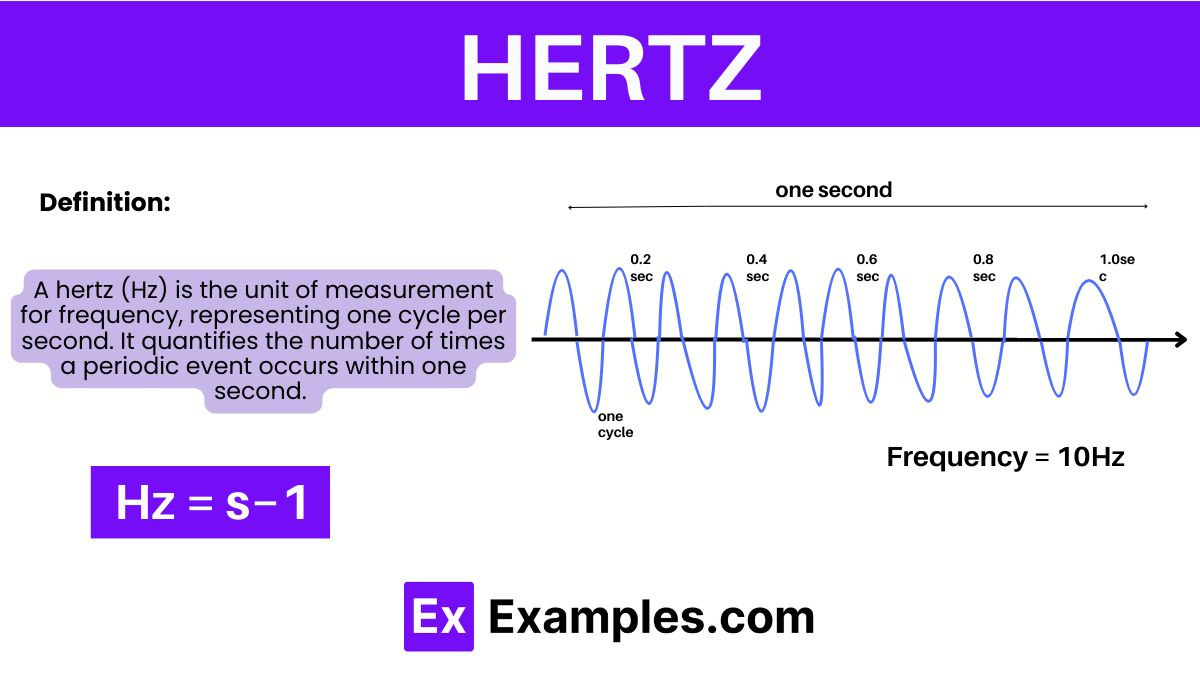
Before exploring complex computing and telecommunications, we must establish what Hertz represents in the context of electrical engineering. The term is named after Heinrich Hertz, the German physicist who first proved the existence of electromagnetic waves. In electricity, specifically Alternating Current (AC), the Hertz measures frequency—the number of times an electrical signal repeats its cycle within one second.
The Science of the Sine Wave
In a Direct Current (DC) system, such as a battery, electricity flows in one constant direction. However, the world’s power grids primarily use Alternating Current (AC). In AC, the flow of electrons periodically reverses direction. If you were to graph this movement, it would look like a smooth, repeating wave known as a sine wave. One full “cycle” consists of the wave rising to its peak, falling to its trough, and returning to the starting point. The number of these completed cycles in one second is the frequency, measured in Hertz.
Why Frequency Matters in Circuitry
Frequency is not just a theoretical number; it determines how components react within a circuit. For example, capacitors and inductors—essential parts of almost every electronic gadget—behave differently depending on the frequency of the electricity passing through them. Engineers must precisely calibrate these components to the intended Hertz to ensure that devices don’t overheat, malfunction, or lose efficiency. This precision is what allows for the miniaturization of technology, enabling us to cram billions of transistors into a chip that fits on a fingernail.
Hertz in the Grid: The Global Standard of Power
When you plug a device into a wall outlet, you are tapping into a massive, synchronized machine: the electrical grid. This grid operates at a very specific frequency to ensure that industrial motors, household appliances, and delicate electronics function correctly.
The 50Hz vs. 60Hz Divide
Globally, there are two primary standards for utility frequency: 60Hz (common in North America and parts of South America) and 50Hz (common in Europe, Asia, and Africa). This means the current reverses direction 60 or 50 times per second, respectively. This split is largely a historical legacy of the “War of Currents” and early engineering decisions by companies like Westinghouse and AEG.
While most modern “switching” power supplies—like those found in laptop chargers—can handle both frequencies, older motorized appliances are sensitive to this difference. A clock designed for 60Hz will run slow if plugged into a 50Hz outlet because it uses the frequency of the electricity as its timekeeping mechanism.
Grid Stability and Frequency Regulation
Maintaining a steady Hertz count is the primary job of grid operators. If the demand for electricity exceeds the supply, the frequency of the grid begins to drop. If there is too much supply, the frequency rises. Even a deviation of 0.5Hz can be catastrophic, potentially leading to massive blackouts or damaging heavy industrial equipment. Today, tech-driven solutions like AI-powered load balancing and massive battery storage systems (such as those pioneered by Tesla) are used to inject or absorb power in milliseconds to keep the grid’s “heartbeat” steady at its target frequency.
The Silicon Pulse: Hertz in Computing and Hardware
As we move from the power plant to the microchip, the scale of Hertz changes dramatically. We stop talking about single units and start talking about MegaHertz (MHz) and GigaHertz (GHz). In the world of computing, Hertz is the primary metric for “Clock Speed.”

CPU Clock Speeds: From Mega to Giga
Every central processing unit (CPU) has an internal clock that synchronizes its operations. Each “tick” of this clock allows the processor to execute a basic instruction. When you see a processor rated at 3.5GHz, it means the chip’s internal clock is “beating” 3.5 billion times per second.
In the early days of personal computing, increasing the clock speed (the Hertz) was the most direct way to make computers faster. However, modern tech trends have shifted. Because higher frequencies generate immense heat, chip manufacturers like Intel and Apple now focus on “Instruction Per Clock” (IPC) efficiency and multi-core architectures. Nevertheless, the Hertz remains the baseline for measuring a processor’s raw potential for speed.
Display Refresh Rates and Visual Fluidity
For gamers and tech enthusiasts, Hertz is most commonly discussed in relation to monitors and smartphone screens. Here, the refresh rate—measured in Hertz—dictates how many times per second the screen updates the image.
- 60Hz: The standard for decades, providing a baseline for smooth motion.
- 120Hz – 144Hz: The “sweet spot” for modern smartphones and gaming monitors, offering significantly smoother scrolling and more responsive gameplay.
- 240Hz and Beyond: Used by professional e-sports athletes where every millisecond of visual data counts.
Higher refresh rates require more “bandwidth” and processing power, illustrating the direct link between electrical frequency and the user experience.
Wireless Communication: Navigating the Spectrum
Beyond physical wires, Hertz is the fundamental unit of the electromagnetic spectrum. Every wireless technology we use—Wi-Fi, Bluetooth, GPS, and Cellular—operates on specific frequency bands.
Radio Frequencies and Bandwidth
When you switch on your Wi-Fi, you are likely using either the 2.4GHz or 5GHz bands. These numbers refer to the frequency of the radio waves being emitted by your router.
- Lower Frequencies (e.g., 2.4GHz): These waves have a lower Hertz count, meaning they oscillate more slowly. They can travel further and pass through walls more easily, but they carry less data.
- Higher Frequencies (e.g., 5GHz or 6GHz): These have a higher Hertz count. They oscillate faster, allowing them to carry significantly more data (higher speeds), but they have a shorter range and struggle to penetrate solid objects.
The 5G Revolution and Millimeter Waves
The leap from 4G to 5G technology is essentially an expansion into higher Hertz ranges. While 4G operates mostly below 2.5GHz, 5G utilizes “millimeter wave” technology, reaching frequencies of 30GHz to 300GHz. This massive increase in frequency allows for the ultra-low latency required for autonomous vehicles, remote surgery, and the Internet of Things (IoT). However, managing these high frequencies requires a denser network of small-cell towers, as high-Hertz waves are easily blocked by trees, rain, or even human hands.
The Future of Frequency: Innovation and Beyond
As technology continues to evolve, our mastery of Hertz is reaching into new frontiers. We are no longer just using frequency to power lights or send text messages; we are using it to redefine the limits of physics.
Quantum Computing and Ultra-High Frequencies
In the burgeoning field of quantum computing, frequency control is used to manipulate “qubits.” These systems often operate at microwave frequencies, requiring extreme precision to maintain the quantum state of particles. Here, a deviation in Hertz isn’t just a technical glitch; it is the difference between a successful calculation and total data loss.
AI-Driven Frequency Optimization
As our world becomes more “electrified” with EV charging stations and smart homes, the demand on our electrical frequency will become more volatile. The next great tech trend is the integration of Artificial Intelligence into frequency management. AI algorithms can now predict “frequency excursions” on the grid before they happen, adjusting the energy consumption of smart appliances in real-time to maintain the 60Hz balance. This represents the ultimate convergence of power electricity and digital intelligence.
Conclusion
Hertz is more than just a unit of measurement found in a physics textbook; it is the invisible thread that connects the various components of our modern technological existence. From the steady 60Hz hum of the power grid that keeps our homes running to the multi-gigahertz signals that enable global connectivity, frequency is the pulse of progress.
As we push toward a future defined by 5G, quantum computing, and smart grids, our ability to measure, manipulate, and master the Hertz will remain the cornerstone of innovation. Understanding “what is hertz in electricity” is not just about understanding waves—it is about understanding the very cadence of the digital age. Regardless of how complex our gadgets become, they will always march to the beat of the Hertz.
aViewFromTheCave is a participant in the Amazon Services LLC Associates Program, an affiliate advertising program designed to provide a means for sites to earn advertising fees by advertising and linking to Amazon.com. Amazon, the Amazon logo, AmazonSupply, and the AmazonSupply logo are trademarks of Amazon.com, Inc. or its affiliates. As an Amazon Associate we earn affiliate commissions from qualifying purchases.