
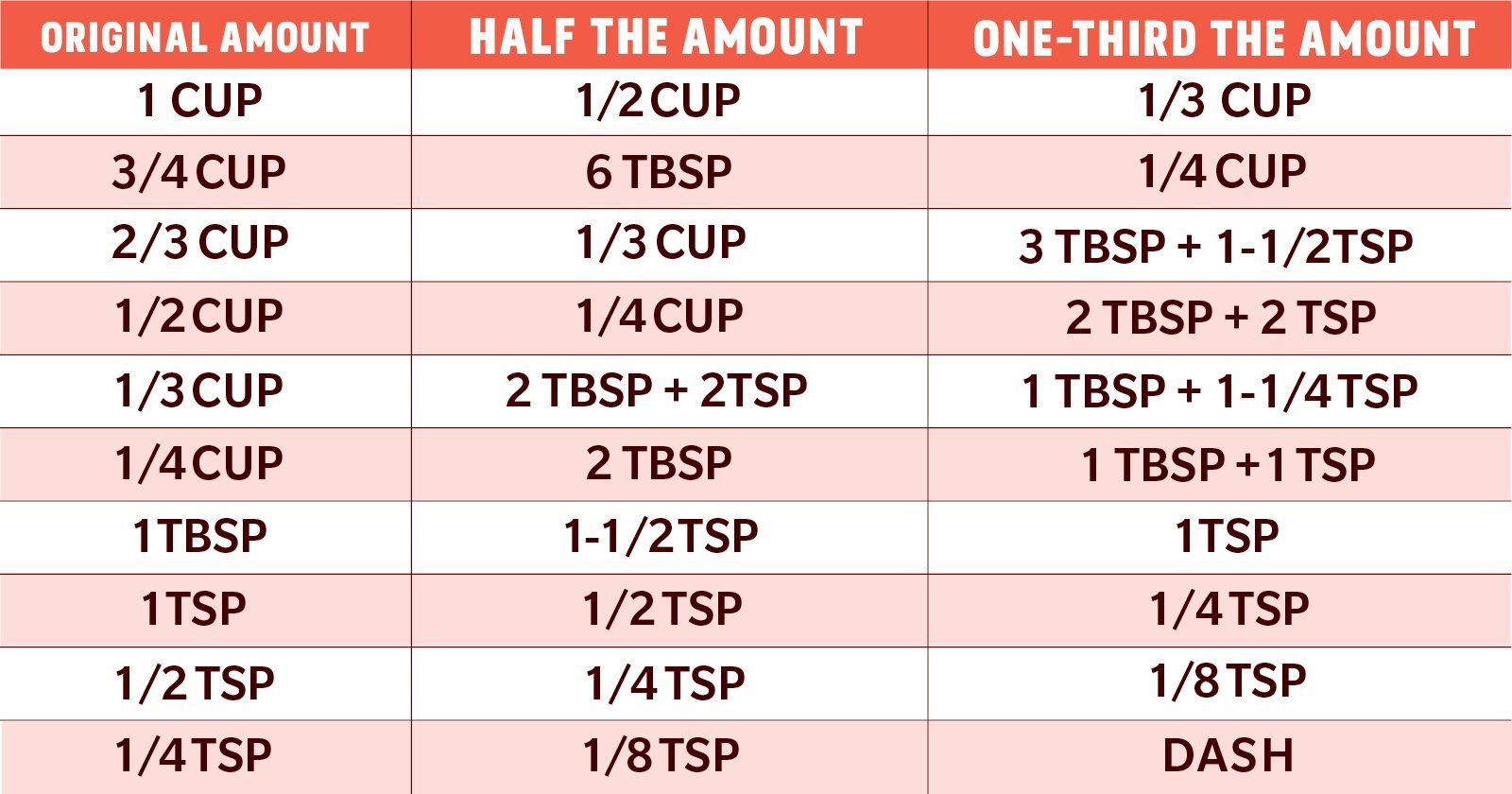
The question “what is half of 1 and 1 3” seems deceptively simple, a basic arithmetic problem often encountered in grade school. The answer, converting 1 and 1/3 to an improper fraction (4/3) and then dividing by two, yields 2/3. However, beneath this straightforward mathematical exercise lies a fundamental principle that underpins countless financial transactions and decisions across personal finance, investing, and business operations. In the intricate world of money, fractions, percentages, and their precise calculations are not mere academic curiosities; they are the bedrock upon which financial literacy, sound investment strategies, and equitable business dealings are built. Understanding how to accurately split a fractional amount, as simple as dividing 1 and 1/3, translates directly into critical skills for managing wealth, assessing opportunities, and mitigating financial risks.
Understanding Fractional Splits in Finance
In the realm of finance, numbers are rarely neat and whole. Assets are fractional, ownership stakes are often expressed as percentages or parts, and growth rates seldom settle into easily divisible integers. The ability to conceptualize and calculate fractional splits is therefore an indispensable skill, far transcending the schoolroom. It is the practical application of this foundational math that empowers individuals and businesses to make informed financial choices.
Everyday Personal Finance Applications
Even the most basic personal financial decisions often involve fractional thinking. Consider a scenario where you’ve received a windfall, perhaps an unexpected bonus equivalent to “1 and 1/3” times your monthly income, and you decide to split it equally between two savings goals or two family members. The exact calculation, determining that each party receives 2/3 of a month’s income equivalent, ensures fairness and proper allocation.
Similarly, household budgeting frequently necessitates fractional divisions. Splitting shared expenses, prorating bills for partial periods, or allocating a portion of an income stream to different categories (e.g., 1/3 for housing, 1/3 for savings, and the remaining 1/3 plus an extra buffer for discretionary spending) all rely on a solid grasp of fractions. Inheritance planning, too, often involves dividing assets—be it property, investment portfolios, or business shares—among multiple beneficiaries, where precision in fractional distribution is paramount to avoid disputes and ensure equitable outcomes. For example, if a small business owner passes away holding 1 and 1/3 units of a particular illiquid asset, and it must be split equally between two heirs, knowing that each receives 2/3 of that asset prevents ambiguity.
Business Equity and Profit Sharing
The importance of fractional calculations escalates significantly in the business world. Partnership agreements, for instance, are intrinsically linked to fractional ownership and profit-sharing models. If a new partner contributes capital equivalent to 1 and 1/3 times the initial investment of an existing partner, and profits are to be distributed based on these fractional contributions, the ability to accurately calculate each party’s share becomes critical.
Consider a startup where founders and early investors own different percentages or ‘units’ of the company. As the company grows, new funding rounds might dilute existing stakes, or profit distributions need to be made based on complex cap tables. These scenarios require a constant recalibration of fractional ownership. Royalty agreements, where creators receive a specific percentage (often a fraction) of sales, or commission structures for sales teams, are other common examples where precise fractional calculations directly impact income and payout fairness. Even in sophisticated financial instruments, such as stock options or convertible notes, underlying fractional entitlements determine the ultimate value and distribution of equity.
The Importance of Precision: Why Fractions Matter
The seemingly small difference between an estimated fraction and an precisely calculated one can accumulate into substantial financial gains or losses over time. In finance, where large sums and long durations are common, even minor inaccuracies in fractional calculations can have profound ripple effects.
Investment Returns and Portfolio Allocation
In the realm of investments, fractions are omnipresent. Returns are often expressed as percentages, which are essentially fractions of the initial investment. Understanding how a 1/3 increase in stock value, or a 1/2 percent change in bond yield, impacts your overall portfolio is crucial. When allocating a portfolio across various asset classes—equities, bonds, real estate, commodities—investors decide what fraction of their total capital goes into each. If an investor aims to put 1 and 1/3 units of their total investment capital into growth stocks and then needs to divide this allocation into two different growth funds, the fractional calculation ensures adherence to the strategic plan.
Moreover, compound interest, the engine of long-term wealth creation, relies on fractional calculations over successive periods. A slight miscalculation of an annual percentage rate (APR) or an effective interest rate, often expressed with fractional components, can lead to significant discrepancies in projected future values. Even the pricing of individual shares or mutual fund units often involves decimals, which are essentially fractional parts of a whole, requiring precision in transaction execution.

Debt Management and Interest Calculations
Debt, in its various forms, from mortgages to credit cards, is another area where fractional precision is paramount. Interest rates are typically expressed as percentages per annum (p.a.) but often accrue daily or monthly, requiring a conversion to fractional daily or monthly rates. Understanding how these fractional rates compound and contribute to the total amount owed is vital for effective debt management.
For instance, a mortgage interest rate of 4.5% is effectively 4 and 1/2 percent. If you need to calculate the daily interest, you’d divide this percentage by 365. Errors in these fractional conversions can lead to overpayment or underpayment, impacting credit scores and long-term financial health. The split between principal and interest in loan repayments, particularly in amortizing loans, is a complex fractional calculation that changes over the life of the loan, highlighting the need for accurate tools and a conceptual understanding of these divisions.
From Simple Fractions to Complex Financial Models
While the problem “what is half of 1 and 1 3” appears elementary, its core concept—the division of a mixed fraction—is a building block for understanding far more intricate financial models and instruments. Financial professionals leverage these foundational principles to navigate complex markets, assess risk, and project future performance.
Leveraging Financial Tools for Accuracy
In today’s fast-paced financial world, individuals and institutions rely heavily on technology to manage and calculate complex fractional data. Spreadsheets like Microsoft Excel or Google Sheets are indispensable, allowing users to input fractional data and perform intricate calculations automatically. Financial calculators, specialized software for investment analysis, and sophisticated trading platforms are designed to process fractional inputs and deliver precise results, mitigating human error that could arise from manual calculation.
However, the efficacy of these tools is tied to the user’s understanding of the underlying mathematical principles. Without a grasp of how fractions and percentages interact, even the most advanced software can be misused or misinterpreted. Knowing that “half of 1 and 1/3” is 2/3 provides the conceptual framework for validating outputs from these tools, ensuring that the results align with logical financial principles.
Strategic Decision-Making with Fractional Insights
Strategic financial decision-making often hinges on understanding the impact of fractional changes. A slight shift in a discount rate (e.g., from 7% to 6.5%, a fractional difference of 0.5% or 1/2 percent) can significantly alter the valuation of a company or a project, influencing investment choices. Similarly, understanding the fractional probabilities associated with various market outcomes or economic scenarios is crucial for risk management and portfolio optimization.
Financial modeling, which involves creating mathematical representations of financial performance, relies on fractional inputs for growth rates, inflation rates, interest rate differentials, and other variables. The ability to manipulate and interpret these fractional insights allows businesses to forecast future cash flows, assess the viability of new ventures, and plan for various economic conditions. This strategic foresight, built on a strong foundation of fractional arithmetic, is a key differentiator for successful financial management.

Mitigating Risks Through Clear Fractional Understanding
A robust understanding of fractional calculations is not just about maximizing gains; it’s equally about mitigating potential financial risks and avoiding costly errors. In an environment where every fraction of a percentage point can translate into millions of dollars, precision is paramount.
Errors in financial contracts, such as misinterpreting clauses related to fractional ownership, profit splits, or interest accruals, can lead to legal disputes, significant financial losses, and damaged business relationships. A clear understanding of what “half of 1 and 1/3” means in a contractual context can prevent such pitfalls. Being able to independently verify fractional calculations in bank statements, investment reports, or loan documents empowers individuals to detect discrepancies, challenge erroneous charges, and protect their financial interests.
Furthermore, a strong command of fractions enhances overall financial literacy, enabling individuals to critically evaluate financial products, understand the true cost of borrowing, and make informed choices about savings and investments. It builds a foundation for comprehending more complex financial concepts like derivatives, options, and bonds, which often involve intricate fractional pricing and valuation models. Ultimately, the ability to confidently navigate and apply fractional mathematics, moving beyond the simple “half of 1 and 1 3” problem, is an essential tool for anyone seeking to achieve financial security, optimize their investments, and operate successfully within the financial landscape.
aViewFromTheCave is a participant in the Amazon Services LLC Associates Program, an affiliate advertising program designed to provide a means for sites to earn advertising fees by advertising and linking to Amazon.com. Amazon, the Amazon logo, AmazonSupply, and the AmazonSupply logo are trademarks of Amazon.com, Inc. or its affiliates. As an Amazon Associate we earn affiliate commissions from qualifying purchases.