
Navigating the financial landscape of Haiti requires a deep understanding of its official currency, the Haitian gourde (HTG). For travelers, investors, and students of international finance, the gourde represents more than just a medium of exchange; it is a symbol of the nation’s tumultuous yet resilient history. As the primary unit of account in the first independent Black republic in the world, the gourde operates within a unique economic framework characterized by historical pegs, a dual-pricing system, and a heavy reliance on external remittances.
To understand Haitian currency is to understand the heartbeat of the Haitian economy. From the bustling markets of Port-au-Prince to the corridors of the Central Bank, the gourde is the tool through which the nation’s wealth is measured and traded. This guide provides a comprehensive overview of the Haitian gourde, exploring its historical roots, its modern denominations, and the complex economic factors that influence its value today.
Understanding the Haitian Gourde (HTG): History and Evolution
The story of the Haitian gourde begins in the early 19th century, shortly after Haiti declared its independence from France in 1804. Before the gourde, the fledgling nation used various colonial currencies, including the French livre. In 1813, the gourde was officially introduced, marking a significant step in establishing national sovereignty. The word “gourde” itself is derived from the Spanish “gordo,” a term used to describe the “heavy” silver pesos that circulated widely in the Caribbean at the time.
The Origins of the Gourde
The initial introduction of the gourde was intended to stabilize the economy and distance the new republic from its colonial past. Over the decades, the currency underwent several revaluations. In the 1870s, the currency was modernized, and by the early 20th century, its value became closely tied to the United States dollar. In 1912, the gourde was pegged to the U.S. dollar at a rate of 5 HTG to 1 USD. This peg lasted for nearly 77 years, providing a period of artificial stability that deeply influenced the Haitian psychological perception of money.
From Sovereignty to Modern Volatility
The fixed exchange rate ended in 1989 when the Haitian government allowed the gourde to float against the dollar. This transition was prompted by growing economic instability and the need for a more flexible monetary policy. Since then, the gourde has experienced significant depreciation, driven by political unrest, natural disasters, and structural economic challenges. Today, the gourde is a free-floating currency, its value determined by market forces of supply and demand, overseen by the Banque de la République d’Haïti (BRH).
The Unique Structure of Haitian Money: Gourdes vs. Haitian Dollars
One of the most confusing aspects of Haitian finance for outsiders is the concept of the “Haitian dollar.” It is crucial to understand that the Haitian dollar is not a physical currency. There are no “Haitian dollar” bills in circulation. Instead, it is an informal unit of account used by locals in everyday transactions.
The 5-to-1 Calculation System
The Haitian dollar is a relic of the historical 5:1 peg to the U.S. dollar. Even though the peg was abandoned decades ago, the habit of quoting prices in “dollars” persisted. In this system, 1 Haitian dollar is equal to 5 gourdes. For example, if a vendor says an item costs “20 dollars,” they are actually asking for 100 gourdes. If you are quoted a price in “dollars” in a local market, you must multiply that number by five to determine the amount of gourdes you need to pay.
Why the “Haitian Dollar” Persists
This dual system exists because of the long-standing stability the 5:1 peg once provided. For generations, the math was simple and ingrained in the culture. However, in modern times, this can lead to significant financial errors. High-end hotels, supermarkets, and formal businesses often quote prices in actual U.S. dollars (USD), while local street vendors and small shops use the “Haitian dollar” (HTG x 5). Always clarify whether a price is in U.S. dollars, Haitian gourdes, or the informal Haitian dollar to avoid overpaying by a factor of five or more.
Denominations and Security Features of Modern Haitian Currency
The Banque de la République d’Haïti is responsible for the issuance and regulation of all banknotes and coins. The currency reflects the nation’s cultural identity, featuring prominent historical figures, landmarks, and symbols of the Haitian Revolution.
Current Banknotes in Circulation
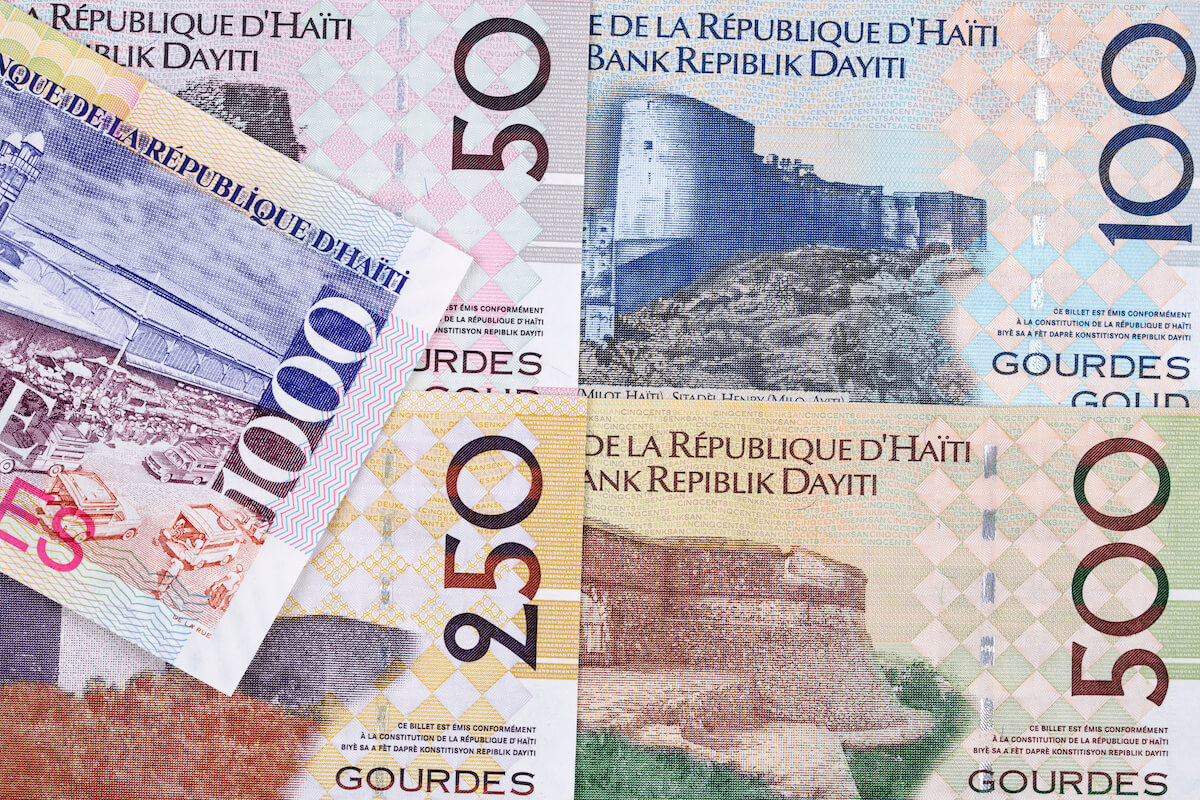
Banknotes in Haiti are colorful and come in several denominations, each telling a piece of the country’s story. The most common notes include:
- 10 Gourdes: Often featuring Sanité Bélair, a female revolutionary hero.
- 25 Gourdes: Typically depicting the Citadelle Laferrière, a massive mountaintop fortress.
- 50 Gourdes: Often honoring Lysius Félicité Salomon Jeune, a former president.
- 100 Gourdes: Usually featuring Henri Christophe, the king of Northern Haiti who built the Citadelle.
- 250 Gourdes: Often depicting Jean-Jacques Dessalines, the founding father of Haiti.
- 500 Gourdes: Typically featuring Alexandre Pétion, a leader of the revolution and president.
- 1,000 Gourdes: The highest denomination, often showcasing Florvil Hyppolite.
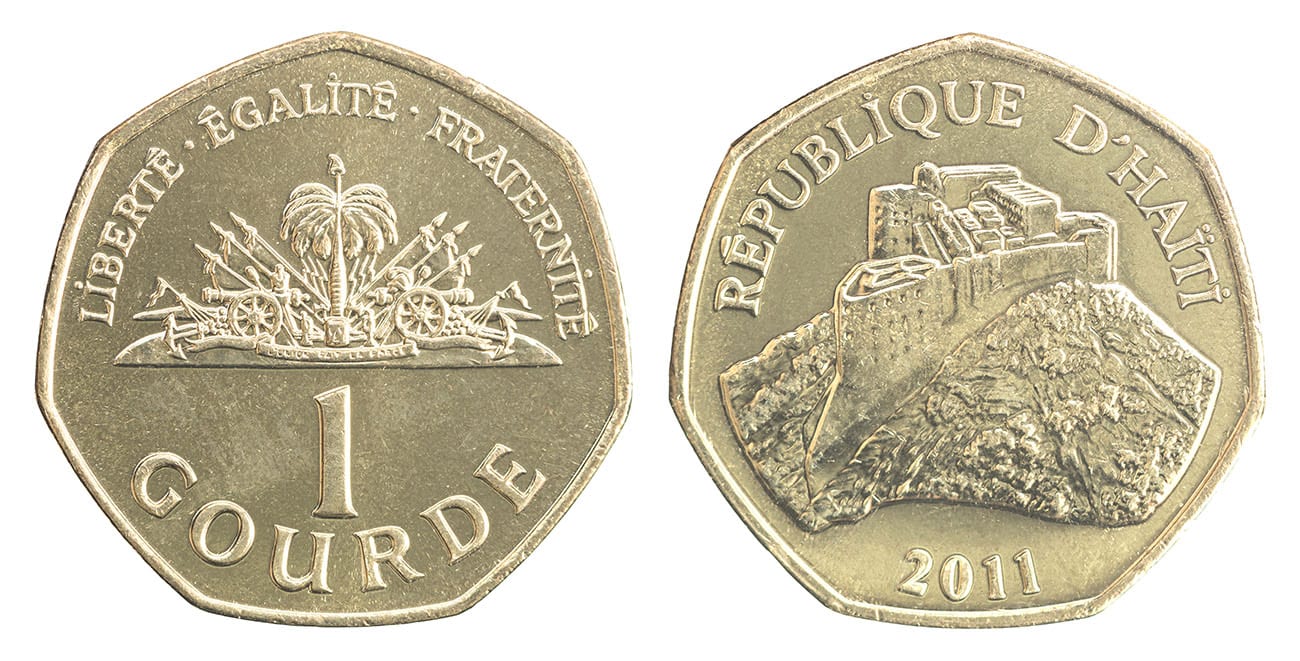
While coins (centimes) technically exist in denominations of 5, 10, 20, and 50, they have largely disappeared from daily circulation due to high inflation. Most transactions are rounded to the nearest gourde, and physical coins are becoming increasingly rare.
Security Measures Against Counterfeiting
To combat counterfeiting, the BRH has integrated modern security features into the banknotes. These include watermarks of historical figures, security threads that change color when tilted, and microprinting that is difficult to replicate with standard scanners. Despite these measures, currency users are encouraged to inspect high-denomination notes carefully, as counterfeit gourdes do occasionally enter the market during periods of high economic activity.
The Economic Landscape: Exchange Rates and Inflation
The value of the gourde is a primary indicator of Haiti’s economic health. Over the last decade, the gourde has seen a steady decline in purchasing power relative to the U.S. dollar. This depreciation has profound effects on the cost of living, as Haiti is a net importer of essential goods, including food and fuel.
The Role of the Banque de la République d’Haïti (BRH)
The BRH acts as the central bank, with the mandate to maintain price stability and ensure the soundness of the financial system. The bank frequently intervenes in the foreign exchange market, selling U.S. dollars from its reserves to soak up excess gourdes and slow down the depreciation of the local currency. However, these interventions are limited by the size of the bank’s reserves and the broader macroeconomic environment.
Factors Influencing the Gourde’s Value
Several key factors drive the volatility of the Haitian currency:
- Political Instability: Periods of unrest lead to decreased investor confidence and a flight to safer currencies like the USD.
- Trade Deficit: Because Haiti imports more than it exports, there is a constant demand for foreign currency to pay for imports, putting downward pressure on the gourde.
- Remittances: Haiti is one of the most remittance-dependent countries in the world. Money sent home by the Haitian diaspora—primarily from the U.S., Canada, and France—provides a vital source of foreign exchange. Fluctuations in these flows directly impact the gourde’s stability.
- Inflation: High inflation rates erode the real value of the gourde, leading consumers and businesses to prefer holding U.S. dollars as a store of value, a process known as “dollarization.”
Practical Financial Tips for Navigating the Haitian Economy
For anyone conducting business or traveling in Haiti, managing currency effectively is essential. The economy is heavily cash-based, though digital solutions are beginning to take root.
Cash vs. Digital Payments
While credit cards are accepted at major hotels and large retailers in Port-au-Prince, the vast majority of the country operates on cash. It is advisable to carry a mix of U.S. dollars and Haitian gourdes. Small vendors and rural areas will almost exclusively require gourdes.
In recent years, mobile money services like MonCash (operated by Digicel) have revolutionized financial inclusion in Haiti. These “digital wallets” allow users to store money, pay bills, and transfer funds via their mobile phones. For many Haitians, this is a safer and more convenient alternative to carrying large amounts of physical cash.
Managing Remittances and Currency Exchange
When exchanging money, it is safest to use official banks or authorized “Bureaux de Change.” While street changers may offer slightly better rates, the risk of receiving counterfeit bills or being targeted for theft is significantly higher.
For those receiving money from abroad, it is important to monitor the exchange rate daily. Since the gourde fluctuates, the timing of a transfer can significantly affect the final amount received in local currency. Many Haitians choose to keep a portion of their savings in U.S. dollar accounts to protect against the gourde’s depreciation.

Final Thoughts on Haitian Currency
The Haitian gourde is a currency defined by its history and the economic challenges of the present. Whether you are calculating prices in “Haitian dollars,” withdrawing gourdes from an ATM, or analyzing the latest inflation data from the BRH, understanding the mechanics of this currency is vital. As Haiti continues to navigate its path toward economic stability, the gourde remains a central figure in the daily lives of millions, serving as both a challenge to manage and a symbol of national identity. By staying informed about exchange trends and local customs, one can navigate the Haitian financial landscape with confidence and insight.
aViewFromTheCave is a participant in the Amazon Services LLC Associates Program, an affiliate advertising program designed to provide a means for sites to earn advertising fees by advertising and linking to Amazon.com. Amazon, the Amazon logo, AmazonSupply, and the AmazonSupply logo are trademarks of Amazon.com, Inc. or its affiliates. As an Amazon Associate we earn affiliate commissions from qualifying purchases.