
The landscape of skilled immigration for professionals, particularly within the technology sector, is often dominated by discussions of the H-1B visa. However, a less frequently discussed, yet highly relevant, visa category exists that caters to a specific set of nationalities and professions: the H1B1 visa. This specialized visa is designed to facilitate the temporary entry of foreign workers into the United States to fill positions in specialty occupations, with a particular emphasis on individuals from Singapore and Chile. Understanding the nuances of the H1B1 visa is crucial for both U.S. companies seeking to tap into a global talent pool and for individuals from these specific countries aspiring to work in the American tech industry.
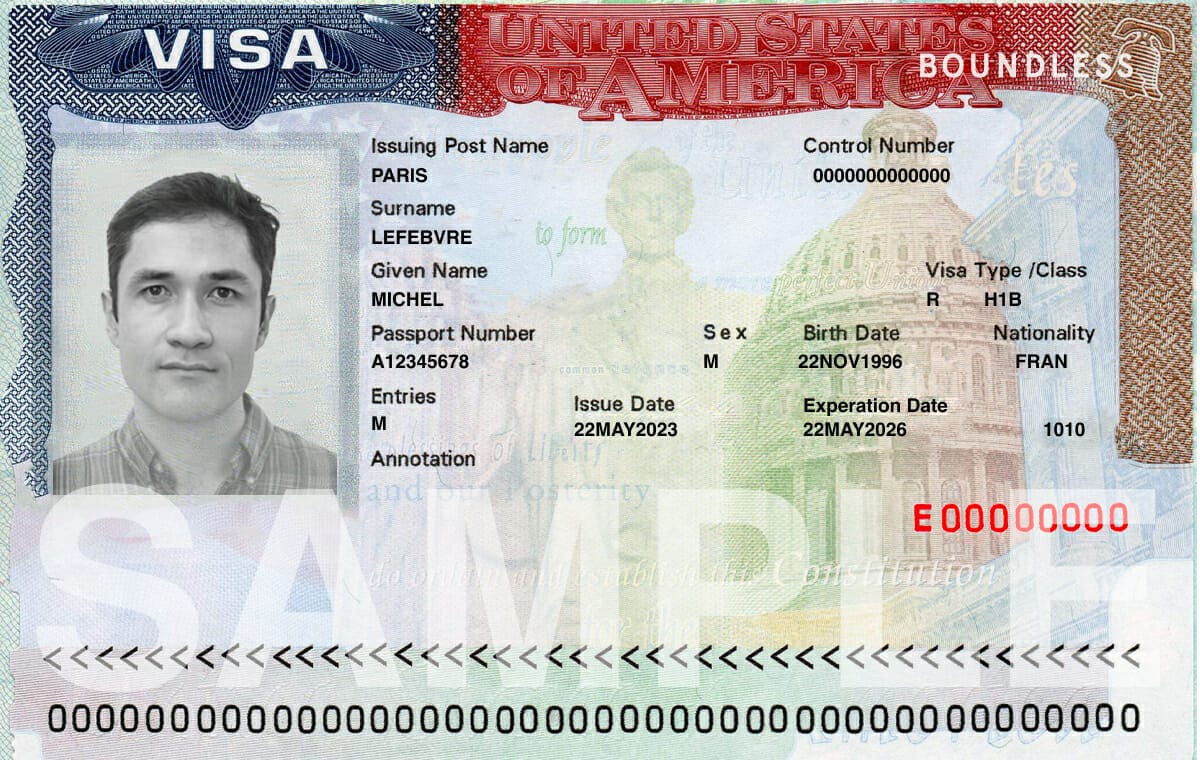
Understanding the H1B1 Visa: A Bridge for Specific Nationalities
The H1B1 visa program, established through the U.S.-Singapore Free Trade Agreement (USSFTA) and the U.S.-Chile Free Trade Agreement (USCFTA), represents a distinct immigration pathway separate from the general H-1B lottery system. While it shares many similarities with its more widely known counterpart, the H1B1 carries its own set of eligibility criteria, application procedures, and limitations, primarily defined by the specific bilateral agreements it stems from.
Genesis and Purpose of the H1B1 Program
The H1B1 visa was conceived as a mechanism to foster economic and trade relationships between the United States and partner nations by easing the movement of skilled professionals. For Singapore and Chile, this meant creating a more streamlined and accessible route for their citizens to pursue temporary employment in the U.S. in demanding occupations. The core objective was to address potential labor shortages in specialized fields within the U.S. and to reciprocate opportunities for American professionals in these signatory countries. The intention was not to replace the H-1B visa but to complement it, offering an alternative for a targeted demographic.
Key Distinctions from the H-1B Visa
While both H-1B and H1B1 visas are non-immigrant visas for temporary workers in specialty occupations, their operational frameworks differ significantly. Perhaps the most crucial distinction lies in the numerical cap. The H-1B visa is subject to an annual cap, often leading to a competitive lottery system. The H1B1 visa, however, operates under separate annual allocations for Singapore and Chile, which are generally higher than the H-1B cap and are not subject to the same lottery system. This can make the H1B1 a more predictable and potentially less competitive option for eligible applicants.
Another significant difference is the application process. While both require a Labor Condition Application (LCA) from the employer, the H1B1 process for individuals from Singapore and Chile involves an interview at a U.S. embassy or consulate abroad, rather than the petition being filed directly with U.S. Citizenship and Immigration Services (USCIS) by the employer, as is the case with the H-1B. This consular-based processing is a hallmark of the H1B1. Furthermore, the H1B1 visa is strictly a non-immigrant visa, meaning applicants must demonstrate non-immigrant intent. While H-1B applicants can also adjust status to permanent residency while in the U.S., H1B1 holders generally cannot, requiring them to depart the U.S. and apply for an immigrant visa if they wish to pursue permanent residency.
Eligibility Requirements for the H1B1 Visa
Securing an H1B1 visa necessitates meeting a set of stringent criteria, encompassing both the applicant’s qualifications and the nature of the employment offer. These requirements are designed to ensure that the visa is utilized for its intended purpose: filling genuine needs for highly skilled professionals.
Professional and Educational Qualifications
At its core, the H1B1 visa is designated for individuals seeking to enter the U.S. in “specialty occupations.” This term, mirroring the definition in the H-1B category, refers to positions that require theoretical or technical expertise in a specific field and generally demand a bachelor’s degree or higher, or its equivalent, as a minimum qualification for entry into the occupation. For the H1B1, the eligible occupations are further refined, often aligning with fields where there is a demonstrated demand for skilled labor, particularly within the technology and IT sectors.
Applicants must possess the requisite academic credentials, typically a bachelor’s degree or a higher degree, in a field relevant to the specialty occupation they intend to practice in the United States. In cases where a formal degree is not the standard entry requirement for a particular occupation, a combination of education and progressively responsible work experience may be considered, often equivalent to a bachelor’s degree (e.g., three years of relevant work experience for each year of formal education lacking). The U.S. employer must demonstrate that the proposed job indeed qualifies as a specialty occupation and that the foreign national meets the educational or experiential prerequisites for that role.
Employer’s Role and Responsibilities
The U.S. employer plays a pivotal role in the H1B1 visa process. They must first identify a genuine need for the foreign national’s specialized skills and prove that the position is a specialty occupation. This involves filing a Labor Condition Application (LCA) with the Department of Labor. The LCA is a crucial document that attests to the employer’s commitment to providing working conditions that will not adversely affect the working conditions of U.S. workers similarly employed. It also confirms that the employer will pay the H1B1 worker at least the prevailing wage for the occupation in the geographic area or the actual wage paid to other employees with similar experience and qualifications, whichever is higher.
Furthermore, the employer must attest that there is no strike or lockout at the place of employment. They are also responsible for providing a copy of the LCA to the H1B1 worker and for notifying their existing U.S. workforce about the H1B1 filing, usually by posting a notice at the worksite. The employer acts as the petitioner, initiating the process and vouching for the legitimacy of the employment opportunity for the foreign national.
The Application and Approval Process
Navigating the H1B1 application journey involves a structured process, predominantly managed through consular processing for eligible applicants. This method differs from the USCIS-centric approach of the H-1B visa, offering a distinct pathway for individuals from Singapore and Chile.
Consular Processing for H1B1 Applicants
Once a U.S. employer has identified a suitable candidate from Singapore or Chile and has prepared the necessary documentation, including the approved LCA, the applicant will typically proceed with a visa application at a U.S. embassy or consulate in their home country. This involves completing the online visa application form (DS-160), paying the visa application fee, and scheduling a visa interview. The applicant will need to present evidence of their eligibility, including the job offer letter from the U.S. employer, proof of their educational qualifications, and the LCA. The consular officer will conduct an interview to assess the applicant’s qualifications, the legitimacy of the job offer, and to confirm that the applicant meets all the requirements for the H1B1 visa, importantly, demonstrating non-immigrant intent.
Visa Fees and Quotas
It is essential to be aware of the various fees associated with the H1B1 visa application. These typically include the visa application processing fee (MRV fee) and potentially other fees depending on the specific circumstances and the applicant’s country of origin. Unlike the H-1B visa, which is subject to an annual numerical cap and a lottery system, the H1B1 visa has its own distinct annual allocations for Singapore and Chile. These quotas are managed separately and are generally higher than the H-1B cap. For instance, there are typically 5,400 visas available annually for Singapore and another 5,400 for Chile. If these quotas are exhausted, the applicant may need to wait for the next fiscal year or explore alternative visa options. The absence of a lottery system for the H1B1 visa can offer a significant advantage in terms of predictability for both employers and prospective employees.
Navigating the Future: Limitations and Alternatives
While the H1B1 visa offers a valuable pathway for skilled professionals from Singapore and Chile, it’s crucial to acknowledge its limitations and to be aware of alternative options should the H1B1 not be a suitable fit. Understanding these nuances can empower individuals and organizations to make informed decisions regarding U.S. immigration for talent acquisition.
Non-Immigrant Intent and Status Adjustments
A critical aspect of the H1B1 visa is its strictly non-immigrant nature. Applicants must demonstrate to the consular officer that they do not intend to immigrate to the United States permanently. This means that while holding an H1B1 visa, it is generally not permissible to seek an adjustment of status to lawful permanent residency (a green card) while remaining within the United States. If an H1B1 visa holder wishes to pursue permanent residency, they typically must depart the U.S. and apply for an immigrant visa through the appropriate channels, which may involve consular processing in their home country or through a different petitionary route. This contrasts with the H-1B visa, where it is more common for individuals to be sponsored for a green card by their employer while already in the U.S.

Exploring Alternative Visa Options
For individuals from Singapore and Chile who may not qualify for the H1B1 visa, or for those whose employers are not eligible to sponsor them under this category, several alternative visa pathways exist for skilled professionals. The most prominent is the H-1B visa, which is open to applicants of all nationalities and is also used for specialty occupations. However, as mentioned, it is subject to an annual cap and a lottery. Other relevant options include the L-1 visa for intracompany transferees, which allows employees of multinational companies to transfer from an overseas office to a U.S. office, and the O-1 visa for individuals with extraordinary ability in their field. For entrepreneurs and innovators, the E-2 Treaty Investor visa (for citizens of certain treaty countries, including Chile) and the EB-5 Immigrant Investor Program offer avenues for establishing businesses in the U.S. Each of these visa categories has its own unique set of requirements, processing times, and eligibility criteria that should be carefully evaluated based on individual circumstances and professional goals.
The H1B1 visa, though specific, represents a valuable bridge for talent flow between the United States, Singapore, and Chile. By understanding its unique characteristics, eligibility criteria, and the broader immigration landscape, both businesses and individuals can effectively leverage this pathway to foster innovation and economic growth within the global technology ecosystem.
aViewFromTheCave is a participant in the Amazon Services LLC Associates Program, an affiliate advertising program designed to provide a means for sites to earn advertising fees by advertising and linking to Amazon.com. Amazon, the Amazon logo, AmazonSupply, and the AmazonSupply logo are trademarks of Amazon.com, Inc. or its affiliates. As an Amazon Associate we earn affiliate commissions from qualifying purchases.