
In today’s interconnected global economy, the flow of skilled professionals across borders is a critical component of innovation and growth. For businesses operating in the United States, particularly within the dynamic tech landscape, understanding the mechanisms that allow them to attract and retain top international talent is paramount. The H-1B visa program stands as a cornerstone of this strategy, offering a pathway for foreign workers with specialized knowledge to come to the U.S. and contribute their expertise. This article delves into the intricacies of the H-1B visa, exploring its purpose, eligibility requirements, the application process, and its significant impact on the technology sector and beyond.
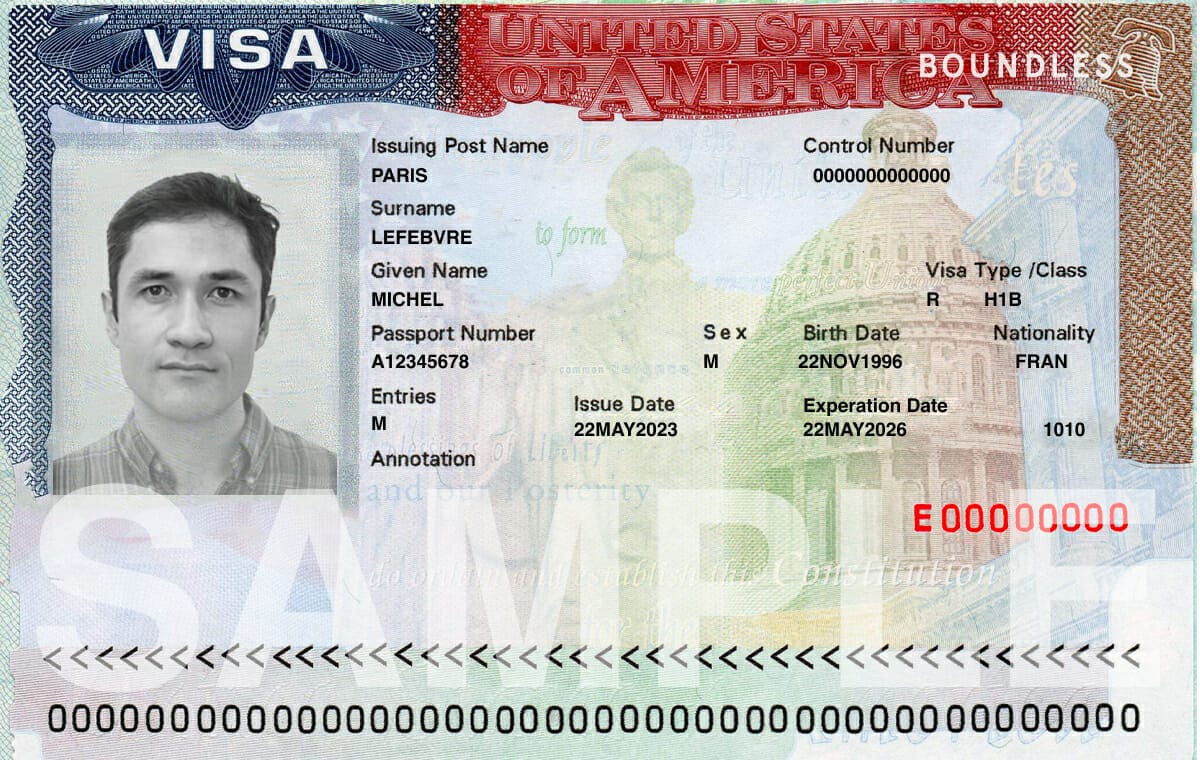
The H-1B visa is a non-immigrant visa that allows U.S. employers to temporarily employ foreign workers in specialty occupations. These occupations are defined as those requiring theoretical or technical expertise in specialized fields, and typically necessitate a bachelor’s degree or higher, or its equivalent, as a minimum qualification. The program is a vital tool for U.S. companies facing a shortage of skilled domestic workers in critical areas, especially within the fast-paced technology industry, where rapid advancements and specialized skill sets are in constant demand.
Understanding the Core of the H-1B Visa Program
The H-1B visa program is fundamentally designed to address specific labor market needs. It allows U.S. businesses to fill positions that require specialized knowledge and skills, which are often found among highly educated international professionals. This can range from software developers and data scientists to engineers, researchers, and even professionals in fields like architecture, accounting, and medicine. The program is not intended to replace U.S. workers but rather to supplement the domestic workforce when there is a demonstrable need for specialized skills that cannot be readily met by the available U.S. labor pool.
Who Qualifies for an H-1B Visa?
The eligibility for an H-1B visa is multifaceted, encompassing both the employer and the prospective employee. For the employer, the primary requirement is to be a U.S. entity that is petitioning for the foreign worker. This employer must offer a position that qualifies as a “specialty occupation.”
Specialty Occupations: The Cornerstone of Eligibility
A specialty occupation is characterized by its complexity and specialization. To qualify, the job duties must involve a high degree of theoretical knowledge and practical application in a specific academic discipline. Furthermore, the position must typically require at least a bachelor’s degree (or its equivalent) in that specific field as a minimum for entry into the occupation. For example, a role requiring a bachelor’s degree in computer science, engineering, or mathematics would likely be considered a specialty occupation. The U.S. Citizenship and Immigration Services (USCIS) evaluates each position based on these criteria to determine its suitability for an H-1B visa.
Qualifications of the Foreign Worker
The foreign national seeking an H-1B visa must possess the necessary qualifications for the specialty occupation. This generally means holding a bachelor’s degree or higher in a field related to the job. In some instances, a combination of education and work experience equivalent to a bachelor’s degree may be accepted. The USCIS meticulously reviews the applicant’s educational background and professional experience to ensure it aligns with the requirements of the offered position.
The H-1B Lottery and Annual Cap
One of the most significant aspects of the H-1B visa program is its annual limitation, or “cap.” Congress sets a numerical limit on the number of H-1B visas that can be issued each fiscal year. This cap typically applies to new H-1B petitions, excluding those filed for extensions of stay for individuals already holding H-1B status or for employees of cap-exempt organizations (such as universities and non-profit research institutions).
Due to the high demand for H-1B visas, particularly from the tech industry, the number of petitions often far exceeds the annual cap. This has led to a lottery system implemented by USCIS. Employers wishing to sponsor an H-1B worker submit their petitions during a designated period. If the number of petitions exceeds the annual limit, USCIS conducts a randomized selection process, or lottery, to determine which petitions will be considered further. This lottery system means that even highly qualified candidates and deserving employers may not be successful in obtaining an H-1B visa in a given year.
Navigating the H-1B Application Process
The journey to obtaining an H-1B visa is a structured process involving several key steps, primarily managed by the U.S. employer. Understanding these stages is crucial for both businesses seeking to hire international talent and foreign professionals hoping to work in the U.S.
Labor Condition Application (LCA)
The first significant hurdle for employers is the filing of a Labor Condition Application (LCA) with the U.S. Department of Labor (DOL). In this application, the employer attests to several crucial conditions:
- Wages: The employer will pay the H-1B worker a wage that is at least the higher of the actual wage paid to similarly employed workers at the employer’s establishment or the prevailing wage level for the occupational classification in the geographic location where the employee will be working. This ensures that foreign workers are not underpaid, which could negatively impact domestic wages.
- Working Conditions: The employment of the H-1B worker will not adversely affect the working conditions of U.S. workers similarly employed.
- Strikes and Lockouts: There is no strike, lockout, or work stoppage at the employer’s place of employment on the date the LCA is filed.
- Notice: Notice of the LCA filing has been provided to U.S. workers employed by the employer.
The DOL certifies the LCA if it meets the required conditions, and this certification is a prerequisite for filing the H-1B petition with USCIS.
H-1B Petition Filing with USCIS
Once the LCA is certified, the employer can then file Form I-129, Petition for a Nonimmigrant Worker, with USCIS. This petition includes the certified LCA and extensive supporting documentation. This documentation typically includes:
- Proof of Employer’s Status: Evidence of the employer’s legal standing and ability to conduct business in the U.S.
- Job Description: A detailed description of the specialty occupation, including its duties and the required qualifications.
- Beneficiary’s Qualifications: Documentation verifying the foreign national’s educational degrees, transcripts, and relevant work experience.
- Evidence of Specialty Occupation: Proof that the position meets the definition of a specialty occupation.
If the petition is selected in the H-1B lottery (if applicable), USCIS will review the submitted petition and supporting documents. If approved, USCIS issues an Approval Notice.
Consular Processing or Change of Status
For foreign nationals outside the U.S., an approved H-1B petition allows them to apply for an H-1B visa stamp at a U.S. embassy or consulate in their home country. Once the visa is obtained, they can travel to the U.S. and begin employment.
For individuals already in the U.S. in a different non-immigrant status (e.g., F-1 student), they can apply for a Change of Status directly with USCIS to switch to H-1B status. This avoids the need for consular processing abroad.
The Broader Impact: H-1B Visas and the U.S. Economy
The H-1B visa program has a profound and often debated impact on the U.S. economy, particularly within the technology sector. Proponents argue that it is essential for maintaining the country’s competitive edge by allowing businesses to access a global pool of highly skilled talent.
Fueling Innovation and Growth in Tech
The technology industry is characterized by its rapid pace of change and an insatiable demand for specialized expertise. Companies often struggle to find enough qualified U.S. workers with the cutting-edge skills needed to develop new products, conduct advanced research, and maintain complex systems. The H-1B program allows these companies to bridge these skill gaps, bringing in individuals with expertise in areas like artificial intelligence, machine learning, cybersecurity, cloud computing, and advanced software development. This influx of talent directly contributes to innovation, the creation of new technologies, and the growth of tech companies, which in turn create jobs for both domestic and international workers.
Addressing Workforce Shortages and Driving Economic Development
Beyond the tech sector, H-1B visas can help alleviate workforce shortages in various specialized fields. This can lead to increased productivity, improved services, and overall economic development. By filling critical roles, these visas enable companies to expand their operations, undertake new projects, and contribute more significantly to the U.S. economy. Furthermore, H-1B workers often spend their earnings in the U.S., contributing to local economies through consumption and taxes.
Debates and Reforms
Despite its benefits, the H-1B program has been the subject of considerable debate. Concerns have been raised about its potential impact on wages and employment opportunities for U.S. workers, as well as the potential for some companies to exploit the program. In response to these concerns, there have been ongoing discussions and efforts to reform the program, including proposals to increase wages for H-1B workers, strengthen enforcement, and prioritize certain types of employers or beneficiaries. The balance between meeting the needs of American businesses for skilled labor and ensuring fair opportunities for domestic workers remains a central challenge in the ongoing evolution of the H-1B visa program.
In conclusion, the H-1B visa program is a crucial mechanism for U.S. employers to secure specialized talent from around the world. It plays a significant role in driving innovation, particularly within the technology sector, and helps address critical workforce needs. While the program is subject to annual caps and a competitive lottery system, and continues to be a topic of policy discussion, its fundamental purpose remains to facilitate the temporary employment of highly skilled foreign professionals, thereby contributing to the dynamism and competitiveness of the U.S. economy.
aViewFromTheCave is a participant in the Amazon Services LLC Associates Program, an affiliate advertising program designed to provide a means for sites to earn advertising fees by advertising and linking to Amazon.com. Amazon, the Amazon logo, AmazonSupply, and the AmazonSupply logo are trademarks of Amazon.com, Inc. or its affiliates. As an Amazon Associate we earn affiliate commissions from qualifying purchases.