
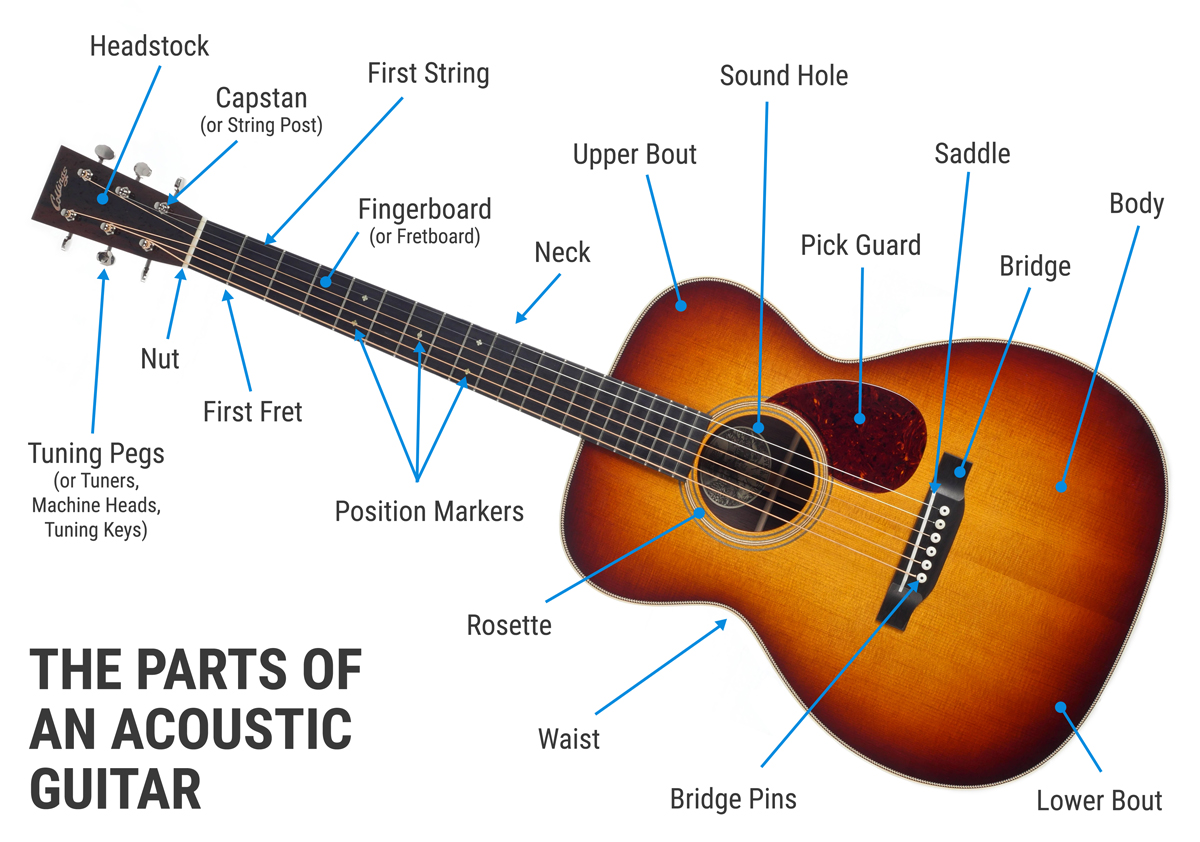
In the realm of musical instrument technology, the guitar bridge stands as one of the most critical pieces of hardware. It is the mechanical interface between the strings and the body of the instrument, acting as the primary conduit for vibration and the central hub for tuning stability and intonation. While casual observers might view it as a simple metal plate, the bridge is a sophisticated piece of engineering that dictates a guitar’s sustain, tonal profile, and playability.
From a technical perspective, the bridge is a transducer system. It takes the kinetic energy of a vibrating string and directs it into the soundboard or the magnetic pickups. Understanding the nuances of bridge technology is essential for any modern musician, technician, or gear enthusiast looking to optimize their signal chain from the very source of the sound.
The Engineering of Sound: How Guitar Bridges Function as Hardware
At its core, the bridge serves two primary technical functions: anchoring the strings and transmitting energy. However, the complexity lies in the physics of how it handles string tension and resonance.
Mechanical Energy Transfer
The bridge acts as a termination point for the string’s “speaking length.” When a player plucks a string, the vibration creates a standing wave. The bridge must be rigid enough to maintain the integrity of this wave while being responsive enough to transfer that energy into the guitar body. In high-end hardware, material science plays a significant role. Materials like cold-rolled steel, bell brass, and titanium are often utilized because of their specific density and acoustic impedance. A bridge made of low-quality zinc alloy (often called “pot metal”) can act as a dampener, absorbing high-frequency harmonics and shortening the sustain of the note.
The Intonation Engine
One of the most vital “smart” features of a modern bridge is the adjustable saddle system. Because strings have different thicknesses and tensions, they do not vibrate in perfect mathematical proportions across their entire length. To ensure the guitar is “in tune with itself” across the entire fretboard, the bridge allows for micro-adjustments of the string length. This process, known as intonation, involves moving the bridge saddles forward or backward using precision-threaded screws. This level of mechanical calibration is what allows a guitar to function as a professional-grade tool rather than a toy.
Radius and Action Height
The bridge also manages the “action,” or the height of the strings above the frets. Most modern bridges feature individual height-adjustable saddles or a centralized adjustment mechanism that matches the “radius” (the curvature) of the fretboard. From a technical standpoint, this is a balancing act between minimizing fret buzz and maximizing player comfort. High-performance bridges often utilize locking mechanisms to ensure that once these parameters are set, they do not drift under the stress of heavy playing or environmental changes.
High-Performance Systems: The Evolution of Tremolo and Fixed Bridges
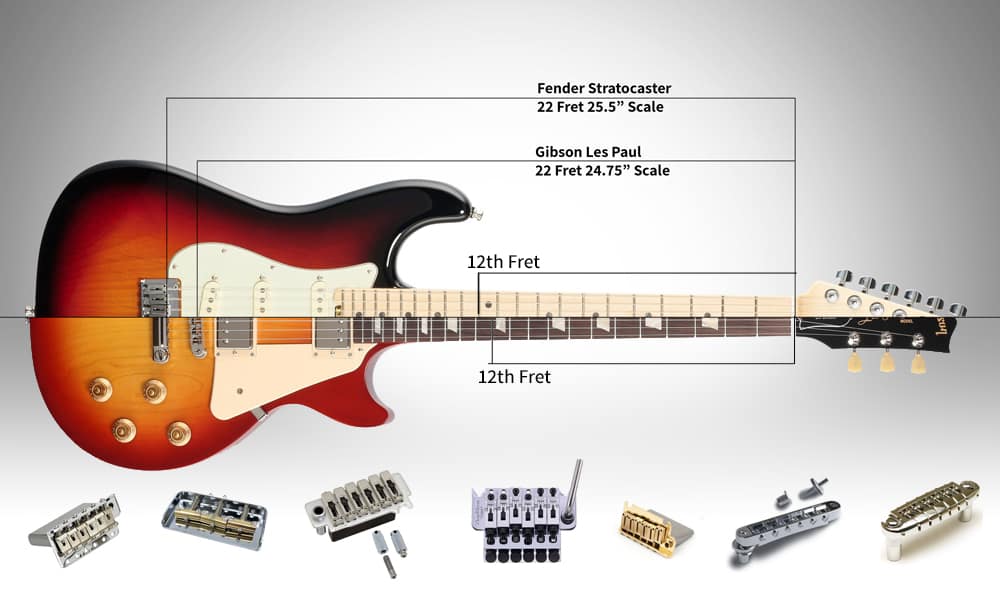
In the evolution of guitar technology, bridges have branched into two main categories: fixed (hardtail) and vibrato (commonly called tremolo) systems. Each represents a different approach to mechanical engineering.
Fixed Bridges: Stability and Throughput
Fixed bridges are the “solid-state” equivalent of the guitar world. Because they have no moving parts relative to the body, they offer the highest level of tuning stability and energy transfer. The “string-through-body” design is a popular iteration where the strings pass through the bridge and are anchored in the wood of the guitar. This maximizes the mechanical coupling between the hardware and the instrument’s chassis, leading to enhanced low-end resonance and sustain. For recording and precision tracking, fixed bridges remain the industry standard due to their reliability and ease of maintenance.
Tremolo Systems and Mechanical Complexity
The tremolo bridge is a marvel of mechanical design. It allows the player to momentarily change the tension of all strings simultaneously to create pitch-shifting effects. The most iconic of these is the synchronized tremolo, which uses a “knife-edge” pivot system and a series of counter-balancing springs located in the back of the guitar.
The technical challenge of a tremolo system is the return to “zero point.” When the bar is released, the bridge must return to the exact same position to keep the strings in tune. This led to the development of the “double-locking” system, popularized by Floyd Rose. By locking the strings at both the bridge and the nut, the system creates a closed loop that is largely immune to the friction issues that plague traditional hardware. These systems are essentially precision-machined mechanical computers that manage thousands of pounds of pressure while remaining responsive to the lightest touch.
The EverTune System: A Mechanical Breakthrough
Perhaps the most significant leap in recent bridge technology is the EverTune system. Unlike traditional bridges that rely on static tension, the EverTune uses a complex series of springs and levers for each individual string. It is a purely mechanical system that maintains constant tension on the string, regardless of temperature changes, humidity, or how hard the player strikes the string. In the world of digital recording and professional touring, this “set and forget” hardware is a revolutionary tool that eliminates the need for constant re-tuning between takes or songs.

Digital Integration: The Bridge as a Data Interface
As music technology pushes further into the digital realm, the guitar bridge has evolved from a purely acoustic component into a sophisticated sensor and data interface.
Piezoelectric Transducers
Many modern bridges are now equipped with piezoelectric sensors embedded within the saddles. These sensors do not rely on magnetic fields (like traditional pickups) but instead capture the physical pressure and vibration of the string. Technically, this allows a solid-body electric guitar to output a signal that mimics an acoustic instrument. This “dual-output” capability is a staple for professional musicians who need a wide sonic palette from a single piece of hardware.
MIDI and Hexaphonic Output
The bridge is the ideal location for “hexaphonic” sensors, which track each string’s vibration independently. When integrated with MIDI (Musical Instrument Digital Interface) technology, the bridge becomes a controller for software synthesizers and digital audio workstations (DAWs). This conversion of analog vibration into digital data allows a guitar player to trigger anything from a piano patch to a complex cinematic texture. The precision required for this tracking is immense; the bridge hardware must isolate each string’s vibration perfectly to prevent “crosstalk,” which would lead to digital glitches or misfired notes.
Smart Bridges and Onboard DSP
We are seeing the emergence of bridges that incorporate active digital signal processing (DSP). Some systems allow for instant digital re-tuning, where the bridge sensors detect the pitch and a software layer shifts it to a different key without the player ever touching the tuning pegs. This represents the pinnacle of bridge technology, where the mechanical and digital worlds merge to expand the creative boundaries of the instrument.
Technical Maintenance: Optimizing Bridge Performance
Owning a high-performance guitar requires an understanding of how to maintain its hardware. Just like a high-end laptop or a precision drone, a guitar bridge requires periodic calibration to function at its peak.
Lubrication and Friction Reduction
For any bridge with moving parts, friction is the enemy of performance. Tech-savvy players often use synthetic lubricants (such as graphite or Teflon-based greases) on the contact points where the string meets the saddle. This ensures that the string can slide freely during bends or tremolo use, preventing “binding” which leads to the string returning sharp or flat.
Tension Balancing
In floating tremolo systems, the entire setup is a delicate tug-of-war between the tension of the strings and the tension of the internal springs. Adjusting this requires a technical understanding of physics. If a player switches to a heavier gauge of strings, the increased tension will pull the bridge forward. To compensate, the spring claw in the rear cavity must be tightened. This iterative process of balancing “load vs. resistance” is a core skill in guitar tech and essential for maintaining the instrument’s “action” and “intonation.”
Component Upgrades
The modular nature of many guitar bridges allows for significant hardware upgrades. Replacing stock saddles with high-tech alternatives like String Saver saddles (which use a teflon-infused material to prevent string breakage) or upgrading a tremolo block to high-density brass can yield measurable improvements in the instrument’s signal-to-noise ratio and harmonic content. In the “pro-sumer” market, these hardware modifications are treated with the same level of detail as upgrading a processor or RAM in a computer.
The Future of Bridge Design: AI and 3D Printing
Looking forward, the technology of the guitar bridge is being shaped by new manufacturing methods and computational design.
Generative Design and Lightweighting
Engineers are now using generative design software—AI-driven tools that optimize a part’s geometry based on specific performance criteria—to create bridges that are both lighter and more resonant. By using complex lattice structures that can only be produced via 3D metal printing (Additive Manufacturing), these next-gen bridges can provide the structural integrity of steel with a fraction of the weight, while specifically tuning the “vibrational throughput” of the hardware.
Smart Material Applications
The use of “shape-memory alloys” and other advanced materials is being explored to create bridges that can automatically compensate for environmental changes. Imagine a bridge that detects a rise in humidity and subtly adjusts its height to prevent the wood’s expansion from affecting the action. This level of automation would represent the ultimate convergence of traditional lutherie and modern tech.
Conclusion: The Bridge as the Instrument’s Processor
While the pickups might be the “microphone” and the strings the “voice,” the bridge is the “processor” of the guitar. It manages data, maintains stability, and ensures the system operates within its intended parameters. Whether it is a simple vintage-style plate or a complex, spring-loaded mechanical marvel, the guitar bridge remains one of the most vital gadgets in a musician’s arsenal. As technology continues to advance, the bridge will only become more integrated, more precise, and more essential to the digital and analog future of music.
aViewFromTheCave is a participant in the Amazon Services LLC Associates Program, an affiliate advertising program designed to provide a means for sites to earn advertising fees by advertising and linking to Amazon.com. Amazon, the Amazon logo, AmazonSupply, and the AmazonSupply logo are trademarks of Amazon.com, Inc. or its affiliates. As an Amazon Associate we earn affiliate commissions from qualifying purchases.