
Determining the precise “net worth” of a colossal tech giant like Google, now formally Alphabet Inc., is a complex undertaking that extends far beyond a simple calculation. For publicly traded corporations, the concept of net worth, while fundamentally rooted in accounting principles, takes on different dimensions compared to an individual’s personal finances. In the realm of business finance, particularly for market behemoths, the term often gives way to more dynamic metrics like market capitalization, which offers a real-time reflection of investor sentiment and perceived value. This article will delve into what “net worth” signifies for a company of Alphabet’s stature, explore its financial components, differentiate it from market capitalization, and provide insights into the broader financial health and valuation drivers of this influential entity.
Demystifying Corporate Net Worth: Beyond Simple Sums
For individuals, net worth is a straightforward calculation: total assets minus total liabilities. For a global corporation like Alphabet, this fundamental principle still applies, but its application involves intricate layers of assets, liabilities, and, crucially, a dynamic market perspective.
The Fundamental Definition: Assets Minus Liabilities
In accounting terms, a company’s net worth is represented by its shareholders’ equity or owner’s equity on the balance sheet. This figure is derived by subtracting the company’s total liabilities from its total assets.
- Assets include everything the company owns that has economic value: cash and cash equivalents, marketable securities, property, plant, and equipment (PPE), accounts receivable, inventory (though less significant for a software-heavy company), and intangible assets.
- Liabilities encompass all the company’s financial obligations: accounts payable, deferred revenue, short-term and long-term debt, and various other financial commitments.
Shareholders’ equity essentially represents the residual value of the company’s assets available to shareholders after all liabilities have been paid. It reflects the capital contributed by shareholders plus accumulated earnings (or minus accumulated losses) over time. While this provides an accounting “book value,” it rarely aligns with the market’s perception of value for publicly traded companies.
Google vs. Alphabet Inc.: A Crucial Distinction
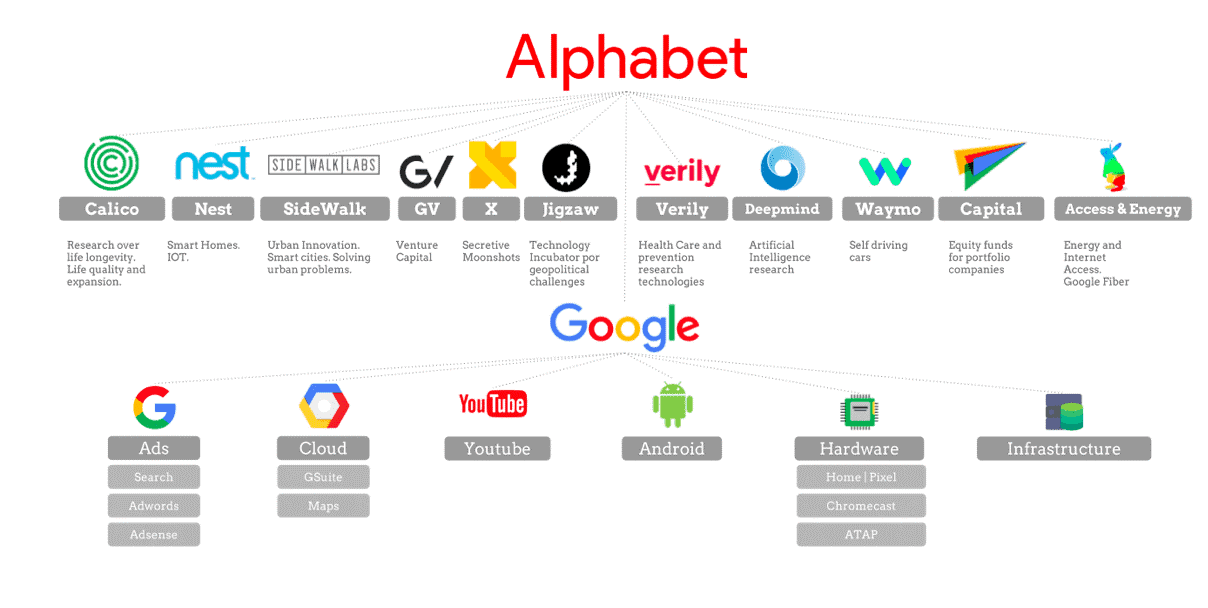
Before delving deeper, it’s vital to clarify the nomenclature. While many still refer to the company as “Google,” the corporate entity that owns Google and its various other ventures is Alphabet Inc. (GOOGL, GOOG). In 2015, Google restructured, creating Alphabet as the parent company. This move separated the core Google businesses (Search, Ads, Android, Chrome, YouTube, Google Cloud) from its “Other Bets” – ambitious, speculative projects like Waymo (self-driving cars), Verily (life sciences), and DeepMind (AI research). Therefore, when discussing the “net worth” or financial standing, we are referring to Alphabet Inc.’s consolidated financials.
Why “Net Worth” Isn’t Always the Primary Metric for Public Companies
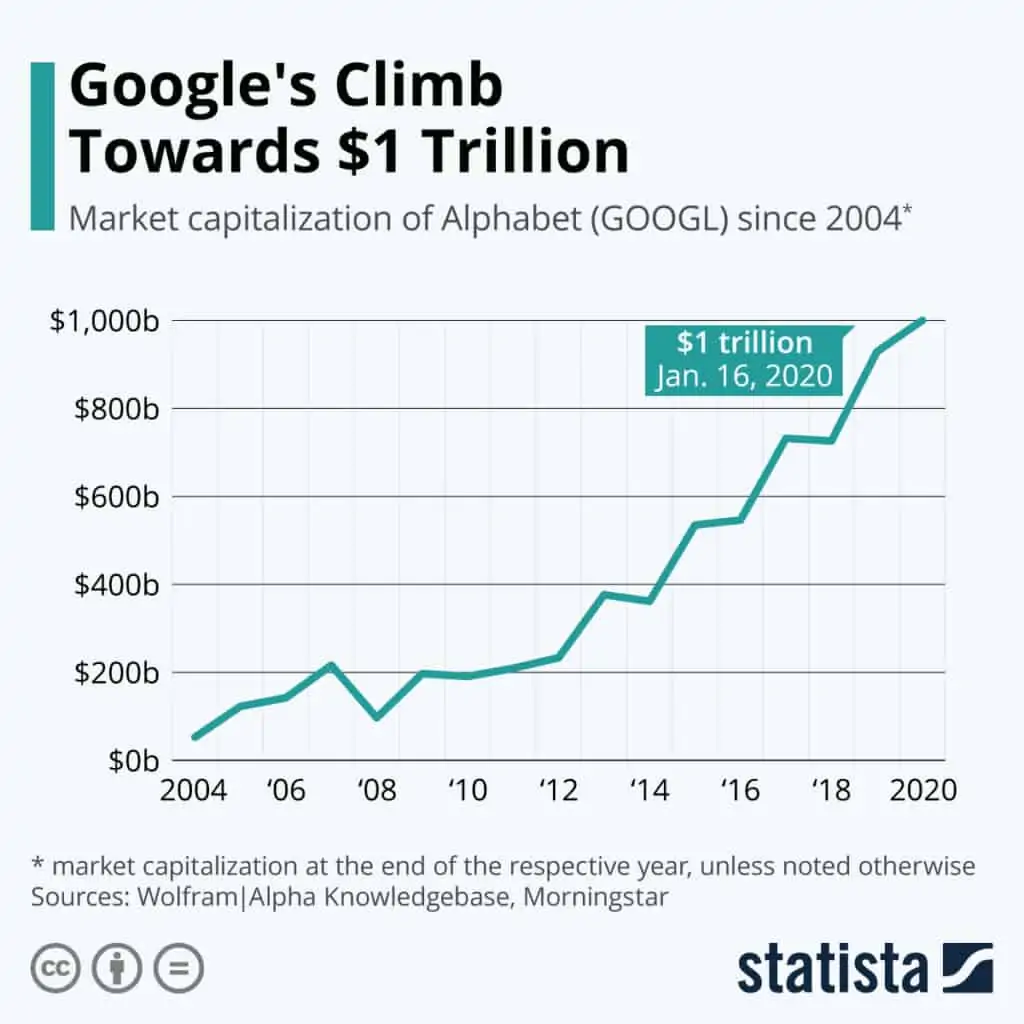
For publicly traded corporations, the accounting concept of “net worth” (shareholders’ equity) is often less emphasized by investors than market capitalization. Market capitalization is calculated by multiplying the current share price by the total number of outstanding shares. It represents the total market value of the company’s outstanding shares and is a real-time, dynamic reflection of what the market believes the company is worth based on its future earnings potential, growth prospects, and overall market sentiment.
Shareholders’ equity is a historical accounting measure based on past transactions and book values, which may not reflect the current market value of assets (especially intangible ones like brand reputation, patents, or user data) or future earnings potential. For a company like Alphabet, whose value is heavily tied to intellectual property, brand power, and future innovation, market capitalization offers a more relevant gauge of its perceived worth by the investment community.
The Pillars of Alphabet’s Financial Strength (Assets)
Alphabet’s immense value is underpinned by a diverse and robust asset base, ranging from significant cash reserves to invaluable intangible assets. Understanding these components is key to appreciating its financial strength.
Tangible Assets: Cash, Investments, and Infrastructure
Alphabet boasts a formidable array of tangible assets. Foremost among these are its staggering reserves of cash and marketable securities. These highly liquid assets provide financial flexibility, enabling investments in research and development, acquisitions, and weathering economic downturns. At any given time, Alphabet holds tens of billions, if not hundreds of billions, in cash, cash equivalents, and easily convertible investments.
Beyond cash, Alphabet possesses substantial property, plant, and equipment (PPE). This includes vast data centers globally, critical for powering its search engine, cloud services (Google Cloud), YouTube, and AI operations. It also encompasses corporate campuses, offices, and specialized facilities for its various “Other Bets,” such as testing grounds for Waymo or laboratories for Verily. These physical infrastructures represent significant capital investments vital for its operations.
Intangible Assets: Innovation, Brand, and Data Moats
For a company like Alphabet, its intangible assets often far outweigh its tangible ones in terms of actual market value.
- Brand Value: The Google brand itself is one of the most recognized and valuable in the world. Its association with search, information, and innovation commands immense trust and loyalty, translating into pricing power and competitive advantage.
- Intellectual Property (IP): Alphabet holds thousands of patents covering everything from search algorithms and AI technologies to mobile operating systems (Android) and hardware designs. This IP protects its innovations and provides a competitive moat.
- Proprietary Technology and Algorithms: The core search algorithm, AI models (like Gemini), ad-serving technologies, and cloud infrastructure are unparalleled and represent years of immense R&D investment.
- User Data and Network Effects: The sheer volume of user data collected across its services (Search, YouTube, Android, Maps) is an invaluable asset, allowing for hyper-targeted advertising and continuous product improvement. The network effects of its platforms (more users attract more content/developers, which attracts more users) create formidable barriers to entry for competitors.
- Talent and Culture: The brilliant engineers, researchers, and business minds employed by Alphabet are arguably one of its greatest assets, driving continuous innovation and maintaining its technological edge.
Strategic Investments and Ventures
Alphabet also makes substantial equity investments in other companies, particularly in emerging technologies or strategic partners. These can range from venture capital stakes in promising startups to significant holdings in established companies. Its “Other Bets” segment, while often not profitable in the short term, represents long-term strategic investments in future growth areas, such as advanced healthcare, robotics, and smart cities. These ventures, though sometimes speculative, hold the potential for massive future returns and diversify Alphabet’s long-term asset portfolio.
Understanding Alphabet’s Financial Obligations (Liabilities)
While Alphabet’s asset base is impressive, it also carries significant liabilities, which are crucial to consider when assessing its financial position. These obligations fund operations, facilitate growth, and maintain its sprawling global enterprise.
Operational Debts and Deferred Revenues
Like any large corporation, Alphabet incurs operational debts. These include accounts payable (money owed to suppliers and vendors), accrued expenses (such as employee salaries and benefits not yet paid), and short-term debt instruments. These are typical costs of doing business and are managed within the company’s robust cash flow.
A notable liability for software and subscription-based companies like Alphabet is deferred revenue. This represents cash received from customers for services or products that have not yet been delivered or recognized as revenue. For example, if a client pays annually for Google Cloud services upfront, Alphabet records the payment as deferred revenue and recognizes it as actual revenue over the 12-month service period. While a liability on the balance sheet, deferred revenue is generally a positive indicator, reflecting strong customer commitments and future revenue streams.
Long-Term Commitments and Capital Leases
Alphabet also manages significant long-term debt, often issued to fund major capital expenditures, share buybacks, or strategic acquisitions. These can be in the form of bonds or other long-term loans. While substantial in absolute terms, Alphabet’s debt-to-equity ratio is typically low, reflecting its strong financial health and ability to service its obligations.
Furthermore, the company has considerable capital lease obligations, particularly related to its extensive network of data centers and real estate. Rather than purchasing all its physical assets outright, Alphabet often leases facilities and equipment, creating long-term financial commitments that appear as liabilities on its balance sheet. These leases allow for operational flexibility and efficient capital allocation.
Market Capitalization: The Investor’s Valuation Benchmark
As established, for a public company like Alphabet, “net worth” as defined by shareholders’ equity often takes a backseat to market capitalization in the eyes of investors and market analysts. Market cap provides a real-time, dynamic gauge of the company’s perceived value.
How Market Cap is Calculated and Why it Matters More
Market capitalization is straightforward to calculate:
Market Cap = Current Share Price × Total Number of Outstanding Shares
For example, if Alphabet (GOOGL) has 13.5 billion shares outstanding and its share price is $150, its market capitalization would be $2.025 trillion. This figure fluctuates continuously with the stock market.
Market cap is critical because:
- Real-time Valuation: It reflects the collective opinion of millions of investors on the company’s present and future value.
- Liquidity and Size: It provides an immediate sense of the company’s size, influence, and how easily its shares can be traded.
- Growth Prospects: Investors bid up share prices based on anticipated future earnings, technological breakthroughs, and market dominance, all of which are encapsulated in market cap.
- Acquisition Potential: It’s a key figure for understanding how much it would cost to acquire the entire company.
While shareholders’ equity offers an accounting “book value,” market capitalization captures the intangible value of brand, innovation, future growth potential, and competitive moats that are not easily quantifiable on a balance sheet.
Factors Influencing Alphabet’s Market Valuation
Alphabet’s market capitalization is a reflection of numerous factors:
- Revenue Growth and Profitability: Strong advertising revenue from Search and YouTube, coupled with the accelerating growth of Google Cloud and other profitable ventures, directly impacts investor confidence.
- Innovation and AI Leadership: Alphabet’s continuous investment in cutting-edge AI, machine learning, and quantum computing capabilities positions it for future growth and competitive advantage. Announcements regarding new AI models or applications can significantly sway its valuation.
- Market Share and Dominance: Its overwhelming market share in search, mobile operating systems (Android), and video (YouTube) provides a stable and powerful base for revenue generation.
- Economic Conditions: Broader economic trends, interest rates, and investor sentiment towards the tech sector can influence Alphabet’s share price regardless of its internal performance.
- Regulatory Environment: Antitrust concerns, data privacy regulations, and potential legislative actions can create uncertainty and impact valuation.
- “Other Bets” Performance: While often not profitable, positive developments or commercialization breakthroughs in ventures like Waymo or Verily can signal future growth engines and boost investor optimism.
Volatility and the Ever-Changing Market Perspective
Alphabet’s market capitalization is not static; it is highly volatile. Daily stock market fluctuations, earnings reports, analyst ratings, news events, and macroeconomic shifts all contribute to its continuous change. A positive earnings surprise, a new product launch, or even a competitor’s misstep can send its valuation upwards, while a regulatory fine, a data breach, or a broader market downturn can lead to declines. This dynamic nature underscores why market capitalization is a more fluid and immediate indicator of value than a fixed “net worth” figure.
Beyond the Numbers: The Broader Financial Health of Google (Alphabet)
While net worth and market capitalization offer snapshots, a comprehensive understanding of Alphabet’s financial health requires looking at its overall business performance, cash generation, and strategic outlook.
Revenue Streams and Profitability: The Engine of Growth
Alphabet’s financial engine is driven by diverse and robust revenue streams, predominantly advertising. Google Search Ads, YouTube Ads, and the Google Network (ads served on third-party websites) constitute the vast majority of its revenue. However, Google Cloud has emerged as a significant growth driver, along with hardware sales (Pixel phones, Nest devices) and subscriptions. The company’s ability to maintain high profit margins across its core businesses, especially advertising, fuels its massive investments in R&D and its “Other Bets.” Sustained revenue growth and profitability are critical indicators of its long-term viability and ability to create shareholder value.
Cash Flow and Liquidity: Fueling Innovation and Stability
Beyond profits, Alphabet generates an extraordinary amount of free cash flow – the cash a company generates after accounting for cash outflows to support operations and maintain its capital assets. This immense cash generation provides unparalleled financial flexibility. It allows Alphabet to:
- Invest heavily in R&D: Powering its AI leadership and developing future technologies.
- Fund strategic acquisitions: Consolidating its market position or expanding into new areas.
- Return capital to shareholders: Through share buybacks (which reduce outstanding shares and can boost EPS) and, increasingly, dividends.
- Maintain a strong balance sheet: Ensuring resilience against economic shocks.
Alphabet’s liquidity, characterized by its substantial cash reserves and ability to convert marketable securities, reinforces its financial stability and capacity for long-term strategic execution.

Future Outlook and Investor Sentiment
Ultimately, Alphabet’s long-term “worth” in the eyes of investors is tied to its future prospects. Key considerations include:
- Continued innovation in AI: How successfully can it integrate AI across all its products and monetize new AI capabilities?
- Google Cloud’s competitive positioning: Can it continue to gain market share against AWS and Microsoft Azure?
- Success of “Other Bets”: Will any of these moonshot projects eventually become significant revenue generators?
- Regulatory landscape: How will it navigate increasing scrutiny over antitrust, data privacy, and AI ethics?
- Global economic health: Advertising spending is cyclical, so global economic stability impacts its core business.
A company’s true value isn’t just what it has done, but what it will do. Alphabet’s consistent track record of innovation, market dominance, and financial discipline provides a strong foundation for a positive future outlook, solidifying its position as one of the world’s most valuable and influential corporations.
In conclusion, while “Google’s net worth” in the strict accounting sense refers to Alphabet Inc.’s shareholders’ equity, the more meaningful and dynamic measure for investors is its multi-trillion-dollar market capitalization. This figure encapsulates not just its vast assets and controlled liabilities, but also the collective market’s belief in its unparalleled innovation, technological leadership, and enduring capacity to generate immense value well into the future.
aViewFromTheCave is a participant in the Amazon Services LLC Associates Program, an affiliate advertising program designed to provide a means for sites to earn advertising fees by advertising and linking to Amazon.com. Amazon, the Amazon logo, AmazonSupply, and the AmazonSupply logo are trademarks of Amazon.com, Inc. or its affiliates. As an Amazon Associate we earn affiliate commissions from qualifying purchases.