
Understanding the stock price of a global technology behemoth like Alphabet Inc. (the parent company of Google) is far more than just knowing a number. It’s an intricate dive into market dynamics, corporate finance, investor sentiment, and the relentless march of innovation that fuels one of the world’s most influential companies. For anyone interested in personal finance, investing, or the broader economy, deciphering “what is Google stock price” involves looking beyond the immediate quote to grasp the underlying forces and implications for financial decision-making.
Alphabet Inc. is a cornerstone of many investment portfolios, representing a significant portion of major stock indices and epitomizing the potential for growth in the digital age. Its stock price reflects the collective wisdom and speculation of millions of investors, driven by quarterly earnings reports, strategic announcements, macroeconomic trends, and the ever-present anticipation of future breakthroughs. This article will explore the multifaceted nature of Alphabet’s stock, guiding you through its structure, the factors that influence its valuation, and how investors can interpret its financial pulse.
Understanding Alphabet Inc. (GOOGL, GOOG) Shares
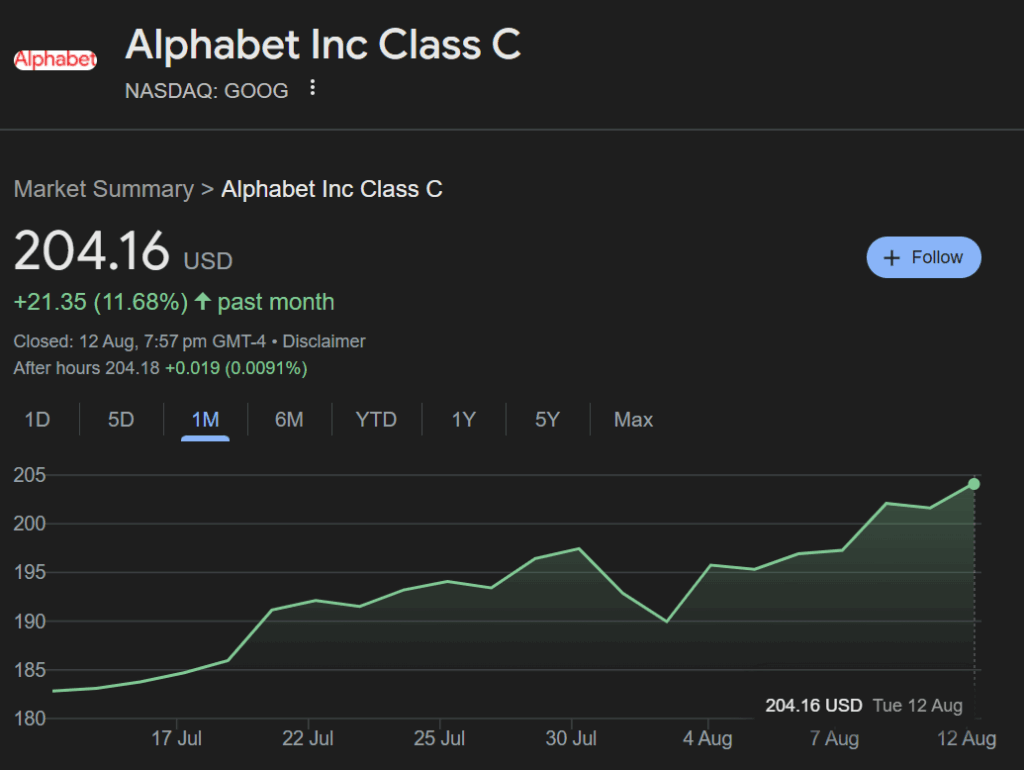
Before delving into the specifics of its price, it’s crucial to understand the unique structure of Alphabet Inc.’s publicly traded shares. Unlike many companies that offer a single class of common stock, Alphabet has maintained a distinctive dual-class share structure since its inception as Google, a strategy designed to preserve the founders’ control and long-term vision.
The Dual-Class Share Structure
Alphabet Inc. trades under two primary ticker symbols on the NASDAQ exchange:
- GOOGL (Class A Shares): These are common shares that come with voting rights, meaning each share typically grants one vote on company matters. This class is generally what most retail investors purchase when they want to invest in Alphabet with some degree of corporate governance influence.
- GOOG (Class C Shares): These are also common shares but are non-voting. They were created through a stock split in 2014, essentially giving investors the financial benefits of owning Alphabet stock without any say in company decisions. This split allowed Alphabet to issue more shares for acquisitions, employee compensation, or other purposes without diluting the voting power of Class A and Class B shareholders.
- Class B Shares: These shares are not publicly traded. They are held primarily by the company’s founders, Larry Page and Sergey Brin, and early executives. Each Class B share carries 10 votes, giving these individuals super-voting power and ensuring they retain significant control over the company’s strategic direction, regardless of public market fluctuations in Class A or C shares.
Why the Distinction Matters to Investors
For the average investor, the distinction between GOOGL and GOOG often comes down to a marginal difference in price and the philosophical stance on voting rights. Historically, the prices of Class A and Class C shares tend to track each other very closely, with only minor spreads that fluctuate based on supply and demand. Any significant divergence is usually arbitraged away by institutional investors.
The existence of Class B shares means that public shareholders, particularly those holding Class C, have very limited influence on corporate governance. While this might be a concern for activist investors seeking to influence company policy, for many retail investors, the primary driver for investing in Alphabet is its financial performance and growth potential, making the voting rights a secondary consideration. The stability of leadership provided by the Class B shares is often seen as a benefit, allowing the company to pursue long-term projects without excessive pressure for short-term gains from public shareholders.
Market Capitalization and Influence
Alphabet’s immense market capitalization, often fluctuating between $1.5 trillion and $2 trillion, places it among the world’s most valuable companies. This valuation is a product of its vast and diverse revenue streams, dominant market positions in search and advertising, and significant investments in future technologies. As a mega-cap stock, Alphabet’s performance has a substantial impact on broader market indices like the S&P 500 and the NASDAQ 100, making its stock price a key indicator of the health of the tech sector and the overall economy. Its size also means that large institutional investors, mutual funds, and ETFs often hold significant positions in Alphabet, making its stock price highly responsive to major market movements and macroeconomic data.
Factors Influencing Google’s Stock Price
Alphabet’s stock price is a dynamic reflection of a multitude of factors, ranging from its internal operations to the broader economic and regulatory landscape. Understanding these influences is paramount for any investor seeking to analyze or predict its movements.
Company Performance and Earnings
At its core, a company’s stock price is tethered to its financial performance. For Alphabet, this means scrutinizing:
- Revenue Growth: Dominated by Google Search & other (advertising), YouTube ads, and the rapidly growing Google Cloud. Consistent growth indicates a healthy business.
- Profitability: Net income, operating margins, and earnings per share (EPS) are critical. Investors look for efficiency and the ability to convert revenue into profit.
- Quarterly Reports: These earnings calls are pivotal, providing updates on all segments, future guidance, and often leading to immediate stock price reactions based on whether the company met, exceeded, or missed analyst expectations.
- Product Innovation: New features for Google Search, advancements in AI, growth of YouTube subscriptions, and expansion of Google Cloud services can signal future revenue streams and boost investor confidence.
Market Sentiment and Economic Conditions
Even the strongest company is subject to the tides of the broader market and economy:
- Broader Market Trends: Bull or bear markets heavily influence individual stock prices. A general market downturn can pull even fundamentally sound stocks like Alphabet lower, irrespective of its internal performance.
- Interest Rates and Inflation: Higher interest rates can make future earnings less valuable (discounted cash flow models), potentially dampening investor enthusiasm for growth stocks. Inflation impacts operational costs and consumer spending, directly affecting Alphabet’s advertising revenue.
- Economic Recessions: A slowing economy can lead to reduced advertising spend by businesses, directly impacting Google’s primary revenue source. Consumer spending habits also shift, affecting product adoption.
- Investor Confidence: Geopolitical events, major policy changes, or shifts in investor psychology can lead to widespread buying or selling, affecting even blue-chip stocks.
Competitive Landscape and Regulatory Scrutiny
Alphabet operates in a highly competitive and increasingly regulated environment:
- Competition: Rivals like Microsoft (with Bing and Azure), Amazon (with AWS and advertising), Meta (with social media advertising), and emerging AI players constantly challenge Alphabet’s dominance. Any perceived threat can impact investor sentiment.
- Antitrust Concerns: Regulatory bodies worldwide are scrutinizing Alphabet’s market power, particularly in search, advertising, and Android. Potential fines, mandated changes to business practices, or even breakups pose significant risks that can weigh heavily on the stock price.
- Data Privacy Regulations: Laws like GDPR and CCPA, and evolving global privacy standards, impact how Alphabet collects and uses data, potentially affecting its advertising business model and requiring costly compliance measures.
Innovation and Future Growth Verticals
Alphabet’s ability to innovate and expand into new markets is a key driver of its long-term valuation:
- AI Advancements: As a leader in AI research and development, Alphabet’s progress in areas like large language models (e.g., Gemini), AI-powered search, and autonomous driving (Waymo) offers immense future growth potential. Positive news in these areas can ignite investor enthusiasm.
- “Other Bets”: Divisions like Waymo (self-driving cars), Verily (life sciences), and Wing (drone delivery) are long-term, high-risk, high-reward ventures. While often loss-making in the short term, breakthroughs in these areas could unlock massive future value.
- New Product Categories: Entry into new hardware markets (Pixel phones, smart home devices), or expansion of services like YouTube Premium, represent diversification and new revenue streams.
Dividends, Buybacks, and Share Splits
Corporate actions directly impact shareholder value and stock price:
- Dividends: While Alphabet has historically not paid regular dividends, a shift to doing so could attract income-focused investors and signal financial maturity.
- Share Buybacks: When Alphabet repurchases its own shares, it reduces the number of outstanding shares, which can boost EPS and signal management confidence, often leading to a stock price increase.
- Stock Splits: While a split doesn’t change the company’s overall market capitalization or an investor’s total value, it makes shares more accessible to a wider range of investors, potentially increasing liquidity and demand, as seen with Alphabet’s 2022 20-for-1 split.
How to Find and Interpret Google’s Stock Price
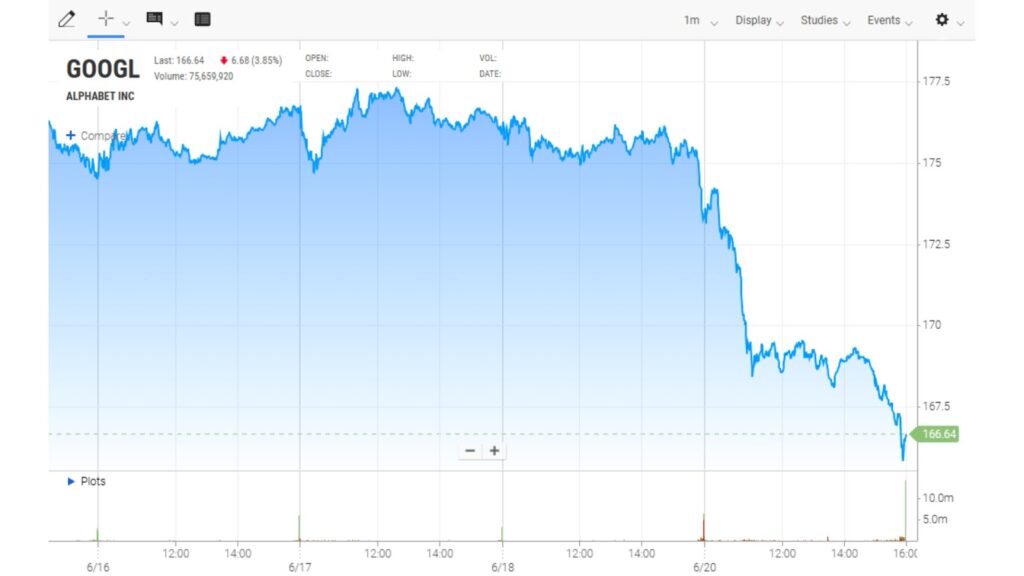
For investors, accessing real-time stock quotes and understanding the associated financial metrics is fundamental. Various platforms provide the data needed to track Alphabet’s performance.
Real-Time vs. Delayed Data
When seeking Alphabet’s stock price, it’s important to distinguish between real-time and delayed data:
- Real-Time Data: Provided by most brokerage platforms, premium financial news services (e.g., Bloomberg Terminal, Refinitiv Eikon), and certain financial websites (e.g., NASDAQ.com, Google Finance itself often offers real-time quotes, as do some other major financial portals depending on their agreements). This data reflects the price at the exact moment of a trade.
- Delayed Data: Many free financial news websites and search engine results may display stock prices that are 15-20 minutes delayed. While sufficient for general observation, it’s not ideal for active trading decisions. Always check the timestamp associated with the quote.
Key Metrics to Track
Beyond the current price, several metrics provide a more comprehensive picture:
- Open, High, Low, Close (OHLC): These daily figures show the price range and where the stock ended the trading day.
- Volume: The number of shares traded in a given period. High volume often indicates strong conviction behind price movements.
- Market Capitalization: Current share price multiplied by the total number of outstanding shares (for both GOOGL and GOOG combined). It represents the company’s total market value.
- P/E Ratio (Price-to-Earnings Ratio): Current share price divided by its earnings per share. It indicates how much investors are willing to pay per dollar of earnings. A high P/E ratio often suggests investors expect strong future growth.
- 52-Week Range: The highest and lowest prices the stock has traded at over the past year, providing context for its current valuation.
- EPS (Earnings Per Share): The portion of a company’s profit allocated to each outstanding share. Crucial for understanding profitability on a per-share basis.
- Beta: A measure of a stock’s volatility in relation to the overall market. A beta greater than 1 indicates higher volatility than the market, while less than 1 indicates lower volatility.
Utilizing Financial Tools
Numerous resources can help you track and analyze Alphabet’s stock:
- Brokerage Platforms: Your investment account provider (e.g., Fidelity, Schwab, E-Trade, Robinhood) will offer real-time quotes, charting tools, and research.
- Financial News Websites: Leading sites like The Wall Street Journal, Bloomberg, Reuters, Yahoo Finance, and CNBC provide comprehensive stock pages, news, and analysis.
- Company Investor Relations: Alphabet’s official investor relations website (abc.xyz/investor) provides direct access to SEC filings, earnings transcripts, and financial reports, which are essential for fundamental analysis.
- Charting Software: Tools like TradingView, StockCharts, or features within brokerage platforms allow for in-depth technical analysis of price movements and patterns.
Investing in Google (Alphabet) Stock: Considerations for Investors
Investing in a company like Alphabet requires careful consideration, weighing its significant potential against inherent risks and ensuring it aligns with your personal financial goals and risk tolerance.
Long-Term Growth Potential
Alphabet’s compelling investment case largely rests on its enduring strengths and future-oriented strategy:
- Dominant Market Position: Its search engine holds an overwhelming market share globally, generating immense cash flow. YouTube is the undisputed leader in online video.
- Diversified Revenue Streams: While advertising remains primary, the rapid growth of Google Cloud, increasing hardware sales, and nascent “Other Bets” reduce dependence on any single segment.
- Innovation Engine: Alphabet’s commitment to R&D, particularly in AI, quantum computing, and other frontier technologies, positions it for continued relevance and new market creation for decades to come.
- Global Reach: With products used by billions worldwide, Alphabet benefits from global economic growth and digital transformation trends.
Risks and Volatility
Despite its strengths, investing in Alphabet is not without risks:
- Regulatory Headwinds: Ongoing antitrust investigations and the potential for new regulations pose a continuous threat to its business model and profitability.
- Competition: The tech industry is fiercely competitive. While dominant, Alphabet faces constant pressure from rivals innovating rapidly.
- Reliance on Advertising: A significant portion of its revenue is tied to advertising, which can be cyclical and sensitive to economic downturns.
- Dependence on Key Personnel: While robust, the company’s visionary leadership and technological prowess are somewhat concentrated.
- Market Volatility: As a growth stock, Alphabet can be more susceptible to broad market downturns and shifts in investor sentiment towards tech.
Diversification and Portfolio Strategy
Even a seemingly robust investment like Alphabet should be viewed as part of a larger, diversified investment strategy:
- Avoid Over-Concentration: While alluring, putting too much of your portfolio into a single stock, no matter how strong, increases your overall risk.
- Sectoral Balance: Balance tech exposure with investments in other sectors (e.g., healthcare, industrials, consumer staples) to mitigate sector-specific risks.
- Asset Allocation: Consider allocating investments across different asset classes, such as bonds, real estate, and international equities, to further diversify risk.
- Long-Term Horizon: Investing in growth companies like Alphabet is generally best suited for investors with a long-term horizon who can weather short-term market fluctuations.
Due Diligence and Research
Successful investing in Alphabet, or any stock, hinges on thorough research:
- Read Financial Reports: Delve into the company’s 10-K (annual) and 10-Q (quarterly) reports filed with the SEC. These provide detailed financial statements and risk factors.
- Follow Analyst Reports: Read reports from reputable financial analysts to get different perspectives, but always cross-reference them with your own research.
- Stay Informed: Keep abreast of industry news, technological developments, and regulatory actions that could impact Alphabet’s business.
- Understand Valuation: Learn how to assess whether the current stock price accurately reflects the company’s intrinsic value and future potential.
The Future Outlook for Alphabet Inc.
Alphabet’s trajectory will undoubtedly continue to shape the digital world, and its stock price will reflect its ability to navigate opportunities and challenges in an ever-evolving landscape.
Continued Dominance in Core Businesses
Google Search and YouTube are expected to maintain their leadership positions, driven by continuous algorithmic improvements, AI integration, and global user growth. Google Cloud, while still trailing market leaders, is demonstrating robust growth and gaining market share, promising a more diversified and resilient revenue base. These core segments provide the financial bedrock for Alphabet’s ambitious long-term projects.
AI’s Role in Future Valuation
Artificial intelligence is not just a part of Alphabet’s strategy; it is increasingly its core. From enhancing search results and personalizing YouTube content to powering Google Cloud services and driving Waymo’s autonomous vehicles, AI integration across all products and new AI ventures (like Gemini and other foundational models) will be a primary driver of future valuation. Alphabet’s success in monetizing its vast AI research and capabilities will be critical.
“Other Bets” and Long-Term Innovation
While often generating losses, Alphabet’s “Other Bets” represent moonshot investments in groundbreaking technologies. A significant breakthrough from Waymo (autonomous driving), Verily (life sciences), or other ventures could unlock exponential value, fundamentally changing Alphabet’s future revenue profile. Investors carefully monitor these segments for signs of progress, recognizing their long-term, high-reward potential that distinguishes Alphabet from many peers.
In conclusion, understanding “what is Google stock price” means appreciating its current numerical value as a real-time snapshot, but also recognizing it as the confluence of robust company fundamentals, dynamic market forces, strategic innovation, and a complex regulatory environment. For investors, Alphabet Inc. offers a compelling, albeit volatile, opportunity to participate in the growth of a company at the forefront of technological advancement. Success in navigating this investment requires continuous research, a long-term perspective, and a clear understanding of one’s own financial goals and risk tolerance within the broader context of a diversified portfolio.
aViewFromTheCave is a participant in the Amazon Services LLC Associates Program, an affiliate advertising program designed to provide a means for sites to earn advertising fees by advertising and linking to Amazon.com. Amazon, the Amazon logo, AmazonSupply, and the AmazonSupply logo are trademarks of Amazon.com, Inc. or its affiliates. As an Amazon Associate we earn affiliate commissions from qualifying purchases.