
The global stock market has been a whirlwind of activity, or perhaps, inactivity in the upward sense, leaving many investors grappling with uncertainty. What was once a seemingly unstoppable bull run has, for many, transitioned into a period characterized by volatility, corrections, and a pervasive sense of caution. Understanding the multifaceted forces at play is crucial for navigating these choppy waters and making informed financial decisions. This isn’t just a simple dip; it’s a complex interplay of macroeconomic shifts, geopolitical tensions, and evolving investor sentiment that demands a deeper dive into the undercurrents of the financial world.

Navigating the Current Economic Landscape
The primary drivers of the stock market’s recent behavior are deeply rooted in the broader economic environment. A confluence of factors, many unprecedented in their scale and synchronicity, has created a challenging backdrop for equity performance.
Inflationary Pressures and Interest Rate Hikes
Perhaps the most significant headwind facing markets globally is persistent inflation. After decades of relative price stability, the post-pandemic recovery, coupled with fiscal stimulus and supply chain bottlenecks, ignited a surge in consumer prices. This inflation erodes purchasing power, increases the cost of doing business, and ultimately impacts corporate profit margins. In response, central banks, most notably the U.S. Federal Reserve, have embarked on aggressive interest rate hiking cycles. Higher interest rates make borrowing more expensive for businesses and consumers, which can slow economic growth. From an investing perspective, higher rates also reduce the present value of future earnings, hitting growth stocks particularly hard. The market’s reaction to each interest rate decision and forward guidance on monetary policy has become a defining characteristic of recent trading sessions, often leading to significant swings based on perceived dovish or hawkish tones.
Geopolitical Events and Supply Chain Disruptions
Beyond monetary policy, geopolitical events have cast a long shadow over global markets. Conflicts, trade disputes, and regional instabilities disrupt established supply chains, leading to shortages and further inflationary pressures. For instance, disruptions in energy-producing regions directly impact global oil and gas prices, which then feed into transportation costs and manufacturing expenses across virtually every industry. Similarly, restrictions on trade or blockades can lead to a scarcity of crucial components, forcing companies to halt production or seek more expensive alternatives. This unpredictability makes it incredibly difficult for businesses to plan and for investors to forecast earnings, introducing an element of risk that is hard to quantify but impossible to ignore. The ripple effect of these disruptions is felt from the factory floor to the consumer’s wallet, ultimately weighing on investor confidence and market valuations.
Consumer Confidence and Corporate Earnings
The health of the consumer is a vital indicator for the broader economy and, by extension, the stock market. High inflation and rising interest rates can significantly erode consumer confidence, leading to reduced discretionary spending. When consumers tighten their belts, businesses experience slower sales growth, which translates directly into lower corporate earnings. Recent earnings reports from major corporations have shown a mixed bag, with some companies managing to pass on higher costs to consumers, while others struggle with shrinking margins or declining demand. Furthermore, many companies have offered cautious outlooks for future quarters, citing ongoing economic uncertainties. The stock market, being a forward-looking mechanism, tends to react sharply to these earnings misses or conservative guidance, often leading to sector-specific sell-offs or broader market corrections as investors adjust their expectations for future profitability.
Key Market Movers and Their Impact
Within the broader market landscape, certain sectors and asset classes have experienced distinct movements, reflecting their unique sensitivities to the prevailing economic conditions.
Technology Sector Volatility
The technology sector, which led the charge during much of the previous bull market, has been particularly susceptible to the current environment. Many tech companies, especially those categorized as “growth stocks,” derive a significant portion of their valuation from projected future earnings. As interest rates rise, the discount rate applied to these future earnings also increases, diminishing their present value. This effect is compounded by concerns about slowing economic growth, which could impact advertising revenues, subscription growth, and enterprise spending on new software and hardware. Consequently, many high-flying tech stocks have experienced substantial corrections, leading to a re-evaluation of their long-term growth prospects and sustainable valuations.
Energy and Commodity Market Dynamics
In stark contrast to the tech sector, energy and commodity-related stocks have often been beneficiaries of the current inflationary and geopolitical climate. Disruptions to global supply chains and political tensions have driven up the prices of oil, natural gas, metals, and agricultural products. Companies involved in the extraction, processing, and distribution of these commodities have seen their revenues and profits surge. This has led to strong performance in the energy sector, for example, even as broader market indices struggled. However, this dynamic is not without its risks; a sudden resolution of geopolitical conflicts or a significant downturn in global demand could quickly reverse these gains, highlighting the cyclical nature of commodity markets.
Financial Sector Resilience
The financial sector, encompassing banks, insurance companies, and investment firms, presents a more nuanced picture. On one hand, rising interest rates can be beneficial for banks, as they typically increase the net interest margin—the difference between what banks earn on loans and what they pay on deposits. This can lead to improved profitability. On the other hand, a slowing economy or a recession could lead to an increase in loan defaults, credit card delinquencies, and a general tightening of credit, which would negatively impact financial institutions. The sector’s performance often becomes a bellwether for the overall health of the economy, as its stability is intrinsically linked to the financial well-being of businesses and consumers. Investors are closely watching for signs of credit deterioration versus the benefits of higher lending rates.
Understanding Market Cycles and Investor Psychology
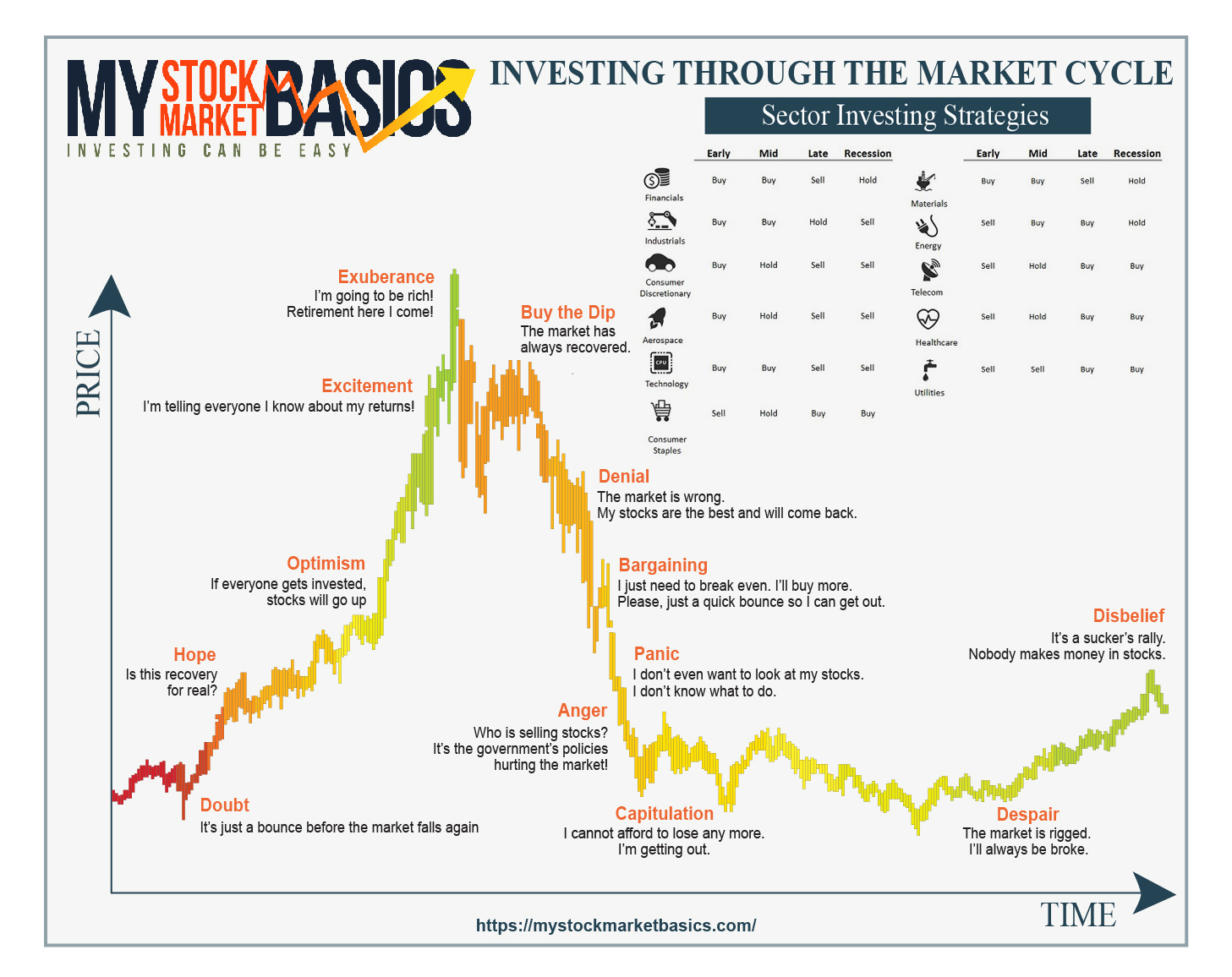
Beyond the tangible economic data and sector-specific performance, the stock market is heavily influenced by human psychology and its inherent cycles. Periods of uncertainty often amplify these emotional responses, leading to exaggerated market movements.
The Role of Fear and Greed
Investor behavior is often driven by two powerful emotions: fear and greed. During bull markets, greed can lead to speculative buying and inflated valuations, pushing asset prices beyond their intrinsic worth. Conversely, in bear markets or periods of significant volatility, fear can trigger panic selling, causing assets to trade below their fundamental value. This cycle of overoptimism and overpessimism is a constant feature of financial markets. Recognizing when fear or greed is dominating market sentiment is critical for maintaining a rational, long-term perspective. Often, the best opportunities arise when others are fearful, provided one has a clear understanding of the underlying value.
Long-Term Investing Principles vs. Short-Term Noise
The daily fluctuations of the stock market, often fueled by news headlines, social media trends, and algorithmic trading, can be deafening. For long-term investors, distinguishing between this “short-term noise” and fundamental shifts in value is paramount. Successful investing typically involves a focus on the long horizon, understanding that market corrections are a normal and inevitable part of the investing journey. Companies with strong fundamentals, sustainable business models, and competent management tend to recover and thrive over time, irrespective of short-term market turbulence. Patience and discipline are virtues that often yield superior returns compared to attempting to time the market based on fleeting news cycles.
The Importance of Diversification
Diversification remains one of the most fundamental principles of sound investing, especially in volatile periods. Spreading investments across different asset classes (equities, bonds, real estate), various sectors, geographical regions, and company sizes helps mitigate risk. When one segment of the market is underperforming, others may be holding steady or even thriving, cushioning the overall portfolio against severe downturns. The current environment, where different sectors are reacting quite differently to economic pressures, underscores the wisdom of not putting all your eggs in one basket. A well-diversified portfolio is not about maximizing gains in any single area but about optimizing risk-adjusted returns over the long term.
Strategies for Investors in a Volatile Market
Given the current dynamics, investors need well-thought-out strategies to protect capital and position themselves for future growth. Hasty decisions driven by emotion are almost always detrimental.
Dollar-Cost Averaging
One of the most effective strategies for navigating volatile markets is dollar-cost averaging. This involves investing a fixed amount of money at regular intervals (e.g., monthly), regardless of whether the market is up or down. When prices are high, your fixed investment buys fewer shares; when prices are low, it buys more shares. Over time, this strategy helps average out your purchase price, reducing the risk of investing a large sum at an unfortunate market peak. It takes the emotion out of investing and is particularly powerful during market downturns, allowing investors to accumulate more assets at reduced prices, which can lead to significant gains when the market eventually recovers.
Rebalancing Portfolios
Periodically rebalancing your portfolio is another crucial strategy. As asset classes perform differently, your portfolio’s original allocation (e.g., 60% stocks, 40% bonds) can drift. Rebalancing involves selling some of your outperforming assets and using the proceeds to buy more of your underperforming assets, bringing your portfolio back to its target allocation. This disciplined approach forces you to “buy low and sell high” on a relative basis and helps ensure your portfolio’s risk level remains consistent with your initial objectives. In a volatile market, where some sectors have soared while others have fallen, rebalancing can be an opportunity to prune overextended positions and add to undervalued ones.
Focusing on Fundamentals and Value
In times of market froth, speculative assets and companies with weak fundamentals can thrive on momentum. However, during downturns, the market tends to differentiate, punishing companies that lack strong underlying financial health. Smart investors in a volatile environment focus on the fundamentals: companies with strong balance sheets, consistent cash flows, sustainable competitive advantages, and reasonable valuations. They look for businesses that can weather economic storms, generate profits even in challenging conditions, and are trading at a price that reflects their intrinsic value rather than speculative hype. Researching and understanding a company’s business model, management, and financial health becomes even more critical.

Seeking Professional Financial Advice
For many, the complexities and emotional toll of a volatile stock market can be overwhelming. Seeking advice from a qualified financial advisor can provide invaluable guidance. A professional can help assess your individual financial goals, risk tolerance, and time horizon, then tailor an investment strategy that aligns with your specific needs. They can also help you stay disciplined during market downturns, provide an objective perspective, and navigate tax implications or estate planning considerations. In an environment where every decision feels weighted, having an experienced hand to guide your financial planning can provide clarity and peace of mind.
aViewFromTheCave is a participant in the Amazon Services LLC Associates Program, an affiliate advertising program designed to provide a means for sites to earn advertising fees by advertising and linking to Amazon.com. Amazon, the Amazon logo, AmazonSupply, and the AmazonSupply logo are trademarks of Amazon.com, Inc. or its affiliates. As an Amazon Associate we earn affiliate commissions from qualifying purchases.