
As the largest financial institution in the United States, JPMorgan Chase serves as a bellwether for the broader economy. When customers and investors ask “what is going on with Chase Bank,” they are often reacting to a combination of systemic shifts, technological updates, and the bank’s evolving role in a high-interest-rate environment. To understand the current state of Chase is to understand the current state of American personal finance.
In recent months, the bank has made headlines for its aggressive expansion, its handling of the “First Republic” acquisition, and its response to the shifting demands of modern retail banking. From digital overhauls to physical branch transformations, the institution is navigating a delicate balance between traditional stability and fintech-driven innovation.

The Digital Pivot: Enhancing the Financial Toolset
In the realm of personal finance, the quality of a bank’s digital interface is often more important to a customer than the location of its nearest branch. Chase has recognized this, pouring billions of dollars into its technology budget to ensure that the Chase Mobile app remains at the top of the App Store rankings.
The Evolution of the Chase Mobile App
The current “state of the union” for Chase’s digital presence is defined by integration. The bank is no longer just a place to store cash; it is attempting to become a comprehensive financial hub. Recent updates have focused on integrating “Chase Travels,” a comprehensive booking engine that allows Sapphire and Freedom cardholders to redeem points or pay with cash directly within the ecosystem. By doing this, Chase is effectively capturing the entire lifecycle of a financial transaction—from the initial saving to the ultimate expenditure.
Furthermore, the introduction of “Wealth Plan,” a digital planning tool available to all users, signifies a shift toward democratizing financial advice. Historically, sophisticated retirement planning and cash-flow modeling were reserved for private banking clients. Now, the app uses data-driven insights to help everyday users visualize their “financial independence” date, reflecting a broader trend in personal finance where the consumer expects more than just a ledger.
Cybersecurity and Consumer Protection
A significant part of “what is going on” with Chase involves its heightened focus on digital security. With the rise of sophisticated phishing and “Zelle scams,” Chase has implemented more friction in its payment processes. While this sometimes frustrates users looking for instant transfers, it is a calculated move to mitigate the rising tide of authorized push payment (APP) fraud. The bank is currently navigating a landscape where the legal responsibility for these scams is being debated at the regulatory level, making their internal security protocols a critical pillar of their business finance strategy.
The Interest Rate Paradox: Why Chase Stays the Course
One of the most frequent questions from Chase customers centers on interest rates. As the Federal Reserve maintained high rates to combat inflation, many online-only banks (like Ally, SoFi, or Marcus by Goldman Sachs) raised their Annual Percentage Yields (APYs) to 4% or higher. Chase, conversely, has kept its standard savings rates near the floor of 0.01%.
The Strategy of Low Savings Rates
To the average consumer, this seems counterintuitive. However, from a corporate finance perspective, Chase’s strategy is rooted in its massive liquidity. Because Chase has a “sticky” deposit base—millions of customers who use it for their primary checking, direct deposits, and bill pay—it does not need to “buy” deposits by offering high interest rates.
Instead, the bank focuses on “Relationship Banking.” Customers who want higher yields are encouraged to move their money into J.P. Morgan Wealth Management products, such as money market funds or Certificates of Deposit (CDs), which do offer competitive rates. This bifurcated approach allows the bank to maintain low-cost capital for its lending operations while providing an “exit ramp” for savvy investors within its own ecosystem.
Relationship Tiers and the Sapphire Ecosystem
Chase is also leaning heavily into its premium tiers—Chase Private Client and Sapphire Banking. By offering benefits like waived wire transfer fees, higher ATM limits, and dedicated bankers, Chase is incentivizing users to keep higher balances despite the lower APY. This branding strategy ensures that high-net-worth individuals remain loyal to the ecosystem, viewing the bank as a service provider rather than just a vault for their cash.
Physical Expansion in a Post-Digital World
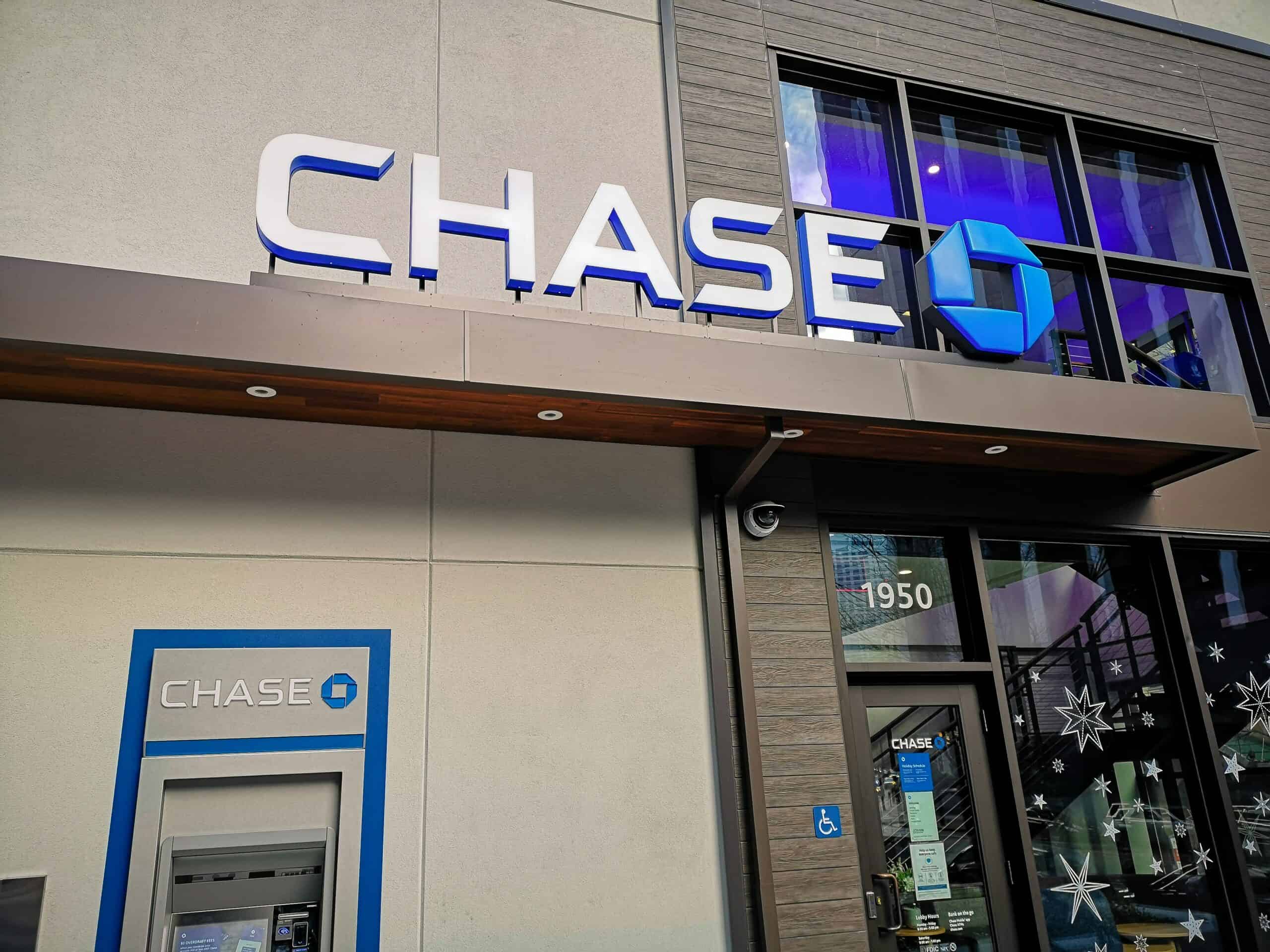
While many banks are aggressively closing physical branches to save on overhead, Chase is doing the opposite. The bank has committed to a massive expansion plan, opening hundreds of new branches in markets where they previously had no physical footprint, such as Boston, Philadelphia, and Charlotte.

The “Financial Center” Model
The “new” Chase branch doesn’t look like a traditional bank. The focus has shifted from teller windows to “Financial Centers” designed for consultation. Chase’s strategy is based on the data that while people do their daily banking on their phones, they still want a physical office for major life events: taking out a mortgage, starting a small business account, or discussing an inheritance.
This physical presence serves as a massive marketing billboard. In the world of personal finance, trust is the primary currency, and a brick-and-mortar building on a busy street corner provides a sense of permanence that a digital-only bank cannot match.
Integrating First Republic
A major component of Chase’s recent activity is the integration of First Republic Bank, which it acquired during the regional banking crisis of 2023. This move was not just about increasing assets; it was about acquiring a specific culture of high-touch service. Chase is currently rebranding many First Republic locations into “J.P. Morgan” branded offices, aiming to capture the ultra-high-net-worth segment. This transition is a massive logistical undertaking that involves migrating thousands of wealthy clients into the Chase technological infrastructure while trying to maintain the “white-glove” service they expect.
Wealth Management and the Retail Investor
Chase is currently in a fierce competition with platforms like Vanguard, Fidelity, and Charles Schwab. To win, they have overhauled their “J.P. Morgan Self-Directed Investing” platform.
The Push Toward Managed Portfolios
What is going on with Chase’s investment arm is a push toward “Personal Advisors.” They are leveraging AI and automated “Robo-Advisors” to provide low-cost management for smaller accounts, while simultaneously hiring thousands of human advisors for more complex financial planning.
For the retail investor, this means the Chase app is becoming an all-in-one terminal. You can buy stocks, trade ETFs, and monitor your 401(k) in the same place you pay your credit card bill. This “one-stop-shop” approach is a central pillar of their business finance model, aiming to increase “wallet share”—the percentage of a customer’s total financial life that is handled by a single institution.
The Rise of Alternative Investments
In a notable shift, Chase is also beginning to provide broader access to alternative investments for its higher-tier clients. Previously, private equity and hedge fund access were reserved for the institutional elite. Chase is now creating pathways for its Private Client base to access these diversified asset classes, reflecting a trend in the broader investment world where “alts” are becoming a standard part of a balanced portfolio.
Economic Indicators: The View from the Top
When Jamie Dimon, the CEO of JPMorgan Chase, speaks, the financial world listens. The bank’s quarterly earnings reports provide the clearest picture of how the American consumer is actually doing.
Consumer Credit Health
According to recent data from Chase, consumer spending remains resilient, but there are signs of normalization. “What is going on” behind the scenes is a cautious recalibration of credit risk. Chase has observed that while credit card spending is still up, delinquency rates are slowly returning to pre-pandemic levels. Consequently, the bank has become slightly more selective in its lending criteria, a move that affects anyone looking to open a new line of credit or apply for a Chase mortgage.
The Outlook for Business Finance
On the business side, Chase is focusing heavily on the “Middle Market”—companies that are too big for small business loans but too small for massive corporate debt offerings. By providing specialized software for treasury services and payroll, Chase is embedding itself into the operational fabric of American businesses. This ensures that even if the retail side of the bank faces headwinds, the institutional and commercial sides provide a stable foundation.
Summary: A Giant in Transition
The current state of Chase Bank is defined by a paradox: it is an old-guard institution that is behaving like a tech company. It is maintaining the largest physical branch network while simultaneously building the most robust mobile banking app. It is keeping interest rates low for savers while providing high-end investment tools for those willing to seek them out.
For the individual, “what is going on with Chase” is a move toward a more integrated, data-driven, and service-oriented financial experience. Whether you are a college student with a first checking account or a seasoned investor managing a multi-million dollar portfolio, the bank is positioning itself to be the singular platform for every financial decision. In an era of financial fragmentation, Chase is betting that the consumer ultimately wants everything in one place, backed by the security of the nation’s largest balance sheet.
aViewFromTheCave is a participant in the Amazon Services LLC Associates Program, an affiliate advertising program designed to provide a means for sites to earn advertising fees by advertising and linking to Amazon.com. Amazon, the Amazon logo, AmazonSupply, and the AmazonSupply logo are trademarks of Amazon.com, Inc. or its affiliates. As an Amazon Associate we earn affiliate commissions from qualifying purchases.