
In the pursuit of advanced education and professional growth, few credentials hold as much weight as a Master of Business Administration (MBA). As aspiring business leaders contemplate this transformative journey, they inevitably encounter a critical gatekeeper: the GMAT. The Graduate Management Admission Test (GMAT) is far more than just another standardized exam; it represents a significant financial and career investment, a strategic step designed to unlock pathways to enhanced earning potential, robust professional networks, and leadership roles in the global economy. Understanding “what is the GMAT test” is therefore not merely an academic exercise, but a crucial component of financial planning and strategic career development for anyone eyeing a future in business management.
Administered by the Graduate Management Admission Council (GMAC), the GMAT is a computer-adaptive test designed to assess certain analytical, writing, quantitative, verbal, and reading skills. These skills are deemed critical for success in the demanding curriculum of graduate business programs. But beyond its academic function, the GMAT serves as an initial investment indicator, signaling a candidate’s commitment and capability to undertake a rigorous, often costly, MBA program. For many, a strong GMAT score is the first tangible step toward a future defined by increased income, accelerated career progression, and a significant return on their educational investment.
The GMAT: An Investment in Your Financial Future
Viewing the GMAT not as an obstacle but as an investment is crucial for prospective business school applicants. The time, effort, and money dedicated to preparing for and taking the test are foundational elements of a larger financial strategy aimed at long-term prosperity and career satisfaction.
Unlocking Prestigious Business Programs
The GMAT score is a primary criterion for admission into virtually all top-tier global MBA programs. These institutions, renowned for their rigorous curricula, world-class faculty, and unparalleled networking opportunities, are also gateways to some of the most lucrative career paths in finance, consulting, technology, and entrepreneurship. A competitive GMAT score demonstrates to admissions committees that an applicant possesses the intellectual acumen and analytical rigor necessary to thrive in such environments. This score, therefore, acts as a key to accessing programs that consistently produce graduates with significantly higher post-MBA salaries and accelerated career trajectories, making it a critical first step in securing a high-ROI education. Without a strong GMAT score, entry into these programs, and the financial benefits they confer, often remains out of reach.
The Direct Link to Enhanced Earning Potential
The correlation between obtaining an MBA from a reputable institution (for which the GMAT is a prerequisite) and a substantial increase in earning potential is well-documented. Graduates of top MBA programs often see their salaries double or even triple within a few years of graduation. The GMAT, by facilitating entry into these programs, directly contributes to this financial uplift. It’s not just about getting into a school; it’s about qualifying for the specific programs that have strong ties to lucrative industries and high-paying roles. The quantitative section of the GMAT, for instance, directly tests skills critical in financial analysis, market forecasting, and strategic planning—roles that command premium salaries. A high score suggests a stronger foundation for mastering these skills, thereby enhancing a candidate’s appeal to employers offering financially rewarding positions.
A Strategic Financial Decision
Deciding to take the GMAT and apply to business school is a multi-faceted financial decision. It involves not only the direct costs of the test and tuition but also the opportunity cost of foregone income during the program. However, for many, this short-term financial outlay is a strategic investment that pays dividends over a lifetime. The GMAT helps business schools identify candidates who are most likely to succeed academically and professionally, thereby maintaining the prestige and value of their degrees. For the individual, investing in GMAT preparation is an upfront commitment to maximizing the return on their subsequent MBA investment. It’s an intelligent allocation of resources today for significantly greater financial returns tomorrow, akin to investing in a high-growth stock that promises substantial long-term gains.
Understanding the GMAT’s Structure and Purpose from a Financial Lens
To fully appreciate the GMAT’s role as a financial tool, it’s essential to understand its structure and why business schools place such high value on its assessment of specific skills. Each section of the GMAT implicitly tests aptitudes that are directly transferable to financially demanding roles and the rigorous analytical environment of an MBA program.
Deconstructing the Test Sections
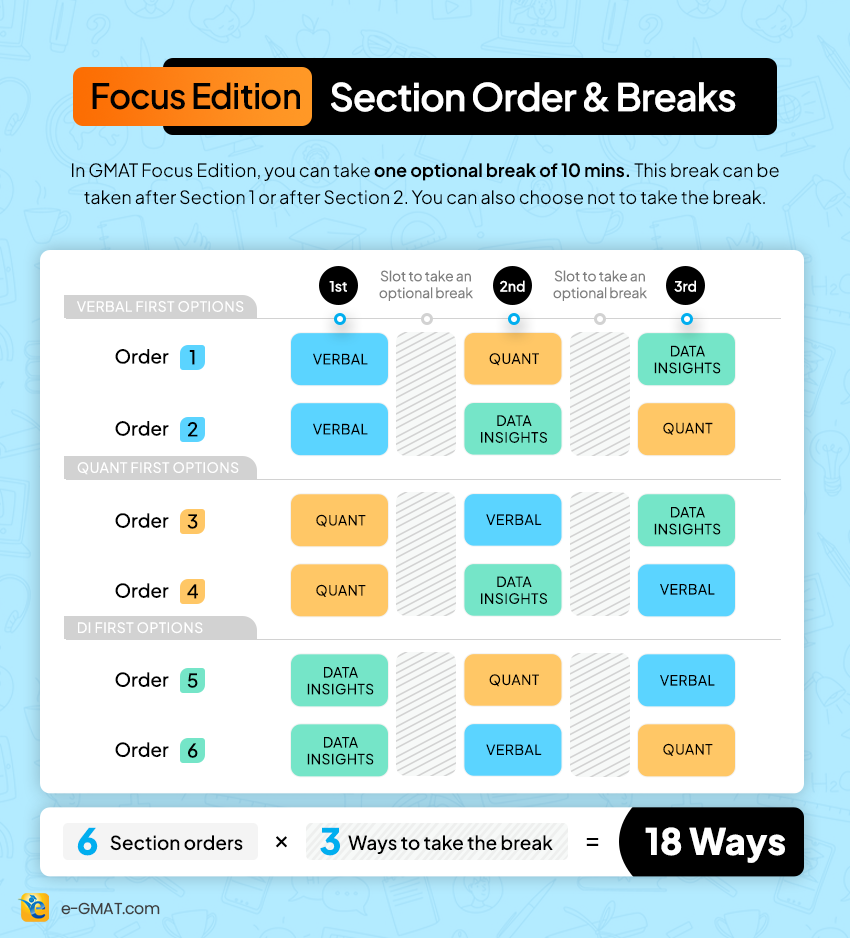
The GMAT is composed of four main sections, each designed to evaluate a distinct set of skills pertinent to business success:
-
Analytical Writing Assessment (AWA): This section requires test-takers to analyze an argument and critique its reasoning. In the business world, this translates to the ability to critically evaluate financial reports, strategic proposals, and market analyses, identifying strengths, weaknesses, and potential risks—all crucial for sound financial decision-making.
-
Integrated Reasoning (IR): This section assesses the ability to synthesize information from multiple sources (charts, graphs, tables) and formats to solve complex problems. This skill is invaluable in finance, consulting, and data-driven roles where professionals must quickly interpret diverse datasets to inform investment strategies or operational improvements.
-
Quantitative Reasoning: Perhaps the most directly relevant to financial careers, this section measures the ability to analyze data and draw conclusions using reasoning skills. It covers problem-solving and data sufficiency, testing mathematical foundations crucial for financial modeling, budget management, and understanding economic indicators. A strong performance here signals a candidate’s readiness for advanced finance coursework and quantitative analysis common in high-value roles.
-
Verbal Reasoning: This section evaluates critical reading, sentence correction, and reading comprehension. Strong verbal skills are essential for clear communication in business, crafting persuasive financial pitches, negotiating deals, and understanding complex legal or contractual language—all integral to navigating sophisticated financial transactions and corporate governance.
Why Business Schools Value the GMAT Score
Business schools rely heavily on the GMAT score for several financial and educational reasons. Firstly, it offers a standardized, objective measure to compare candidates from diverse academic backgrounds and international education systems. This allows schools to curate a cohort of students who are not only capable of handling the demanding curriculum but also likely to contribute positively to the school’s post-graduation employment statistics—a key metric for reputation and future financial viability. Secondly, a high average GMAT score for an incoming class boosts a school’s ranking, which in turn attracts more applicants and higher-quality students, creating a virtuous cycle that enhances the value of the degree for all alumni. For individual applicants, a strong GMAT score is a clear signal of preparedness, reducing the risk of academic struggle and ensuring a more secure return on their tuition investment.
Beyond the Score: A Holistic Financial Assessment
While the GMAT score is numerically significant, business schools conduct a holistic review of applications, considering essays, letters of recommendation, work experience, and interviews. These elements help paint a complete picture of an applicant’s potential as a future business leader and a valuable alumni network member. From a financial perspective, this holistic assessment aims to identify candidates who will not only succeed academically but also contribute significantly to the economy post-MBA, generating a positive impact that reflects well on the school. Work experience, for example, demonstrates practical application of business principles and can hint at an applicant’s financial maturity and career trajectory. Essays and interviews allow candidates to articulate their financial goals and how an MBA aligns with their vision for wealth creation and societal contribution.
Financial Planning for Your GMAT Journey
Embarking on the GMAT journey requires careful financial planning. From the test fee itself to preparation materials and potential re-takes, these costs quickly add up, forming the initial layer of your larger investment in an MBA.

The Cost of the Test and Preparation Resources
The registration fee for the GMAT is a non-trivial amount, often several hundred dollars, varying by region. Beyond the test itself, comprehensive preparation is typically required for a competitive score. This can involve purchasing official study guides, practice tests, online courses, or even enrolling in expensive in-person preparatory classes, which can cost thousands of dollars. While these costs represent a significant upfront expenditure, they are a necessary investment to maximize the likelihood of achieving a score that opens doors to the most financially rewarding MBA programs. Skimping on preparation can lead to lower scores, potentially necessitating re-takes (incurring additional fees) or limiting access to top-tier programs, thereby diminishing the ultimate financial return on the entire MBA endeavor.
Budgeting for MBA Applications and Tuition
The GMAT is just the first financial hurdle. Prospective MBA students must also budget for application fees (which can add up quickly when applying to multiple schools), travel costs for interviews, and ultimately, the substantial tuition fees and living expenses associated with an MBA program. Top MBA programs can cost upwards of $100,000 to $200,000 for tuition alone, not including living expenses, which can easily double the total cost of attendance. Acknowledging and planning for these cumulative costs from the outset is crucial. It underscores why the GMAT score is so important: it’s the initial investment that validates the much larger subsequent investment in the MBA degree itself.
Exploring Scholarships and Financial Aid
For many, the significant financial commitment of an MBA is mitigated by scholarships and financial aid. A strong GMAT score can be a powerful tool in securing merit-based scholarships, which can drastically reduce the overall cost of an MBA and significantly boost its financial ROI. Business schools often award scholarships to candidates who demonstrate exceptional academic promise, as evidenced by a high GMAT score, coupled with strong work experience and leadership potential. Furthermore, various financial aid options, including student loans, fellowships, and employer sponsorship, exist to help finance an MBA. Researching and applying for these opportunities concurrently with GMAT preparation can be a wise financial strategy, as reducing the debt burden post-graduation directly enhances the net financial benefit of the degree.
Maximizing Your Return on Investment (ROI) with the GMAT
The ultimate goal of undertaking the GMAT and an MBA is to achieve a significant return on investment. This ROI is not just monetary but also encompasses career satisfaction, leadership opportunities, and a powerful professional network.
Leveraging Your Score for Career Advancement
A strong GMAT score is a powerful asset that extends beyond admissions. It can influence early career opportunities post-MBA, particularly in highly competitive fields like investment banking, management consulting, and private equity, where firms often look at GMAT scores as a proxy for analytical ability and intellectual horsepower. Recruiters from these high-paying industries understand that candidates who performed well on the GMAT possess the core competencies needed to excel in demanding roles. Leveraging your GMAT score effectively can thus lead to more lucrative job offers, faster promotions, and quicker access to leadership positions, accelerating your financial growth trajectory.
The Long-Term Financial Impact of an MBA
The financial impact of an MBA is sustained over decades. Graduates typically experience higher lifetime earnings compared to their non-MBA counterparts. This long-term financial benefit stems from several factors: increased salary, higher bonuses, greater job security, and the flexibility to pivot into new, often more lucrative, industries or entrepreneurial ventures. The GMAT, as the initial filter for these opportunities, plays a foundational role in establishing this enhanced financial trajectory. It’s an early indicator of an individual’s potential to make strategic decisions that yield substantial financial rewards throughout their career.
Strategic Networking and Post-MBA Earning Trajectories
An often-underestimated component of an MBA’s ROI is the invaluable network of peers, alumni, and faculty it provides. This network can open doors to unforeseen career opportunities, partnerships, and investment possibilities. The GMAT, by helping you gain admission to elite programs, places you within this high-caliber network. Engaging with this network strategically can lead to mentorship, job referrals, and even funding for entrepreneurial ventures, all of which have direct or indirect financial benefits. The collective success and earning power of an MBA program’s alumni base reinforce the value of the degree and, by extension, the importance of the GMAT in accessing such an influential community.
Is the GMAT Right for Your Financial and Career Goals?
Before committing to the GMAT, a thorough self-assessment of your financial and career aspirations is crucial. It’s important to weigh the potential benefits against the costs and consider if this path truly aligns with your long-term financial vision.
Assessing Alternatives and Opportunity Costs
While the GMAT and MBA path is highly rewarding for many, it’s not the only route to career and financial success. Other certifications (e.g., CFA for finance, PMP for project management), executive education programs, or even direct entrepreneurial ventures might be more suitable depending on individual circumstances and goals. Assessing the opportunity cost—the income lost during the MBA program and the costs incurred—against the potential financial gains from alternative paths is a critical step. For some, the time and money invested in the GMAT and MBA might be better allocated elsewhere if their career goals do not strongly align with a traditional business management trajectory requiring such a degree.
Aligning Your Aspirations with Business Education
The GMAT and MBA are best suited for individuals aspiring to leadership roles in corporations, financial institutions, consulting firms, or high-growth startups, or for those seeking to found their own businesses with a strong strategic foundation. If your financial goals involve these types of roles, then the GMAT is a necessary and prudent investment. It signals a readiness to engage with complex business challenges and leverage an MBA for significant financial and professional advancement. Your career aspirations and desired financial outcomes should be the guiding force behind your decision to pursue the GMAT.

Making an Informed Decision for Your Financial Future
Ultimately, understanding “what is the GMAT test” means recognizing it as a foundational step in a strategic financial plan designed to maximize long-term earning potential and career satisfaction. It is a rigorous assessment that, if approached with diligence and foresight, can unlock access to elite educational programs and, by extension, a world of enhanced financial opportunities. By viewing the GMAT through a financial lens—as an investment in human capital—prospective applicants can make an informed decision that shapes their professional trajectory and secures a prosperous future. The GMAT is not just a test; it’s a strategic entry point into a financially rewarding career path.
aViewFromTheCave is a participant in the Amazon Services LLC Associates Program, an affiliate advertising program designed to provide a means for sites to earn advertising fees by advertising and linking to Amazon.com. Amazon, the Amazon logo, AmazonSupply, and the AmazonSupply logo are trademarks of Amazon.com, Inc. or its affiliates. As an Amazon Associate we earn affiliate commissions from qualifying purchases.