
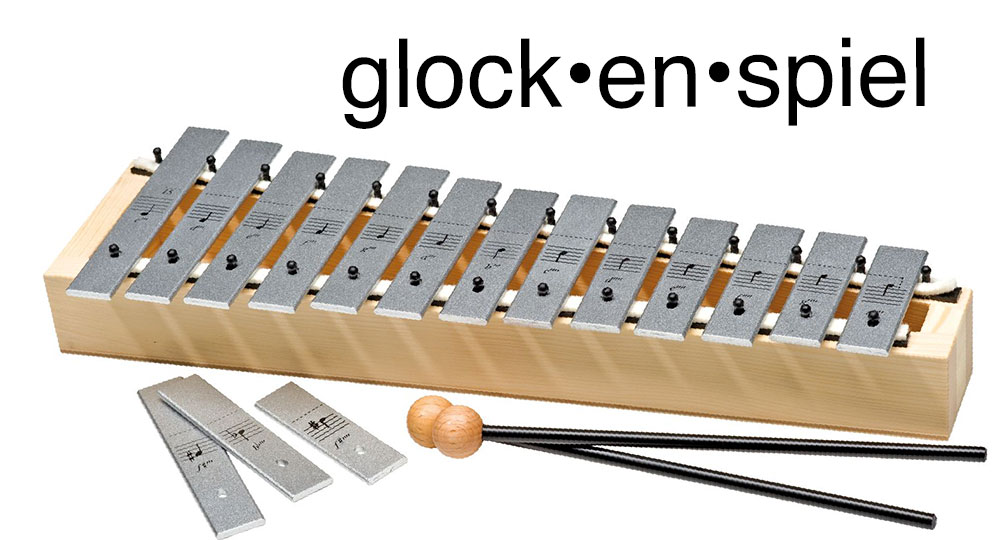
The glockenspiel, traditionally a percussive instrument renowned for its bright, bell-like tones, has charmed audiences and composers for centuries with its distinctive, shimmering sound. Composed of tuned metal bars arranged chromatically and struck with mallets, it adds a unique sparkle to orchestral pieces, marching bands, and theatrical productions. However, in the 21st century, the concept of the glockenspiel has transcended its physical form, evolving into a sophisticated digital entity deeply integrated into the world of technology. Today, understanding “what is glockenspiel” often requires exploring its presence as a virtual instrument, a software component, a mobile application, and a synthesized sound, revolutionizing how musicians, producers, and educators interact with this classic instrument. This exploration delves into how technology has not only preserved the glockenspiel’s legacy but also expanded its accessibility, versatility, and creative potential within the digital landscape.

The Digital Evolution of a Classic Instrument
The transformation of the glockenspiel from a purely acoustic instrument into a digital staple represents a significant shift in music technology. This evolution has democratized access to its unique timbre, allowing creators to incorporate its sound into diverse projects without the need for a physical instrument, dedicated recording space, or specialized microphone setups.
Virtual Instruments (VSTs) and Software Emulation
At the forefront of the glockenspiel’s digital presence are Virtual Studio Technology (VST) instruments and other software emulations. These plugins, compatible with Digital Audio Workstations (DAWs) like Ableton Live, Logic Pro, Pro Tools, and FL Studio, allow musicians to generate high-fidelity glockenspiel sounds directly from their computers. Advanced sampling techniques capture the nuances of various acoustic glockenspiels, including different mallet types, strike velocities, and sustain characteristics. Developers meticulously record individual notes at multiple dynamic levels, creating intricate sample libraries that can reproduce the instrument’s authentic sound with remarkable accuracy. Beyond simple playback, many VSTs offer extensive control over parameters such as reverb, decay, stereo imaging, and even simulated room acoustics, enabling producers to tailor the glockenspiel’s sound to fit any musical context, from ethereal soundscapes to punchy orchestral hits. The sophistication of these emulations means that a digital glockenspiel can often be indistinguishable from its acoustic counterpart in a mix, offering unparalleled flexibility and convenience.
Glockenspiel Apps for Mobile and Desktop
The accessibility of the glockenspiel has further expanded through dedicated mobile and desktop applications. These apps transform everyday devices into virtual instruments, often featuring intuitive touch interfaces that simulate striking the bars. For mobile platforms, glockenspiel apps are popular tools for casual music-making, ear training, and educational purposes. They allow users to experiment with melodies, learn basic music theory, or simply enjoy the instrument’s bright tones on the go. Desktop applications, meanwhile, might offer more advanced features, serving as standalone virtual instruments or as controllers for more complex music production setups. Some apps even integrate augmented reality (AR) features, allowing users to “play” a virtual glockenspiel superimposed on their real-world environment, adding an engaging, interactive dimension to music creation and performance. This proliferation of glockenspiel apps has made the instrument more approachable than ever, fostering new generations of digital musicians and enthusiasts.
Unlocking Creative Potential with Digital Glockenspiels
Integrating the glockenspiel into digital workflows has opened up a universe of creative possibilities, moving beyond its traditional orchestral role to inspire innovation in contemporary music production, sound design, and experimental compositions.
Integration into Digital Audio Workstations (DAWs)

The seamless integration of virtual glockenspiels into DAWs is central to their creative utility. Within a DAW, producers can sequence glockenspiel parts using MIDI (Musical Instrument Digital Interface), allowing for precise control over timing, pitch, and dynamics. This level of control enables complex rhythmic patterns and intricate melodic lines that might be challenging or impossible to perform acoustically. Furthermore, the digital environment facilitates easy experimentation with layering glockenspiel sounds with other instruments, applying advanced effects like granular synthesis, delays, or modulation, and automating parameters over time. This transformative capacity allows the glockenspiel to assume roles far beyond its traditional functions, appearing in genres from electronic dance music to film scores, ambient soundscapes, and experimental jazz. The ability to recall and modify these digital arrangements endlessly also speeds up the creative process, fostering rapid prototyping and refinement of musical ideas.
Sound Design and Synthesis Techniques
Beyond mere emulation, the digital glockenspiel serves as a fertile ground for advanced sound design and synthesis. While sample-based virtual instruments focus on realism, synthesis techniques offer a pathway to entirely new glockenspiel-inspired sounds. Wavetable synthesis, FM synthesis, and physical modeling can generate glockenspiel-like timbres that range from hyper-realistic to otherworldly. Sound designers can manipulate the attack, decay, sustain, and release envelopes, introduce harmonic distortions, or process the sound through spectral filters to create unique sonic textures. For instance, elongating the decay of a glockenspiel strike can turn its bright transient into a shimmering pad, while adding granular effects can dissolve its distinct notes into an atmospheric texture. This approach pushes the boundaries of “what is glockenspiel” by not just reproducing its sound but using its core characteristics as a starting point for entirely new sonic expressions, expanding the instrument’s versatility in film scoring, game audio, and experimental music production.
Learning and Performance in the Digital Age
Technology has not only broadened the creative applications of the glockenspiel but has also revolutionized how individuals learn to play it and perform with it, making musical education more accessible and engaging.
Interactive Tutorials and Educational Software
The digital realm offers a wealth of interactive tutorials and educational software designed to teach the glockenspiel. These platforms leverage visual aids, immediate feedback, and gamification to create effective learning experiences. Beginners can access virtual keyboards that highlight notes as they’re played, track their progress, and even provide real-time rhythmic and pitch correction. Many apps offer guided lessons that introduce basic melodies, scales, and chords, complete with animated demonstrations of mallet techniques. Some advanced educational software integrates with MIDI controllers, allowing students to use a physical MIDI glockenspiel or keyboard controller to interact with the digital lessons, bridging the gap between virtual practice and hands-on experience. This personalized and self-paced learning environment removes traditional barriers, enabling anyone with a smart device to begin their glockenspiel journey.
Performance with MIDI Controllers and Digital Interfaces
The digital glockenspiel is also increasingly prominent in live performance and studio recording, facilitated by MIDI controllers and digital interfaces. Percussionists and keyboardists can use MIDI-enabled mallet controllers, such as electronic marimbas or xylophones, to trigger glockenspiel VSTs with the expressiveness and feel of a traditional instrument. These controllers often feature velocity-sensitive pads or bars that respond to the force of a strike, accurately translating the performer’s dynamics into the digital realm. Furthermore, generic MIDI keyboards can be mapped to glockenspiel sounds, offering a convenient way for pianists and synthesists to incorporate the instrument into their setups. In live settings, performers can use foot pedals or programmable controllers to switch between different glockenspiel sounds, apply effects, or layer multiple digital instruments simultaneously. This technological integration allows for unprecedented sonic versatility and dynamic control in both solo performances and ensemble contexts, blurring the lines between acoustic and electronic instrumentation.
Future Trends: AI and the Acoustic-Digital Hybrid
As technology continues to advance, the future of the glockenspiel in the digital sphere promises even more innovation. Artificial intelligence (AI) is beginning to play a role in musical composition and sound generation, potentially leading to AI-powered glockenspiel performances or unique synthesized timbres that adapt to user input in real-time. Machine learning algorithms could analyze vast databases of glockenspiel recordings to generate new, original phrases or entire compositions in the style of renowned composers.
Moreover, the trend towards acoustic-digital hybrid instruments is likely to grow. Imagine a physical glockenspiel equipped with embedded sensors and microcontrollers that augment its acoustic sound with digital effects, synthesis, or even haptic feedback. Such instruments could offer the best of both worlds: the tactile experience and resonant beauty of a physical instrument combined with the limitless sonic possibilities and processing power of digital technology. These future developments will continue to redefine “what is glockenspiel,” pushing the boundaries of creativity, performance, and accessibility for this timeless instrument. The glockenspiel, once confined to orchestral pits and marching bands, is now a versatile and evolving component in the ever-expanding universe of music technology.
aViewFromTheCave is a participant in the Amazon Services LLC Associates Program, an affiliate advertising program designed to provide a means for sites to earn advertising fees by advertising and linking to Amazon.com. Amazon, the Amazon logo, AmazonSupply, and the AmazonSupply logo are trademarks of Amazon.com, Inc. or its affiliates. As an Amazon Associate we earn affiliate commissions from qualifying purchases.