
Globalization of the economy refers to the increasing interdependence of national economies across the world. It encompasses the widespread movement of goods, services, technology, capital, and labor across international borders. Fundamentally, it represents the integration of economic activities through markets, production, and financial flows, transforming how businesses operate, individuals earn and spend, and nations manage their economic policies. This phenomenon has profound implications for global financial stability, business strategy, and personal wealth management.
Defining Economic Globalization: A Foundation
At its core, economic globalization manifests in several key dimensions, each significantly impacting the flow and management of money. Understanding these facets is crucial for comprehending the intricate web of global financial interactions.
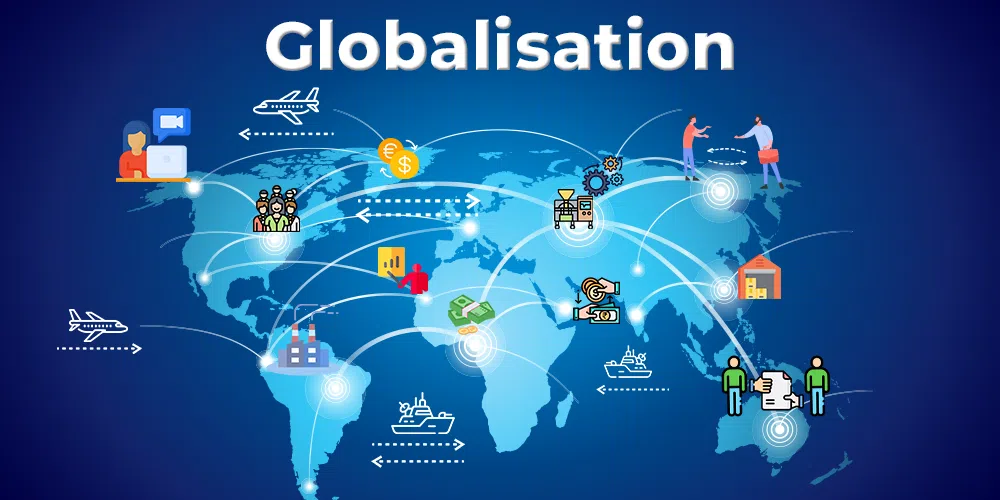
Trade Globalization
This dimension involves the increasing volume and variety of goods and services traded across national borders. Driven by reduced tariffs, free trade agreements, and advancements in logistics, trade globalization means that production processes are often distributed across multiple countries. A single product might contain components from several nations, assembled in another, and sold worldwide. For businesses, this translates into opportunities for expanded market access, economies of scale, and sourcing efficiency. For individuals, it often means a wider array of consumer goods at potentially lower prices. From a financial perspective, trade globalization fuels currency exchange markets, necessitates robust international payment systems, and influences national balance of payments, directly impacting a country’s financial health and its currency’s value.
Financial Globalization
Perhaps the most direct link to the “Money” category, financial globalization signifies the liberalization of capital markets and the integration of financial systems globally. This involves the rapid and substantial movement of capital across borders in various forms: foreign direct investment (FDI), portfolio investment (stocks, bonds), international loans, and speculative capital flows. Technology, particularly high-speed telecommunications and digital trading platforms, has accelerated this process, enabling instantaneous transactions across continents. While offering benefits like increased access to capital for developing economies and diversification opportunities for investors, financial globalization also presents risks, such as heightened financial volatility and the rapid spread of economic crises from one region to another. Managing currency risks, understanding international interest rate differentials, and navigating complex regulatory frameworks become paramount for investors and financial institutions.
Production Globalization
Production globalization refers to the phenomenon where companies organize their production processes across multiple countries to leverage comparative advantages. This often involves offshoring (relocating a part of production to another country) and outsourcing (contracting out a business function to a third party, often in another country). Multinational corporations (MNCs) are the primary drivers of this trend, establishing supply chains that span the globe. The financial implications are significant, as decisions on where to produce affect labor costs, tax liabilities, investment in foreign infrastructure, and ultimately, a company’s profitability and competitive edge. For national economies, production globalization can bring foreign investment and job creation but also raise concerns about domestic job displacement and reliance on foreign supply chains, which became critically evident during recent global disruptions.
Drivers and Facilitators of Economic Globalization
Several forces have converged to accelerate the globalization of the economy, each with significant financial ramifications.
Technological Advancements
While technology is its own category, its impact on economic globalization is undeniably financial. Breakthroughs in information and communication technology (ICT), particularly the internet, have dramatically reduced the costs and increased the speed of communication and information exchange. This has facilitated cross-border transactions, enabled global financial markets to operate 24/7, and allowed companies to manage complex international supply chains from anywhere. Advancements in transportation technology, such as containerization and improved air freight, have reduced shipping costs and transit times, making international trade more viable and cost-effective. Fintech innovations continue to streamline international payments, enhance financial transparency, and offer new avenues for cross-border investing and lending, directly influencing global money flows.
Policy and Institutions
Government policies and international institutions play a crucial role in shaping the global economic landscape. Trade liberalization efforts, including the reduction of tariffs and non-tariff barriers, driven by organizations like the World Trade Organization (WTO), have made it easier and cheaper for goods and services to cross borders. The establishment of international monetary systems and financial institutions like the International Monetary Fund (IMF) and the World Bank aims to foster global financial stability and provide financial assistance, influencing global capital flows and economic development strategies. Regional economic blocs, such as the European Union (EU) or the North American Free Trade Agreement (NAFTA), further integrate member economies through common markets, currency unions, or reduced trade barriers, creating specific financial ecosystems for businesses and investors within those regions.
Market Forces
The inherent drive of businesses to seek greater profits and efficiency is a powerful engine of globalization. Companies are constantly looking for new markets to sell their products and services, cheaper sources of raw materials and labor, and more efficient production methods. This search for competitive advantage pushes firms to expand internationally, leading to increased foreign direct investment and the establishment of global supply networks. Consumers, too, contribute to market forces by demanding a wider variety of goods, often at lower prices, which encourages companies to source internationally. This interplay of supply and demand across national borders is a fundamental financial motivator for economic globalization.
Impacts of Economic Globalization
The far-reaching effects of economic globalization touch every aspect of national and personal finance, presenting both opportunities and challenges.
Economic Growth and Efficiency
Globalization can stimulate economic growth by promoting specialization, allowing countries to focus on producing goods and services in which they have a comparative advantage. This leads to increased overall production efficiency and lower costs. Access to larger markets allows businesses to achieve economies of scale, fostering innovation and productivity gains. For individuals, this can translate into more job opportunities in competitive sectors, higher real incomes due to cheaper goods, and access to a wider range of financial products and services. Developing nations can benefit from foreign capital and technology transfer, accelerating their industrialization and improving living standards.
Market Opportunities and Competition
For businesses, economic globalization opens vast new markets, enabling expansion beyond domestic borders and tapping into diverse consumer bases. This can lead to significant revenue growth and increased profitability. However, it also intensifies competition, as domestic firms face rivals from around the world. This heightened competition can drive down prices, compel businesses to innovate, and increase efficiency, but it can also lead to pressure on profit margins and even business failures for those unable to adapt. Investors seeking higher returns often look to emerging markets, diversifying their portfolios beyond saturated domestic options, but they must also contend with greater market volatility and geopolitical risks.
Income Inequality and Labor Market Shifts
While globalization generally boosts overall economic prosperity, its benefits are not always evenly distributed. In some developed countries, jobs in manufacturing and lower-skilled services may be outsourced to nations with lower labor costs, leading to job losses and wage stagnation for certain segments of the workforce. Conversely, new job opportunities may emerge in higher-skilled sectors, such as technology, finance, and international logistics. This can exacerbate income inequality both within and between nations. From a personal finance perspective, individuals must adapt by acquiring new skills, pursuing higher education, or seeking employment in industries that thrive in a globalized environment.
Financial Volatility and Crises
The interconnectedness of global financial markets means that economic shocks in one region can quickly ripple across the world. The 2008 global financial crisis, originating in the U.S. subprime mortgage market, rapidly affected financial institutions and economies worldwide, demonstrating the systemic risk inherent in highly integrated financial systems. Currency fluctuations, speculative capital flows, and sovereign debt issues in one country can trigger investor panic and capital flight from others, leading to market instability. For investors, this necessitates sophisticated risk management strategies, including international diversification and hedging against currency risks. For governments, it implies the need for robust regulatory frameworks and international cooperation to mitigate financial contagions.
Navigating the Globalized Economy: Implications for Businesses and Individuals
Operating successfully within a globalized economy requires strategic foresight and adaptation for both commercial entities and individual financial planning.
For Businesses
Businesses must adopt a global mindset, considering international markets for both sourcing and sales. This involves managing complex global supply chains, often requiring sophisticated logistics and risk management strategies to mitigate disruptions. Foreign exchange risk management becomes critical for companies dealing with multiple currencies, necessitating hedging strategies to protect profits. Understanding and complying with diverse international regulations, trade laws, and tax structures is also paramount. Strategic decisions regarding foreign direct investment, mergers and acquisitions, and market entry strategies are heavily influenced by global economic conditions and competitive landscapes.
For Investors
Economic globalization offers investors unprecedented opportunities for portfolio diversification, allowing them to spread risk across different countries, industries, and asset classes. Investing in international stocks, bonds, and real estate can provide exposure to higher growth rates in emerging markets and reduce reliance on a single domestic economy. However, this also introduces new layers of risk, including currency risk (the fluctuation in exchange rates impacting returns), geopolitical risk, and regulatory differences. Successful international investing demands thorough research, a deep understanding of global market dynamics, and often, collaboration with financial advisors specializing in international markets.
For Individuals
The globalized economy profoundly impacts personal finance and career paths. Individuals may face increased competition for jobs but also have access to more diverse employment opportunities, including remote work for international companies or international career mobility. Understanding global economic trends can inform career choices, guiding individuals towards sectors poised for growth. As consumers, individuals benefit from lower prices and a wider variety of goods due to international trade. However, they also need to be aware of how global events, such as trade wars or supply chain disruptions, can affect their cost of living, investment values, and job security. Developing adaptable skills and a global perspective is increasingly essential for long-term financial stability.
The Future Trajectory of Economic Globalization
While the fundamental forces driving economic globalization remain strong, its future trajectory is subject to ongoing shifts and challenges.
Shifting Dynamics
Recent years have seen a rise in protectionist sentiments and policies in some nations, driven by concerns over domestic job losses, national security, and economic sovereignty. Geopolitical tensions are also influencing trade relationships and investment flows, leading some companies to reconsider the resilience of their global supply chains. Efforts towards reshoring or nearshoring production, aimed at reducing reliance on distant suppliers, could alter the patterns of trade and investment. The balance between global efficiency and national resilience is a key consideration that will shape future economic integration.
Digital Economy and Emerging Markets
The continued expansion of the digital economy is set to further deepen economic globalization. E-commerce platforms facilitate direct cross-border transactions, enabling small businesses to access global markets. Innovations in fintech, including blockchain and digital currencies, could revolutionize international payments and financial services, potentially lowering transaction costs and increasing financial inclusion. Emerging markets, with their large populations and growing middle classes, are increasingly becoming major players in global consumption and production, shifting the centers of economic gravity and creating new financial opportunities and challenges.
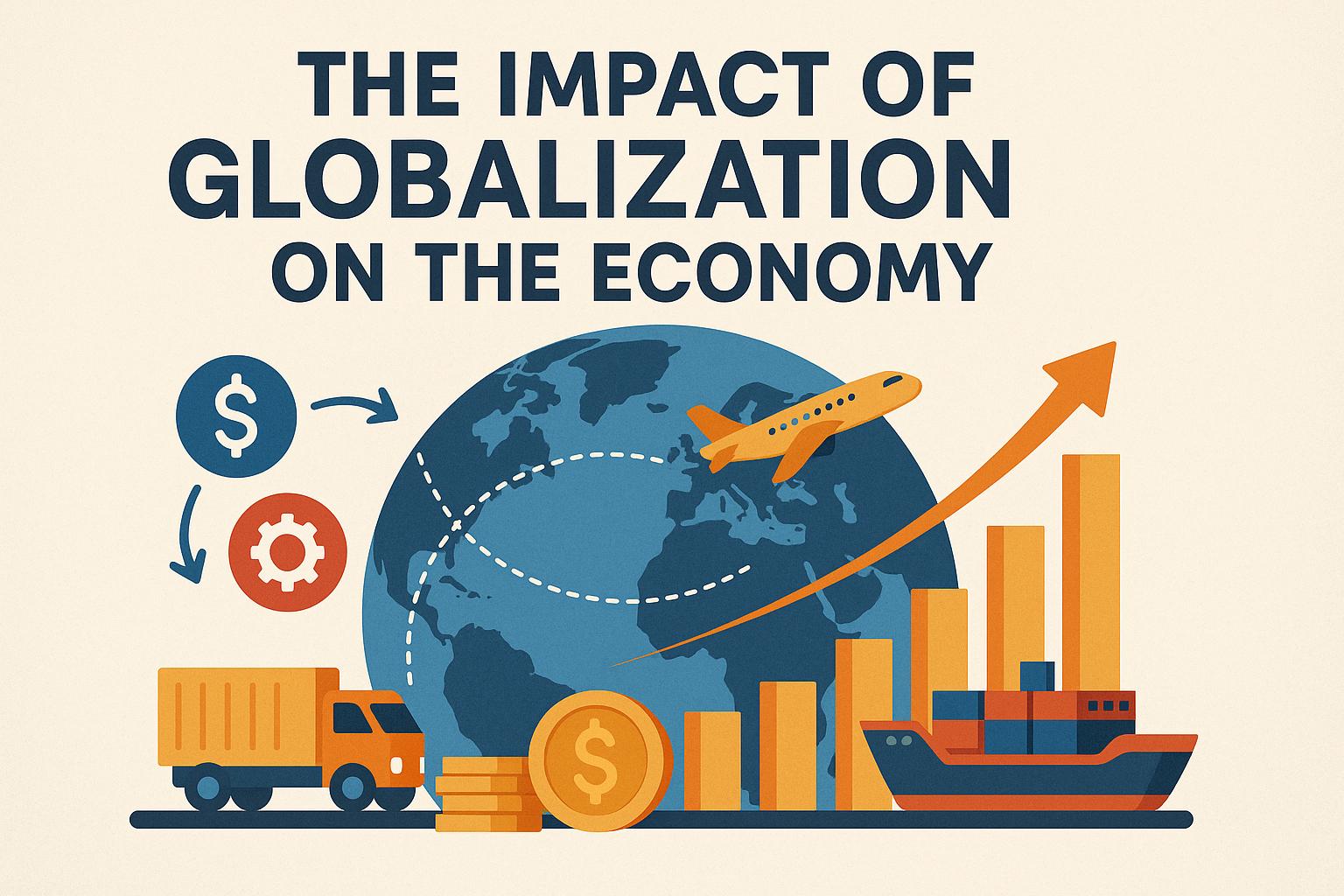
Sustainability and Ethical Considerations
There is a growing emphasis on environmental, social, and governance (ESG) factors in global business and investment decisions. Concerns about climate change, labor practices, and ethical supply chains are increasingly influencing corporate strategy and investor behavior. Companies are under pressure to demonstrate sustainable practices throughout their global operations, which impacts supply chain design, manufacturing processes, and investment criteria. Investors are allocating capital towards companies and funds that align with ESG principles, recognizing that long-term financial performance is intertwined with sustainable and ethical business practices. This evolving focus will continue to redefine the responsibilities and opportunities within the globalized economic landscape.
aViewFromTheCave is a participant in the Amazon Services LLC Associates Program, an affiliate advertising program designed to provide a means for sites to earn advertising fees by advertising and linking to Amazon.com. Amazon, the Amazon logo, AmazonSupply, and the AmazonSupply logo are trademarks of Amazon.com, Inc. or its affiliates. As an Amazon Associate we earn affiliate commissions from qualifying purchases.