
In the rapidly evolving landscape of hardware engineering and materials science, the terms we use to describe performance are moving beyond megahertz and gigabytes. As we push the boundaries of what consumer electronics, aerospace components, and semiconductors can endure, a specific unit of measurement has become a cornerstone of technical discourse: the Giga Pascal (GPa).
While most tech enthusiasts are familiar with “Giga” in the context of data, its application to pressure and structural integrity represents the frontier of hardware durability and miniaturization. Understanding the Giga Pascal is no longer just for civil engineers; it is essential for anyone tracking the progress of foldable screens, next-generation processors, and the resilient materials that make modern tech possible.

Understanding the Physics: Defining the Giga Pascal in a Digital Age
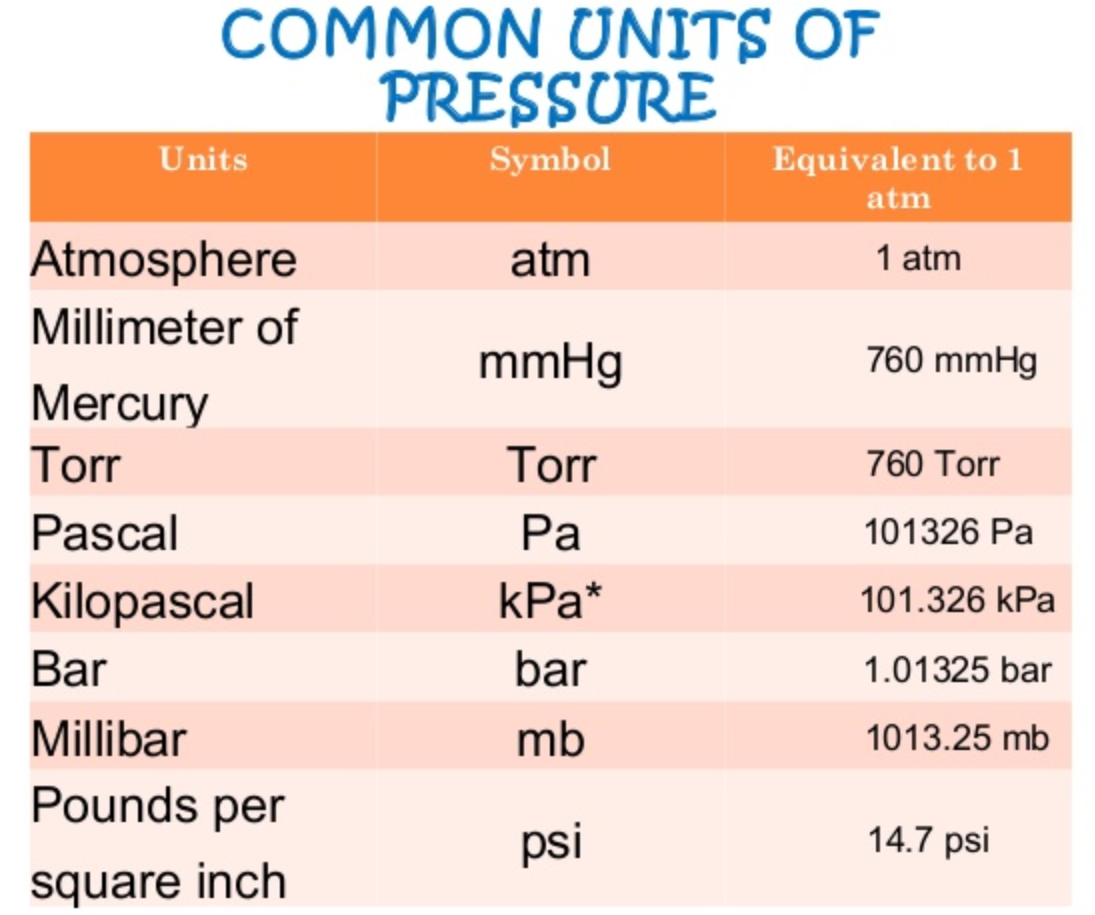
To understand what a Giga Pascal is, we must first look at its base unit, the Pascal (Pa). Named after the French mathematician and physicist Blaise Pascal, one Pascal is defined as one newton of force applied over an area of one square meter. In the grand scheme of the physical world, a single Pascal is incredibly small—roughly the pressure exerted by a single sheet of paper resting on a table.
Because modern technology deals with extreme forces and incredibly dense materials, engineers require a much larger scale. This is where the “Giga” prefix comes in.
From Pascals to Gigapascals: Scaling the Math
In the metric system, “Giga” denotes a factor of one billion ($10^9$). Therefore, one Giga Pascal is equal to 1,000,000,000 Pascals. To put this into perspective, 1 GPa is approximately 10,000 times the atmospheric pressure at sea level.
In the tech industry, we use GPa to measure two primary things:
- Modulus of Elasticity (Young’s Modulus): How much a material deforms under stress (stiffness).
- Ultimate Tensile Strength: The maximum stress a material can withstand before breaking.
As devices become thinner and more powerful, the materials used to house them must possess higher GPa ratings to ensure they don’t succumb to the physical rigors of daily use or the internal pressures of thermal expansion.
The Role of Stress and Strain in Tech Design
In the world of hardware design, “stress” is the internal force a material experiences, while “strain” is the resulting deformation. The relationship between the two is often measured in Giga Pascals. For instance, when Apple or Samsung designs a new chassis for a flagship smartphone, they aren’t just looking for something that “feels” premium; they are calculating the GPa threshold required to prevent the device from bending in a user’s pocket—a technical challenge that famously plagued earlier iterations of ultra-thin smartphones.
Structural Integrity in Consumer Electronics and Hardware
The consumer tech market is currently obsessed with “toughness.” Whether it is the move toward titanium frames or the development of flexible glass, the Giga Pascal is the metric that validates these marketing claims. When a company claims their screen is “four times stronger,” they are essentially discussing an increase in the Giga Pascal threshold of the material.
Smartphone Durability: Screen Tech and Chassis Strength
Perhaps the most visible application of GPa in tech is in the evolution of display glass. Standard soda-lime glass has a Young’s modulus of around 70 GPa. However, specialized aluminosilicate glass, used in high-end smartphones, is engineered to have much higher resistance to fracture and deformation.
The transition from aluminum to titanium in high-end hardware (like the iPhone 15 Pro or the Samsung Galaxy S24 Ultra) is also a GPa-driven decision. Titanium alloys typically exhibit a tensile strength that reaches deep into the Giga Pascal range while remaining lightweight. This allows tech manufacturers to reduce the volume of the frame—making the phone lighter—without sacrificing the structural integrity required to protect sensitive internal logic boards.

Wearables and Extreme Environment Hardware
For wearables like the Apple Watch Ultra or Garmin’s tactical series, GPa ratings are even more critical. These devices are designed for “extreme environments,” which includes high-pressure underwater diving and high-impact sports. The sapphire crystals used in these gadgets often boast a Young’s modulus of over 300 GPa, making them nearly impervious to scratches compared to standard glass. By utilizing materials with high GPa values, tech companies can create “invisible” layers of protection that allow sensors to function through a shield that is as hard as armor.
Giga Pascals in Semiconductor Manufacturing and Nanotechnology
While we often think of pressure in terms of physical impact, some of the most intense GPa measurements occur at the microscopic level inside our computers. As transistors shrink to the 3nm and 2nm scales, the internal stresses within a silicon chip become a major hurdle for AI performance and energy efficiency.
Thin-Film Deposition and Internal Stress
During the fabrication of integrated circuits, different materials (conductors, insulators, and semiconductors) are layered on top of one another through a process called thin-film deposition. Because these materials have different thermal expansion rates, they pull on each other with immense force.
If the internal stress exceeds a certain number of Giga Pascals, the chip can “delaminate” or crack, rendered useless before it even leaves the factory. Software tools used in semiconductor design (Electronic Design Automation or EDA) now include stress-simulation modules that calculate GPa loads across the surface of a wafer. Engineers must carefully balance these forces to ensure that the microscopic “highways” of electrons remain stable under the heat generated by high-performance AI workloads.
Quantum Computing Components and Pressure Resistance
The emerging field of quantum computing takes GPa requirements to a new level. Many quantum processors require cryogenic temperatures to function, but they also require specific pressure environments to maintain the “coherence” of qubits. Researchers are experimenting with high-pressure capsules that apply Giga Pascals of force to certain crystals to change their electronic properties, potentially unlocking new ways to store quantum information. In this context, GPa is not just a measure of strength—it is a “tuning knob” for the next generation of computing.
The Future of Materials: AI-Driven Discovery and High-GPa Alloys
As we look toward the future, the tech industry is no longer satisfied with the materials found in nature. We are entering an era of “synthetic metallurgy” and “computational material science,” where AI is used to discover substances with unprecedented GPa ratings.
Predictive Modeling for Super-Hard Materials
Tech giants and research institutions are now using machine learning algorithms to simulate billions of atomic combinations to find the next “super-material.” The goal is often to find materials that maintain high GPa stiffness while being extremely low in mass.
AI-driven tools like Google’s GNoME (Graph Networks for Materials Exploration) have already predicted the existence of hundreds of thousands of stable crystals. Many of these are “high-pressure phases”—materials that only exist or are created under Giga Pascals of pressure but remain stable afterward. These discoveries could lead to more efficient heat sinks for data centers or more durable solid-state batteries for electric vehicles.
Aerospace Tech and the Race for Lighter, Stronger Composites
In the tech-heavy sector of commercial spaceflight (led by companies like SpaceX and Blue Origin), GPa is the metric of survival. Rocket engine nozzles, for instance, must withstand immense pressure and heat simultaneously. The development of Ceramic Matrix Composites (CMCs) allows these components to handle stresses in the Giga Pascal range at temperatures that would melt traditional steel.
As satellite technology becomes more prevalent—powering our global GPS and internet star-links—the ability to manufacture components that can withstand the high-GPa environments of launch and the vacuum of space becomes a competitive edge. The tech companies that master these high-strength materials will be the ones that define the infrastructure of the 21st century.
Conclusion: Why GPa is the Tech Metric of the Future
The Giga Pascal may seem like an abstract concept from a physics textbook, but it is the silent force shaping the gadgets in our pockets and the satellites above our heads. As our technological ambitions grow, our reliance on materials that can withstand Giga Pascals of stress grows with them.
From the “unbreakable” glass on a foldable phone to the internal layers of a 2nm AI chip, the GPa rating is a testament to human ingenuity. It represents our ability to manipulate the very atoms of the earth to create tools that are stronger, lighter, and more capable than ever before. For the tech professional and the enthusiast alike, keeping an eye on GPa ratings is the best way to see how close we are to the next breakthrough in hardware evolution.
aViewFromTheCave is a participant in the Amazon Services LLC Associates Program, an affiliate advertising program designed to provide a means for sites to earn advertising fees by advertising and linking to Amazon.com. Amazon, the Amazon logo, AmazonSupply, and the AmazonSupply logo are trademarks of Amazon.com, Inc. or its affiliates. As an Amazon Associate we earn affiliate commissions from qualifying purchases.