
In an era defined by rapid technological advancement and increasing demands for convenience, the world of video gaming stands at a pivotal juncture. Traditional gaming, long tethered to expensive, dedicated hardware like consoles and high-end PCs, is experiencing a profound transformation. At the forefront of this revolution is cloud gaming, a paradigm shift that promises to democratize access to cutting-edge interactive entertainment. Among the leading innovators in this space is NVIDIA’s GeForce NOW, a service that has garnered significant attention for its ambitious promise: to deliver top-tier gaming experiences to virtually any device, regardless of its inherent processing power.
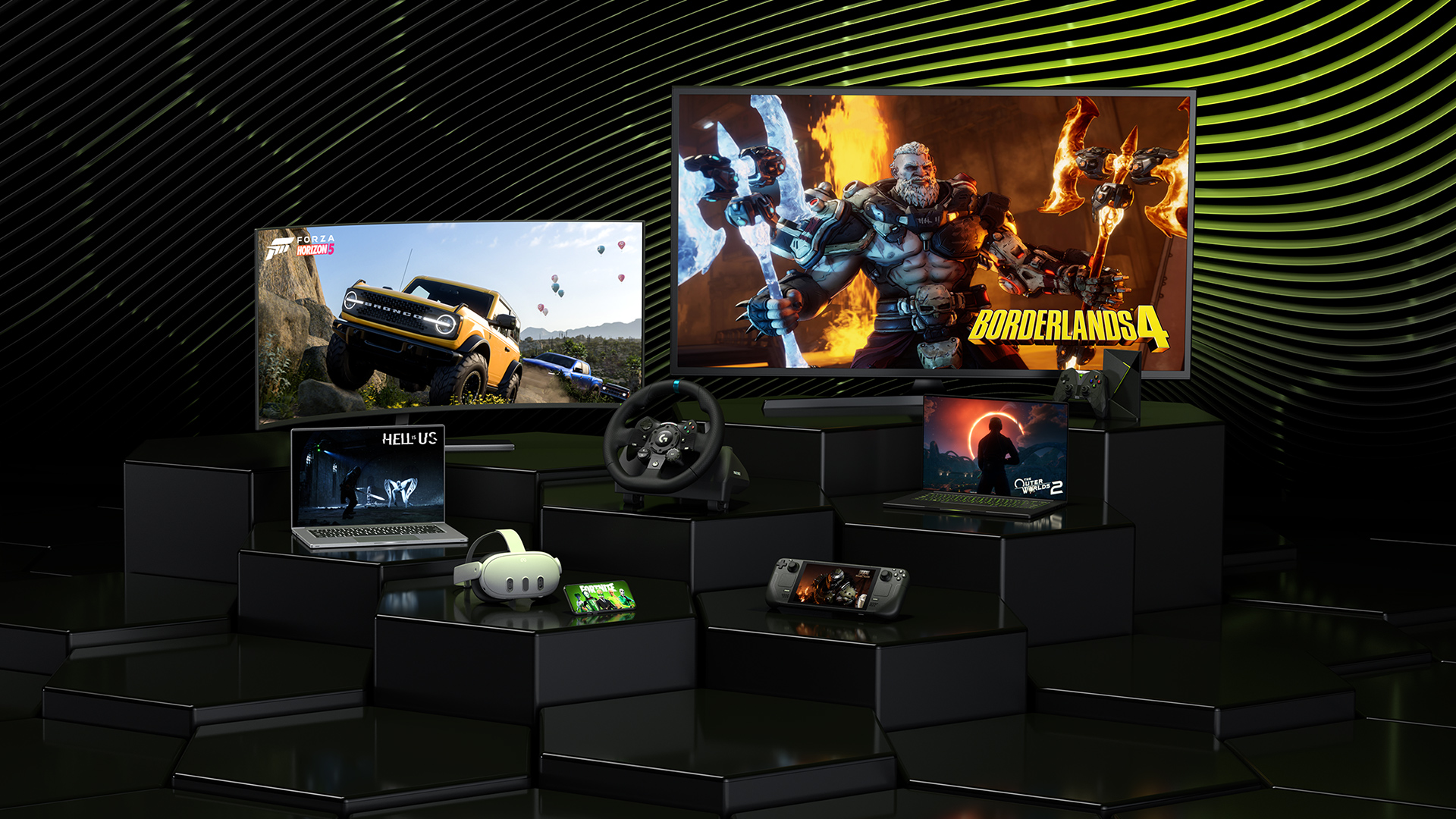
GeForce NOW is not merely another streaming service; it represents a sophisticated convergence of cloud computing, high-performance graphics technology, and intricate network infrastructure. Launched by graphics processing unit (GPU) giant NVIDIA, the service leverages vast data centers packed with powerful NVIDIA GPUs to render games remotely and stream them over the internet to a user’s device. This eliminates the need for players to own expensive gaming hardware, perform lengthy game installations, or worry about system specifications. Instead, the computational heavy lifting is done in the cloud, allowing users to tap into a world of high-fidelity gaming with just a stable internet connection and a compatible device. This article will delve into the intricacies of GeForce NOW, exploring its core technological underpinnings, key features, performance considerations, and its strategic position within the burgeoning cloud gaming ecosystem. It aims to provide a comprehensive understanding of how this service is not only reshaping individual gaming habits but also influencing the broader trajectory of the digital entertainment industry.
The Dawn of Cloud Gaming: Understanding GeForce NOW’s Core Concept
The concept of cloud gaming, while seemingly futuristic, is built upon established principles of remote computing and media streaming. GeForce NOW, in particular, refines these principles to deliver a seamless, interactive experience. At its heart, it’s about shifting the computational burden from the end-user’s device to a powerful server farm, allowing for high-quality gaming without local hardware constraints.
Nvidia’s Vision: Democratizing High-End Gaming
NVIDIA, a company synonymous with high-performance graphics technology, recognized early on the inherent barriers to entry for PC gaming. The ever-escalating costs of top-tier GPUs, CPUs, and supporting components often put the latest games out of reach for many enthusiasts. GeForce NOW was conceived as a solution to this problem, aligning with NVIDIA’s broader strategy to make advanced graphics capabilities accessible to a wider audience. Their vision extends beyond merely selling hardware; it’s about selling access to the experience that hardware enables. By centralizing the most powerful GPUs in data centers, NVIDIA can offer a service where users rent “virtual gaming PCs” on demand, significantly lowering the financial and logistical hurdles to enjoying premium games. This democratizes access, allowing users with older laptops, basic PCs, Macs, Android devices, and even specific smart TVs to play titles that would otherwise demand thousands of dollars in hardware investment.
Bridging the Hardware Gap: How Cloud Gaming Works
The operational principle behind GeForce NOW is elegant in its simplicity, yet complex in its execution. When a user launches a game through the GeForce NOW client, they are essentially connecting to a virtual machine (VM) running in one of NVIDIA’s global data centers. This VM is equipped with state-of-the-art NVIDIA GPUs and other components designed to run games at optimal settings. The game executes on this remote server, processing all inputs, rendering graphics, and generating audio. These rendered frames are then encoded into a video stream and transmitted over the internet to the user’s device. Simultaneously, the user’s inputs (keyboard, mouse, gamepad) are sent back to the server. This rapid, two-way communication creates the illusion that the game is running locally, despite the thousands of miles that might separate the player from the actual hardware doing the work. The “bridging the hardware gap” aspect is crucial; it means users no longer need to check minimum system requirements, upgrade components, or worry about storage space.
The Technology Underpinning the Experience
The robust functionality of GeForce NOW relies on several key technological pillars. Foremost among them is NVIDIA’s expertise in GPU virtualization and encoding. Each virtual machine needs to efficiently share GPU resources without performance degradation, a challenge that NVIDIA’s GRID technology addresses. Furthermore, ultra-low latency video encoding and decoding are paramount. The video stream from the server to the client must be compressed efficiently without introducing noticeable visual artifacts, and crucially, with minimal delay. NVIDIA leverages advanced codecs like H.264 and H.265 (HEVC) to achieve this balance. On the networking front, a vast global network of data centers strategically positioned close to population centers helps minimize latency – the time it takes for data to travel from the user to the server and back. Proprietary network optimization techniques also play a role, prioritizing game traffic to ensure a smooth, responsive experience. The integration of these advanced technologies creates a powerful ecosystem that delivers high-performance gaming regardless of the end-user’s local hardware capabilities.
Key Features and Technological Advantages
GeForce NOW stands out in the cloud gaming market due to a suite of features and technological advantages specifically designed to enhance the user experience and address common gaming pain points. These advantages stem directly from its cloud-based architecture and NVIDIA’s deep expertise in graphics and streaming.
Access to a Vast Gaming Library: Your Games, Everywhere
One of the most compelling aspects of GeForce NOW is its “bring your own games” model. Unlike some competitors that require users to purchase games through their platform, GeForce NOW integrates with existing popular PC game stores like Steam, Epic Games Store, GOG.com, and Ubisoft Connect. This means that if you already own a supported game on one of these platforms, you can simply log in and play it through GeForce NOW. This significantly broadens the available library for users and avoids the need to re-purchase titles. The service constantly updates its list of supported games, offering access to hundreds of popular PC titles, including many AAA blockbusters and indie gems. This approach respects player ownership and leverages the vast existing ecosystem of PC gaming, making the transition to cloud gaming seamless for many.
Device Agnosticism: Gaming Beyond the Console and PC
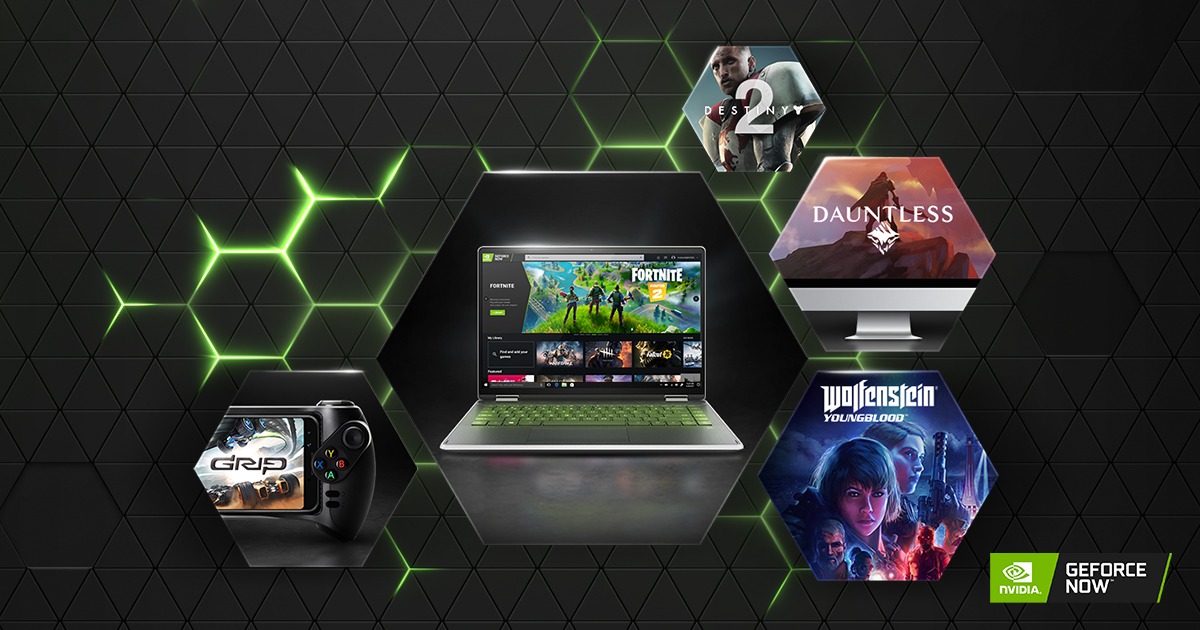
The core promise of cloud gaming is liberation from specific hardware, and GeForce NOW delivers on this by supporting a remarkable array of devices. Users can access the service on traditional PCs (Windows and macOS), Android smartphones and tablets, Chromebooks, and even select smart TVs (like LG TVs) and NVIDIA’s own SHIELD TV. This unparalleled device agnosticism means a player can start a game on their high-end PC, switch to their Android phone during a commute, and pick it up again on their living room TV, all without losing progress. The client applications for these diverse platforms are optimized to provide the best possible experience, adapting controls and resolutions to suit the device. This flexibility empowers users to game wherever and whenever they choose, truly revolutionizing the concept of a “gaming setup.”
The Power of the Cloud: High-Fidelity Graphics and Performance
Perhaps the most impressive technological feat of GeForce NOW is its ability to deliver high-fidelity graphics and smooth performance on hardware that would otherwise be completely incapable of running such demanding titles. The data centers hosting GeForce NOW are equipped with NVIDIA’s powerful server-grade GPUs, capable of rendering games at resolutions up to 4K (for certain tiers) and frame rates up to 120 FPS or even 240 FPS (for ultimate tier). This means players on a thin-and-light laptop or an older Mac can experience games with ray tracing enabled, ultra-settings, and buttery-smooth frame rates, precisely as they were intended by the developers, often exceeding what even high-end local gaming PCs could achieve just a few years ago. The cloud provides a dynamic, scalable source of computational power that is constantly upgraded by NVIDIA, ensuring users always have access to cutting-edge graphics performance without the burden of personal hardware upgrades.
Real-time Streaming Architecture: Minimizing Latency
For a cloud gaming service to be successful, it must effectively mitigate latency. Latency, the delay between a user’s input and the game’s response, is the Achilles’ heel of streaming interactive content. GeForce NOW employs a sophisticated real-time streaming architecture to minimize this effect. This includes a global network of data centers strategically placed to reduce the physical distance between the player and the server. Advanced network protocols and traffic prioritization techniques are used to ensure that game data packets receive preferential treatment. Furthermore, NVIDIA’s proprietary encoding and decoding algorithms are highly optimized for speed and efficiency, compressing and decompressing video frames with minimal delay. The system also dynamically adjusts stream quality based on network conditions, attempting to maintain responsiveness even if it means a slight reduction in visual fidelity. While a completely local experience will always have zero network latency, GeForce NOW’s technological efforts bring cloud gaming remarkably close, making it viable for even fast-paced competitive titles.
Technical Requirements and Performance Considerations
While GeForce NOW liberates users from the need for high-end local hardware, it does introduce its own set of technical requirements, primarily centered around internet connectivity. Understanding these requirements and how to optimize them is crucial for a satisfactory cloud gaming experience.
Internet Bandwidth: The Lifeline of Cloud Gaming
The single most critical technical requirement for GeForce NOW is a stable, high-speed internet connection. Since the entire game experience is streamed, sufficient bandwidth is essential to transmit high-definition video frames and user inputs in real-time. NVIDIA recommends specific minimums:
- 15 Mbps for 720p resolution at 60 FPS.
- 25 Mbps for 1080p resolution at 60 FPS.
- 35 Mbps for 1440p resolution at 120 FPS (Ultimate tier).
- 45 Mbps for 4K resolution at 120 FPS (Ultimate tier).
However, it’s not just about raw speed. Latency (ping) and jitter (variation in ping) are equally important. High latency or unstable jitter can manifest as noticeable input lag, stuttering, or visual artifacts, severely impacting the gaming experience. A wired Ethernet connection is almost always superior to Wi-Fi for cloud gaming due to its inherent stability and lower latency. If Wi-Fi must be used, a strong 5GHz signal in close proximity to the router is recommended over the more congested 2.4GHz band.
Supported Hardware and Operating Systems
GeForce NOW is designed to be highly compatible, but there are still minimum specifications for the client devices:
- PC: Windows 7 (64-bit) or newer, a dual-core CPU with 2.0 GHz or faster, 4GB of RAM, and a GPU capable of supporting DirectX 11 (e.g., NVIDIA GeForce 600 series or newer, AMD Radeon HD 3000 series or newer, Intel HD Graphics 2000 series or newer).
- macOS: macOS 10.11 or newer.
- Android: Android 5.0 (L) or later, 2GB of RAM, and OpenGL ES3.2 support. Certain gamepads are also recommended for the best mobile experience.
- Chromebooks: Any Chromebook supporting the Google Play Store for Android app, or directly via the web app.
- SHIELD TV: All generations of NVIDIA SHIELD TV devices.
- Smart TVs: Select LG Smart TV models (2021-2023 with webOS 6.0 or higher).
The beauty of these requirements is their relatively low bar, meaning most modern non-gaming devices can run GeForce NOW effectively. The focus shifts from the device’s processing power to its ability to decode a video stream and manage a stable internet connection.
Optimizing Your Cloud Gaming Experience
To ensure the best possible GeForce NOW experience, several optimization steps can be taken:
- Use a Wired Connection: Whenever possible, connect your device to your router via an Ethernet cable. This minimizes interference and provides the most stable connection.
- Minimize Network Congestion: Ensure other devices on your network are not heavily using bandwidth (e.g., large downloads, multiple 4K streams). Use Quality of Service (QoS) settings on your router to prioritize GeForce NOW traffic if available.
- Close Background Applications: On your client device, close any unnecessary applications that might consume CPU cycles or network bandwidth.
- Choose the Closest Server: GeForce NOW typically auto-selects the closest server, but you can manually check and select the server with the lowest ping in the settings.
- Adjust In-App Settings: Within the GeForce NOW app, you can customize streaming quality settings (resolution, frame rate, bitrate). If you experience stuttering, try lowering these settings to reduce bandwidth demands.
- Update Drivers: Ensure your device’s network drivers and operating system are up to date.
Following these guidelines can significantly improve responsiveness and visual fidelity, providing an experience that often feels indistinguishable from local gaming.
GeForce NOW’s Ecosystem and Market Position
GeForce NOW operates within a dynamic and competitive technology landscape. Its unique business model and continuous technological evolution position it as a significant player shaping the future of interactive entertainment.
Membership Tiers: Tailoring the Experience to the User
NVIDIA has structured GeForce NOW with different membership tiers to cater to a range of users, from casual players to hardcore enthusiasts:
- Free Tier: This entry-level option allows users to test the service with standard access to gaming servers, but sessions are limited to one hour, and users may experience wait times during peak hours. It’s an excellent way to sample the technology without commitment.
- Priority Tier: This paid tier offers significant upgrades, including priority access to premium servers (reducing or eliminating wait times), extended session lengths (typically up to 6 hours), and improved graphics performance with RTX ON features. It provides a more consistent and robust experience for regular gamers.
- Ultimate Tier: The premium offering provides the most powerful cloud gaming experience, granting users access to NVIDIA’s most advanced GPUs (e.g., RTX 4080-class performance). This tier supports up to 4K resolution at 120 FPS or 240 FPS for competitive gaming, with full ray tracing and NVIDIA DLSS technology, delivering an experience often superior to that of many local high-end PCs. Session lengths are extended even further (up to 8 hours).
These tiered options allow users to select a plan that aligns with their gaming frequency, desired quality, and budget, making the service flexible and scalable for individual needs. The revenue generated from these subscriptions fuels NVIDIA’s ongoing investment in server infrastructure and technological advancements.
The Evolving Landscape: GeForce NOW Against Competitors
The cloud gaming market is a battlefield, with tech giants vying for dominance. GeForce NOW’s primary competitors have included services like Google Stadia (now defunct), Microsoft’s Xbox Cloud Gaming (part of Game Pass Ultimate), Amazon Luna, and Sony’s PlayStation Plus Premium (which includes cloud streaming for older titles). Each service has its own approach and ecosystem:
- Xbox Cloud Gaming: Leverages Microsoft’s extensive Game Pass library and Xbox console ecosystem, offering a strong value proposition for those invested in Xbox titles. It integrates seamlessly with Xbox hardware and software.
- Amazon Luna: Focuses on channels and partnerships, offering a different subscription model and tight integration with Twitch streaming.
- PlayStation Plus Premium: Primarily for streaming older PlayStation titles, complementing Sony’s console strategy rather than replacing it.
GeForce NOW distinguishes itself through its “bring your own games” model, which allows players to utilize their existing PC game libraries. This open approach, combined with NVIDIA’s unmatched expertise in GPU hardware and low-latency streaming technology, often gives it a technical edge in terms of raw graphical fidelity and performance across a wide range of PC titles. Its platform-agnostic nature also contrasts with console-specific cloud services, positioning it as a powerful, versatile option for PC gamers looking for flexibility.

Impact on the Future of Gaming Technology
GeForce NOW is not just a service; it’s a testament to the future direction of gaming technology. Its success demonstrates the viability of high-performance gaming without local hardware, pushing the industry towards greater accessibility and flexibility. As internet infrastructure improves globally (e.g., 5G and fiber optic expansion), the potential for cloud gaming to reach even wider audiences grows exponentially.
The service’s continuous evolution in terms of server upgrades (e.g., migrating to RTX 4080 SuperPODs), new features (such as 240 FPS streaming), and expanded device support showcases a commitment to innovation. GeForce NOW’s technological advancements, particularly in reducing latency and enhancing streaming quality, are influencing broader trends in distributed computing and real-time interactive media. It encourages game developers to optimize for cloud environments and pushes the boundaries of what’s possible with remote rendering. Ultimately, GeForce NOW is playing a crucial role in democratizing access to premium gaming experiences, shifting the focus from hardware ownership to service subscription, and paving the way for a more connected, accessible, and technologically advanced future for interactive entertainment.
aViewFromTheCave is a participant in the Amazon Services LLC Associates Program, an affiliate advertising program designed to provide a means for sites to earn advertising fees by advertising and linking to Amazon.com. Amazon, the Amazon logo, AmazonSupply, and the AmazonSupply logo are trademarks of Amazon.com, Inc. or its affiliates. As an Amazon Associate we earn affiliate commissions from qualifying purchases.