
A geothermal heat pump (GHP), often referred to as a ground source heat pump (GSHP), represents a sophisticated and highly efficient heating and cooling technology that leverages the stable temperature of the Earth to regulate indoor climates. Unlike conventional HVAC systems that generate heat through combustion or rely heavily on air temperature for heat exchange, GHPs tap into the planet’s vast, renewable energy reservoir just a few feet below the surface. This innovative approach significantly reduces energy consumption and environmental impact, making it a cornerstone of sustainable building technology.
The Core Principle: Harnessing Earth’s Constant Temperature
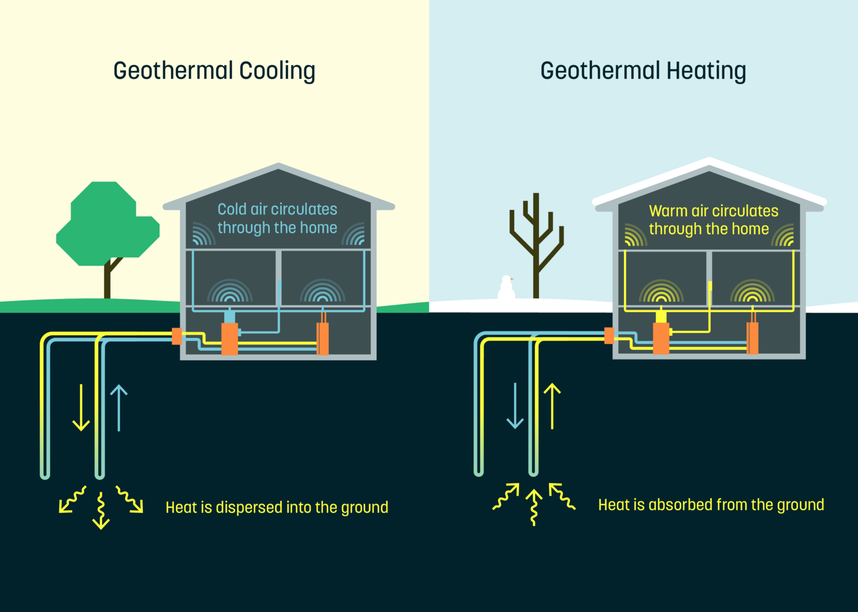
At the heart of a geothermal heat pump system lies a fundamental thermodynamic principle: heat transfer from a warmer area to a cooler area. The Earth, a few meters below its surface, maintains a remarkably consistent temperature, typically ranging from 45°F to 75°F (7°C to 24°C) year-round, regardless of extreme seasonal air temperatures. This thermal stability provides an ideal medium for heat exchange, acting as a heat sink in summer and a heat source in winter.
How Ground Loops Work
The critical component that facilitates this heat exchange is the ground loop system. This network of buried pipes, usually made of high-density polyethylene, circulates a fluid—typically a mixture of water and antifreeze.
During the heating season, the cooler fluid circulates through the underground loops, absorbing heat from the warmer surrounding earth. As the fluid gains thermal energy, it returns to the heat pump unit inside the building. Conversely, during the cooling season, the process reverses: the warmer fluid from the building circulates through the loops, dissipating excess heat into the cooler ground before returning to the heat pump unit to continue cooling the indoor air.
The efficiency of this exchange is paramount. The ground loop acts as a massive, passive heat exchanger, constantly balancing the indoor temperature demands with the Earth’s thermal mass. This continuous, low-temperature difference exchange is what gives geothermal systems their superior energy efficiency compared to air-source heat pumps, which struggle when outdoor air temperatures are extreme.
The Refrigerant Cycle Explained
Inside the geothermal heat pump unit, the absorbed heat from the ground loop is further processed through a conventional vapor-compression refrigeration cycle, similar to that found in refrigerators or air conditioners, but optimized for bidirectional operation.
- Evaporation (Heating Mode): The warm fluid from the ground loop enters a heat exchanger within the heat pump. Here, it transfers its absorbed heat to a low-pressure refrigerant, causing the refrigerant to evaporate and turn into a low-temperature, low-pressure gas.
- Compression: This refrigerant gas is then drawn into a compressor, where its pressure and temperature are significantly increased. This is the only part of the system that consumes a notable amount of electricity, but it’s used to move heat, not generate it.
- Condensation: The hot, high-pressure refrigerant gas then moves to another heat exchanger, where it condenses back into a liquid by releasing its stored heat to the indoor air distribution system (e.g., ducts for forced air or hydronic radiant floors).
- Expansion: Finally, the now-cooled, high-pressure liquid refrigerant passes through an expansion valve, which lowers its pressure and temperature, preparing it to absorb more heat in the evaporator and restart the cycle.
In cooling mode, the cycle simply reverses, with the heat pump extracting heat from the indoor air and transferring it to the refrigerant, which then dissipates it into the ground loop.
Types of Geothermal Systems
Geothermal heat pump systems are categorized primarily by the configuration of their ground loops, each suited to different geological conditions and property sizes.
Closed-Loop Systems
Closed-loop systems are the most common type and involve a sealed loop of buried pipes circulating an antifreeze solution. They are highly reliable as they don’t involve the exchange of water with the environment.
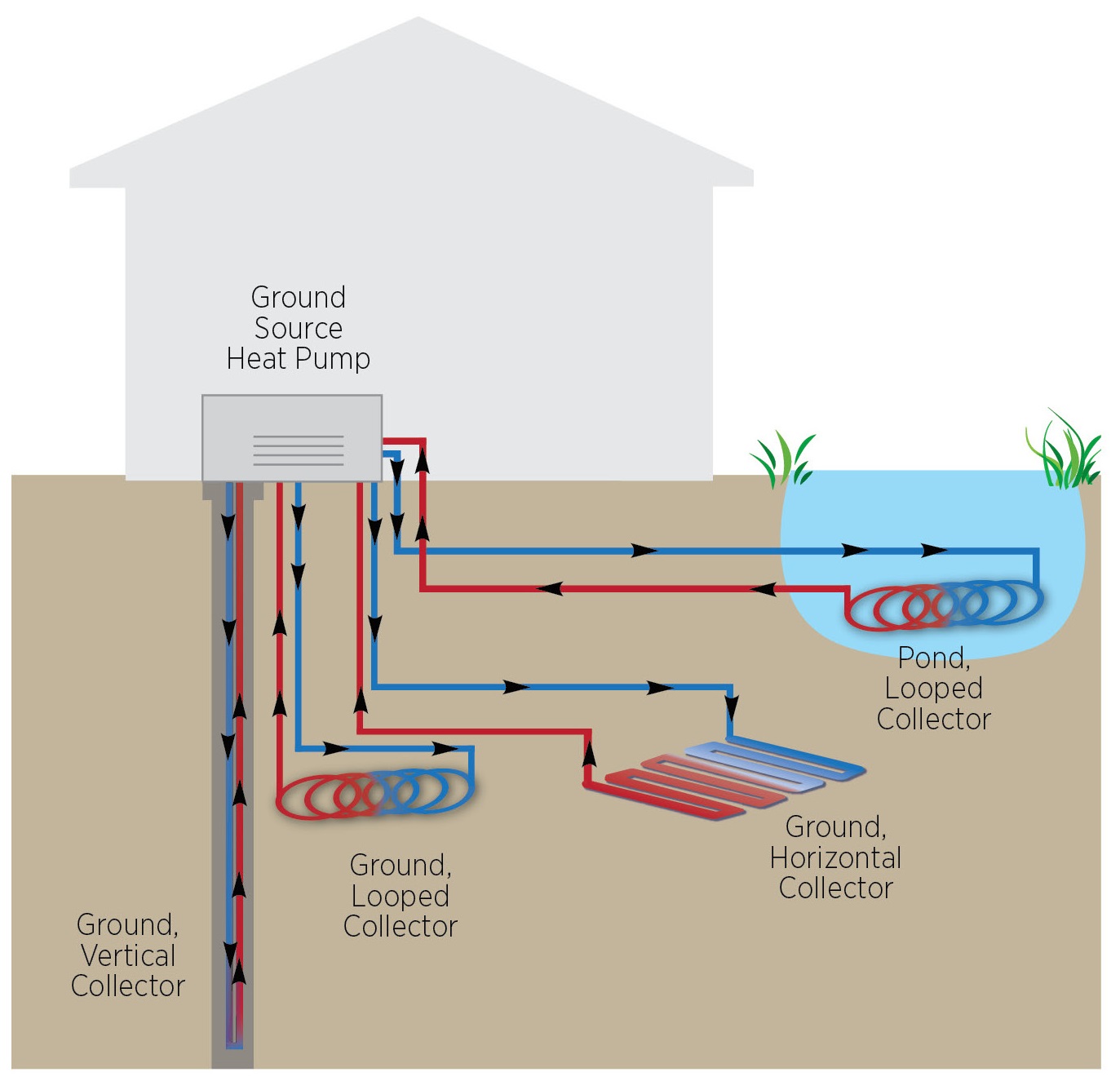
- Horizontal Loops: These are typically installed in trenches 4 to 6 feet deep. They require more land area but are generally less expensive to install than vertical loops, making them suitable for new construction with ample available land. Multiple trenches or coils (slinky coils) can be used to achieve the required heat exchange capacity.
- Vertical Loops: When land area is limited, vertical loops are the preferred choice. Boreholes are drilled 150 to 400 feet deep, and U-shaped pipes are inserted. While the drilling cost is higher, vertical systems require minimal surface area and have less impact on landscaping. They are often chosen for existing homes or commercial buildings in urban environments.
- Pond/Lake Loops: If a suitable body of water (pond or lake) is available on the property, a submerged closed loop can be an efficient option. Coils of pipe are laid at the bottom of the pond or lake, taking advantage of the water’s stable temperature for heat exchange. This method can significantly reduce drilling and trenching costs.
Open-Loop Systems
Open-loop systems, also known as “pump and dump” systems, utilize a well or surface water body as a direct source of heat exchange. Water is drawn from an aquifer or well, passed through the GHP’s heat exchanger, and then discharged back into the same aquifer through a separate discharge well or into another suitable discharge point.
While potentially very efficient due to direct water contact, open-loop systems are less common due to concerns about water quality, discharge regulations, and the need for a reliable water source. The water must be clean enough to prevent fouling of the heat exchanger, and iron content can be a particular issue.
Direct Exchange (DX) Systems
Direct exchange (DX) geothermal systems are a less common but highly efficient variant. Instead of circulating an antifreeze solution in the ground loop, DX systems circulate refrigerant directly through copper tubing buried in the ground. This eliminates one step of heat exchange (from ground to fluid, then fluid to refrigerant), potentially increasing efficiency. However, copper is more expensive than polyethylene, and installation requires specialized handling of refrigerant lines underground, making them less prevalent than water-based closed-loop systems.
Key Technological Components
Understanding the core components provides insight into the integrated nature of a geothermal heat pump system. Each part plays a crucial role in the system’s overall performance and efficiency.
The Heat Pump Unit
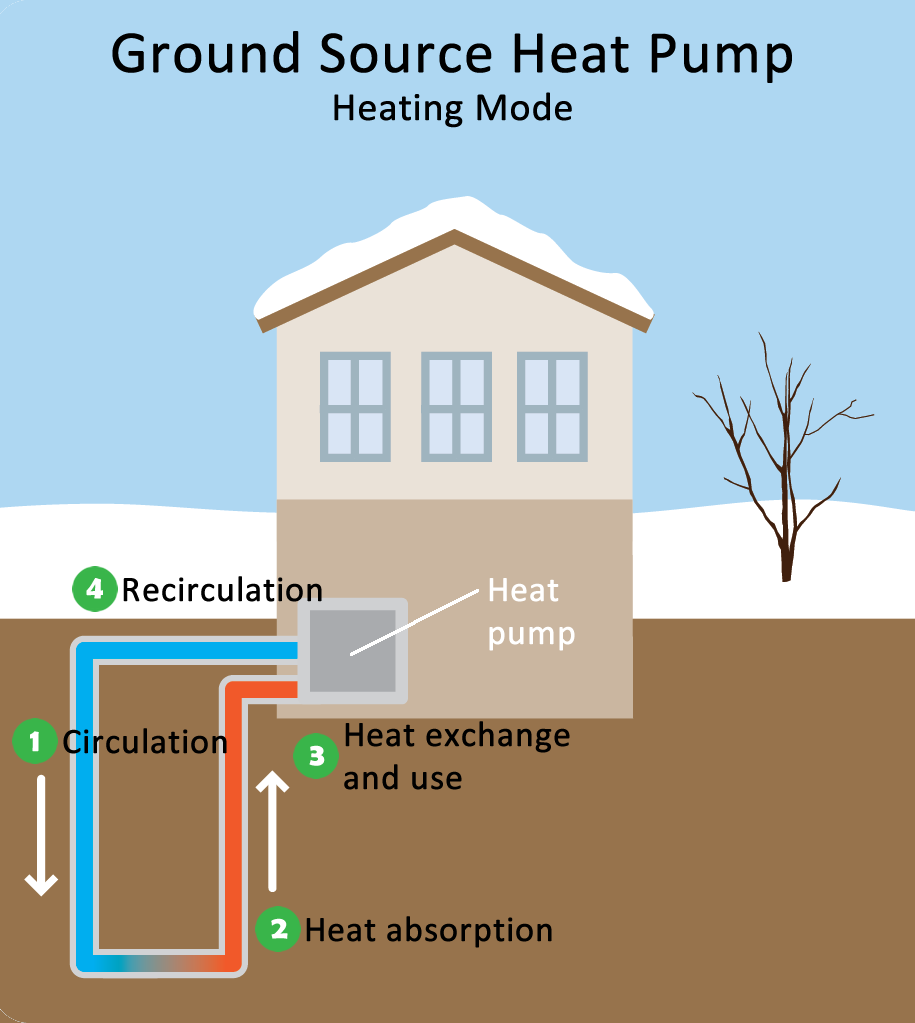
This is the central indoor component, often resembling a conventional furnace or air handler. It contains the compressor, refrigerant coils (evaporator and condenser), expansion valve, and controls. The heat pump unit is responsible for manipulating the refrigerant’s state to either extract heat from the ground for indoor heating or reject heat into the ground for indoor cooling. Modern units incorporate advanced variable-speed compressors and fans for optimized performance and quieter operation.
Ground Loop Heat Exchangers
As discussed, these are the buried pipes that form the primary interface with the Earth’s thermal energy. The material (high-density polyethylene for closed loops, copper for DX) and configuration (horizontal, vertical, pond) are critical design choices based on site specifics and budget. The integrity and proper installation of these loops are paramount for long-term reliability and leak prevention.
Distribution System (Ductwork/Hydronic)
Once heat is extracted or rejected by the heat pump unit, it needs to be distributed throughout the building. Geothermal systems typically integrate with standard indoor distribution systems:
- Forced-Air Systems: Most GHPs connect to conventional ductwork, delivering conditioned air (heated or cooled) to different zones of the building via vents.
- Hydronic Radiant Systems: Geothermal heat pumps can also supply hot water to radiant floor heating systems, baseboard heaters, or fan coils. This offers a highly comfortable and evenly distributed heat.
Desuperheater (Optional Hot Water Generation)
Many geothermal heat pump units can be equipped with a desuperheater, a secondary heat exchanger that captures waste heat from the compressor’s hot discharge gas. This captured heat can be used to preheat the domestic hot water supply, significantly reducing the energy required for the conventional water heater and offering additional savings. In cooling mode, this feature is even more efficient, as the system is already working to extract heat, making hot water a convenient byproduct.
Technological Advantages and Efficiency
The adoption of geothermal heat pump technology is driven by a compelling suite of advantages that address both performance and environmental concerns.
Unparalleled Energy Efficiency
Geothermal heat pumps are among the most energy-efficient heating and cooling systems available. They typically operate with a coefficient of performance (COP) ranging from 3.0 to 5.0 for heating, meaning they deliver 3 to 5 units of heat energy for every unit of electrical energy consumed. For cooling, their energy efficiency ratio (EER) often exceeds 20. This is because they are not generating heat but rather moving it, and they do so against a smaller temperature differential (ground vs. indoor air) compared to air-source systems (outdoor air vs. indoor air). This translates to significantly lower utility bills, often reducing heating and cooling costs by 25% to 70%.
Environmental Impact and Sustainability
By leveraging the Earth’s natural thermal energy, GHPs dramatically reduce reliance on fossil fuels for heating and cooling. This leads to a substantial decrease in greenhouse gas emissions and a smaller carbon footprint. They do not produce on-site combustion emissions, contributing to cleaner air quality. Furthermore, the refrigerants used in modern GHPs are increasingly environmentally friendly, with lower global warming potential. Their status as a renewable energy technology makes them a key component in achieving energy independence and sustainability goals for homes and businesses.
Longevity and Reliability
Geothermal systems are renowned for their durability and long lifespan. The indoor components typically last 20 to 25 years, comparable to traditional HVAC units. However, the buried ground loops, which are made of robust materials and are protected from the elements, can last 50 years or even longer. This exceptional longevity, combined with fewer moving parts exposed to harsh weather conditions, results in lower maintenance requirements and greater system reliability over its operational life.
Quiet Operation
One often-overlooked benefit is the quiet operation of geothermal systems. Since the main heat exchange unit is located indoors and there is no outdoor condensing unit (like in air conditioners or air-source heat pumps) producing noise, GHPs operate very quietly. This enhances indoor comfort and eliminates external noise pollution, making them ideal for residential areas or any setting where noise reduction is a priority.
Installation Considerations and System Sizing
Implementing a geothermal heat pump system requires careful planning and professional execution to ensure optimal performance and cost-effectiveness.
Site Assessment and Geological Factors
A thorough site assessment is the foundational step. This involves evaluating the property’s geology, soil composition, water table, and available land area. These factors dictate the most suitable type of ground loop system (horizontal, vertical, pond) and influence the design of the loop field. For vertical loops, soil conductivity tests are often performed to accurately size the boreholes. Understanding the local geology helps engineers design a system that maximizes heat transfer efficiency.
Professional Installation: The Critical Step
Given the complexity of ground loop installation and refrigerant handling, professional installation by experienced and certified geothermal contractors is paramount. Improper sizing of the ground loop, poor drilling techniques, or incorrect refrigerant charging can severely impact efficiency and longevity. Expertise in fusion welding for polyethylene pipes and adherence to strict plumbing and electrical codes are essential for a reliable and safe system.
Sizing for Optimal Performance
Correct system sizing is crucial. An undersized system will struggle to meet heating or cooling demands, leading to discomfort and increased auxiliary heating use. An oversized system, while seemingly powerful, will cycle on and off more frequently, leading to reduced efficiency, increased wear and tear on components, and higher initial costs. Professional engineers use advanced software and detailed load calculations (based on building size, insulation, window efficiency, climate data, etc.) to precisely determine the heat pump’s capacity and the ground loop’s length and configuration, ensuring the system operates at peak efficiency throughout its lifespan.
aViewFromTheCave is a participant in the Amazon Services LLC Associates Program, an affiliate advertising program designed to provide a means for sites to earn advertising fees by advertising and linking to Amazon.com. Amazon, the Amazon logo, AmazonSupply, and the AmazonSupply logo are trademarks of Amazon.com, Inc. or its affiliates. As an Amazon Associate we earn affiliate commissions from qualifying purchases.