
In the high-stakes world of global finance and corporate strategy, the “gentlemen’s agreement” stands as a testament to the enduring power of social capital and professional honor. While the modern economy is built upon a foundation of complex legal frameworks, ironclad contracts, and regulatory oversight, a significant portion of business is still initiated, and sometimes concluded, with a simple handshake or a verbal promise.
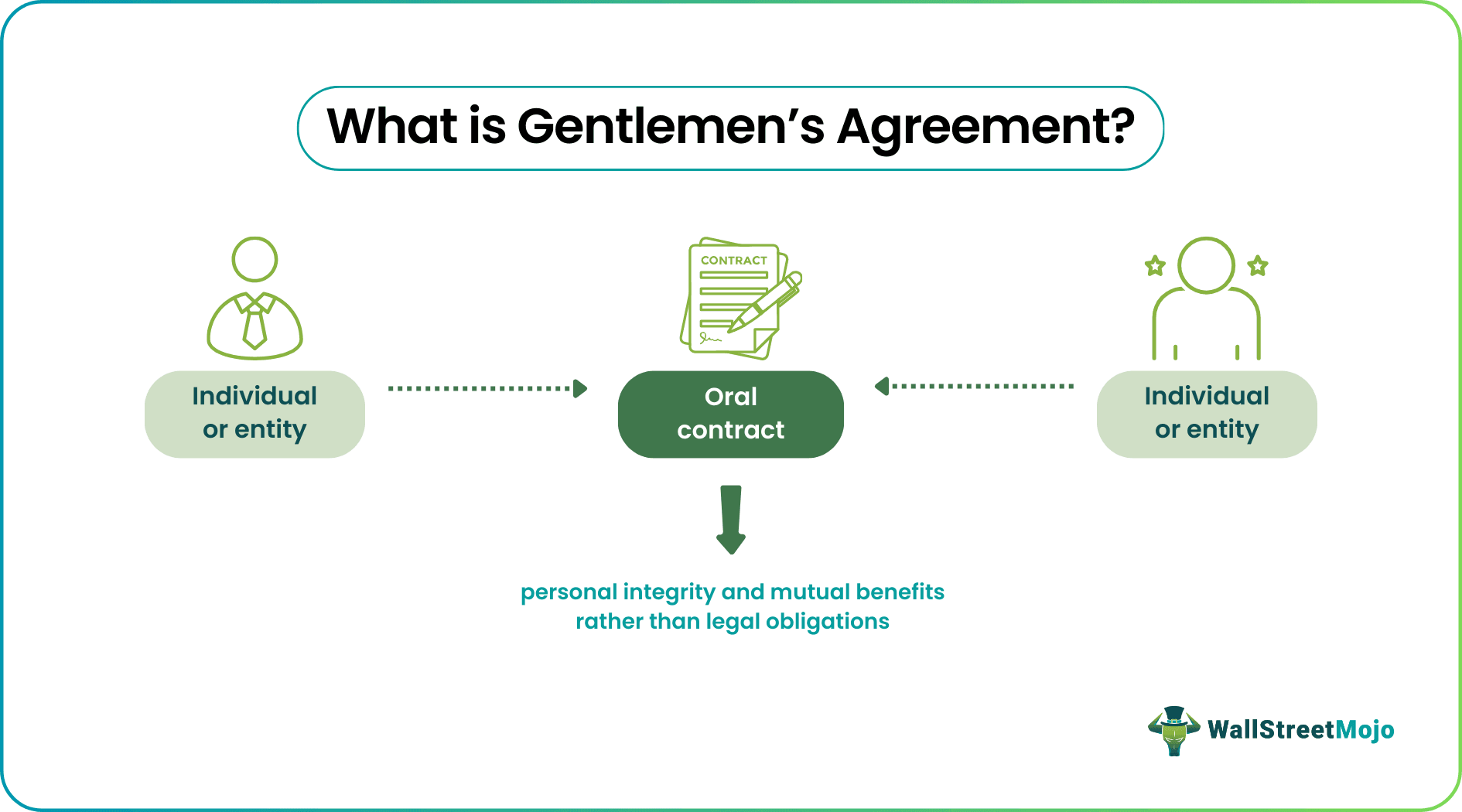
A gentlemen’s agreement is an informal, non-legally binding arrangement between two or more parties. It relies not on the threat of litigation or the enforcement of a court, but on the honor, integrity, and mutual interest of those involved. In the context of money, investing, and business finance, understanding the nuances of these agreements is essential for any entrepreneur, investor, or executive looking to navigate the delicate balance between speed and security.
Defining the Gentlemen’s Agreement in a Modern Financial Context
At its core, a gentlemen’s agreement is a “contract of honor.” In a legal landscape where every word is scrutinized by compliance officers and attorneys, the persistence of informal agreements might seem like an anachronism. However, in the fast-moving sectors of private equity, venture capital, and boutique finance, these agreements serve as a critical lubricant for the gears of commerce.
The Mechanics of Non-Binding Contracts
The defining characteristic of a gentlemen’s agreement is its lack of legal enforceability. If one party fails to uphold their end of the bargain, the aggrieved party generally has no recourse in a court of law. This distinguishes it from a formal contract, which is backed by the coercive power of the state.
In business finance, these agreements often manifest as “understandings” regarding market territory, price stabilization, or non-solicitation of employees. Because they are not written down—or if they are, they include clauses explicitly stating they are non-binding—they exist in a gray area of professional ethics. The “penalty” for breaking such an agreement is not a fine or an injunction, but a devastating blow to one’s reputation. In financial circles, where your word is your currency, losing that “social credit” can be more expensive than any lawsuit.
Historical Roots and the Evolution of Business Trust
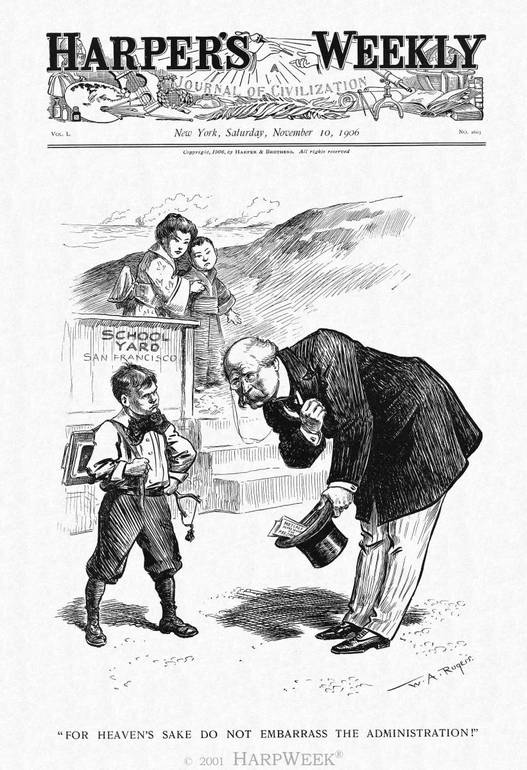
The term originated in the British Parliament in the early 19th century and gained prominence in the United States during the industrial revolution. Historically, these agreements were used to manage competition in nascent industries like railroads and steel, often to bypass burgeoning antitrust laws.
Today, the concept has evolved. While the term “gentlemen” reflects a gendered past, the modern application is inclusive but remains rooted in the idea of “elite trust.” In the 21st-century financial ecosystem, the gentlemen’s agreement has shifted from a tool for market collusion to a tool for strategic agility. It is the precursor to the formal “Term Sheet” or “Memorandum of Understanding” (MOU), allowing parties to signal intent before the lawyers arrive.
The Role of Informal Agreements in Global Business and Finance
In the realm of money and business finance, time is often the most valuable asset. The ability to lock in a deal or secure a partnership before a competitor can intervene is a significant competitive advantage. This is where the informal agreement shines.
Facilitating Rapid Deals in Private Equity and M&A
In Mergers and Acquisitions (M&A) and Private Equity (PE), the early stages of a deal are almost always governed by informal understandings. When two CEOs meet for dinner to discuss a potential buyout, they are operating under a gentlemen’s agreement. They agree on a ballpark valuation and a timeline for due diligence.
These verbal commitments allow for “soft” exploration of a deal without the immediate overhead of legal fees. It provides a “safe space” for financial leaders to test the waters of a partnership. If a CEO gives their word that they will not entertain other offers for thirty days while the other party assesses the books, that is a gentlemen’s agreement. In the tight-knit world of high finance, breaking that promise would signal to the entire market that the individual is an unreliable partner, potentially scuttling future opportunities.
Informal Alliances in Small Business and Side Hustles
The gentlemen’s agreement isn’t reserved solely for the corridors of Wall Street. It is equally prevalent in the world of small business, independent consulting, and side hustles. For an entrepreneur starting a new venture, formal legal contracts for every minor collaboration can be cost-prohibitive and time-consuming.
Consider a referral partnership between a freelance web designer and a digital marketer. They may agree to a 10% commission for any client referred to one another. There is no signed document, just a mutual understanding that benefits both parties’ bottom lines. In the “gig economy” and the world of online income, these trust-based networks are often the primary driver of growth. They allow for a level of flexibility and “trial periods” that formal contracts simply do not permit.
The Risks and Rewards of Eschewing Formal Legal Contracts
Engaging in an agreement that cannot be enforced by a judge is a calculated risk. For every success story fueled by a handshake, there is a cautionary tale of a deal gone sour and a partner left with no legal standing.
The Efficiency of the “Handshake Deal”
The primary reward of a gentlemen’s agreement is efficiency. By bypassing the “friction” of legal review, businesses can move at the speed of thought. This is particularly vital in volatile markets where asset prices can shift in a matter of hours.
Furthermore, these agreements foster a culture of high-level accountability. When a deal is based on personal honor, the parties involved often feel a greater psychological commitment to its success than they would with a cold, sterile contract. It builds “social capital,” a form of intangible wealth that can be leveraged for decades. In many cultures, particularly in parts of Asia and the Middle East, the relationship (and the verbal honor associated with it) is considered far more important than the written document.
Legal Vulnerabilities and the Problem of Unenforceability
The most glaring risk is, of course, the lack of protection. If a market crashes or a project fails, a party may find it more financially advantageous to break their word than to honor the agreement. Without a signed contract, the other party is left with “unclean hands”—unable to seek damages or specific performance.
Another risk is the “clarity gap.” Verbal agreements are prone to the fallibility of human memory. Two partners may walk away from a handshake deal with two slightly different interpretations of the terms. Months later, what started as a friendly understanding can devolve into a bitter dispute, not because of a lack of honor, but because of a simple misunderstanding. In business finance, where decimal points matter, this lack of precision can be a fatal flaw.
Ethical Implications and the “Old Boys’ Club” Critique
While the gentlemen’s agreement is a tool of efficiency, it also carries significant ethical baggage. Its history is intertwined with exclusivity and the intentional subversion of fair market competition.
Exclusivity and Market Competition
Critics of the gentlemen’s agreement argue that it reinforces “insider” networks, often referred to as the “Old Boys’ Club.” Because these agreements rely on personal relationships and social standing, they can inadvertently (or intentionally) exclude outsiders—women, minorities, and newcomers—who have not yet built the necessary social capital.
From a regulatory perspective, informal agreements have also been used as a cloak for anti-competitive behavior. Cartels, price-fixing schemes, and market-sharing arrangements are often built on gentlemen’s agreements to avoid creating a “paper trail” for regulators like the FTC or the SEC. While the agreements themselves are not illegal, the actions they facilitate often are.
Moving Toward Transparency in Modern Corporate Governance
As ESG (Environmental, Social, and Governance) criteria become more prominent in investment decisions, the “gentlemen’s agreement” is coming under increased scrutiny. Investors and stakeholders are demanding greater transparency and documented accountability.
The modern trend is toward “verified trust.” This means using the informal agreement as a starting point but quickly transitioning to digital records, emails, or “handshake” apps that provide a timestamped trail of the consensus. In the world of business finance, the goal is to keep the spirit of the informal agreement while mitigating the systemic risks of total opacity.
Best Practices for Navigating Gentlemen’s Agreements Today
In a professional financial environment, how should one handle the opportunity for a handshake deal? It is a skill that requires a blend of intuition, strategic thinking, and self-protection.
When to Trust and When to Document
The decision to rely on a gentlemen’s agreement should depend on the “stakes-to-trust” ratio. If the financial stakes are low and the trust level is high (e.g., a long-term business partner), an informal agreement may be sufficient for minor tasks. However, as the complexity and the dollar amount increase, the need for documentation becomes absolute.
A good rule of thumb in business finance is: Trust the person, but document the deal. You can maintain a friendly, honor-based relationship while still insisting on a written summary. This doesn’t have to be a 50-page contract; it can be a simple follow-up email that says, “Just to confirm our conversation today, we agreed on X, Y, and Z.” This preserves the rapport while closing the “clarity gap.”

Transitioning from Informal to Formal Agreements
The most successful financial leaders use gentlemen’s agreements as a bridge, not a destination. They use the handshake to signal commitment and build momentum, but they have a clear process for moving toward a formal contract.
In venture capital, this is seen in the “Soft Circle.” An investor might “soft circle” a $500,000 investment in a startup. It is a non-binding gentlemen’s agreement that tells the founder they are in. However, both parties know that the money won’t move until the Subscription Agreement is signed. This allows the founder to tell other investors that the round is filling up, creating “social proof” while maintaining legal rigor.
By understanding the power and the pitfalls of the gentlemen’s agreement, you can navigate the world of money with greater sophistication. Whether you are closing a deal on a golf course or via a video call, remember that while a handshake can start a multi-million dollar venture, it is the integrity of the people involved—and the eventual clarity of the terms—that will determine its lasting success.
aViewFromTheCave is a participant in the Amazon Services LLC Associates Program, an affiliate advertising program designed to provide a means for sites to earn advertising fees by advertising and linking to Amazon.com. Amazon, the Amazon logo, AmazonSupply, and the AmazonSupply logo are trademarks of Amazon.com, Inc. or its affiliates. As an Amazon Associate we earn affiliate commissions from qualifying purchases.