
In the contemporary digital landscape, the question “what is genre in music?” has shifted from a sociological inquiry into a complex technological challenge. Traditionally, a music genre was a conventional category that identified some pieces of music as belonging to a shared tradition or set of conventions. However, in the era of big data, artificial intelligence, and global streaming platforms, genre has been redefined as a multidimensional data vector. It is no longer just a label found on a record sleeve; it is a sophisticated metadata system that powers discovery algorithms, trains machine learning models, and organizes the world’s digital library of over 100 million tracks.

Understanding genre today requires a deep dive into how technology parses sound, analyzes listener behavior, and utilizes taxonomies to bridge the gap between human creativity and algorithmic efficiency.
The Shift from Cultural Labels to Data-Driven Metadata
Historically, genres were defined by musicologists and critics based on instrumentation, rhythm, and cultural origin. In the tech-driven music economy, these definitions have been codified into rigid yet expansive metadata structures. This transition from “vibe” to “variable” is the foundation of modern music technology.
The Role of ID3 Tags and Database Taxonomy
At the core of digital music files—whether MP3, FLAC, or AAC—lies the ID3 tag. These containers of metadata are what allow software to identify a track’s genre. Early digital music management systems relied on standardized lists (like those provided by Gracenote or the ID3v1 standard), which offered a limited set of categories.
Today, database taxonomy has evolved into “Knowledge Graphs.” Companies like Spotify and Apple Music use hierarchical structures where a single track isn’t just “Rock”; it is tagged with hundreds of micro-descriptors. This technological taxonomy allows software to understand that “Post-Punk Revival” is a subset of “Alternative Rock,” which in turn is a subset of “Rock.” This structured data is essential for the functionality of search engines and voice assistants like Alexa or Siri, which must interpret natural language queries into specific genre-based database calls.
How Collaborative Filtering Redefines Style
Technology has introduced a new way of defining genre known as “Collaborative Filtering.” This is a process where the genre of a song is partially defined by the listening habits of users. If a significant cluster of users who listen to “Industrial Techno” also frequently play a specific “Dark Ambient” track, algorithms begin to associate those two genres digitally.
In this tech-centric view, genre is not just what the music sounds like, but who listens to it and what else they consume. This creates a “behavioral genre” profile, where the lines between musical styles are blurred by consumer data, leading to the creation of algorithmic playlists that feel cohesive even if the traditional genres of the songs vary wildly.
Algorithmic Genre Detection and Machine Learning
One of the most significant technological breakthroughs in the music industry is Automated Genre Classification (AGC). Using Digital Signal Processing (DSP) and Machine Learning (ML), software can now “listen” to a track and assign it a genre without any human input.
Audio Signal Processing and Spectrogram Analysis
To a computer, a music genre is a pattern of frequencies and amplitudes. Tech tools analyze audio files by converting them into spectrograms—visual representations of the spectrum of frequencies in a sound as they vary with time.
Through Fast Fourier Transform (FFT) algorithms, software can extract specific features from a track. For example, an EDM track will show high energy in the low-frequency range (the kick drum) and a consistent 4/4 temporal pattern. A Classical piece might show higher dynamic range and complex harmonic overlays. By quantifying these “Acoustic Features” (such as danceability, energy, speechiness, and acousticness), machine learning models can categorize music with a high degree of accuracy, effectively turning “genre” into a mathematical signature.
Neural Networks and the Death of “Pure” Genres
Deep Learning, specifically Convolutional Neural Networks (CNNs), has taken genre detection a step further. These networks are trained on millions of labeled tracks, learning to recognize subtle nuances that define a genre.
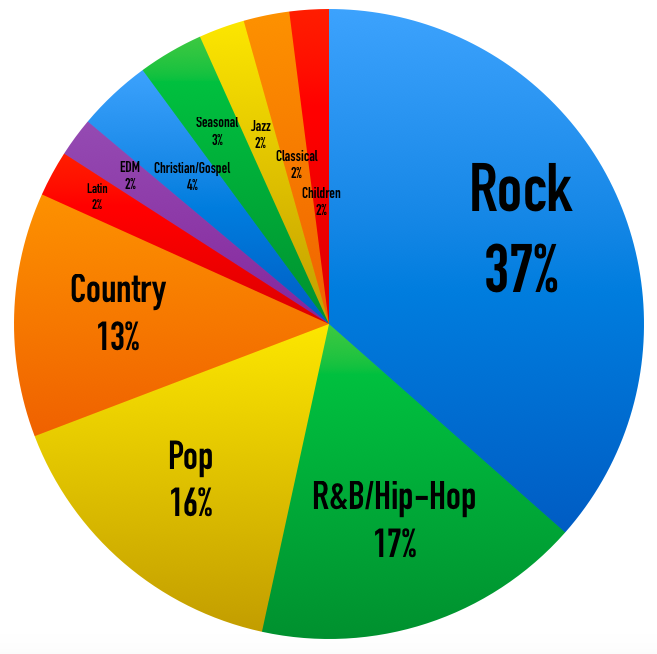
However, this technology has also highlighted the inherent instability of genre. When a neural network analyzes a track and assigns it “60% Jazz, 20% Hip-Hop, and 20% Neo-Soul,” it reflects the reality of modern production. The technology doesn’t just categorize; it quantifies the hybridity of modern music. This has led to the development of “vector-based” genre models, where music exists in a multi-dimensional space rather than a single folder. This tech-driven perspective allows for more nuanced discovery, as the software can find “the midpoint” between two disparate styles.
The Influence of Streaming Platforms on Genre Fluidity
The platforms we use to consume music are not neutral conduits; they are sophisticated software environments that actively shape our understanding of genre. Through User Interface (UI) design and back-end logic, streaming services have commoditized and fragmented the concept of musical style.
Micro-Genres and the Long Tail Theory
In the physical era, record stores had limited shelf space, forcing music into broad categories. In the digital era, the “Long Tail” theory applies: platforms can cater to infinitely niche audiences. This has given rise to thousands of “micro-genres”—categories like “Escape Room,” “Vapor Twitch,” or “Stomp and Holler.”
These genres are often technological artifacts. They are created by clustering algorithms that identify specific trends within the platform’s data. For instance, Spotify’s “Every Noise at Once” project tracks over 6,000 distinct genre distinctions. These micro-labels serve a specific technological purpose: they improve the precision of recommendation engines. The more granular the genre, the more “sticky” the recommendation, keeping users engaged with the app for longer periods.
User Experience (UX) and Discovery Algorithms
From a Tech/Product perspective, genre is a tool for optimizing User Experience (UX). Features like “Daily Mixes” or “Discovery Weekly” use genre tags as the primary filter for content delivery.
The logic of “Discoverability” has fundamentally changed how artists produce music. Knowing that algorithms prioritize specific genre-consistent features, some producers now optimize their tracks for “Playlisting.” This involves ensuring the first 30 seconds of a track align perfectly with the “sonic fingerprint” of a specific genre-based playlist (like “Lo-Fi Beats to Study To”). In this sense, the technology of the platform has become a feedback loop, where the algorithmic definition of a genre begins to dictate the actual creation of the music.
The Future of Genre: Generative AI and Personalized Soundscapes
As we look toward the future of music technology, the concept of genre is poised for even more radical transformation. Generative AI and personalized audio are moving us toward a world where genre is dynamic rather than static.
AI-Generated Content (AIGC) and Style Transfer
Generative AI models, such as those developed by Anthropic, OpenAI, or specialized firms like Udio and Suno, use genre as a “prompt.” In these systems, a genre is a set of weights and biases in a Large Music Model (LMM).
We are now seeing the rise of “Style Transfer” technology, similar to how AI can turn a photo into a Van Gogh painting. Modern software can take a MIDI melody and “re-genre” it instantly—turning a Heavy Metal riff into a Bossa Nova track. Here, genre becomes a digital skin or a filter that can be applied to any underlying musical structure. This separates the “content” (melody/lyrics) from the “genre” (the technological arrangement), treating style as a modular component.

The Ethical Implications of Automated Categorization
As technology becomes the primary arbiter of genre, several ethical and technical challenges arise. Algorithmic bias is a significant concern; if an AI is trained on a dataset that mislabels or overlooks regional genres (such as various African or Asian folk traditions), those genres become “digitally invisible.”
Furthermore, the “black box” nature of proprietary algorithms means that artists often don’t know why they are categorized a certain way. If an algorithm incorrectly tags a “Grime” artist as “Trap,” it can affect their visibility, royalty rates, and audience reach. The future of music tech will require more transparent metadata standards and decentralized “Genre Oracles” to ensure that the digital classification of music remains fair and culturally representative.
In conclusion, when we ask “what is genre in music” in a tech-driven world, the answer is that it is a sophisticated system of classification, a mathematical frequency pattern, and a critical component of the digital economy. From ID3 tags to neural networks, technology has transformed genre from a simple label into the very engine that drives the global music industry. As AI continues to evolve, the boundaries of genre will become even more fluid, shifting from fixed categories to personalized, real-time auditory experiences.
aViewFromTheCave is a participant in the Amazon Services LLC Associates Program, an affiliate advertising program designed to provide a means for sites to earn advertising fees by advertising and linking to Amazon.com. Amazon, the Amazon logo, AmazonSupply, and the AmazonSupply logo are trademarks of Amazon.com, Inc. or its affiliates. As an Amazon Associate we earn affiliate commissions from qualifying purchases.