
Understanding your Full Retirement Age (FRA) is a cornerstone of effective retirement planning, directly impacting the amount of Social Security benefits you will receive. Often abbreviated as FRA, this age represents the point at which you are entitled to 100% of your primary insurance amount (PIA)—the benefit calculated from your lifetime earnings. Claiming benefits before or after your FRA results in either a permanent reduction or increase to your monthly payout, making it a critical financial decision with lifelong implications.
Decoding Your Full Retirement Age (FRA)
The concept of Full Retirement Age isn’t static; it has evolved over time, primarily tied to the year you were born. This phased approach was introduced to ensure the long-term solvency of the Social Security system in response to increasing life expectancies. For anyone approaching retirement, knowing their specific FRA is the first step in constructing a sound strategy for claiming benefits.
The Birth Year Calculation
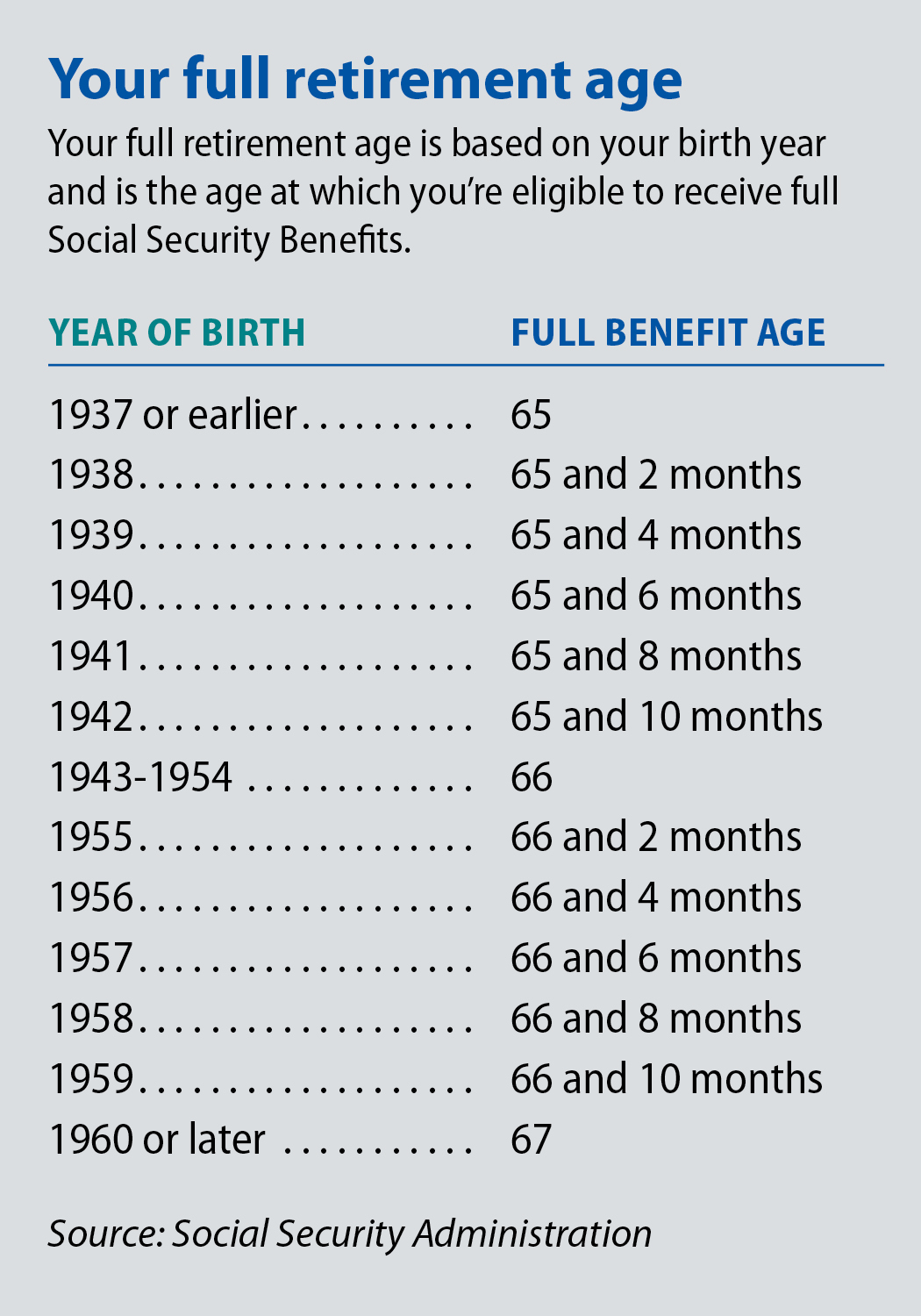
Your Full Retirement Age is precisely determined by your birth year. The Social Security Administration (SSA) has a tiered system that gradually increases the FRA for individuals born in 1938 and later.
- If you were born in 1937 or earlier, your FRA was 65.
- For those born between 1943 and 1954, your FRA is 66.
- If you were born in 1960 or later, your FRA is 67.
For birth years between 1955 and 1959, the FRA incrementally increases by a couple of months for each subsequent birth year. For instance, if you were born in 1955, your FRA is 66 and 2 months; for 1956, it’s 66 and 4 months, and so on, until it reaches 67 for those born in 1960 and beyond. This staggered increase is crucial because even a difference of a few months in your FRA can influence your claiming strategy and the overall benefits you receive.
Evolution of FRA Over Time
The gradual increase in FRA was legislated as part of the Social Security Amendments of 1983. Prior to these amendments, the FRA for all individuals was 65. The rationale behind the change was rooted in demographics and economics: Americans were living longer, leading to more years in retirement and a greater strain on the Social Security trust funds. By slowly raising the FRA, policymakers aimed to balance the system’s financial obligations with the changing realities of life expectancy. This evolution underscores the dynamic nature of government benefit programs and highlights why individuals must stay informed about current regulations as they plan for their future. Understanding this historical context provides insight into why future adjustments might occur and why proactive financial planning is essential, rather than relying solely on past benchmarks.
The Financial Trade-offs: Early, Full, or Delayed Claiming
The decision of when to claim Social Security benefits is one of the most significant financial choices you’ll make in retirement. It’s a trade-off between receiving income sooner versus receiving a larger monthly payment for the rest of your life. Each option—claiming early, at FRA, or delaying—carries distinct financial implications that warrant careful consideration.
The Impact of Claiming Early (Reduced Benefits)
You are eligible to start claiming Social Security retirement benefits as early as age 62. However, choosing to claim before your Full Retirement Age results in a permanent reduction of your monthly benefit amount. This reduction is not a temporary penalty but a long-term adjustment designed to compensate for the fact that you will be receiving benefits for a longer period.
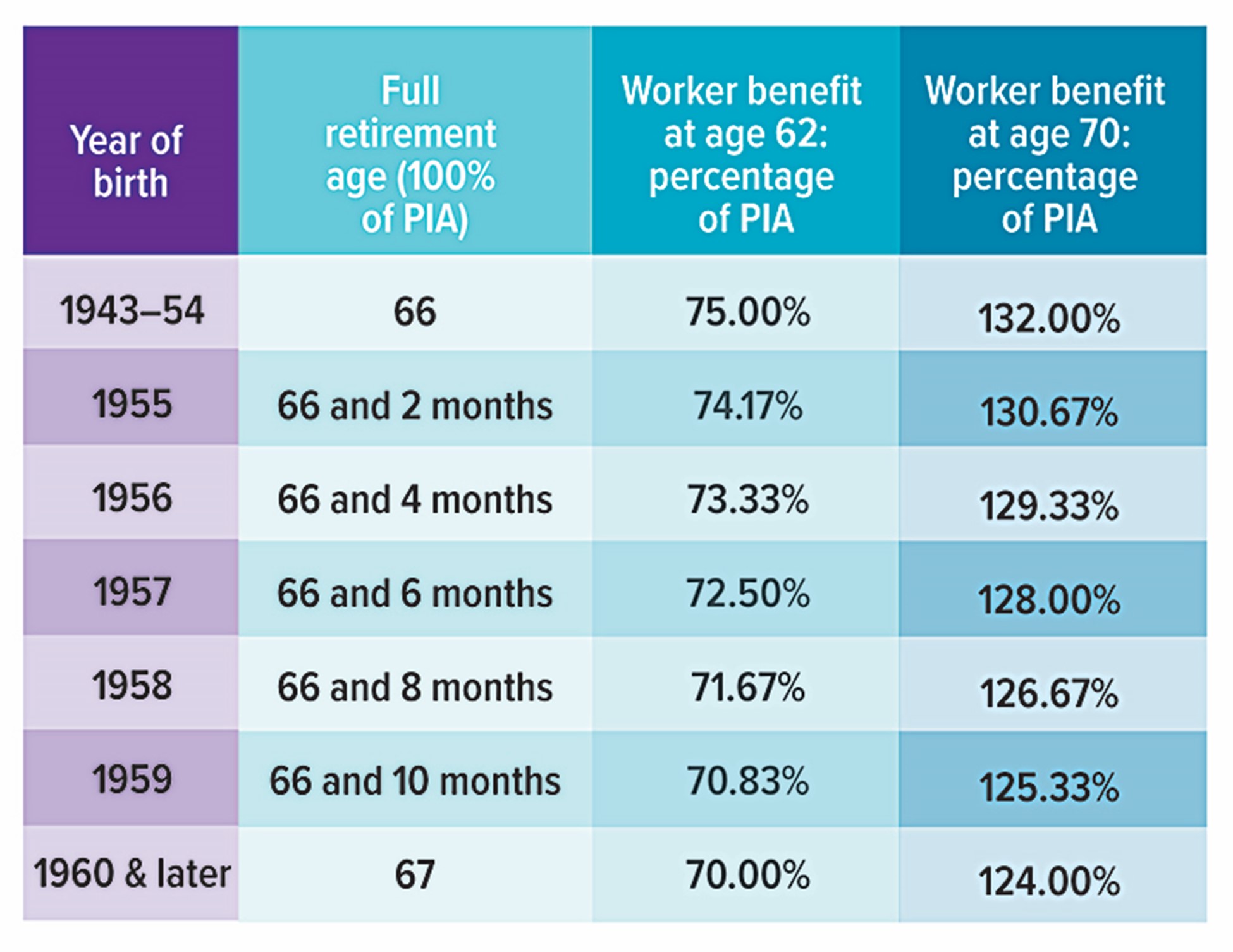
The reduction percentage depends on how many months early you claim. For example, if your FRA is 67 and you claim at age 62, your monthly benefit could be reduced by as much as 30%. This calculation is based on an actuarial adjustment:
- For each month you claim early, your benefit is reduced by 5/9 of 1% for the first 36 months.
- If you claim more than 36 months early, the reduction is 5/12 of 1% for each additional month.
While receiving income earlier can be appealing, especially if facing health issues, job loss, or a desire for an earlier retirement, it’s critical to project the cumulative impact of this reduction over your expected lifespan. A smaller monthly check can significantly diminish your total lifetime income from Social Security, potentially putting a greater strain on other retirement savings.
Claiming at FRA (Standard Benefits)
Claiming benefits precisely at your Full Retirement Age means you receive 100% of your Primary Insurance Amount (PIA). This is the baseline monthly benefit calculated by the SSA based on your highest 35 years of indexed earnings. For many, claiming at FRA represents a balanced approach, providing a substantial income stream without the permanent reductions associated with early claiming.
This option is often suitable for individuals who:
- Have adequately saved for retirement and don’t need to bridge an income gap with early Social Security.
- Are in good health and expect to live a typical lifespan.
- Wish to start receiving their full earned benefits without delay, providing financial stability during their initial retirement years.
Understanding your PIA and receiving the full amount at your FRA provides a predictable and significant component of your retirement income, offering a stable foundation for financial planning.
Delaying Benefits Beyond FRA (Increased Benefits)
Perhaps one of the most powerful strategies for maximizing lifetime Social Security benefits is to delay claiming past your Full Retirement Age. For each year you delay claiming benefits beyond your FRA, up to age 70, your monthly benefit amount increases by a certain percentage, known as “Delayed Retirement Credits” (DRCs).
These credits accumulate at a rate of 8% per year (or 2/3 of 1% per month) for those born in 1943 or later. This means if your FRA is 67 and you delay claiming until age 70, you could increase your monthly benefit by 24% (3 years * 8% per year). This increase is permanent and applies for the rest of your life.

Delaying benefits is often a strong strategy for:
- Individuals in excellent health with a family history of longevity, as the increased monthly payout can lead to significantly higher cumulative lifetime benefits.
- Those who continue to work past their FRA and don’t need the Social Security income immediately.
- Retirees who have other substantial income sources, such as pensions or large investment portfolios, that can bridge the gap until age 70.
The decision to delay is essentially an investment in a higher guaranteed income stream. While it requires foregoing earlier payments, the substantial increase in monthly benefits can provide enhanced financial security, particularly against the backdrop of rising living costs and increasing life expectancies. It is a calculated risk that, for many, can pay significant dividends over time.
Strategic Considerations for Maximizing Your Benefits
Optimizing your Social Security claiming strategy extends beyond simply knowing your Full Retirement Age. It involves integrating your benefits with other retirement income sources, understanding the nuances of spousal and survivor benefits, and accounting for potential taxation. A holistic approach ensures you leverage every available advantage.
Integrating Social Security with Other Retirement Income
Social Security is rarely the sole source of income in retirement; it typically serves as one pillar of a multi-faceted financial plan. Effectively integrating Social Security benefits with pensions, 401(k)s, IRAs, and other savings is crucial.
- Bridge Income: If you plan to retire before claiming Social Security (e.g., retiring at 62 but delaying Social Security until 67 or 70), you’ll need sufficient personal savings to cover your living expenses during that gap. Your investment portfolio might need to generate more income or you might draw down assets more aggressively in the early years of retirement.
- Tax Efficiency: Consider how your Social Security income, when combined with withdrawals from traditional IRAs or 401(k)s, might impact your overall tax liability. Diversifying income streams from both pre-tax and Roth accounts can offer greater flexibility in managing your taxable income in retirement.
- Longevity Planning: View delayed Social Security benefits as a form of longevity insurance. The guaranteed, inflation-adjusted income stream that increases with delay can act as a hedge against outliving your other retirement savings, providing critical income in your later years when other assets might be depleted.
A comprehensive financial plan will illustrate how your Social Security claiming age influences the sustainability and longevity of your entire retirement nest egg.
Understanding Spousal and Survivor Benefits
Social Security benefits aren’t solely for individual workers; they also provide critical support for spouses and survivors. Understanding these rules can significantly impact a couple’s or family’s overall financial security.
- Spousal Benefits: If you are married, your spouse may be eligible for benefits based on your earnings record, even if they have little or no earnings history themselves. A spouse can receive up to 50% of your Full Retirement Age benefit. However, claiming spousal benefits early also results in a reduction. A key strategy for couples often involves one spouse delaying their higher benefit while the other claims a spousal benefit.
- Survivor Benefits: When a Social Security beneficiary dies, certain family members may be eligible for survivor benefits. A surviving spouse can receive up to 100% of the deceased worker’s benefit if they claim at their own Full Retirement Age for survivor benefits. Children under 18 (or 19 if in high school) and disabled adult children may also be eligible. These benefits are a vital safety net and should be factored into any long-term financial and estate planning.
- Divorced Spouse Benefits: Even if divorced, you may be eligible to receive benefits based on your ex-spouse’s earnings record, provided the marriage lasted at least 10 years, you are at least 62, and you are currently unmarried. This can be a significant, often overlooked, source of income.
Careful coordination of claiming strategies between spouses can maximize combined lifetime benefits, particularly when there is a significant difference in earnings history or life expectancy.
The Role of Taxation in Social Security Benefits
It’s a common misconception that Social Security benefits are tax-free. For many retirees, a portion of their benefits may be subject to federal income tax, and in some states, to state income tax as well.
- Federal Taxation: The taxability of your Social Security benefits depends on your “combined income,” which is your adjusted gross income (AGI) plus non-taxable interest plus one-half of your Social Security benefits.
- If your combined income is between $25,000 and $34,000 for an individual ($32,000 and $44,000 for married filing jointly), up to 50% of your benefits may be taxable.
- If your combined income exceeds $34,000 for an individual ($44,000 for married filing jointly), up to 85% of your benefits may be taxable.
- State Taxation: Some states also tax Social Security benefits, though many have exemptions for lower-income retirees. It’s important to check the specific tax laws in your state of residence.
Understanding these tax implications is crucial for accurate retirement income projections. Strategies like Roth conversions or managing withdrawals from various accounts can help keep your combined income below certain thresholds, potentially reducing the amount of Social Security benefits subject to taxation.
Practical Steps for Social Security Planning
Navigating the complexities of Social Security requires proactive planning and utilizing available resources. The decisions you make regarding when and how to claim your benefits can have a profound impact on your financial well-being throughout retirement.
Utilizing the Social Security Administration’s Resources
The Social Security Administration (SSA) offers a wealth of information and tools that are indispensable for planning your retirement benefits.
- my Social Security Account: Creating a “my Social Security” account online is perhaps the most important first step. This account allows you to view your earnings history, check your estimated future benefits at various claiming ages (62, FRA, 70), and verify that your reported earnings are accurate. Regularly reviewing your earnings record is critical, as errors can impact your future benefits.
- Benefit Calculators: The SSA website provides various online calculators that can help you estimate your benefits under different scenarios, including claiming early, at FRA, or delaying. These tools can help you visualize the financial trade-offs associated with different claiming ages.
- Publications and Fact Sheets: The SSA publishes numerous free guides and pamphlets explaining specific aspects of Social Security, such as spousal benefits, survivor benefits, and taxation. These resources are designed to be user-friendly and can clarify many common questions.
Leveraging these official resources directly from the SSA ensures you are working with the most accurate and up-to-date information for your personal situation.
The Value of Professional Financial Advice
While the SSA provides the data, a qualified financial advisor can help you interpret that data within the broader context of your complete financial picture. An advisor specializing in retirement planning can provide invaluable assistance by:
- Personalized Strategy Development: An advisor can help you integrate your Social Security claiming decision with your other retirement assets, income sources, healthcare costs, and overall spending goals. They can model various scenarios to show the long-term impact of different claiming ages.
- Tax Optimization: Advisors can help devise strategies to minimize the taxation of your Social Security benefits and your overall retirement income, potentially saving you thousands of dollars over your retirement years.
- Spousal and Survivor Benefit Maximization: For couples, advisors can help navigate the complex rules for spousal and survivor benefits to ensure the highest possible combined lifetime income. This often involves intricate calculations and understanding optimal timing for each spouse.
- Longevity and Risk Assessment: They can help you consider factors like your health, family longevity, and risk tolerance to make an informed decision that aligns with your personal circumstances and helps you manage risks like outliving your savings.
The decision of when to claim Social Security benefits is a complex one, deeply intertwined with your entire financial future. By understanding your Full Retirement Age, evaluating the financial implications of different claiming strategies, and leveraging both official resources and professional advice, you can make an informed choice that maximizes your retirement security.
aViewFromTheCave is a participant in the Amazon Services LLC Associates Program, an affiliate advertising program designed to provide a means for sites to earn advertising fees by advertising and linking to Amazon.com. Amazon, the Amazon logo, AmazonSupply, and the AmazonSupply logo are trademarks of Amazon.com, Inc. or its affiliates. As an Amazon Associate we earn affiliate commissions from qualifying purchases.