
In the modern era of athletics, the line between sport and technology has blurred to the point of invisibility. Nowhere is this more apparent than in the world of cycling. While the sport was once defined by “feel,” “grit,” and the subjective experience of burning lungs, it is now governed by precise digital metrics. At the heart of this data revolution lies a single, three-letter acronym: FTP.
Functional Threshold Power (FTP) has become the gold standard for measuring a cyclist’s fitness, but more importantly, it serves as the cornerstone of the digital training ecosystem. To understand FTP is to understand how software, hardware, and data science converge to turn a simple bicycle into a high-performance laboratory.
The Digital Foundation: Defining Functional Threshold Power (FTP)
At its most basic level, Functional Threshold Power is a metric used to represent the highest average power (measured in watts) a cyclist can maintain for approximately one hour. However, in the context of modern technology, FTP is much more than a simple number; it is a calibrated benchmark that allows software to create a personalized digital twin of an athlete’s physiological capabilities.
What is FTP? The Core Metric of Performance
In physiological terms, FTP represents the point at which lactate begins to accumulate in the bloodstream faster than the body can remove it—often referred to as the “steady state.” From a tech perspective, FTP is the “North Star” for training algorithms. By establishing this baseline, training platforms can calculate every other training intensity with mathematical precision. If you know a rider’s FTP, you can calculate their “Sweet Spot,” their “VO2 Max” intervals, and their active recovery zones with a degree of accuracy that was impossible twenty years ago.
The Role of Power Meters and Digital Sensors
The existence of FTP as a usable metric is entirely dependent on the hardware. Power meters—devices equipped with strain gauges that measure the force applied to the pedals or crankset—are the primary tools of data collection. These devices sample data hundreds of times per second, transmitting information via ANT+ or Bluetooth Low Energy (BLE) protocols to head units or smartphones. This continuous stream of raw data is the “big data” of the cycling world, providing the granular insights necessary to define and track FTP over time.
The Software Ecosystem: Platforms Transforming Raw Data into Insight
A power meter provides the numbers, but software provides the meaning. The rise of sophisticated training platforms has democratized professional-grade coaching, allowing any enthusiast with a smartphone to train with the same analytical rigor as a Tour de France winner.
TrainingPeaks, Zwift, and the Gamification of Data
Platforms like TrainingPeaks and Strava use FTP as the fundamental input for their proprietary algorithms. TrainingPeaks, for example, uses FTP to calculate the Training Stress Score (TSS), a metric that quantifies the physiological cost of a ride. This allows athletes to track their chronic training load (fitness) and acute training load (fatigue) through complex digital modeling.
On the other hand, Zwift has revolutionized the social and competitive aspect of cycling by using FTP to “level the playing field.” In the virtual world of Zwift, a rider’s avatar moves based on their “watts per kilogram” (W/Kg), a calculation derived directly from their FTP. This integration of real-world power output into a virtual environment represents one of the most successful applications of IoT (Internet of Things) technology in the fitness industry.
AI and Machine Learning in Predictive Performance
The latest frontier in cycling tech is the move away from manual testing toward predictive modeling. Traditionally, finding one’s FTP required an exhausting physical test. However, companies like TrainerRoad and Xert are now utilizing artificial intelligence and machine learning to estimate a rider’s FTP based on their historical workout data. By analyzing thousands of data points from previous rides, these AI models can detect subtle shifts in a rider’s power curve and automatically adjust their FTP. This eliminates the need for frequent, grueling “Ramp Tests” and ensures that the training software is always calibrated to the user’s current fitness level.

Testing Protocols: The Technology Behind the Benchmark
To establish a reliable FTP, cyclists must engage in specific testing protocols. These protocols are designed to elicit a maximum sustainable effort, which the software then translates into a usable fitness metric.
The 20-Minute Test vs. Ramp Tests
The classic FTP test is the 20-minute time trial. The technology behind this involves the cyclist performing an all-out effort for 20 minutes, with the head unit recording the average power. The software then subtracts 5% from this average to estimate what the rider could hold for a full hour.
In recent years, the “Ramp Test” has gained popularity within the digital training community. This protocol involves a smart trainer—an indoor bike trainer that can be controlled by software—automatically increasing the resistance every minute until the rider reaches total exhaustion. The software monitors the exact point of failure and uses an algorithm to calculate the FTP. This “Smart” approach to testing is highly valued for its repeatability and lower psychological barrier to entry.
The Evolution of “Estimated FTP” through Smart Algorithms
Beyond structured tests, modern cycling computers (like those from Garmin or Wahoo) utilize background algorithms to estimate FTP during regular outdoor rides. If a cyclist hits a new peak power for a sustained duration during a group ride or a race, the device’s firmware will recognize the anomaly and notify the user that their FTP has increased. This real-time processing of complex data streams showcases the power of edge computing in sports wearables.
Beyond the Number: How Technology Dictates Modern Training
Once an FTP is established, it becomes the primary variable in a larger equation of performance optimization. Technology uses this number to dictate exactly how an athlete should train, recover, and even eat.
Power Zones and Digital Personalization
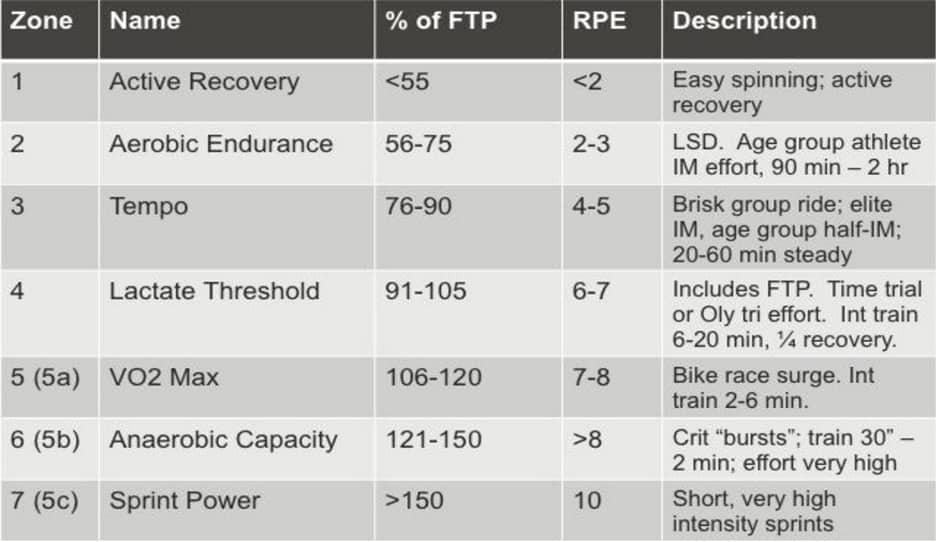
Based on the FTP, software automatically generates “Power Zones.” These zones (usually labeled 1 through 7) represent different energy systems in the body. For instance, Zone 2 is for endurance, while Zone 6 is for anaerobic capacity. By using “ERG mode” on a smart trainer, the software can force the hardware to stay at a specific wattage regardless of how fast the rider pedals. This level of digital control ensures that every second of a workout is spent at the exact intensity required to trigger physiological adaptation, maximizing the efficiency of the training.
Wearable Integration and Recovery Analytics
FTP does not exist in a vacuum. Modern health tech ecosystems integrate FTP data with other biometrics, such as Heart Rate Variability (HRV), sleep quality, and blood oxygen levels. By layering power data (the “work done”) over heart rate and recovery data (the “cost to the body”), apps like Whoop or Oura can provide a holistic view of an athlete’s status. If a rider’s FTP suggests they should be able to hold 300 watts, but their HRV indicates they are overtrained, the software can proactively suggest a rest day, preventing injury through data-driven intervention.

The Future of Cycling Tech: Where Data Goes Next
The trajectory of cycling technology suggests that FTP is only the beginning of a much deeper integration between humans and machines. We are moving toward a future where “real-time physiological monitoring” will become the norm.
New sensors are already entering the market that measure muscle oxygen saturation (SmO2) and real-time glucose levels. When synced with FTP data, these tools will allow software to tell a rider exactly when they are about to “bonk” (run out of energy) or how much glycogen they have left in their legs. We are also seeing the rise of aerodynamic sensors that measure “CdA” (coefficient of drag) in real-time, allowing riders to see how their body position affects the power required to maintain their FTP speed.
In conclusion, “FTP Cycling” is much more than a fitness trend; it is a testament to the power of the modern tech stack. From the strain gauges in the pedals to the AI algorithms in the cloud, FTP represents the conversion of human effort into digital intelligence. As hardware becomes more precise and software becomes more predictive, the pursuit of the “higher FTP” will continue to drive innovation in the world of sports technology, proving that in the digital age, the fastest way to get ahead is to master your data.
aViewFromTheCave is a participant in the Amazon Services LLC Associates Program, an affiliate advertising program designed to provide a means for sites to earn advertising fees by advertising and linking to Amazon.com. Amazon, the Amazon logo, AmazonSupply, and the AmazonSupply logo are trademarks of Amazon.com, Inc. or its affiliates. As an Amazon Associate we earn affiliate commissions from qualifying purchases.