
The concept of free will, a cornerstone of human philosophy, psychology, and ethics for millennia, finds itself in a profound state of re-evaluation in the modern digital age. Traditionally defined as the capacity of agents to make choices that are genuinely uncoerced and self-determined, the essence of free will implies an individual’s ability to act upon their intentions, independent of external or internal compulsions that entirely dictate their course. It’s the conviction that we are the authors of our own decisions, responsible for our actions, and capable of choosing otherwise. However, with the exponential rise of advanced technology, particularly artificial intelligence (AI), ubiquitous data collection, and sophisticated algorithms, this classical definition is being stretched, challenged, and even redefined within the context of our increasingly digital existence. The very notion of self-determination now intersects with algorithmic influence, predictive analytics, and the emergent complexities of machine autonomy, compelling us to ask: what does free will truly mean when our digital lives are constantly shaped by unseen forces?

Decoding Free Will in the Age of Algorithms and AI
At its core, free will, as human beings understand it, refers to our capacity for conscious, intentional, and self-initiated action. It is the ability to deliberate, choose between alternatives, and act on those choices, holding ourselves morally accountable for the outcomes. This involves an internal sense of agency – the feeling that ‘I’ am the one making this decision. In the digital age, this fundamental human experience is continuously scrutinized. Every click, every search, every interaction online generates data, which sophisticated algorithms then process to build highly accurate models of our preferences, behaviors, and even our likely future actions.
This data-driven reality forces a critical re-evaluation of classic philosophical debates surrounding free will, such as determinism versus libertarianism. While philosophical determinism suggests that all events, including human choices, are ultimately determined by prior causes, the algorithmic age presents a new form of digital determinism. Our online environments are no longer neutral spaces; they are engineered with ‘choice architectures’ designed to guide, predict, and even pre-empt our decisions. From personalized product recommendations to curated news feeds, AI-driven systems aim to optimize for specific outcomes – often engagement, consumption, or advertising revenue. This raises the question: if our choices are so consistently predicted and subtly influenced by algorithms, how free are they truly? Are we exercising genuine free will, or merely navigating a pre-programmed landscape of options, where our most ‘spontaneous’ decisions are, in fact, the calculated output of an unseen digital puppet master?
The distinction between human free will and the growing autonomy of AI systems becomes paramount here. While AI can execute complex tasks, learn, and even adapt, its ‘choices’ are fundamentally algorithmic, based on programmed objectives and training data. It lacks consciousness, subjective experience, and the capacity for moral introspection that define human agency. Understanding this demarcation is crucial for defining human free will in an era where machine capabilities increasingly mimic intelligent behavior.
The Algorithmic Nudge: When Tech Influences Choice
The pervasive influence of technology on human decision-making is perhaps the most direct challenge to our traditional understanding of free will. Everyday digital tools, from social media platforms to e-commerce sites, employ intricate algorithms and user interface (UI) design principles to ‘nudge’ users toward specific actions. Recommendation engines, for instance, are designed not merely to suggest products or content, but to anticipate our desires with such precision that they can shape them. These systems learn from our past behavior, the behavior of similar users, and vast datasets to present us with options that are highly likely to appeal, thereby streamlining decision-making but also potentially narrowing our exposure to diverse perspectives and alternative choices.
Consider the dynamic of a social media feed. Algorithms prioritize content based on engagement metrics, often amplifying emotionally charged or polarizing material because it generates more interactions. Users, in turn, find themselves in ‘echo chambers’ or ‘filter bubbles,’ where their existing beliefs are reinforced, and dissenting viewpoints are minimized. This subtle manipulation of information flow can profoundly impact individual perspectives, political affiliations, and social behaviors, raising significant questions about the autonomy of thought and the freedom to form independent opinions.
Furthermore, personalized advertising, while seemingly convenient, crafts an individualized reality designed to optimize for conversion. By leveraging deep insights into our psychological profiles, digital marketers can present appeals tailored to our vulnerabilities, aspirations, or current needs, making the act of consumption feel like an intrinsic choice rather than an algorithmically engineered outcome. The definition of free will must, therefore, evolve to account for these pervasive ‘digital nudges,’ acknowledging that while individuals still make choices, the context and presented options are increasingly curated by non-human intelligence, potentially diminishing the perceived range and genuine self-initiation of those decisions.
Can AI Possess Free Will? Exploring Machine Autonomy and Agency
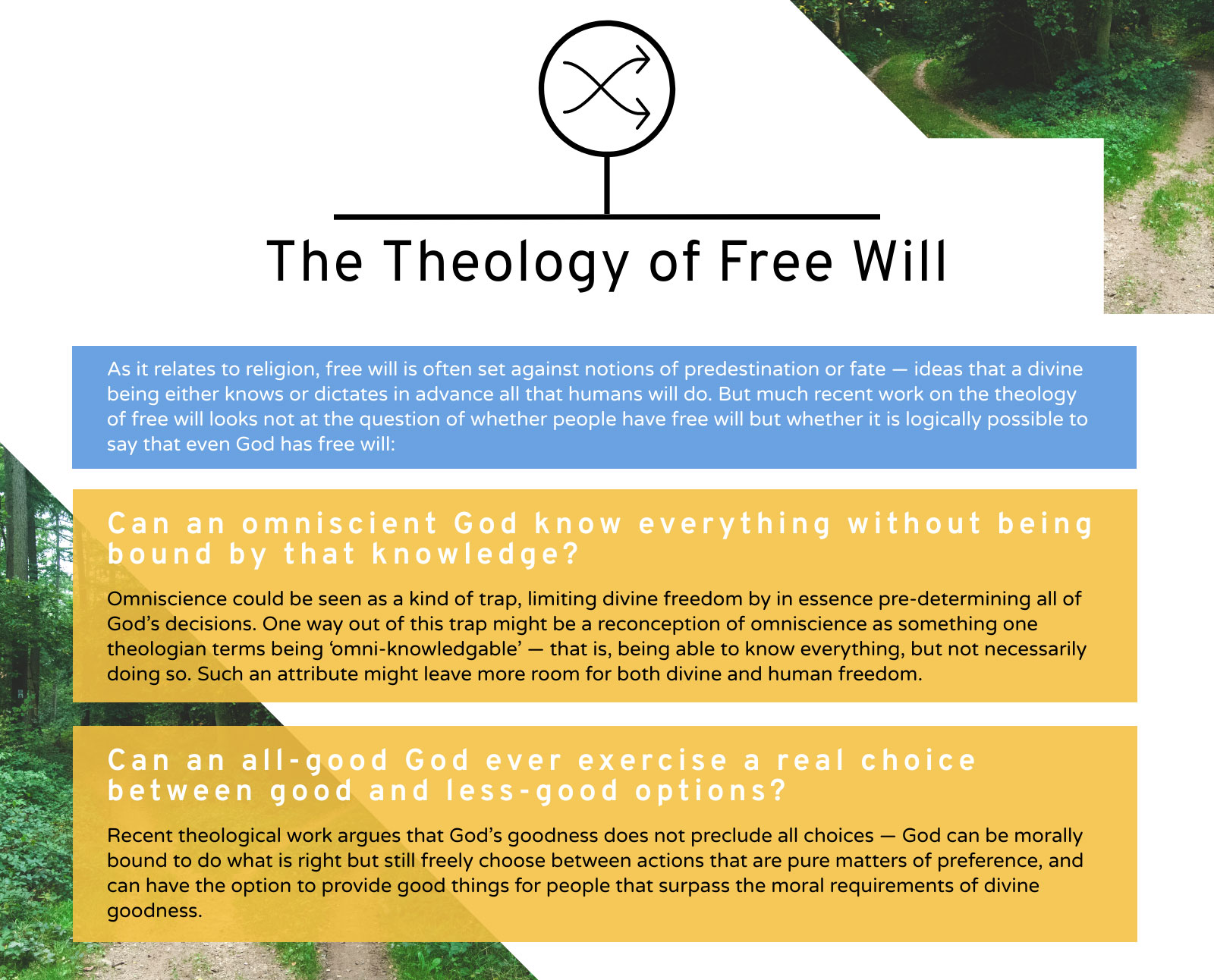
A critical aspect of redefining free will in the digital age involves exploring whether advanced AI could ever truly possess it. The current definition of free will, tied to consciousness, intentionality, and moral responsibility, presents significant hurdles for machines. While AI systems like large language models can generate human-like text, engage in complex problem-solving, and even appear to ‘learn,’ their operations are deterministic functions of their programming, data, and algorithms. They do not experience subjective states, possess self-awareness, or harbor intentions in the human sense. Their ‘choices’ are the result of computational processes designed to optimize for specific objectives, not expressions of genuine internal volition.
However, as AI capabilities advance, the lines can become blurred, leading to ongoing philosophical and ethical debates. The concept of ’emergent behavior’ in complex AI systems, where unexpected and seemingly autonomous actions arise from intricate interactions, occasionally sparks discussion. Yet, even these emergent behaviors are ultimately traceable back to the system’s foundational algorithms and training data, rather than an independent will.
The ethical implications are profound. If an autonomous vehicle makes a life-or-death decision, is it exercising free will, and therefore morally responsible? Or is its ‘choice’ a direct consequence of its programming and the ethical framework embedded within its code by human developers? Attributing free will to AI would necessitate a radical redefinition, separating it from its traditional ties to consciousness and human experience. For now, the consensus remains that AI, while incredibly sophisticated, operates within a fundamentally different framework than conscious human agents. Understanding this difference helps us to preserve the unique human definition of free will while exploring the boundaries of machine autonomy.
Safeguarding Human Autonomy in a Hyper-Connected World
Given the pervasive technological influences, safeguarding human autonomy and preserving the essence of free will becomes an imperative in the digital age. This necessitates a multi-faceted approach, starting with enhanced digital literacy. Users need to understand how algorithms work, how their data is collected and used, and the subtle ways technology can influence their choices. Algorithmic transparency, where the underlying logic and data sources of AI systems are made understandable and auditable, is another critical component. This moves beyond mere compliance, aiming to empower individuals to make more informed decisions about their digital interactions.
Ethical AI design principles are also crucial. Developers and policymakers are increasingly advocating for frameworks that prioritize fairness, accountability, and user control. Designing technologies that respect and foster human agency means building systems that offer genuine choices, provide clear explanations for recommendations, and allow users to override algorithmic suggestions. Principles like ‘privacy by design’ and ‘user-centric AI’ aim to embed respect for individual autonomy into the very architecture of digital tools.
Emerging concepts like ‘cognitive liberty’ or ‘digital self-determination’ underscore the growing recognition of the need to protect our mental and decision-making independence in the digital realm. These ideas advocate for the right of individuals to control their own minds, data, and mental processes, free from external technological manipulation. For free will to remain a meaningful concept, individuals must retain ultimate authority over their own thoughts, beliefs, and actions, particularly as technology gains increasing access to and influence over our cognitive landscapes.

The Synergistic Future: Tech as an Enabler, Not Erroder, of Free Will
While the challenges posed by technology to the traditional definition of free will are significant, it’s also important to envision a future where technology can serve as an enabler, rather than an eroder, of human autonomy. Instead of solely focusing on the deterministic aspects of algorithms, we can explore how technology might augment human decision-making and expand our capabilities for self-determination.
Imagine AI tools designed specifically to help individuals make more informed choices by presenting diverse perspectives, analyzing complex data, or even identifying personal biases that might hinder rational decision-making. Cognitive enhancement technologies, for instance, could provide individuals with access to vast amounts of information and analytical power, potentially broadening their intellectual horizons and empowering them to make more nuanced and truly self-aware choices. Wearable tech could provide real-time feedback on our mental states, allowing for greater self-regulation and intentional action.
The human-AI partnership, therefore, could evolve into a synergistic relationship where AI handles routine or computationally intensive tasks, freeing up human cognitive capacity for higher-level, creative, and genuinely self-determined choices. This perspective emphasizes leveraging AI to enhance, rather than diminish, the unique human capacity for reflection, intentionality, and moral reasoning that underpins our definition of free will. By consciously designing and deploying technology with human flourishing and autonomy at its core, we can strive for a future where technology amplifies our freedom to choose, rather than subtly dictates it. The definition of free will, in this context, would expand to include the responsible integration of technology as a tool for deeper self-understanding and more empowered decision-making.
aViewFromTheCave is a participant in the Amazon Services LLC Associates Program, an affiliate advertising program designed to provide a means for sites to earn advertising fees by advertising and linking to Amazon.com. Amazon, the Amazon logo, AmazonSupply, and the AmazonSupply logo are trademarks of Amazon.com, Inc. or its affiliates. As an Amazon Associate we earn affiliate commissions from qualifying purchases.