
Framing bias is a pervasive cognitive bias that profoundly influences how individuals perceive information and make decisions, particularly when confronted with choices presented in different ways. In the realm of brand strategy, marketing, and corporate communication, understanding and strategically addressing framing bias is not merely advantageous; it is fundamental to shaping consumer perception, driving engagement, and fostering brand loyalty. This bias describes the phenomenon where people react to a particular choice in different ways depending on how it is presented, or “framed,” rather than on the intrinsic value or objective facts of the choice itself.
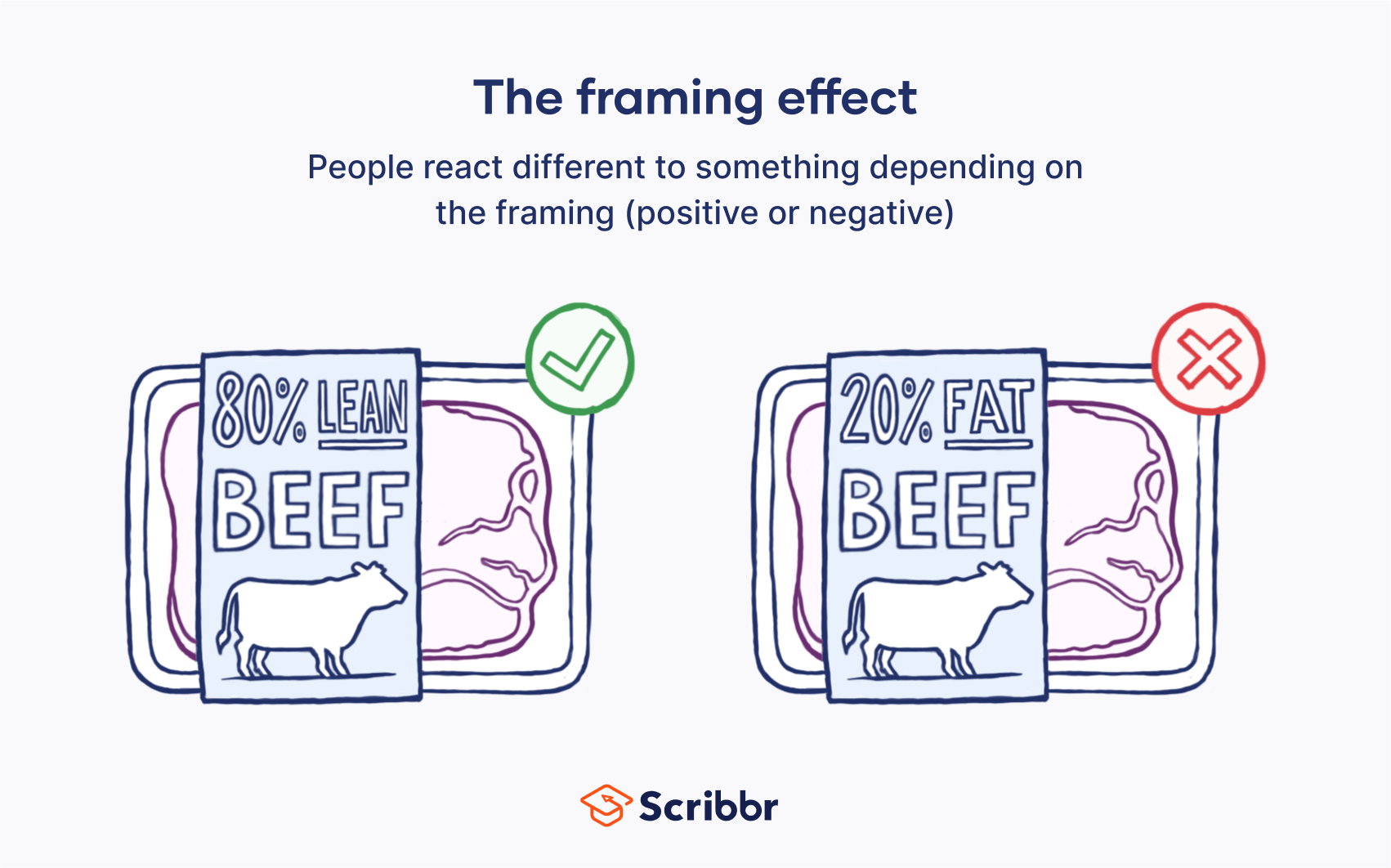
The Subtle Art of Presentation: How Framing Shapes Perception
At its core, framing bias illustrates the power of context and presentation in shaping human judgment. It highlights that the words, imagery, and emotional tone used to convey information can drastically alter how that information is interpreted, regardless of the underlying data. This isn’t about deception; it’s about the inherent human tendency to simplify complex information and respond to the most salient features of its presentation. For brands, this means that the way a product, service, or corporate message is articulated can be as impactful as the offering itself.
The Psychology Behind Influencing Decisions
The origins of framing bias are rooted in cognitive psychology and behavioral economics, most famously explored by Daniel Kahneman and Amos Tversky in their work on Prospect Theory. This theory posits that individuals tend to weigh potential losses more heavily than equivalent potential gains. Consequently, a choice framed in terms of potential gains (e.g., “save 90% of your data”) often elicits a different response than one framed in terms of potential losses (e.g., “lose only 10% of your data”), even if the objective outcome is identical.
For brand strategists, understanding this psychological underpinning is crucial. It informs decisions about how to position products, design marketing campaigns, and craft public relations messages. Consumers are not purely rational actors; their decisions are heavily swayed by emotional responses and the perceived risk or reward associated with a given frame.
Positive vs. Negative Framing: A Strategic Lever
One of the most common applications of framing bias in branding involves the deliberate use of positive (gain) or negative (loss) framing.
- Positive Framing (Gain Framing): This approach emphasizes the benefits, advantages, or positive outcomes of choosing a particular option. For example, a skincare brand might frame its product as “achieve visibly younger-looking skin in just four weeks.” This highlights the desirable gain the consumer stands to acquire.
- Negative Framing (Loss Framing): This approach focuses on the potential losses, risks, or negative consequences of not choosing a particular option. The same skincare brand might instead frame its product as “don’t miss out on reversing the signs of aging – regain your youthful glow.” Here, the emphasis is on avoiding a perceived loss (continued aging or missing out on a solution).
Both frames can be effective, but their impact varies depending on the product, target audience, and desired emotional response. Brands often use loss framing to create urgency or highlight the cost of inaction, while gain framing is typically used to inspire aspiration and excitement.
Framing Bias in Brand Strategy and Marketing Execution
The influence of framing bias permeates every layer of brand strategy and marketing execution, from the foundational articulation of a brand’s purpose to the granular details of advertising copy.
Crafting Compelling Brand Narratives and Messaging
A brand’s narrative is its story, and framing bias dictates how that story resonates. Brands that successfully frame their origin, mission, and values in a way that aligns with consumer aspirations or addresses their underlying fears can build stronger emotional connections. For instance, an eco-friendly brand might frame its products not just as “sustainable,” but as “your contribution to a healthier planet for future generations,” appealing to a sense of legacy and collective gain. Conversely, highlighting the negative environmental impact of competitors (without explicitly naming them) can subtly frame the brand as the superior, responsible choice.

Product Positioning and Value Perception
How a product is positioned in the market is a direct application of framing. Consider premium brands that frame their high price not as a cost, but as an investment in quality, exclusivity, or superior craftsmanship. The narrative shifts from “expensive” to “valuable.” Similarly, a software company might frame its subscription model not as a recurring expense, but as “continuous access to innovation and cutting-edge features,” emphasizing an ongoing benefit rather than a fixed cost.
Pricing Strategies and Consumer Choice Architecture
Pricing is a prime example where framing bias significantly impacts consumer decisions.
- Anchoring: Presenting a higher-priced “premium” option first can make a subsequent mid-range option seem more reasonable, even if it’s still expensive. The premium option acts as an anchor, framing the perception of value for the other choices.
- Bundle Framing: Offering products in bundles (e.g., “buy two, get one free”) can be more appealing than “33% off each item,” even if the discount is mathematically identical. The “free” component frames the deal as a clear gain.
- Decoy Effect: Introducing a third, less attractive “decoy” option can frame one of the main options as significantly better. For example, a subscription service might offer: A) Web only for $5, B) Print only for $10, C) Web + Print for $10. Option B (the decoy) makes option C look like an incredible deal by framing “print” as being “free” when added to web access.
These strategies are not about misleading consumers but about understanding their psychological tendencies and guiding them towards choices that are beneficial for both the brand and, ideally, the consumer.
Visual and Contextual Framing
Beyond words and numbers, visual elements, brand design, and the overall context in which a message is delivered also contribute to framing. A minimalist, elegant advertisement frames a brand as sophisticated and high-end, while a vibrant, cluttered ad might frame it as accessible and value-oriented. The choice of models in an advertisement, the setting of a product photoshoot, or even the placement of a call-to-action button (e.g., “Join Now” vs. “Learn More”) all contribute to the overall frame and influence perception. Consistent visual framing across all touchpoints reinforces corporate identity and strengthens brand recognition.
Ethical Considerations and Responsible Framing
While understanding framing bias offers powerful tools for brands, it also carries significant ethical responsibilities. The line between strategic influence and manipulation can be thin, and brands must navigate it carefully to maintain trust and credibility.
Avoiding Manipulation and Promoting Transparency
Ethical framing means using the bias to clarify value, highlight genuine benefits, and present choices in an understandable way, rather than to obscure facts or coerce decisions. Brands should strive for transparency, ensuring that while the presentation might be optimized, the underlying information remains accurate and accessible. Misleading or deceptive framing can lead to consumer distrust, reputational damage, and ultimately, undermine the brand’s long-term success.

Building Trust Through Authentic Communication
For brands, the long-term goal is to build genuine relationships with their audience. This requires authentic communication. While strategic framing is part of effective communication, it should always be grounded in truth and reflect the brand’s true identity and offerings. When consumers perceive a brand’s framing as honest and aligned with their interests, it fosters trust and encourages repeat engagement. Brands that master ethical framing don’t just sell products; they cultivate loyalty and become perceived as reliable partners in the consumer’s decision-making journey.
In conclusion, framing bias is an indispensable concept for anyone involved in brand strategy, marketing, or corporate identity. By understanding how the presentation of information profoundly shapes perception and decision-making, brands can more effectively communicate their value, engage their target audience, and build enduring connections in a crowded marketplace. The strategic application of framing, coupled with a strong ethical compass, empowers brands to not just speak to their audience, but to genuinely resonate with them.
aViewFromTheCave is a participant in the Amazon Services LLC Associates Program, an affiliate advertising program designed to provide a means for sites to earn advertising fees by advertising and linking to Amazon.com. Amazon, the Amazon logo, AmazonSupply, and the AmazonSupply logo are trademarks of Amazon.com, Inc. or its affiliates. As an Amazon Associate we earn affiliate commissions from qualifying purchases.