
In the realms of software engineering, robotics, and spatial computing, the concept of a “frame of reference” is not merely a theoretical abstraction from a physics textbook. It is the mathematical scaffolding upon which all modern motion-based technology is built. Whether it is a self-driving car navigating a busy intersection, a drone maintaining stability in high winds, or a VR headset synchronizing a digital world with a user’s head movements, the “physics” of the frame of reference provides the logic necessary to translate raw data into meaningful action.

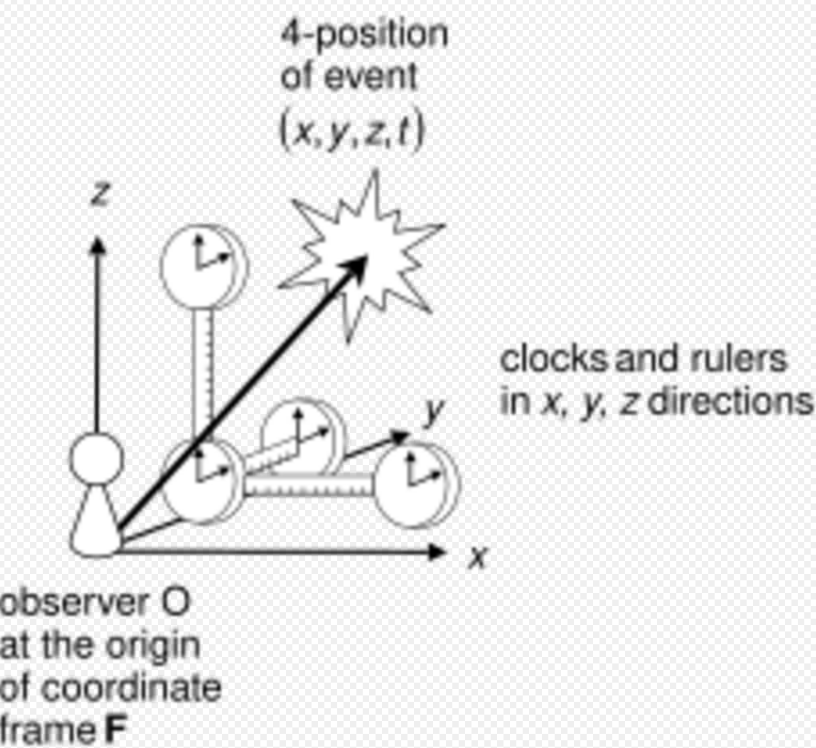
At its core, a frame of reference is a coordinate system used to measure the position, orientation, and motion of objects. In technology, we deal with the translation of these frames constantly. To understand how our most advanced gadgets function, we must first dissect the physics of these frames and how they are implemented in the digital stack.
The Foundation of Positional Logic in Modern Software
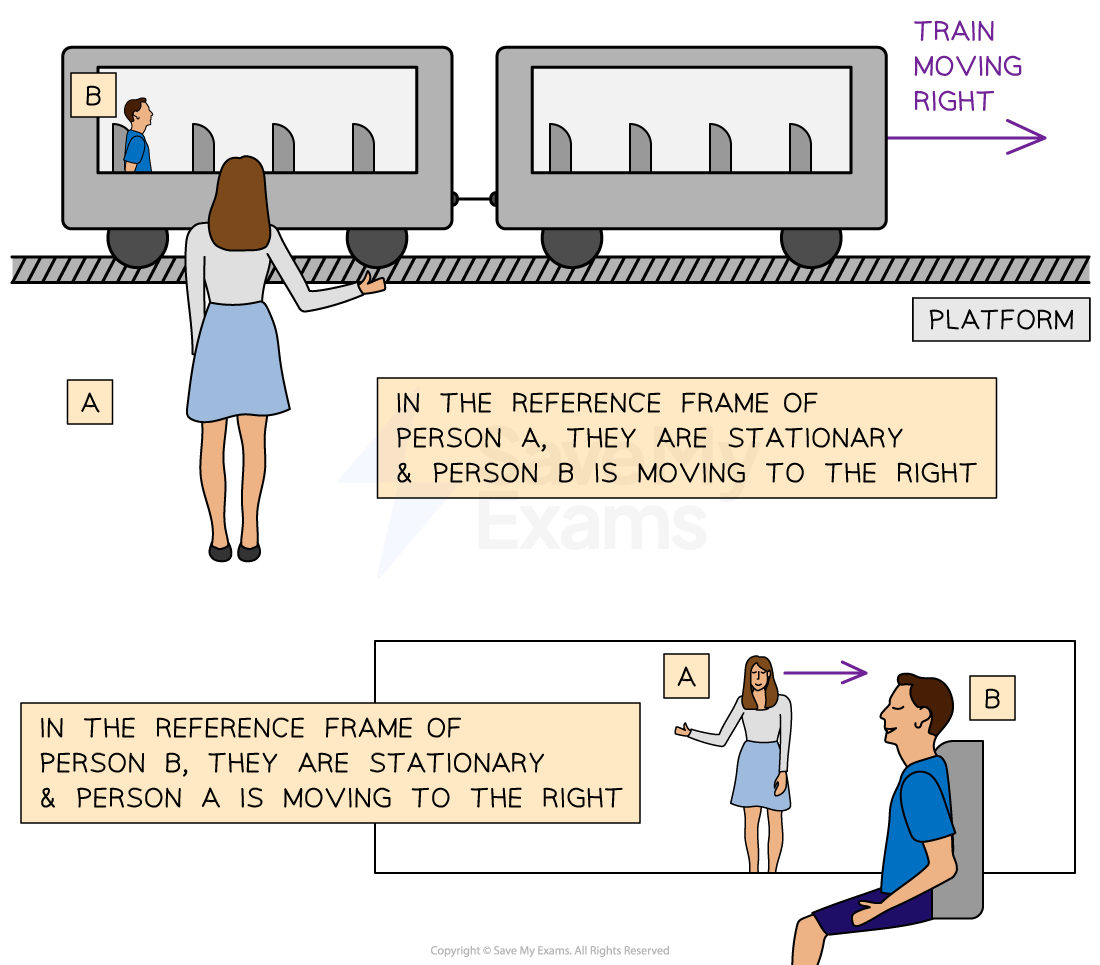
In classical mechanics, a frame of reference is categorized as either inertial or non-inertial. An inertial frame is one that is either at rest or moving at a constant velocity—it does not accelerate. A non-inertial frame, conversely, is undergoing acceleration. For software developers and hardware engineers, distinguishing between these two is the difference between a stable system and a catastrophic failure.
Defining Inertial and Non-Inertial Frames in Technical Systems
When an engineer designs a navigation system for a satellite, they must account for the fact that the Earth is a rotating, non-inertial frame. The physics of the Coriolis effect and centrifugal force must be baked into the algorithms. In simpler consumer tech, such as a smartphone’s accelerometer, the device itself acts as a frame of reference. When you tilt your phone to play a racing game, the software interprets the gravitational vector relative to the device’s local frame to determine the desired steering input.
The challenge in tech is often “Frame Transformation.” This is the mathematical process of moving data from one frame to another. For example, a camera on a robotic arm sees an object in “Camera Space” (the camera’s frame). To move the arm to pick up that object, the software must transform those coordinates into “World Space” (the room’s frame) and then into “Joint Space” (the motor’s frame). Without the rigorous physics of reference frames, the robot would have no concept of where its hand is in relation to what it sees.
The Role of Coordinate Systems in AI and Mapping
Artificial Intelligence, particularly in computer vision, relies heavily on establishing a consistent frame of reference. When an AI model processes a video feed to detect motion, it must distinguish between the motion of the camera and the motion of the objects within the frame. This is known as ego-motion estimation. By treating the camera as a moving frame of reference, the AI can subtract the camera’s own velocity to accurately calculate the real-world speed of a pedestrian or another vehicle.
Autonomous Navigation and the Multi-Frame Problem
One of the most complex applications of frame-of-reference physics is found in autonomous vehicles. A self-driving car is a rolling laboratory of shifting frames. It possesses a global frame (GPS coordinates), a local vehicle frame (the car’s center of gravity), and various sensor frames (LiDAR, Radar, and individual cameras).
SLAM and Relative Positioning
Simultaneous Localization and Mapping (SLAM) is the computational problem of constructing or updating a map of an unknown environment while simultaneously keeping track of an agent’s location within it. This is entirely a game of frames. The “Physics” here involves constant recalibration. As the vehicle moves, its internal frame of reference shifts relative to the static environment.
The vehicle uses “dead reckoning” to estimate its position based on its last known frame, but sensor drift—tiny errors in the physics calculations—can accumulate. To fix this, the system uses “Loop Closure,” where it recognizes a landmark from a previous frame of reference and snaps the current coordinate system back into alignment. This interplay between the moving frame (the car) and the fixed frame (the map) is what allows a Tesla or a Waymo vehicle to navigate with centimeter-level precision.
Sensor Fusion and Relative Motion
Sensor fusion is the process of combining data from different sources so that the resulting information has less uncertainty than would be possible when these sources were used individually. In terms of physics, this means aligning the frames of reference of every sensor on the vehicle. A LiDAR sensor might scan the environment in polar coordinates, while a camera uses a 2D Cartesian grid. The engineering feat lies in “extrinsic calibration”—the physical alignment of these sensors so that their frames of reference overlap perfectly. If the LiDAR’s frame is offset by even a fraction of a degree from the camera’s frame, the AI might perceive an obstacle several feet away from its actual location.
Virtual and Augmented Reality: Synchronizing Digital and Biological Frames
The “physics” of frame of reference is perhaps most visceral in the world of spatial computing, which includes Virtual Reality (VR) and Augmented Reality (AR). Here, the goal is to trick the human brain into accepting a digital frame of reference as the “real” one.
Solving the Latency Gap in Spatial Computing
The most common cause of “VR sickness” is a mismatch between the user’s biological frame of reference (the inner ear’s vestibular system) and the digital frame of reference (the visual input from the headset). If you turn your head and the digital world lags by even 20 milliseconds, your brain detects the discrepancy between your physical frame’s acceleration and the digital frame’s visual update.
To solve this, developers use a technique called “Asynchronous Timewarp.” This involves taking the last rendered frame and re-projecting it based on the very latest tracking data of the user’s head frame. By mathematically shifting the frame of reference at the last possible microsecond before the light hits the user’s eyes, the tech compensates for the delay in the rendering pipeline, maintaining the illusion of a stable physical reality.
Head-Tracking and Spatial Anchors
In AR, such as with the Apple Vision Pro or Microsoft HoloLens, the device must “anchor” digital objects to the physical world. This requires a constant translation between the “Device Frame” and the “World Frame.” When you place a digital lamp on your real-world coffee table, the software creates a spatial anchor. Even as you walk around the room—changing your own frame of reference—the device must calculate the exact transformation needed to keep those digital pixels pinned to the same physical coordinates. This is the ultimate application of Newtonian frame physics applied to light and pixels.
The Role of Physics Engines in Game Development
Modern video games are essentially massive physics simulations. Developers use “Physics Engines” like PhysX or Havok to manage thousands of interacting objects, each with its own frame of reference.
Transformation Matrices and Coordinate Systems
In a game engine like Unity or Unreal Engine, every object exists in a hierarchy. A sword held by a character has a “Local Frame” (relative to the hand), the character has a “Parent Frame” (relative to the ground), and the ground exists in the “Global Frame.”
When the character swings the sword, the engine doesn’t calculate the sword’s position in global space directly. Instead, it uses a transformation matrix—a series of algebraic operations—to move the sword’s coordinates through the hierarchy of frames. This hierarchical approach to frame-of-reference physics allows for complex animations and realistic collisions. If the character is on a moving ship (a moving frame of reference), the physics engine ensures that the sword behaves correctly relative to the character, even though both are hurtling across the digital ocean at high speeds.
Optimization Techniques in Global vs. Local Space
Computational efficiency is the lifeblood of software performance. Calculating every object’s physics in a single global frame would be a nightmare for a CPU. Instead, developers use “Culling” and “Local Space” optimizations. Physics calculations are often localized to a specific frame of reference around the player. Objects far away might be “hibernated,” meaning their physics frames are frozen until the player’s frame of reference gets close enough to interact with them. This strategic management of frames is what allows modern consoles to render vast, open worlds without crashing.
The Future of Computed Reality: Quantum and Beyond
As we move toward the next generation of technology, our understanding of the frame of reference is expanding. In quantum computing, the “frame” is not just a set of spatial coordinates but a state of entanglement and observation. While classical tech relies on the solid, predictable frames of Newtonian physics, the future of AI and high-speed computing may require us to build software that can handle the fluid, probabilistic frames of quantum mechanics.
For now, the physics of the frame of reference remains the invisible tether connecting our digital creations to the physical laws of our universe. Whether it is through the lens of a drone’s camera, the sensors of a robotic arm, or the lenses of a VR headset, the ability to define, translate, and synchronize frames of reference is the core mastery of the modern tech landscape. Understanding this concept is not just for physicists—it is the essential vocabulary for anyone building the future of the digital world.
aViewFromTheCave is a participant in the Amazon Services LLC Associates Program, an affiliate advertising program designed to provide a means for sites to earn advertising fees by advertising and linking to Amazon.com. Amazon, the Amazon logo, AmazonSupply, and the AmazonSupply logo are trademarks of Amazon.com, Inc. or its affiliates. As an Amazon Associate we earn affiliate commissions from qualifying purchases.