
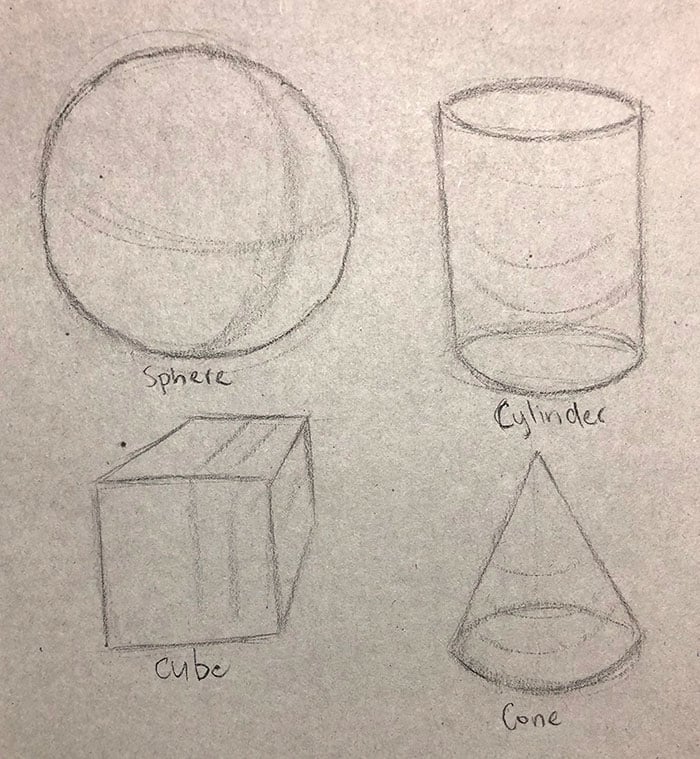
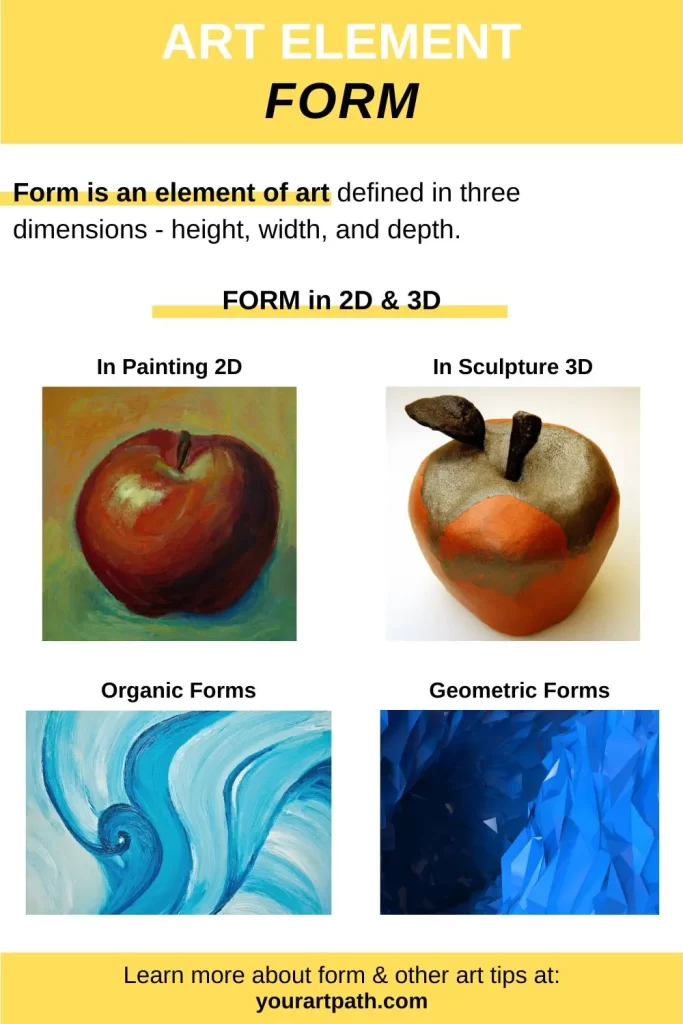
In the classical sense, “form” is one of the seven elements of art, referring to a three-dimensional object or the illusion of one on a two-dimensional surface. However, as we transition deeper into the digital age, the definition of form in painting has undergone a radical technological transformation. No longer confined to the physical properties of oil, pigment, and canvas, form is now a product of complex algorithms, pixel manipulation, and light-simulating software.
Understanding form in the modern context requires a bridge between traditional art theory and cutting-edge technology. From the way a digital brush calculates pressure to the way artificial intelligence interprets depth, “form” has become a sophisticated interplay of geometry and data.
The Digital Evolution of Form: From Pigment to Pixels
In traditional painting, form is created through “chiaroscuro”—the use of strong contrasts between light and dark to give the illusion of volume. In the tech-driven landscape of digital painting, this process is facilitated by sophisticated software engines that mimic the physics of light.
The Shift from Physicality to Mathematical Precision
When a digital artist works in programs like Adobe Photoshop or Corel Painter, “form” is essentially a series of coordinate-based instructions. Unlike physical paint, where the artist must manually mix values to create a gradient, digital tools use 32-bit color depths to provide millions of incremental steps between light and shadow. This precision allows for a “perfect” form that was previously unattainable, where the transition of light across a sphere can be calculated with mathematical exactness.
Digital Light and the Simulation of Volume
In modern digital painting, technology allows for a concept known as “Global Illumination” within 2D painting software. High-end painting apps now incorporate “lighting layers” that treat the painting as a 3D environment. By using “Normal Maps”—a technology borrowed from 3D game development—digital painters can apply light sources to a 2D stroke, and the software will automatically calculate where the shadows should fall to imply form. This automation is a significant technological leap, shifting the artist’s role from a manual renderer to a lighting director.
Technological Tools for Mastering Form
To achieve realistic form, digital artists rely on a suite of hardware and software tools that bridge the gap between human intuition and computational power. The “form” in a digital painting is often the result of hardware responsiveness and software complexity working in tandem.
3D Sculpting and Digital Brushes
The most significant advancement in defining form has been the integration of 3D sculpting into the 2D painting workflow. Software like ZBrush or Blender allows artists to “sculpt” a form in 3D space before “painting” over it. This ensures that the underlying anatomy or geometry is structurally sound. Furthermore, modern digital brushes are programmed with “tilt and pressure sensitivity.” When using a stylus on a Wacom or iPad Pro, the software interprets the angle of the pen to change the “form” of the stroke itself, mimicking the way a physical brush splays against a canvas to create a thick or thin edge.
Physically Based Rendering (PBR) in Digital Art
Originally a staple of the VFX and gaming industries, PBR (Physically Based Rendering) has made its way into the digital painting world. PBR technology calculates how light interacts with different material properties—such as roughness, metallic sheen, and translucency. When an artist paints “form” using PBR-enabled tools, the software simulates how light would bounce off a surface (albedo) and how much light would be absorbed. This allows for the creation of “Sub-surface Scattering,” a technique used to give form to organic subjects like skin or wax, making them appear lifelike by simulating light penetrating the surface.

The Role of Artificial Intelligence in Synthesizing Form
The emergence of Generative AI has introduced a new paradigm for how “form” is perceived and created. AI models like Midjourney, DALL-E, and Stable Diffusion do not “paint” in the traditional sense; they synthesize form based on vast datasets of human-made imagery.
Generative AI and the Understanding of Geometry
AI models operate within a “latent space”—a multi-dimensional mathematical space where different visual concepts are mapped. When an AI is prompted to create a painting with “strong form,” it identifies patterns associated with volume and depth from its training data. The technology uses “diffusion,” a process where it starts with random noise and gradually refines it into a coherent image. The AI’s ability to maintain form depends on its “understanding” of lighting consistency. If the AI detects a light source from the top-left, it applies a consistent gradient across all objects in the frame, effectively “hallucinating” form based on statistical probability.
Neural Style Transfer vs. Geometric Integrity
One of the most fascinating tech developments is “Neural Style Transfer” (NST). This technology allows a user to take the “form” of one image (e.g., a photograph of a building) and apply the “style” of another (e.g., Van Gogh’s Starry Night). The challenge for the software is to maintain the structural integrity of the original form while distorting the pixels to match the brushwork of the style. This represents a technological tug-of-war between the “edges” (the form) and the “texture” (the style), showcasing how AI can deconstruct and reconstruct the very essence of what form means in a visual composition.
Form in the Era of Spatial Computing and AR
As we move toward a future dominated by spatial computing—think Apple Vision Pro or Meta Quest—the concept of form in painting is leaving the flat screen and entering three-dimensional space.
Spatial Painting and the Z-Axis
In Virtual Reality (VR) painting apps like Tilt Brush or Quill, the “canvas” is the air around the artist. Here, form is no longer an illusion created by light and shadow; it is a literal three-dimensional construct. The artist paints with “volumetric strokes.” Technology allows these strokes to be viewed from 360 degrees. This shifts the definition of form in painting from a 2D representation to a “painted sculpture.” The tech behind this involves real-time mesh generation, where every stroke is converted into a series of polygons that the computer can render in real-time.
Interactive Forms in Real-Time Engines
The integration of painting with real-time engines like Unreal Engine 5 has introduced “dynamic form.” In this context, a painting’s form can react to the viewer. Using “Vertex Displacement” and “Shaders,” an artist can create a painting where the form ripples, expands, or contracts based on code. This interactivity represents the ultimate tech-evolution of form: it is no longer static. It is a living, breathing digital entity that responds to environmental variables, blurring the line between a traditional painting and a software application.
The Future of Form: Toward a Hybrid Reality
The future of form in painting lies in the convergence of human creativity and automated precision. We are entering an era where “Digital Twin” technology could allow an artist to paint on a physical canvas while a digital version is simultaneously updated in a 3D space, capturing every nuance of the form in high-fidelity data.
As software becomes more intuitive, the barrier to mastering form is lowering. Tools that once required years of anatomical study are being replaced by “smart” features that suggest shadow placement or automatically correct perspective. However, the core of the tech-art relationship remains the same: technology provides the tools to simulate reality, but the artist provides the vision to transcend it.
In conclusion, “form” in the digital age is a multi-layered concept. It is a mixture of 3D geometry, PBR rendering, AI-driven synthesis, and spatial computing. Whether it is the subtle gradient of a digital portrait or the complex polygons of a VR masterpiece, form continues to be the backbone of visual storytelling, now powered by the most advanced technology humanity has ever created. By mastering these technological tools, artists can push the boundaries of what is possible, creating forms that are not just seen, but experienced in entirely new dimensions.
aViewFromTheCave is a participant in the Amazon Services LLC Associates Program, an affiliate advertising program designed to provide a means for sites to earn advertising fees by advertising and linking to Amazon.com. Amazon, the Amazon logo, AmazonSupply, and the AmazonSupply logo are trademarks of Amazon.com, Inc. or its affiliates. As an Amazon Associate we earn affiliate commissions from qualifying purchases.