
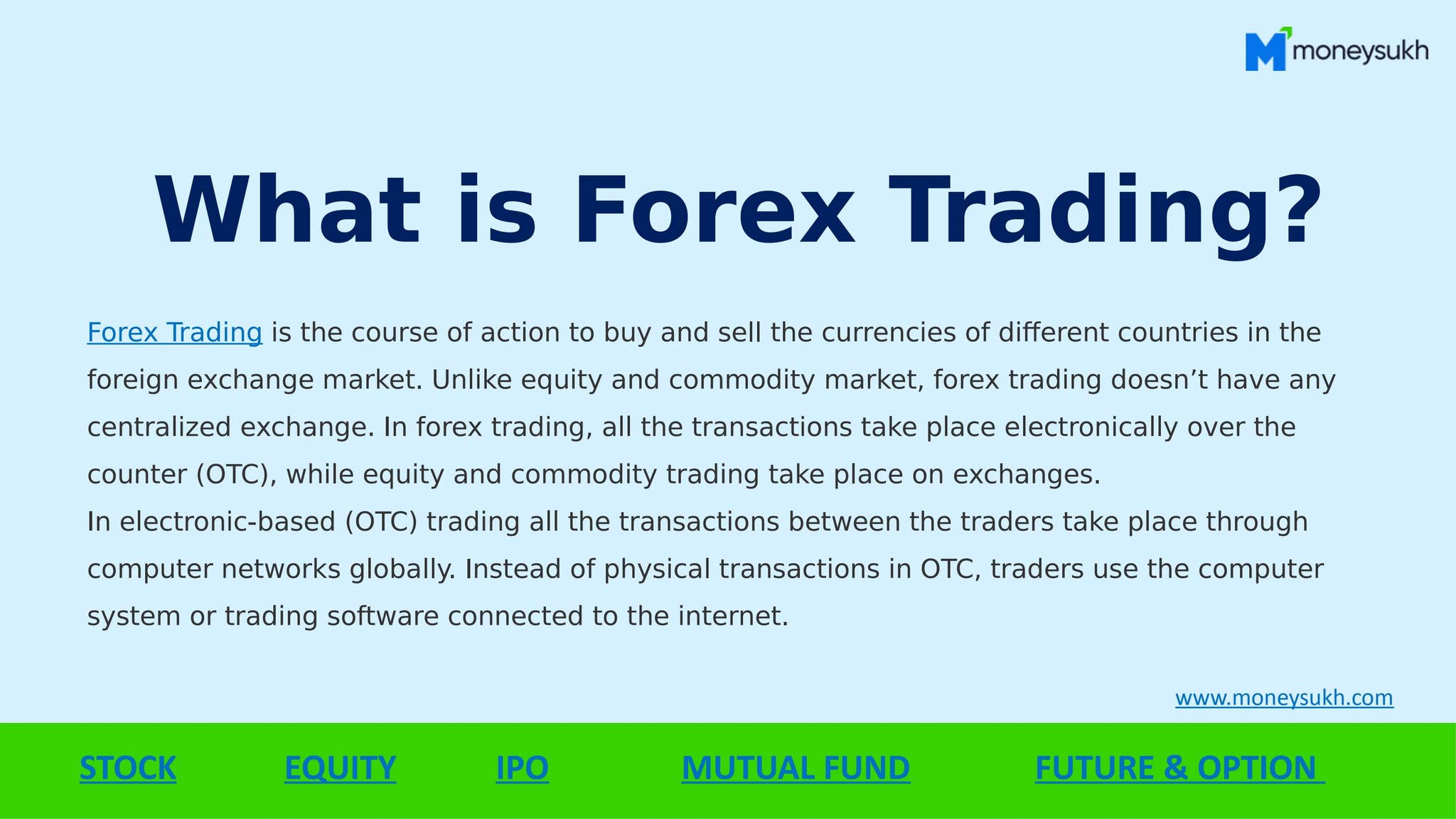
Forex, short for foreign exchange, represents the global marketplace where national currencies are traded against one another. It is the largest and most liquid financial market in the world, with trillions of dollars changing hands daily. Unlike stock markets, which typically have a central exchange and specific trading hours, the forex market operates 24 hours a day, five days a week, across major financial centers like London, New York, Tokyo, and Sydney. This decentralized, over-the-counter (OTC) nature allows for constant trading activity, driven by a multitude of factors including economic indicators, geopolitical events, and interest rate differentials. Understanding forex trading is the first step for anyone looking to participate in this dynamic and potentially lucrative market.
Understanding the Forex Market
The foreign exchange market is a vast ecosystem where the value of currencies is constantly in flux. At its core, forex trading involves buying one currency while simultaneously selling another. This is represented by currency pairs, where the first currency is the base currency and the second is the quote currency. For example, in the EUR/USD pair, the Euro is the base currency and the US Dollar is the quote currency. The exchange rate indicates how much of the quote currency is needed to buy one unit of the base currency. The market’s immense liquidity ensures that large trades can be executed with minimal impact on prices, making it attractive to a wide range of participants, from individual retail traders to large financial institutions.
The Mechanics of Currency Pairs and Exchange Rates
Currency pairs are the fundamental building blocks of forex trading. They are quoted in a specific format, with the first currency being the “base” and the second the “quote.” When you trade a currency pair, you are essentially speculating on the future movement of their relative values. For instance, if you believe the Euro will strengthen against the US Dollar, you would buy the EUR/USD pair. This means you are buying Euros and selling US Dollars. Conversely, if you anticipate the Euro will weaken, you would sell the EUR/USD pair, selling Euros and buying US Dollars. The exchange rate, often expressed as a decimal, tells you the price of one unit of the base currency in terms of the quote currency. Fluctuations in these rates are driven by supply and demand, which are, in turn, influenced by a complex interplay of economic, political, and social factors.
Key Participants in the Forex Market
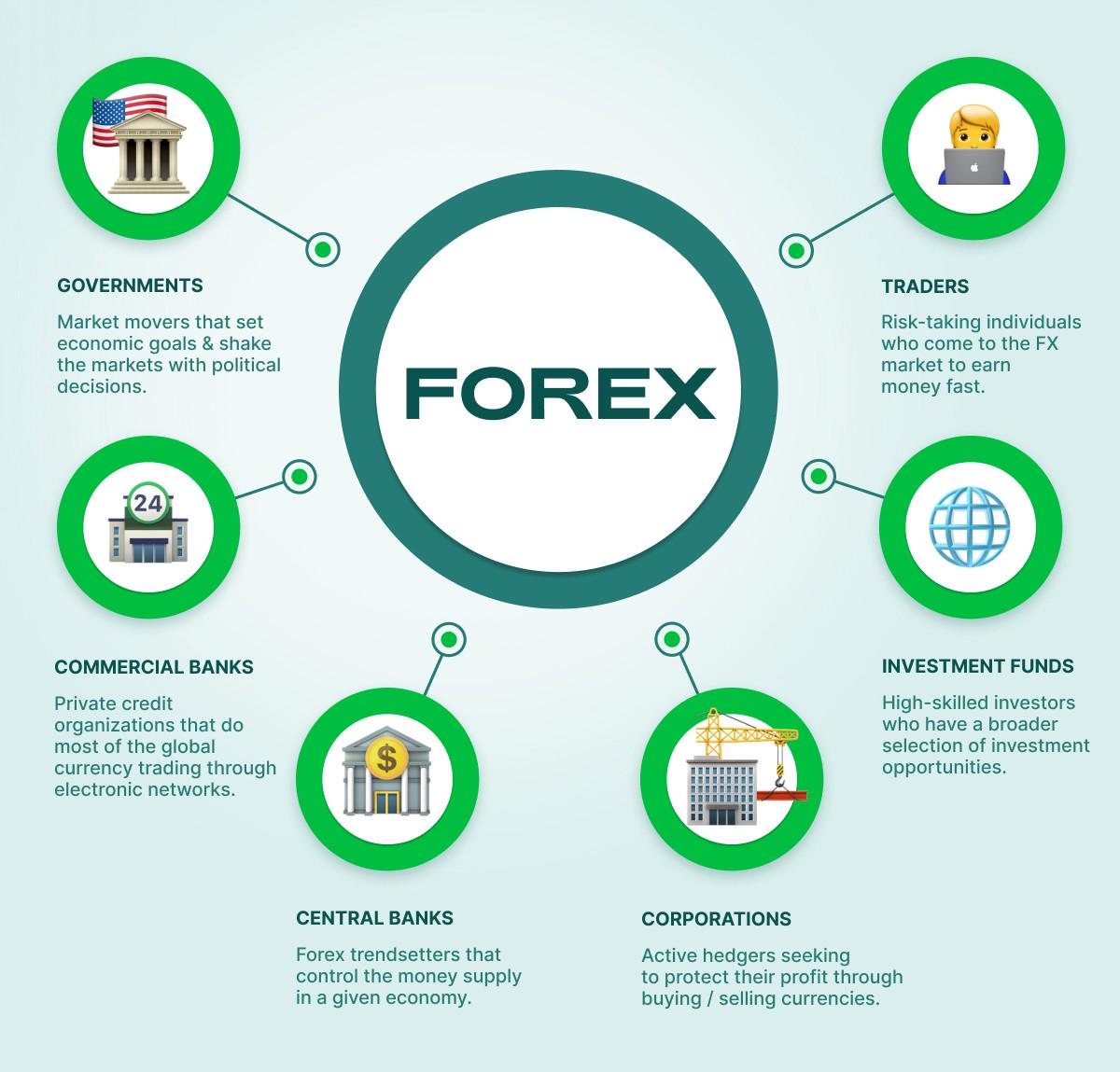
The forex market is not a monolithic entity but rather a network of diverse participants, each with their own motivations and objectives. At the highest level are central banks and governments, who often intervene in the market to manage their national currency’s value or to influence monetary policy. Major commercial banks play a crucial role as market makers, facilitating trades and providing liquidity. These banks engage in large-scale interbank trading, dealing with each other and with their institutional clients. Investment banks, hedge funds, and large corporations also participate actively, hedging their currency risks arising from international business transactions or speculating on currency movements for profit. Finally, retail traders, individuals who trade smaller amounts, have gained increasing access to the forex market through online brokers, contributing significantly to its overall activity.
Factors Influencing Currency Values
The value of any currency is not static; it is a dynamic reflection of a nation’s economic health, political stability, and its standing in the global financial landscape. Several key factors exert influence over these movements. Economic indicators such as Gross Domestic Product (GDP) growth, inflation rates, unemployment figures, and trade balances provide crucial insights into a country’s economic performance. Higher growth and stable inflation generally tend to strengthen a currency. Interest rates set by central banks are another powerful driver. When a central bank raises interest rates, it makes that country’s assets more attractive to foreign investors seeking higher returns, thereby increasing demand for the currency and pushing its value up. Political stability and geopolitical events can also have a dramatic impact. Wars, elections, or significant policy changes can introduce uncertainty, leading to currency depreciation. Finally, market sentiment and speculation, fueled by news and analysis, can also drive short-term currency movements.
How Forex Trading Works
Forex trading involves speculating on the future direction of exchange rates. Traders aim to profit by buying a currency when they expect its value to rise and selling it when they expect its value to fall, or vice versa. The market’s leverage, a feature offered by many brokers, allows traders to control a larger position with a smaller amount of capital, amplifying both potential profits and losses. This necessitates a thorough understanding of risk management techniques. Retail traders typically access the forex market through online brokerage platforms, which provide the tools and infrastructure needed to execute trades.
The Role of Forex Brokers and Platforms
Forex brokers are the intermediaries that provide access to the forex market for retail traders. They connect traders to the liquidity provided by larger financial institutions. When you open an account with a forex broker, you are essentially gaining the ability to place buy and sell orders for various currency pairs. These brokers typically offer trading platforms, which are software applications that provide real-time price feeds, charting tools, and order execution capabilities. Popular platforms like MetaTrader 4 (MT4) and MetaTrader 5 (MT5) have become industry standards, offering a comprehensive suite of features for technical analysis and automated trading strategies. Choosing a reputable and regulated broker is paramount for any trader, as it ensures fair execution of trades and the security of your funds.
Understanding Leverage and Margin
Leverage is a double-edged sword in forex trading. It allows traders to control a larger position size with a relatively small amount of capital, known as margin. For example, with a leverage ratio of 1:100, a trader can control $100,000 worth of currency with just $1,000 of their own capital. This amplification can lead to significant profits if the market moves in the trader’s favor. However, it also magnifies losses just as effectively. If the market moves against the trader, the losses can quickly exceed the initial margin deposited, potentially leading to a margin call, where the broker requires the trader to deposit additional funds to cover the losses, or the position is automatically closed, resulting in a loss of the entire deposited margin and potentially more. Therefore, understanding and carefully managing leverage is critical for survival in the forex market.
Executing a Trade: Buying and Selling
Executing a trade in the forex market is a straightforward process once you understand the basics. When you decide to buy a currency pair, such as EUR/USD, you are essentially buying the base currency (EUR) and selling the quote currency (USD). You do this with the expectation that the EUR will appreciate in value relative to the USD. Conversely, if you decide to sell a currency pair, you are selling the base currency and buying the quote currency, anticipating that the base currency will depreciate. Trades are executed at the prevailing market price, and profits or losses are realized when the position is closed. Most trading platforms offer different types of orders, including market orders (executed immediately at the best available price) and pending orders (placed to be executed at a specific price in the future), providing flexibility in trade execution.
Popular Forex Trading Strategies
The forex market offers a diverse range of trading strategies, each catering to different risk appetites, time horizons, and analytical approaches. Successful forex traders often develop a personalized approach, combining various techniques and adapting them to changing market conditions. Whether you are a short-term scalper or a long-term position trader, understanding the principles behind these strategies is crucial for developing your own trading plan.
Day Trading and Scalping
Day trading involves opening and closing positions within the same trading day, aiming to profit from intraday price fluctuations. Day traders typically avoid holding positions overnight to minimize the risk associated with overnight news or economic events. Scalping is an even more aggressive form of day trading, where traders aim to profit from very small price movements, often holding positions for mere seconds or minutes. Scalpers execute a high volume of trades, relying on precise execution and tight risk management to achieve profitability. This style requires intense concentration and a robust trading platform with fast order execution.
Swing Trading and Position Trading
Swing trading focuses on capturing price “swings” or trends that typically last from a few days to a few weeks. Swing traders use technical analysis to identify potential turning points in the market and aim to profit from these medium-term moves. They are less concerned with short-term noise and more focused on the larger trend. Position trading, on the other hand, is a long-term approach where traders hold positions for weeks, months, or even years. Position traders often base their decisions on fundamental analysis, looking for major economic and political trends that are likely to influence currency values over extended periods. This strategy requires patience and a strong conviction in the underlying fundamentals.
Fundamental vs. Technical Analysis
The two primary analytical approaches in forex trading are fundamental analysis and technical analysis. Fundamental analysis involves evaluating economic, social, and political forces that could affect a currency’s supply and demand. This includes examining macroeconomic data like GDP, inflation, employment, interest rates, and political stability. Technical analysis, conversely, focuses on studying past price charts and trading volumes to identify patterns and predict future price movements. Technical analysts use a variety of tools, including charts, indicators (like moving averages, MACD, RSI), and price patterns (like head and shoulders, double tops/bottoms) to make trading decisions. Many successful traders combine both approaches, using fundamental analysis to identify long-term trends and technical analysis to pinpoint precise entry and exit points.
Getting Started with Forex Trading
Embarking on your forex trading journey requires careful preparation and a commitment to continuous learning. It’s a market that offers significant opportunities but also carries inherent risks. Before diving in with real capital, it is highly recommended to educate yourself thoroughly, practice with a demo account, and develop a well-defined trading plan.
Education and Research
The foundation of any successful trading endeavor lies in comprehensive education and ongoing research. Before you even consider placing a trade, it is crucial to understand the basic principles of forex, how the market operates, and the various factors that influence currency prices. Numerous online resources, books, courses, and webinars are available to help you learn. Dedicate time to studying economic calendars, understanding the impact of central bank statements, and familiarizing yourself with different trading strategies and risk management techniques. Continuous learning is key, as the forex market is constantly evolving, and staying informed is essential for adapting your strategies.
The Importance of a Trading Plan
A well-structured trading plan is the cornerstone of disciplined and potentially profitable forex trading. It acts as a roadmap, guiding your decisions and helping you avoid emotional trading. Your trading plan should clearly define your trading objectives, your risk tolerance, the currency pairs you will trade, your preferred trading strategies, your entry and exit criteria, and your risk management rules, including how much you are willing to risk per trade and your stop-loss levels. Regularly reviewing and refining your trading plan based on your performance is essential for continuous improvement. Without a plan, you are essentially trading speculatively, which significantly increases the likelihood of making impulsive and costly decisions.
Practicing with a Demo Account
Before risking real money, it is highly advisable to practice your trading skills with a demo account. Most forex brokers offer free demo accounts that allow you to trade with virtual money in real-time market conditions. This provides a risk-free environment to:
- Familiarize yourself with trading platforms: Learn how to navigate the software, place orders, and utilize charting tools.
- Test your strategies: Experiment with different trading approaches and see how they perform without financial consequences.
- Develop discipline: Practice adhering to your trading plan and managing your emotions during simulated market fluctuations.
- Understand the impact of leverage: Gain firsthand experience with how leverage amplifies both gains and losses.
The insights gained from demo trading are invaluable and can significantly increase your confidence and preparedness when you transition to live trading.

Risk Management and Capital Preservation
In forex trading, capital preservation is paramount. The potential for rapid losses due to leverage and market volatility means that robust risk management strategies are not optional; they are essential for survival. Always determine the maximum amount of capital you are willing to risk on any single trade, and never exceed it. Implementing stop-loss orders is crucial for limiting potential losses. These orders automatically close a trade when the price reaches a predetermined level, preventing further losses. Diversification, while more challenging in forex due to its currency pair nature, can involve trading across different currency pairs that are not highly correlated. Ultimately, responsible risk management ensures that you can stay in the market long enough to learn, adapt, and potentially profit.
aViewFromTheCave is a participant in the Amazon Services LLC Associates Program, an affiliate advertising program designed to provide a means for sites to earn advertising fees by advertising and linking to Amazon.com. Amazon, the Amazon logo, AmazonSupply, and the AmazonSupply logo are trademarks of Amazon.com, Inc. or its affiliates. As an Amazon Associate we earn affiliate commissions from qualifying purchases.