
In the competitive landscape of home improvement and architectural design, differentiation is the ultimate currency. Companies rarely achieve market dominance simply by selling a product; they achieve it by owning a concept, a technology, or a material that no one else can replicate. This is the essence of Fibrex material. While often discussed in the context of windows and doors, Fibrex is more than just a composite of wood fiber and thermoplastic polymer. It is a masterclass in brand strategy, illustrating how a proprietary material can become the cornerstone of a corporate identity and a powerful tool for market positioning.

To understand what Fibrex material is, one must look beyond the technical specifications and into the strategic vision of its creator, Andersen Corporation. By developing an exclusive, high-performance material, the company moved away from the “commodity trap” of the window industry, creating a unique brand ecosystem that prioritizes sustainability, durability, and premium design.
The Origin Story: Engineering a Proprietary Brand Asset
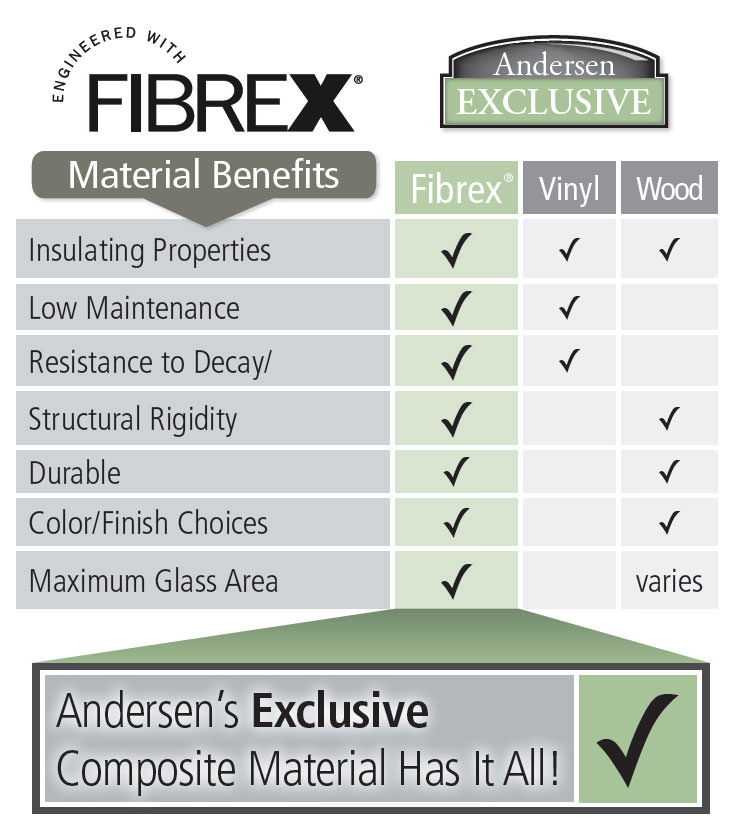
The development of Fibrex was not merely an engineering challenge; it was a strategic response to a gap in the market. For decades, the window industry was bifurcated. On one end was wood—the gold standard for aesthetics and thermal performance but high-maintenance and prone to rot. On the other end was vinyl—low-maintenance and affordable but often criticized for its lack of structural rigidity and aesthetic limitations.
Bridging the Gap Between Wood and Vinyl
Fibrex was engineered to occupy the “white space” between these two extremes. By blending 40% reclaimed wood fiber with 60% proprietary thermoplastic polymer, Andersen created a composite that offered the strength and insulating properties of wood with the low-maintenance benefits of vinyl. From a brand strategy perspective, this allowed the company to position itself as the innovator that solved a fundamental consumer dilemma.
This synthesis created a new category of material. In marketing, being the “first” or “only” in a category is a significant advantage. Fibrex allowed the brand to stop competing on price and start competing on unique value. The material doesn’t just function differently; it communicates a message of superior engineering that justifies a premium price point.
Sustainability as a Brand Pillar
In the modern era, a brand’s identity is inextricably linked to its environmental impact. Fibrex was a pioneer in the circular economy long before the term became a corporate buzzword. Because it utilizes reclaimed wood fiber from Andersen’s own manufacturing processes, it serves as a powerful testament to the brand’s commitment to sustainability.
This green credential is not just an “add-on” to the marketing strategy; it is a core component of the Fibrex brand story. Consumers are increasingly drawn to brands that demonstrate responsibility. By highlighting that Fibrex is a sustainable composite, the brand creates an emotional connection with the eco-conscious homeowner, turning a structural component into a values-based choice.
Ingredient Branding: How Fibrex Defines Andersen Windows
One of the most effective strategies in corporate identity is “ingredient branding”—where a component of a product is branded so effectively that it becomes a primary driver of the purchase decision. Much like “Intel Inside” revolutionized the computer industry, Fibrex has become the “Intel” of the window world.
Creating Exclusive Market Value
Ingredient branding works by creating a perceived difference in quality that consumers can name. When a customer asks for “Fibrex windows,” they are not just asking for windows made of a composite material; they are asking for the specific promise of quality associated with that trademarked name. This exclusivity is a powerful brand moat. Because no other manufacturer can use Fibrex, the brand effectively eliminates direct apples-to-apples comparisons.
This strategy forces competitors to play on Andersen’s turf. If a competitor offers a “composite window,” the brand can respond by highlighting the specific, proprietary benefits of Fibrex—such as its resistance to thermal expansion or its ability to be crafted into dark, elegant colors that vinyl cannot support. The brand name itself becomes a shorthand for a specific set of performance standards.
The Psychology of “Proprietary” in Consumer Choice
The word “proprietary” carries significant weight in brand strategy. It implies a level of research, development, and secret-sauce engineering that generic materials lack. When a brand owns its material from the molecular level up, it signals to the consumer that the company has total control over the quality of the end product.
Fibrex material serves as a physical manifestation of the brand’s authority. It tells the consumer: “We didn’t just buy parts and assemble them; we invented the very foundation of this product.” This builds immense trust and elevates the corporate identity from that of a manufacturer to that of an innovator.
Design Synergy and Architectural Identity
In the world of high-end architecture and design, the material is the message. Fibrex has played a crucial role in shifting the brand’s identity toward a design-forward audience. The material’s unique properties allow for thinner frames and larger glass areas, which are hallmarks of contemporary architectural styles.
Aesthetic Versatility and Brand Perception
One of the historical limitations of vinyl was its inability to hold dark colors in high-heat environments. Vinyl expands and contracts significantly, which can lead to warping when dark pigments absorb solar heat. Because Fibrex is twice as strong as vinyl and has a very low rate of thermal expansion, it can be finished in deep blacks, bronzes, and forest greens.
This capability transformed the brand’s standing among architects and designers. It allowed the company to participate in the “Modern Farmhouse” and “Industrial Chic” trends that rely heavily on dark, thin-profile window frames. By enabling these design aesthetics, Fibrex helped the brand pivot from being a traditional legacy company to a modern design leader.
Long-term Performance as Brand Reliability
A brand is ultimately a promise kept over time. The durability of Fibrex—its resistance to rotting, fading, pitting, and corroding—is the engine that drives brand loyalty and word-of-mouth marketing. When a material performs flawlessly for twenty years, it cements the brand’s reputation for reliability.
In the luxury market, the “total cost of ownership” is often more important than the initial price. Fibrex allows the brand to frame the purchase as a long-term investment. This shift in narrative—from “buying a window” to “investing in a home’s future”—is a sophisticated marketing move that aligns the brand with the values of high-net-worth homeowners.
Case Study: Differentiation in a Crowded Commodity Market
The success of Fibrex provides a compelling case study for any brand operating in a crowded market. Before the widespread adoption of Fibrex, the window industry was largely viewed as a commodity market where price and availability were the primary drivers.
Moving Beyond Price-Point Competition
By anchoring its Renewal by Andersen division around Fibrex, the company successfully decoupled itself from the downward price pressure of big-box retailers. They created a boutique, high-touch experience centered around a “miracle material.” This allowed them to control the entire customer journey, from manufacturing to installation.
The case of Fibrex demonstrates that if you can change the “what” of your product (the material), you can change the “how” of your sales process. The brand no longer has to explain why its windows are 20% more expensive than the competitor’s; they simply have to explain that the competitor doesn’t have Fibrex. This shifts the conversation from price to unique utility.
Educating the Consumer: From Material to Experience
The branding of Fibrex required an extensive consumer education campaign. The brand had to teach homeowners why thermal expansion matters, why VOC (volatile organic compound) off-gassing is a concern, and why stiffness in a window frame leads to better seal integrity.
This educational approach positioned the brand as an expert advisor rather than a mere vendor. When a brand takes the time to educate its audience on the nuances of material science, it builds a layer of authority that is difficult for competitors to penetrate. The consumer feels empowered by their knowledge, and that empowerment is forever linked to the Fibrex name.
The Future of Branded Materials in Corporate Strategy
As we look toward the future of manufacturing and marketing, the Fibrex model serves as a blueprint for “Material-Led Branding.” In an era where digital tools and AI can easily replicate software and services, physical proprietary materials offer a tangible, defensible advantage.
The lesson for brand strategists is clear: the most resilient brands are those that own their primary ingredients. Whether it is the specific alloy in a luxury watch, the patented fabric in high-end athletic wear, or Fibrex in a window frame, these materials act as the DNA of the brand. They are the physical evidence of a company’s claims to quality, innovation, and sustainability.
Fibrex material is not just a combination of wood and plastic. It is a strategic asset that has allowed a century-old company to remain at the forefront of its industry. By focusing on the intersection of engineering excellence and brand storytelling, Andersen has ensured that Fibrex is not just what their windows are made of—it is what their brand stands for. In the end, the success of Fibrex proves that in the world of premium design, the medium truly is the message.
aViewFromTheCave is a participant in the Amazon Services LLC Associates Program, an affiliate advertising program designed to provide a means for sites to earn advertising fees by advertising and linking to Amazon.com. Amazon, the Amazon logo, AmazonSupply, and the AmazonSupply logo are trademarks of Amazon.com, Inc. or its affiliates. As an Amazon Associate we earn affiliate commissions from qualifying purchases.