
Fiber optics, a technology that transmits information as pulses of light through tiny strands of glass or plastic fiber, has fundamentally reshaped our modern world. Far from being a niche advancement, its applications span an astonishing array of industries, acting as the invisible backbone for many of the technologies we now take for granted. At its core, fiber optics offers unparalleled speed, bandwidth, and reliability, making it the preferred medium for critical data transmission across vast distances and within complex systems.
The Core Technology: How Fiber Optics Works and Its Advantages
Understanding the widespread utility of fiber optics begins with grasping its foundational principles and inherent benefits. The technology leverages the unique properties of light to transmit data efficiently and securely.
Principles of Light Transmission
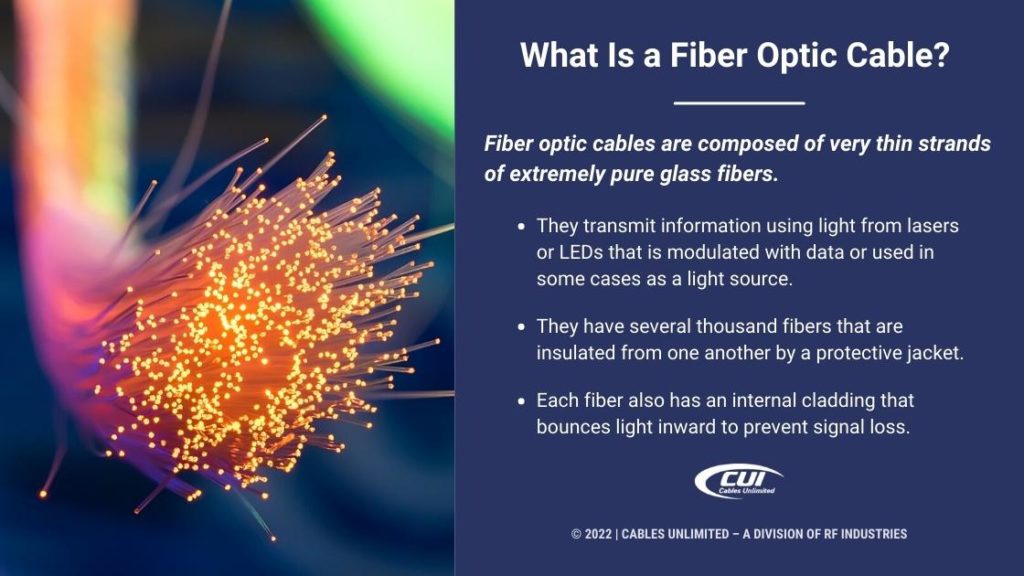
Fiber optic cables operate on the principle of Total Internal Reflection (TIR). Each fiber consists of a core, typically made of highly pure glass, surrounded by a cladding layer with a lower refractive index. When light signals, often generated by lasers or LEDs, are injected into the core at a shallow angle, they bounce off the interface between the core and the cladding, traveling down the length of the fiber without significant loss. This continuous reflection allows light to travel thousands of kilometers, carrying vast amounts of data at the speed of light. The sheer speed and bandwidth capacity – the amount of data that can be transmitted per unit of time – are orders of magnitude greater than traditional copper cables.
Components of a Fiber Optic Cable
A typical fiber optic cable is a marvel of engineered simplicity and robustness. Beyond the crucial core and cladding, a buffer coating protects the glass fiber from moisture and physical damage. This is then encased within strengthening members, often aramid yarn, and finally, an outer jacket provides the ultimate layer of protection against environmental factors and mechanical stress. The precision in manufacturing these microscopic fibers, often no thicker than a human hair, is what enables their extraordinary performance.
Advantages Over Copper
The superiority of fiber optics over traditional copper wiring is multifaceted. Firstly, bandwidth and speed are dramatically higher; fiber can carry exponentially more data over greater distances with less signal degradation. This translates into faster internet, clearer voice calls, and smoother video streaming. Secondly, distance capability is vastly improved; while copper signals degrade rapidly over tens of meters, fiber can transmit signals across hundreds or even thousands of kilometers without needing repeaters. Thirdly, fiber is immune to electromagnetic interference (EMI), unlike copper, which is susceptible to electrical noise that can corrupt data. This makes fiber ideal for electrically noisy industrial environments. Fourthly, fiber optic cables are generally smaller and lighter than their copper counterparts, simplifying installation and reducing physical infrastructure requirements. Finally, fiber offers enhanced security as it does not emit electromagnetic signals that can be easily tapped, and any physical attempt to tap into a fiber cable typically results in a detectable signal loss. These combined advantages cement fiber optics as the premier choice for high-performance data communication.
Revolutionizing Telecommunications and Internet
Perhaps the most impactful application of fiber optics lies in its transformative role within the telecommunications sector, serving as the bedrock for the global internet and modern communication networks.
Global Internet Backbone
Fiber optics forms the literal backbone of the internet, connecting continents and countries through vast undersea cables and terrestrial long-haul networks. These sophisticated networks, crisscrossing oceans and spanning landmasses, are responsible for transmitting the colossal volume of data that underpins international communication, cloud computing, and digital services. Without these high-capacity fiber links, the interconnected global digital economy as we know it would be impossible. They enable instantaneous communication across vast distances, facilitating everything from international video conferences to online gaming with participants thousands of miles apart. The reliability and bandwidth provided by these fiber networks are critical for maintaining the seamless flow of information that drives global commerce, research, and social interaction.
Fiber to the Home (FTTH) / Business (FTTB)
Beyond the global infrastructure, fiber optics is increasingly being brought directly to end-users through Fiber to the Home (FTTH) and Fiber to the Business (FTTB) deployments. These initiatives replace older copper lines (like DSL or cable modems) with direct fiber connections, delivering unprecedented broadband speeds to residences and commercial establishments. FTTH/B enables symmetrical upload and download speeds, significantly enhancing experiences for cloud backups, remote work, online education, and ultra-high-definition streaming. The demand for higher bandwidth driven by these applications continues to accelerate the adoption of FTTH/B, making multi-gigabit internet speeds a reality for millions and laying the groundwork for future smart home and smart city technologies.
Data Centers and Enterprise Networks
Within the confines of data centers and large enterprise networks, fiber optics plays an equally critical role. It interconnects servers, storage arrays, and networking equipment, forming the high-speed arteries that ensure rapid data processing and transfer within these crucial facilities. The sheer volume of data processed and exchanged within a modern data center—supporting everything from social media platforms to scientific simulations—demands the low latency, high bandwidth, and reliability that only fiber can provide. Short-reach fiber optic cables are essential for enabling 10 Gigabit Ethernet (10GbE), 40GbE, 100GbE, and even 400GbE connections, ensuring that applications and services hosted within these centers perform optimally. Similarly, enterprise campus networks rely on fiber to connect buildings and distant departments, providing a robust and future-proof infrastructure for corporate communications and data management.
Applications Beyond Communication
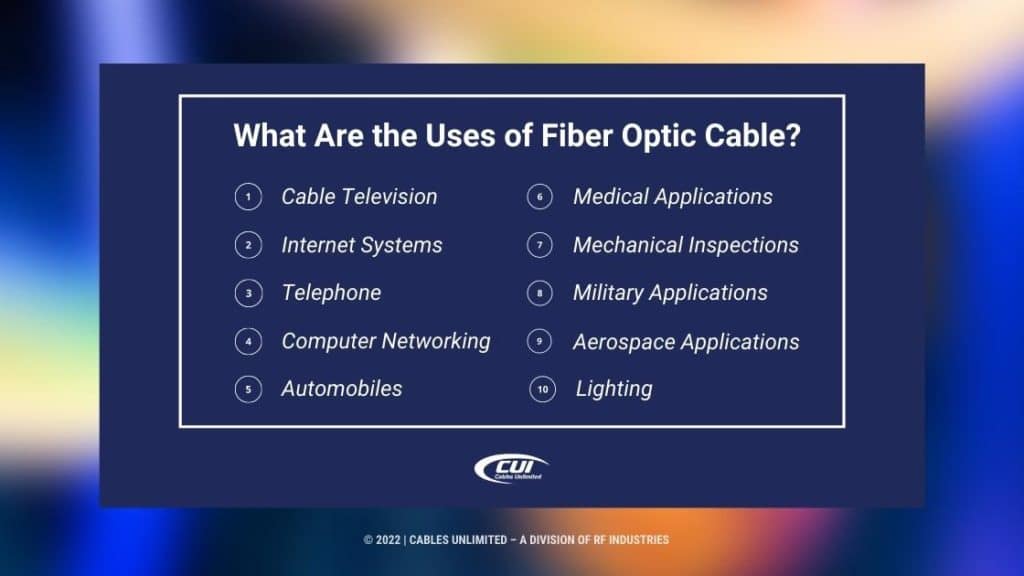
While telecommunications remains its most prominent application, the versatility of fiber optics extends far beyond transmitting internet data, influencing a diverse range of industries and enabling specialized functions.
Medical and Healthcare
In medicine, fiber optics has become indispensable. Endoscopes utilize bundles of optical fibers to transmit light into the body and return images, allowing minimally invasive diagnostic and surgical procedures. Surgeons can perform complex operations with small incisions, reducing patient recovery times and risks. Fiber optic surgical illumination systems provide bright, cold light directly to the surgical site, enhancing visibility without generating heat. Furthermore, specialized fibers are used to deliver laser energy for various therapeutic applications, including ophthalmology, dermatology, and dentistry, enabling precise tissue ablation and treatment. Fiber optic sensors are also being developed for real-time monitoring of vital signs, drug delivery, and diagnostic imaging.
Industrial and Manufacturing
The industrial sector leverages fiber optics for precision control, monitoring, and automation. Fiber optic sensors are employed to detect temperature, pressure, strain, and chemical changes in harsh environments where electrical sensors might fail due to EMI or explosive atmospheres. Their immunity to electromagnetic interference makes them ideal for factory automation, robotics, and process control systems, ensuring reliable operation near heavy machinery. Fiber optic cables also provide secure and high-speed communication within manufacturing plants, connecting programmable logic controllers (PLCs), robotic arms, and supervisory control systems, critical for modern Industry 4.0 initiatives.
Defense and Security
For defense and security applications, fiber optics offers unmatched advantages in terms of secure communication, surveillance, and operational control. Secure communication networks using fiber are impervious to electromagnetic eavesdropping, crucial for military commands and intelligence agencies. In surveillance systems, fiber optic cables transmit high-resolution video from remote cameras over long distances without degradation. They are also integral to weapon guidance systems, guiding missiles and torpedoes with pinpoint accuracy, and in perimeter security systems, where disturbances in light transmission can detect intrusions along fences or borders. Their robustness and resistance to harsh conditions make them suitable for deployment in challenging operational theaters.
Broadcasting and Entertainment
The entertainment industry relies on fiber optics for transmitting high-definition video and audio signals over long distances with pristine quality. Live event broadcasting, from sports stadiums to concert halls, uses fiber optic links to send uncompressed video streams to production facilities and broadcast networks, ensuring crystal-clear visuals and sound. Within studios, fiber provides the high-bandwidth connections needed for post-production, digital asset management, and transferring large media files. The low latency of fiber is also critical for real-time interactive experiences and remote production workflows, allowing geographically dispersed teams to collaborate seamlessly.
Emerging Trends and Future Potential
The evolution of fiber optics is ongoing, with new applications and advancements continually pushing the boundaries of what’s possible, promising even more profound impacts on technology and society.
Quantum Communication
One of the most exciting frontiers is the development of quantum communication using fiber optic networks. Quantum Key Distribution (QKD) leverages the principles of quantum mechanics to create unhackable encryption keys, transmitted over fiber optic lines. This technology promises ultra-secure communication channels, critical for government agencies, financial institutions, and any entity requiring absolute data confidentiality in an increasingly vulnerable digital landscape. Integrating QKD with existing fiber infrastructure is a key area of research and development.
Advanced Sensing
Fiber optic sensing technology continues to advance, leading to more sophisticated and versatile applications. Future developments include highly distributed fiber optic sensors capable of monitoring vast infrastructures like pipelines, bridges, and power grids for minute changes, providing early warnings for maintenance needs or potential failures. These advanced sensors will contribute significantly to smart city initiatives, enabling real-time environmental monitoring, traffic management, and predictive maintenance for public utilities.
Space and Astronomy
Fiber optics is also finding a place in environments as demanding as space and astronomy. For ground-based telescopes, fiber is used to transmit data from multiple receivers to a central processor for interferometry, combining signals to achieve higher resolution images of distant cosmic objects. In spacecraft, specialized radiation-hardened fibers can provide high-bandwidth data links for scientific instruments, reducing weight and power consumption compared to traditional electrical wiring, crucial for deep-space missions and satellite constellations.

Sustainable Infrastructure
As the world increasingly focuses on sustainability, fiber optics contributes to the development of green data centers and energy-efficient networks. Optical communication consumes less power than electrical signaling over long distances, reducing the carbon footprint of digital infrastructure. Furthermore, fiber optic cables are made from abundant silica, offering a more sustainable alternative to copper, which is a scarcer resource. Future fiber optic technologies are poised to further reduce energy consumption across the entire information technology ecosystem, supporting global efforts towards a more sustainable digital future.
aViewFromTheCave is a participant in the Amazon Services LLC Associates Program, an affiliate advertising program designed to provide a means for sites to earn advertising fees by advertising and linking to Amazon.com. Amazon, the Amazon logo, AmazonSupply, and the AmazonSupply logo are trademarks of Amazon.com, Inc. or its affiliates. As an Amazon Associate we earn affiliate commissions from qualifying purchases.