
The concept of a “fair die” is foundational to countless applications within the realm of technology, particularly in areas involving probability, simulation, and randomness. In essence, a fair die is a theoretical construct representing an idealized object with an equal chance of landing on any of its faces when rolled. While the physical world often presents imperfections, the mathematical ideal of a fair die serves as a crucial benchmark and building block for understanding and implementing probabilistic algorithms and systems. This article will delve into the technical underpinnings of what constitutes a fair die, exploring its mathematical definition, its practical implications in simulations, the challenges of achieving it in the digital realm, and its vital role in areas like cryptography and game development.
The Mathematical Foundation of Fairness
At its core, the fairness of a die is a probabilistic concept. It’s not about the physical properties of the object itself, but about the underlying probability distribution of its outcomes.
Probability and Randomness
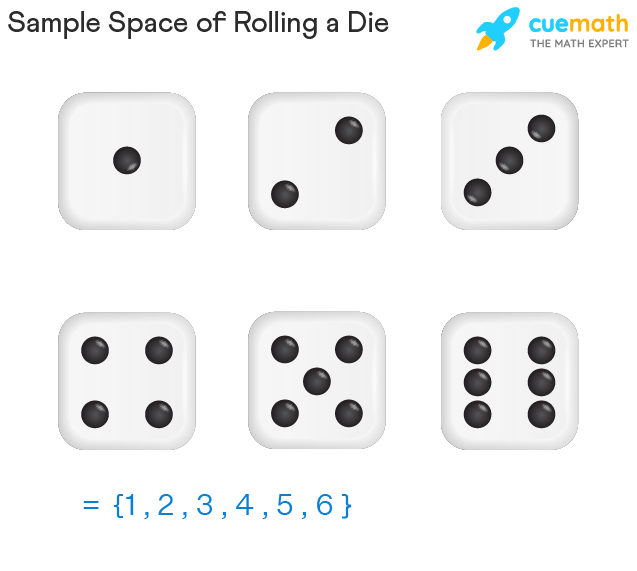
A fair die, typically a cube with six faces numbered 1 through 6, is characterized by an equal probability of each outcome occurring. This means that for a single roll, the probability of obtaining any specific number (1, 2, 3, 4, 5, or 6) is exactly 1/6. This equal probability distribution is the defining characteristic of fairness in this context. The outcomes are considered mutually exclusive (only one face can land up at a time) and exhaustive (all possible outcomes are covered by the faces).
The concept of randomness is intrinsically linked to a fair die. While a physical die roll appears random to an observer, true randomness in a computational context is a more complex subject. A fair die represents the ideal random number generator (RNG) for its specific domain. It implies that there is no bias or predictable pattern in the sequence of outcomes. Each roll is independent of the previous ones, meaning the result of one roll has no influence on the result of the next. This independence is crucial for ensuring that the probabilities remain consistent over a large number of trials.
Expected Value and Variance
From a mathematical perspective, the concept of expected value and variance further illuminates the properties of a fair die. The expected value (E) of a random variable is the weighted average of all possible values that the variable can take. For a fair six-sided die, the expected value of a single roll is calculated as:
E = (1 * 1/6) + (2 * 1/6) + (3 * 1/6) + (4 * 1/6) + (5 * 1/6) + (6 * 1/6)
E = (1 + 2 + 3 + 4 + 5 + 6) / 6
E = 21 / 6
E = 3.5
This means that, on average, over a large number of rolls, the outcome will tend towards 3.5. This is a theoretical value, as no single roll can result in 3.5. The variance, on the other hand, measures the spread of the distribution. For a fair die, the variance quantifies how much the individual outcomes deviate from the expected value. A lower variance indicates that the outcomes are clustered closer to the mean, while a higher variance suggests they are more spread out. A fair die, by its definition, has a specific and calculable variance that reflects its unbiased nature.
The Role of Fair Dice in Technological Simulations
The abstract concept of a fair die is far from a mere academic curiosity; it forms the bedrock of numerous simulation techniques used extensively in technology. By modeling phenomena with probabilistic outcomes, developers and researchers can gain insights into complex systems without needing to replicate them physically.
Monte Carlo Simulations
Monte Carlo simulations are a powerful class of computational algorithms that rely on repeated random sampling to obtain numerical results. The core principle is to use random numbers, often generated to mimic the behavior of fair dice, to model uncertainty and variability within a system. For example, in financial modeling, Monte Carlo simulations can be used to estimate the probability of an investment portfolio reaching a certain value by repeatedly simulating market fluctuations based on random inputs. Similarly, in scientific research, they are used to model complex physical processes, such as particle physics interactions or fluid dynamics, where precise analytical solutions are intractable.
The “fairness” of the random numbers used in these simulations is paramount. If the underlying random number generator is biased, the simulation results will be skewed, leading to inaccurate conclusions and potentially flawed designs. The assumption of a fair die (or its digital equivalent) is what allows these simulations to accurately reflect the inherent randomness of the real-world phenomena they are designed to model.
Game Development and Procedural Generation
In the realm of video games, fair dice are not just a metaphor; they are often directly implemented or simulated to introduce elements of chance and unpredictability. From determining the success of an attack in a role-playing game to the random distribution of resources in a strategy game, the outcomes of simulated dice rolls significantly impact gameplay.
Procedural generation, a technique used to create game content algorithmically, frequently leverages random numbers. This allows for unique and varied game worlds, levels, and experiences for each player or playthrough. The fairness of the random number generation directly influences the perceived fairness and replayability of the game. A game where item drops are consistently biased, or where certain events happen with an unrealistic frequency due to an unfair RNG, can quickly lead to player frustration and dissatisfaction. Therefore, developers strive to implement robust and fair random number generation to ensure a balanced and engaging player experience.
Cryptography and Security
While not always directly manifesting as “dice rolls,” the principles of fairness and unpredictability are absolutely critical in modern cryptography. Cryptographic systems rely heavily on random numbers for tasks such as key generation, initialization vectors, and nonce values. The security of these systems hinges on the impossibility of predicting these random values.
A weak or biased random number generator in a cryptographic context can have catastrophic consequences. If an attacker can predict the “random” values used, they can potentially decipher encrypted messages, forge digital signatures, or compromise the entire system’s integrity. Therefore, cryptographically secure pseudo-random number generators (CSPRNGs) are designed to produce sequences of numbers that are computationally indistinguishable from true random sequences, effectively mimicking the behavior of an infinitely large and perfectly fair die.

The Challenges of Achieving True Randomness in Technology
While the mathematical ideal of a fair die is straightforward, achieving true, unbiased randomness in a computational environment presents significant technical hurdles. Digital systems are inherently deterministic, meaning that given the same inputs, they will always produce the same outputs. This creates a fundamental tension with the concept of true randomness.
Pseudo-Random Number Generators (PRNGs)
The vast majority of random numbers used in computing are generated by Pseudo-Random Number Generators (PRNGs). PRNGs are algorithms that produce sequences of numbers that appear random but are actually deterministic. They start with an initial value called a “seed” and, using a mathematical formula, generate a sequence of numbers. If you use the same seed, you will get the exact same sequence of “random” numbers.
The “fairness” of a PRNG is judged by its ability to generate sequences that pass various statistical tests for randomness and unpredictability. A good PRNG will exhibit properties similar to a fair die: uniform distribution of outcomes, independence between numbers in the sequence, and resistance to prediction. However, because they are deterministic, PRNGs are not truly random and can, in theory, be predicted if the algorithm and seed are known. This is why, for applications requiring high security or genuine unpredictability, PRNGs are insufficient.
Hardware Random Number Generators (HRNGs)
To overcome the limitations of PRNGs, Hardware Random Number Generators (HRNGs), also known as True Random Number Generators (TRNGs), are employed. These devices exploit naturally occurring random physical phenomena to generate randomness. Examples of such phenomena include:
- Thermal noise: The random movement of electrons in a resistor.
- Shot noise: The random fluctuation of electric current in semiconductor devices.
- Radioactive decay: The unpredictable timing of atomic decay events.
- Atmospheric noise: Random radio signals from natural sources.
HRNGs capture these unpredictable physical processes and convert them into digital random numbers. The fairness of an HRNG depends on the quality of the physical source of randomness and the sophistication of the digitization and post-processing techniques used to ensure statistical uniformity and remove any potential biases. While HRNGs provide a much higher degree of genuine randomness, they can be more expensive, slower, and susceptible to environmental factors or hardware failures that could introduce biases.
The Importance of Seed Management
For PRNGs, the quality and management of the seed are crucial for achieving effective randomness. A predictable or easily guessable seed compromises the entire sequence. Therefore, robust systems use a combination of sources to generate unpredictable seeds, often incorporating entropy from various unpredictable events happening on the system, such as user input timings, disk I/O timings, network packet arrival times, and even readings from HRNGs if available. Properly seeding a PRNG is akin to shaking a physical die vigorously before a roll; it helps to ensure that the starting point is as unpredictable as possible.
The Ever-Evolving Quest for Digital Fairness
The pursuit of true randomness and the assurance of fairness in digital systems is an ongoing area of research and development. The increasing reliance on probabilistic models and random processes across technology makes this quest ever more critical.
Statistical Testing and Validation
A cornerstone of ensuring that random number generators (both PRNGs and HRNGs) behave like a fair die is through rigorous statistical testing. A battery of tests is applied to sequences of generated numbers to assess their adherence to theoretical probability distributions and their lack of discernible patterns. These tests look for:
- Uniformity: Do all possible outcomes occur with equal frequency?
- Independence: Is there any correlation between consecutive numbers?
- Randomness: Can the sequence be distinguished from a truly random one?
Prominent test suites, such as the NIST Statistical Test Suite and Dieharder, are used to evaluate the quality of RNGs. Failing these tests indicates that the generator is likely biased and does not faithfully represent the behavior of a fair die.
Applications Beyond the Obvious
The principles of a fair die extend far beyond the examples already discussed. In scientific computing, for instance, the accurate simulation of stochastic processes is vital for fields like climate modeling, drug discovery, and materials science. The fair generation of random inputs directly impacts the reliability of the predictive models built upon these simulations.
Furthermore, in the field of machine learning, particularly in techniques like reinforcement learning and Bayesian inference, random exploration and sampling are fundamental. An unfair random process can lead to a model getting stuck in suboptimal solutions or failing to generalize effectively. Ensuring that the random elements within these algorithms behave like a fair die is essential for their successful application.

The Future of Randomness Generation
As computational power continues to increase and our reliance on randomness deepens, so too does the sophistication of randomness generation. Research is ongoing into novel HRNG designs, more efficient and secure PRNG algorithms, and hybrid approaches that combine the strengths of both. Quantum computing also promises new paradigms for generating truly unpredictable random numbers, potentially offering a level of randomness that is mathematically provable and thus the ultimate embodiment of a “fair die” in the digital age. The concept, though simple in its definition, remains a powerful and evolving technical challenge, underpinning much of our modern digital infrastructure and innovation.
aViewFromTheCave is a participant in the Amazon Services LLC Associates Program, an affiliate advertising program designed to provide a means for sites to earn advertising fees by advertising and linking to Amazon.com. Amazon, the Amazon logo, AmazonSupply, and the AmazonSupply logo are trademarks of Amazon.com, Inc. or its affiliates. As an Amazon Associate we earn affiliate commissions from qualifying purchases.