
In the rapidly evolving landscape of software development, artificial intelligence, and user experience (UX) design, the ability to iterate quickly and accurately is a competitive necessity. As tech products become more complex, the traditional method of “one-variable-at-a-time” (OVAT) testing has proven to be inefficient and often misleading. To solve this, data scientists and software engineers rely on factorial design—a robust statistical framework used to understand how multiple independent variables interact with one another to influence a final output.
Whether you are optimizing a machine learning algorithm, fine-tuning a cloud-based architecture, or refining a mobile app’s interface, factorial design provides the mathematical rigor needed to make informed technical decisions. This article explores the nuances of factorial design within the tech sector, its practical applications in software engineering, and how it serves as the backbone of modern algorithmic optimization.
Understanding Factorial Design in Modern Tech Ecosystems
At its core, factorial design is an experimental setup that allows researchers and engineers to study the effects of two or more independent variables (factors) simultaneously. In a tech context, these factors could range from server response times and database query structures to the color of a “Call to Action” button and the layout of a navigation menu.
The Transition from Single-Variable to Multi-Factor Testing
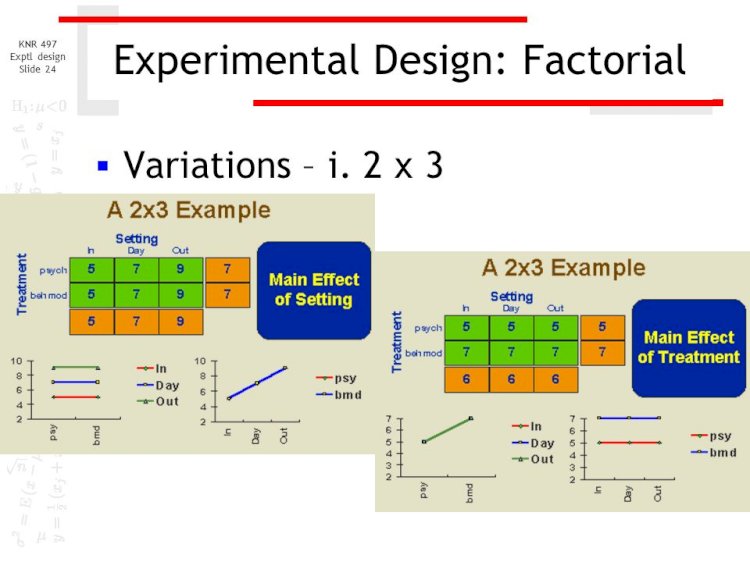
In the early days of software testing, many teams relied on simple A/B testing. For example, a team might test Version A of a landing page against Version B to see which resulted in more sign-ups. While effective for isolated changes, this approach fails to account for interactions. An interaction occurs when the effect of one variable depends on the level of another.
Factorial design allows tech teams to move beyond binary choices. Instead of running three separate tests for three different features, a factorial experiment runs them all at once. This not only saves time but also reveals hidden synergies between software components that isolated testing would miss.
Full Factorial vs. Fractional Factorial Designs
In technical experimentation, there are two primary types of factorial designs:
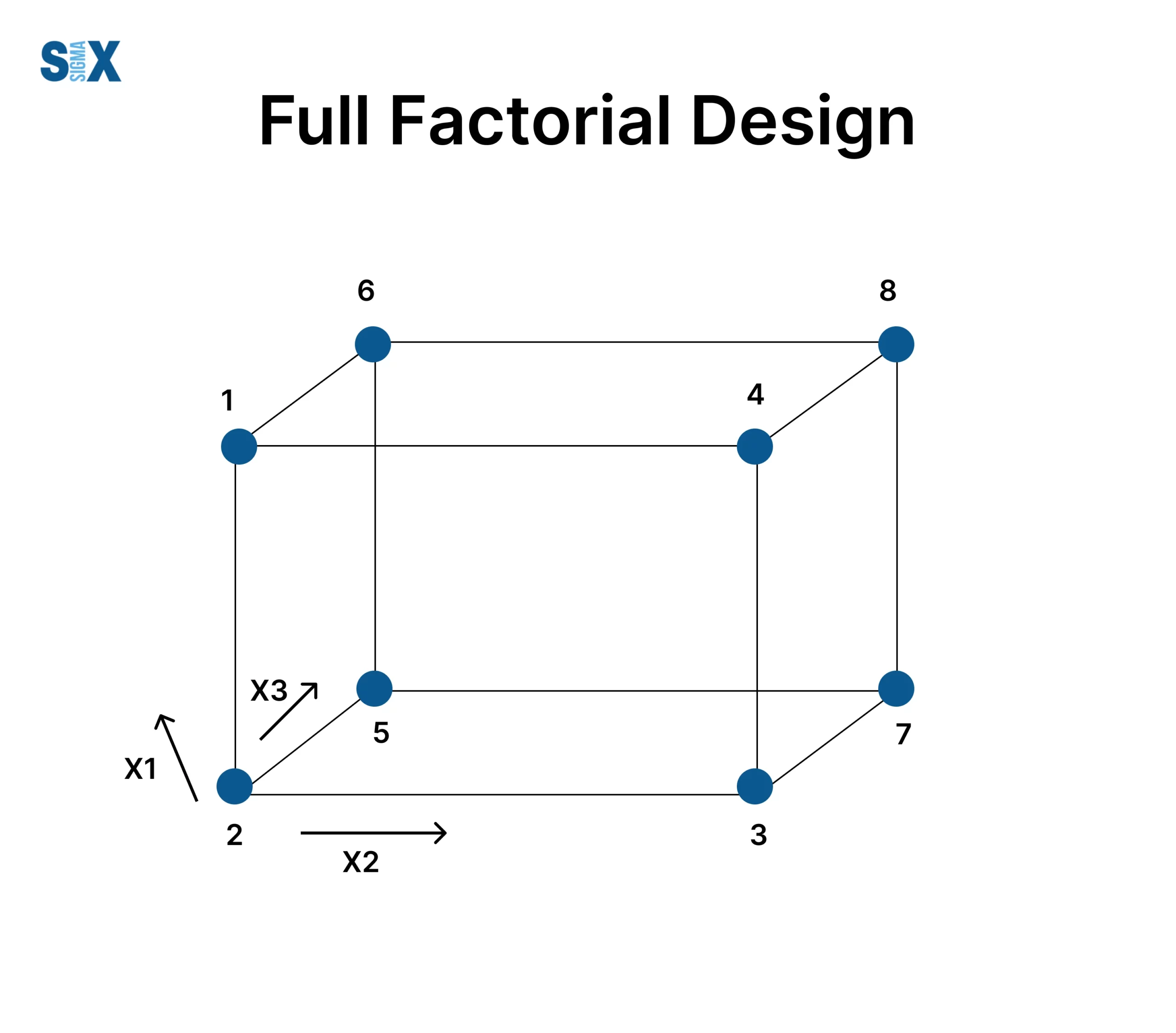
- Full Factorial Design: This involves testing every possible combination of factors and their levels. If you have three variables (e.g., Font Size, Image Resolution, and Load Speed) and each has two variations, a full factorial design requires $2^3 = 8$ distinct experimental runs. This provides the most comprehensive data but can become computationally expensive as the number of variables increases.
- Fractional Factorial Design: When the number of variables is too high for the available compute power or time, engineers use fractional designs. This method uses a carefully selected subset of combinations to provide the most critical data points. In high-scale tech environments—such as testing thousands of nodes in a distributed system—fractional design is often the only feasible path to optimization.
Leveraging Factorial Design for UX and Software Optimization
Software is rarely a collection of independent parts; it is an ecosystem. When a developer changes a backend API, it might impact frontend rendering speeds or user engagement metrics. Factorial design allows teams to map these dependencies with precision.
Enhancing User Interface (UI) and UX Efficiency
For UX researchers, factorial design is the “gold standard” for multivariate testing (MVT). Imagine a fintech application trying to increase user retention. The team might want to test three factors:
- Factor A: Notification frequency (Low vs. High)
- Factor B: Dashboard layout (Grid vs. List)
- Factor C: Dark Mode vs. Light Mode
Using a factorial design, the team can determine if “High Notification Frequency” actually works better specifically when “Dark Mode” is enabled, or if the “Grid Layout” becomes overwhelming when notifications are high. This level of insight allows for the creation of a “personalized” tech experience that feels seamless to the end-user.
Stress Testing and Performance Engineering
In the realm of DevOps and site reliability engineering (SRE), factorial design is used to identify the breaking points of a system. When migrating to a microservices architecture, engineers might test how different levels of CPU allocation, memory limits, and network latency interact to affect total system throughput.
By applying factorial design to stress tests, engineers can identify “edge cases” where a specific combination of low memory and high network latency causes a system-wide failure, even if each factor on its own is within acceptable parameters. This proactive identification of failure points is critical for maintaining the high availability required by modern SaaS platforms.
The Role of Factorial Design in Machine Learning and AI Development
As artificial intelligence becomes central to the tech industry, the need for efficient experimentation has shifted from human-centric interfaces to machine-centric models. Factorial design is now a fundamental component of the AI development lifecycle, particularly in model training and validation.
Hyperparameter Tuning and Optimization
Machine learning models are governed by “hyperparameters”—variables that control the learning process, such as the learning rate, batch size, and the number of layers in a neural network. Finding the “sweet spot” for these hyperparameters is notoriously difficult.
Data scientists often use a “Grid Search,” which is essentially a full factorial design. They define a range of values for each hyperparameter and the system runs experiments on every combination to find the one that results in the highest accuracy. While “Random Search” is sometimes used to save time, factorial-based approaches ensure that no critical interaction between parameters (like how learning rate affects the stability of specific batch sizes) is overlooked.
Ensuring Robustness in Algorithmic Decision-Making
Beyond performance, factorial design is used to ensure the ethical and functional robustness of AI. In computer vision or natural language processing (NLP), researchers use factorial experiments to test how models respond to different input “noise.”
For example, an autonomous driving AI might be tested across factors like “Weather Conditions” (Rain, Snow, Sun), “Lighting” (Day, Night, Dusk), and “Obstacle Type” (Pedestrian, Vehicle, Debris). A factorial approach ensures the AI is tested in the specific combination of “Snow” + “Night” + “Pedestrian,” which might be the most dangerous scenario, rather than just testing each condition in isolation.
Best Practices for Implementing Factorial Experiments in Tech Teams
Implementing factorial design requires more than just statistical knowledge; it requires a culture of data-driven decision-making and the right technical stack.
Selecting Independent Variables and Levels
The first step in a successful factorial experiment is narrowing down the variables. In a tech environment, it is tempting to test everything at once. However, “noise” in the data can increase as more variables are added. Tech leads should prioritize variables based on:
- Impact: Which factors are most likely to move the needle on Key Performance Indicators (KPIs)?
- Controllability: Can the development team actually implement changes to this variable?
- Feasibility: Is there enough traffic or compute power to achieve statistical significance?
Data Analysis and Statistical Significance
Once the experiment is run, the data must be analyzed using techniques like ANOVA (Analysis of Variance). In a professional tech setting, this is often automated through experimentation platforms like Optimizely, LaunchDarkly, or custom-built internal tools at companies like Netflix and Meta.
The goal is to determine the “p-value” for both the main effects and the interaction effects. If the p-value is below a certain threshold (usually 0.05), the tech team can be confident that the observed improvements are not due to random chance. This confidence is what allows a CTO to greenlight a major architectural change or a global product rollout.

Conclusion: The Strategic Value of Factorial Design in Tech
Factorial design is much more than a statistical curiosity; it is a high-leverage tool for the modern technology sector. By moving away from simplistic A/B testing and embracing the complexity of multi-variable interactions, tech companies can optimize their software with unprecedented accuracy.
From the granular level of tuning a neural network’s hyperparameters to the high-level strategy of improving user engagement across a global platform, factorial design provides the roadmap. It reduces the “guesswork” often associated with software updates, minimizes the risk of unforeseen system failures, and ultimately leads to a more robust, efficient, and user-centric digital world. For any tech professional looking to master the art of data-driven development, understanding and implementing factorial design is an essential milestone.
aViewFromTheCave is a participant in the Amazon Services LLC Associates Program, an affiliate advertising program designed to provide a means for sites to earn advertising fees by advertising and linking to Amazon.com. Amazon, the Amazon logo, AmazonSupply, and the AmazonSupply logo are trademarks of Amazon.com, Inc. or its affiliates. As an Amazon Associate we earn affiliate commissions from qualifying purchases.