
In the intricate world of finance and economics, understanding costs is paramount to making informed decisions, whether you’re managing a household budget or running a multinational corporation. Among the various types of costs, “explicit cost” stands out as one of the most straightforward yet fundamentally important concepts. Simply put, an explicit cost is a direct payment made to an external party for goods or services. It’s an out-of-pocket expense, a tangible transaction that leaves an undeniable paper trail, reflected in ledgers, invoices, and bank statements.
Unlike its more elusive counterpart, the implicit cost, explicit costs represent real money flowing out of a business or individual’s pocket. These are the expenses you can point to, itemize, and quantify with precision. From the rent paid for office space to the wages disbursed to employees, the cost of raw materials, or even the interest on a business loan, explicit costs are the bread and butter of financial accounting and the primary drivers of profit calculations. Grasping the nature and implications of explicit costs is the first step toward effective financial management, strategic pricing, and sustainable economic growth for any entity.
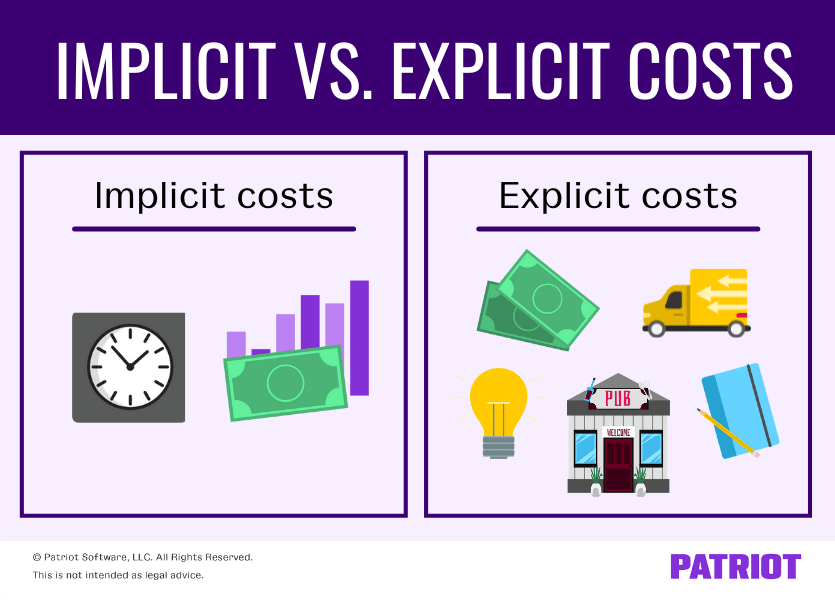
Unpacking the Definition of Explicit Costs
To truly appreciate the significance of explicit costs, it’s essential to delve deeper into what defines them, where they manifest, and how they contribute to our financial understanding. They are the bedrock upon which financial statements are built and business decisions are often made.
The Tangible Nature of Explicit Costs
The defining characteristic of an explicit cost is its tangibility. These are actual monetary expenditures that can be verified and recorded. When a business incurs an explicit cost, it involves a transaction where money (or an equivalent asset) changes hands. This direct exchange means explicit costs are:
-
Measurable: They have a specific monetary value, making them easy to quantify and compare.
-
Recordable: They appear on financial records such as income statements, balance sheets, and cash flow statements, often backed by invoices, receipts, and bank statements. This makes them verifiable and auditable.
-
Contractual or Transactional: They often arise from formal agreements or standard commercial transactions, such as lease agreements, employment contracts, purchase orders, or utility bills.
This clear-cut nature distinguishes explicit costs from other financial concepts, making them a cornerstone of traditional accounting practices.
Examples in Business Operations
For businesses, explicit costs are pervasive across all departments and operational levels. They represent the financial outlay required to keep the enterprise running and productive. Common examples include:
-
Wages and Salaries: Payments to employees for their labor and services. This also includes payroll taxes and employee benefits that are paid out.
-
Rent and Utilities: Payments for office space, factory floors, retail outlets, and essential services like electricity, water, internet, and heating.
-
Raw Materials and Supplies: The direct cost of components or materials used in the production of goods or services.
-
Marketing and Advertising Expenses: Money spent on campaigns, ad placements, digital marketing tools, and promotional materials.
-
Insurance Premiums: Payments for various types of business insurance, such as property, liability, and health insurance for employees.
-
Interest on Loans: The cost of borrowing capital from banks or other financial institutions.
-
Transportation and Logistics: Costs associated with shipping, delivery, and supply chain management.
-
Maintenance and Repairs: Expenses incurred to keep equipment, vehicles, and facilities in good working order.
-
Professional Fees: Payments to lawyers, accountants, consultants, or other external experts.
These examples illustrate that explicit costs are not abstract but concrete, regular outlays that form the bulk of a company’s operating expenses.
Explicit Costs in Personal Finance
While often discussed in a business context, explicit costs are equally relevant and present in our personal finances. For individuals and households, understanding these direct expenses is crucial for budgeting, saving, and financial planning. Examples in personal finance include:
-
Housing Costs: Monthly rent or mortgage payments, property taxes, and homeowner’s insurance premiums.
-
Utility Bills: Payments for electricity, water, gas, internet, and mobile phone services.
-
Groceries and Food: Direct expenses for purchasing food items for home consumption and dining out.
-
Transportation: Car payments, fuel costs, public transport fares, and vehicle maintenance.
-
Insurance Premiums: Health, auto, life, and home insurance payments.
-
Debt Payments: Principal and interest payments on credit cards, student loans, and personal loans.
-
Education Expenses: Tuition fees, books, and supplies.
-
Entertainment and Recreation: Costs for movies, concerts, subscriptions, and hobbies.
For both businesses and individuals, identifying and tracking explicit costs is the first step towards gaining financial clarity and control.
Explicit Costs vs. Implicit Costs: A Crucial Distinction
While explicit costs are straightforward monetary outlays, their true significance often comes into sharper focus when contrasted with their less obvious counterpart: implicit costs. Understanding the difference between these two types of costs is fundamental for a complete economic analysis and for making truly informed decisions.
Understanding Implicit Costs
Implicit costs, also known as implied costs or opportunity costs, are the value of foregone alternatives. They represent the income or benefit that could have been earned if a resource had been used in its next best alternative way. Unlike explicit costs, implicit costs do not involve an actual cash payment and are not typically recorded in traditional accounting statements.
Common examples of implicit costs include:
-
Owner’s Time and Effort: If a business owner works in their own company without drawing a salary, the implicit cost is the salary they could have earned working for someone else.
-
Use of Owner’s Capital: If an owner uses their personal savings to finance their business instead of investing it elsewhere, the implicit cost is the interest or returns they could have earned on that capital.
-
Use of Owner’s Property: If a business operates out of a property owned by the proprietor, the implicit cost is the rent that could have been earned by leasing the property to another party.
Implicit costs reflect the economic principle of scarcity and choice, highlighting that every decision to use a resource in one way means foregoing the potential benefits of using it in another.
Why the Distinction Matters: Economic vs. Accounting Profit
The differentiation between explicit and implicit costs leads directly to a critical distinction in profitability:
-
Accounting Profit: This is calculated by subtracting only explicit costs from total revenue. It is the profit figure that appears on a company’s income statement and is the most commonly cited measure of profitability.
- Accounting Profit = Total Revenue – Explicit Costs
-
Economic Profit: This takes into account both explicit and implicit costs. It represents the true profit or loss of a business after considering all costs, including the opportunity cost of resources used. A positive economic profit indicates that the business is earning more than it could in its next best alternative, justifying its existence from an economic standpoint.
- Economic Profit = Total Revenue – (Explicit Costs + Implicit Costs)
A business might show a healthy accounting profit but still have zero or negative economic profit if its implicit costs (e.g., the owner’s foregone salary or investment returns) are high. This distinction is crucial for understanding the true viability and efficiency of an enterprise.
Practical Implications for Businesses
For businesses, recognizing both explicit and implicit costs is vital for:
-
Strategic Decision-Making: When evaluating new projects, expansions, or even continuing current operations, businesses must consider not only the direct cash outflows (explicit costs) but also the opportunity costs associated with using their resources in a particular way (implicit costs). This provides a more holistic view of the project’s true economic value.
-
Resource Allocation: Understanding implicit costs helps businesses allocate their scarce resources (capital, labor, time) to their most productive uses. If the implicit cost of using a resource internally is higher than obtaining it externally, it signals a potential inefficiency.
-
Pricing Strategies: While explicit costs form the floor for pricing (to cover direct expenses), implicit costs help determine if the chosen price yields an adequate economic return, justifying the commitment of all resources.
-
Business Valuation: For investors and potential buyers, economic profit offers a more realistic assessment of a company’s long-term sustainability and attractiveness, as it accounts for the true cost of doing business.
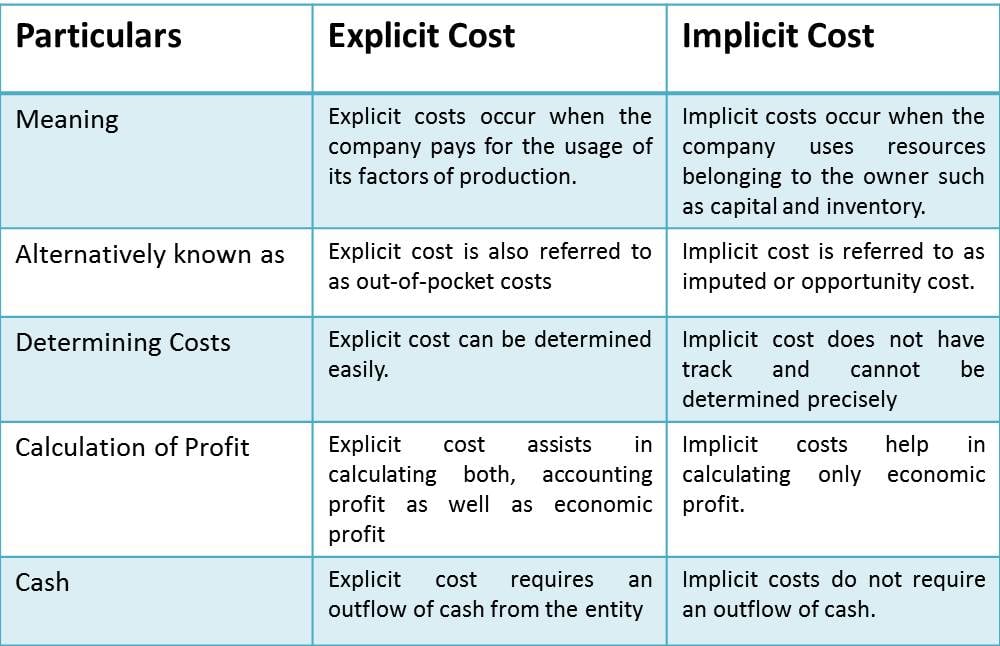
In essence, while explicit costs are essential for day-to-day accounting and operational reporting, implicit costs provide the deeper economic insight necessary for strategic planning and ensuring a business is truly creating value.
The Role of Explicit Costs in Financial Reporting and Business Decisions
Explicit costs are not just line items in an expense report; they are active components that shape a company’s financial health, influence its operational strategies, and dictate its market behavior. Their tangible nature makes them central to financial reporting and critical for sound business decision-making.
Impact on Financial Statements
Explicit costs are the backbone of a company’s financial statements, providing a clear picture of its operational expenses and cost structure.
-
Income Statement (Profit and Loss Statement): This is where most explicit costs are prominently featured.
-
Cost of Goods Sold (COGS): Direct costs attributable to the production of the goods sold by a company, such as raw materials and direct labor. These are explicit costs directly tied to revenue generation.
-
Operating Expenses: All other explicit costs incurred in the normal course of business, not directly related to production. This includes selling, general, and administrative (SG&A) expenses like rent, utilities, salaries of administrative staff, marketing, and depreciation (which, while non-cash, represents the explicit cost of an asset spread over its useful life).
-
Interest Expense: The explicit cost of borrowing money, also shown on the income statement.
By subtracting these explicit costs from revenue, the income statement progressively arrives at gross profit, operating profit, and ultimately, net income.
-
-
Cash Flow Statement: Explicit costs are direct cash outflows. The cash flow statement tracks the actual movement of cash in and out of the business, categorized into operating, investing, and financing activities. Payments for explicit costs like wages, rent, supplier invoices, and utility bills are reflected as cash outflows from operating activities. This statement is crucial for assessing a company’s liquidity and ability to generate cash.
Budgeting and Cost Control
Explicit costs are the primary focus of budgeting processes and cost control efforts within any organization.
-
Budget Creation: A budget is essentially a detailed forecast of expected revenues and explicit costs over a specific period. Companies meticulously plan for explicit costs such as payroll, rent, utilities, inventory purchases, and marketing spend. Effective budgeting helps allocate resources efficiently and sets financial targets.
-
Cost Control: Monitoring and managing explicit costs are continuous activities. Businesses constantly seek ways to reduce these expenses without compromising quality or operational efficiency. This might involve negotiating better deals with suppliers, optimizing energy consumption, streamlining processes to reduce labor costs, or leveraging technology to automate tasks. By controlling explicit costs, companies can improve their profitability and financial stability.
Pricing Strategies and Profitability Analysis
Explicit costs are foundational to determining pricing strategies and analyzing profitability.
-
Break-Even Analysis: Businesses must at least cover their explicit costs to avoid losses. Break-even analysis calculates the sales volume required to cover all fixed and variable explicit costs. This helps set a minimum sales target.
-
Cost-Plus Pricing: Many businesses use cost-plus pricing, where they calculate their total explicit cost for a product or service and then add a desired profit margin to arrive at the selling price.
-
Margin Analysis: Understanding explicit costs allows companies to calculate various profit margins (gross margin, operating margin) which indicate how efficiently they are converting revenue into profit after accounting for different explicit cost categories. This informs decisions about product mix, discounting, and sales targets.
Investment and Expansion Decisions
When considering new investments, projects, or expansion into new markets, explicit costs play a pivotal role in financial modeling and feasibility studies.
-
Capital Budgeting: Decisions regarding large-scale investments (e.g., buying new machinery, building a new facility) involve significant upfront explicit costs. Techniques like Net Present Value (NPV) and Internal Rate of Return (IRR) are used to evaluate these projects, heavily relying on projections of future explicit costs and revenues.
-
Project Viability: Before launching a new product or service, companies must meticulously estimate all associated explicit costs—research and development, production, marketing, distribution—to determine if the project is financially viable and likely to generate a return that covers these substantial outlays.
-
Return on Investment (ROI): The ultimate measure of an investment’s success is its ROI, which directly compares the returns generated against the explicit costs incurred.
In essence, explicit costs are the measurable financial commitments that businesses make to operate, grow, and generate revenue. Their accurate tracking and astute management are critical for transparency, operational efficiency, and long-term success.
Managing Explicit Costs for Optimal Financial Health
Effective management of explicit costs is not merely about cutting expenses; it’s about optimizing resource allocation to achieve strategic goals while maintaining financial stability and profitability. Both businesses and individuals can benefit significantly from proactive cost management strategies.
Strategies for Cost Reduction
While aggressive cost-cutting can sometimes be detrimental, thoughtful cost reduction focuses on efficiency and value.
-
Negotiation with Suppliers: Regularly review supplier contracts and actively negotiate better terms, bulk discounts, or longer payment periods. Building strong supplier relationships can also yield benefits.
-
Process Optimization and Automation: Streamline operational processes to reduce labor hours, waste, and errors. Investing in technology or automation can turn a variable explicit cost (like manual labor) into a more efficient, potentially lower fixed cost.
-
Energy Efficiency: Implement energy-saving measures in facilities, such as LED lighting, efficient HVAC systems, and smart thermostats. For businesses, this can translate into significant savings on utility bills.
-
Lean Inventory Management: For businesses, adopting just-in-time (JIT) inventory systems or optimizing inventory levels reduces storage costs, carrying costs, and the risk of obsolescence, all of which are explicit costs.
-
Strategic Outsourcing: Evaluate whether certain functions can be performed more cost-effectively by external specialists, potentially reducing explicit costs associated with in-house staff, benefits, and infrastructure.
-
Technology Adoption: Leverage software and digital tools for accounting, project management, customer relationship management (CRM), and communication. While there might be an initial explicit cost for software, it often leads to efficiency gains and reduced operational expenses over time.
Monitoring and Analysis
Cost management is an ongoing process that requires continuous oversight and analytical review.
-
Regular Review of Expenses: Periodically scrutinize all explicit costs. For businesses, this involves reviewing profit and loss statements, expense reports, and departmental budgets. For individuals, it means tracking bank statements and credit card bills.
-
Variance Analysis: Compare actual explicit costs against budgeted costs. Investigate significant variances to understand the underlying causes and take corrective action. Are utility bills higher due to increased usage or a rate hike? Is marketing spend exceeding budget but generating proportionally higher returns?
-
Benchmarking: Compare explicit costs against industry averages or best-in-class competitors. This can reveal areas where costs are out of line and identify opportunities for improvement.
-
Cost-Benefit Analysis: Before making any new expenditure, conduct a thorough cost-benefit analysis. Ensure that the explicit cost of an item or service is justified by the benefits it brings, both tangible and intangible.
Leveraging Technology for Cost Management
Modern technology offers powerful tools to simplify and enhance the management of explicit costs.
-
Accounting Software: Tools like QuickBooks, Xero, or SAP for businesses, and personal finance apps like Mint or YNAB for individuals, automate the tracking, categorization, and reporting of explicit costs. This reduces manual effort, improves accuracy, and provides real-time financial insights.
-
Enterprise Resource Planning (ERP) Systems: For larger organizations, ERP systems integrate various business functions (finance, HR, procurement, supply chain) into a single platform. This provides a holistic view of explicit costs across the enterprise, enabling better planning and control.
-
Expense Tracking Apps: Mobile apps designed for expense tracking allow individuals and employees to easily record and categorize explicit costs on the go, often with receipt scanning capabilities, simplifying reimbursement processes and budget adherence.
-
Budgeting Software: Digital budgeting tools help set spending limits, track progress against budgets, and issue alerts when explicit cost categories are nearing their limits.
By strategically reducing, meticulously monitoring, and intelligently leveraging technology to manage explicit costs, both businesses and individuals can significantly improve their financial health, enhance profitability, and build a more secure financial future.

Conclusion
Explicit costs are the visible and quantifiable financial outlays that form the bedrock of all economic activity, whether personal or corporate. They are the tangible payments made for goods, services, and resources—the rent checks, the salary payments, the utility bills, and the raw material purchases that keep the wheels of commerce and daily life turning. Unlike their elusive counterparts, implicit costs, explicit costs leave a clear monetary trail, making them central to financial accounting and readily observable on income statements and cash flow reports.
Understanding and effectively managing explicit costs is not merely an accounting exercise; it is a critical driver of financial success. For businesses, it dictates profitability, informs pricing strategies, guides investment decisions, and ensures operational efficiency. For individuals, it forms the foundation of budgeting, saving, and achieving personal financial goals. By distinguishing explicit costs from implicit costs, both entities can gain a more comprehensive understanding of their true economic standing and make more informed strategic choices.
In a dynamic economic landscape, the ability to identify, track, and strategically control explicit costs remains an indispensable skill. By employing smart reduction strategies, rigorous monitoring, and leveraging modern financial technologies, individuals and organizations can optimize their spending, enhance their financial health, and lay a robust foundation for sustainable growth and prosperity. Ultimately, mastering the concept of explicit cost is a fundamental step towards achieving financial clarity and control in an increasingly complex world.
aViewFromTheCave is a participant in the Amazon Services LLC Associates Program, an affiliate advertising program designed to provide a means for sites to earn advertising fees by advertising and linking to Amazon.com. Amazon, the Amazon logo, AmazonSupply, and the AmazonSupply logo are trademarks of Amazon.com, Inc. or its affiliates. As an Amazon Associate we earn affiliate commissions from qualifying purchases.