
The Evaporative Emission Control (EVAP) system is a critical, yet often misunderstood, component in modern vehicles. Designed to prevent harmful fuel vapors from escaping into the atmosphere, its integrity is paramount for environmental compliance and optimal vehicle performance. An EVAP system leak, therefore, represents a breach in this sophisticated network, leading to potential issues ranging from illuminating the check engine light to contributing to air pollution. Understanding the mechanics of the EVAP system and the implications of a leak is essential for any vehicle owner or enthusiast delving into automotive technology.
The Core Function of the EVAP System
At its heart, the EVAP system is an environmental safeguard, a complex piece of engineering designed to capture and process gasoline vapors that would otherwise evaporate from the fuel tank and fuel lines. Gasoline is a volatile substance, and its raw vapor contains hydrocarbons, a significant contributor to smog and ozone formation. The EVAP system prevents these vapors from directly entering the atmosphere, instead routing them for combustion within the engine.
Controlling Harmful Emissions
Every time you fill your gas tank, or even when your vehicle is simply parked, gasoline vapors are naturally produced. Without an EVAP system, these vapors would escape directly into the atmosphere, contributing to ground-level ozone, a harmful air pollutant. The system works by creating a sealed environment around the fuel tank and fuel lines. As vapors accumulate, they are not vented to the outside; instead, they are routed through a series of lines to a charcoal canister. This canister, filled with activated charcoal, is highly porous and absorbs the fuel vapors, effectively storing them until the engine can burn them.
Key Components Involved
The EVAP system is a network of several interconnected components, each playing a vital role in its overall operation:
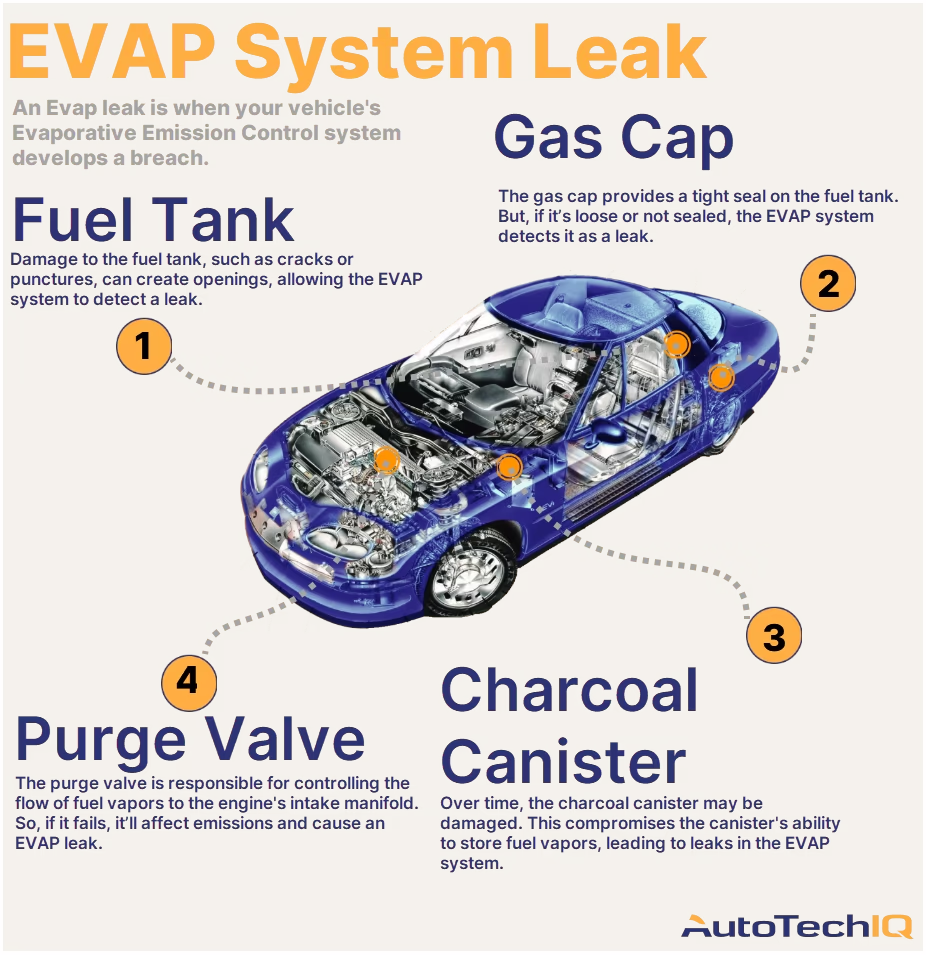
- Fuel Tank: The primary source of fuel vapor. It’s designed to be sealed, with only controlled vents.
- Fuel Filler Neck and Cap: The cap creates a crucial seal. A loose or faulty cap is a common cause of minor EVAP leaks.
- Vent Valve: Controls the flow of fresh air into the charcoal canister when the engine is running, allowing trapped fuel vapors to be drawn out.
- Purge Valve (or Purge Solenoid): This electrically controlled valve is located between the charcoal canister and the engine’s intake manifold. When the engine is operating under specific conditions (e.g., warmed up and at certain RPMs), the engine control module (ECM) opens this valve, allowing engine vacuum to draw the stored fuel vapors from the charcoal canister into the combustion chambers, where they are burned off as part of the normal combustion process.
- Charcoal Canister: The central storage unit for fuel vapors. It contains activated charcoal that adsorbs (attracts and holds on its surface) gasoline molecules.
- Fuel Lines and Vapor Lines: A network of hoses and pipes that transport fuel and vapors between the tank, canister, and engine.
- Pressure Sensors: Monitor pressure within the fuel tank and EVAP system to detect leaks and ensure proper operation.
- Engine Control Module (ECM): The vehicle’s “brain” that monitors all EVAP system components, tests for leaks, and controls the purge and vent valves based on sensor data.
The harmonious operation of these components ensures that fuel vapors are captured, stored, and then efficiently introduced into the engine, minimizing environmental impact.
Unpacking an EVAP System Leak
An EVAP system leak fundamentally means that the sealed environment designed to contain fuel vapors has been compromised. This breach allows unburned hydrocarbons to escape directly into the atmosphere, bypassing the charcoal canister and the engine’s combustion process. The severity of the leak can vary significantly, from a minor hairline crack to a major detachment of a hose.
The Nature of the Problem
When a leak occurs, the sophisticated self-diagnostic routines performed by the ECM detect a drop in pressure within the EVAP system that shouldn’t be happening. The ECM pressurizes the system or creates a vacuum and then monitors how quickly the pressure or vacuum decays. If it decays too rapidly, it indicates a breach – an EVAP system leak. Because the system is designed to be completely sealed, even a tiny pinhole can be enough to trigger a diagnostic trouble code (DTC) and illuminate the check engine light. The primary concern is the release of volatile organic compounds (VOCs) into the air, contributing to smog and other air quality issues.
Common Causes of Leaks
EVAP system leaks can arise from a variety of sources, often due to wear and tear, material degradation, or accidental damage. Identifying the cause is crucial for effective diagnosis and repair.
- Loose or Faulty Gas Cap: This is by far the most common and simplest cause of an EVAP leak. If the gas cap isn’t tightened properly after refueling, or if its rubber seal is cracked, dried out, or missing, it fails to create the necessary seal, allowing vapors to escape.
- Cracked or Damaged Hoses/Lines: Over time, the plastic or rubber hoses that carry fuel vapors can become brittle due to exposure to heat, cold, and fuel. They can crack, split, or become disconnected, creating an opening in the system. Physical damage from road debris or improper repairs can also rupture these lines.
- Faulty Purge Valve or Vent Valve: These valves are designed to open and close on command from the ECM. If either valve sticks open, it creates a permanent opening in the system, preventing it from holding pressure or vacuum during a diagnostic test. A faulty purge valve might also allow a constant vacuum leak into the engine, affecting idle quality.
- Cracked Charcoal Canister: While less common, the charcoal canister itself can crack due to impact, age, or extreme temperature fluctuations. A crack compromises the sealed nature of the canister, allowing vapors to escape directly.
- Corrosion or Damage to Fuel Tank/Filler Neck: Rust or physical damage to the fuel tank or the metal filler neck can create pinholes or larger openings that allow fuel vapor to escape. This is more prevalent in older vehicles or those exposed to harsh road conditions.
- Weakened Seals or Gaskets: Various points in the EVAP system, such as around sensors or module connections, use rubber seals or gaskets. These can degrade over time, losing their elasticity and creating tiny pathways for vapor escape.
Understanding these potential points of failure helps technicians narrow down the diagnostic process and pinpoint the exact source of the leak.
Recognizing the Symptoms of an EVAP Leak
While some EVAP leaks can be subtle, many manifest in noticeable ways, primarily through warning lights and changes in vehicle behavior. Ignoring these symptoms can lead to more significant problems down the line, both for the vehicle and the environment.
Warning Lights and Diagnostic Trouble Codes (DTCs)
The most immediate and common indicator of an EVAP system leak is the illumination of the Check Engine Light (CEL) on your dashboard. When the ECM detects an anomaly in the EVAP system’s pressure test – specifically, a failure to maintain pressure or vacuum – it triggers a diagnostic trouble code (DTC) and illuminates the CEL. Common EVAP-related DTCs include:
- P0440: Evaporative Emission Control System Malfunction
- P0442: Evaporative Emission Control System Leak Detected (Small Leak)
- P0446: Evaporative Emission Control System Vent Control Circuit Malfunction
- P0455: Evaporative Emission Control System Leak Detected (Gross Leak)
- P0456: Evaporative Emission Control System Leak Detected (Very Small Leak)
These codes provide a starting point for diagnosis, indicating the general area or nature of the problem, but rarely pinpoint the exact component failure. A professional scan tool is required to retrieve these codes.

Performance and Fuel Economy Impacts
While an EVAP leak doesn’t directly affect engine power output in the way a misfiring cylinder would, a significant leak, especially one involving a faulty purge valve stuck open, can create a vacuum leak in the engine’s intake manifold. This unmetered air can disrupt the air-fuel ratio, leading to:
- Rough Idle: The engine might run unevenly, particularly when cold or at a stop.
- Poor Engine Performance: Slight hesitation or reduced throttle response, though often not severe.
- Decreased Fuel Economy: When fuel vapors escape or the air-fuel mixture is incorrect, the engine’s efficiency can be compromised, leading to higher fuel consumption. This is particularly true if the ECM tries to compensate for the unmetered air or lost vapors by enriching the fuel mixture.
- Difficulty Starting: In rare cases, a severe leak or a stuck-open purge valve might interfere with the engine’s ability to start, especially after refueling.
Distinctive Odors
One of the most telling signs of an EVAP leak, especially a significant one, is the smell of gasoline. If you frequently smell gasoline fumes around your vehicle, particularly when it’s parked or after refueling, it’s a strong indicator that fuel vapors are escaping somewhere in the EVAP system. This odor might be more pronounced near the fuel tank, under the hood (if the leak is in the purge valve area), or even inside the cabin if the leak is substantial and vehicle ventilation draws in the fumes. This symptom is not only unpleasant but also highlights the environmental concern of escaping volatile organic compounds and presents a potential fire hazard.
Diagnosing and Addressing EVAP Leaks
Addressing an EVAP system leak requires a methodical approach, often involving specialized tools and expertise. While checking the gas cap is a good first step for any DIY enthusiast, more complex leaks usually necessitate professional diagnosis.
Professional Diagnostic Procedures
When a vehicle presents with an EVAP-related DTC, a technician typically follows a structured diagnostic process:
- Retrieve DTCs and Freeze Frame Data: Using an OBD-II scanner, the technician will retrieve all stored trouble codes and accompanying freeze frame data, which captures engine conditions at the moment the fault occurred. This provides context for the diagnosis.
- Visual Inspection: A thorough visual inspection is performed, checking the gas cap for damage, ensuring it’s properly tightened, and examining all visible EVAP hoses, lines, and components (charcoal canister, purge valve, vent valve) for cracks, disconnections, or obvious damage.
- Smoke Test: This is the most common and effective method for locating EVAP leaks. A specialized smoke machine injects a non-toxic, highly visible smoke into the EVAP system. The system is then pressurized, and the smoke will visibly emanate from any leak point, no matter how small. This allows for precise identification of cracked hoses, faulty seals, or damaged components.
- Vacuum/Pressure Decay Test: The ECM performs these tests during normal operation, but technicians can also manually command the system to be pressurized or placed under vacuum using a scan tool. A pressure gauge then monitors how quickly the pressure or vacuum dissipates, indicating the presence and potentially the size of a leak.
- Component-Specific Tests: If the initial tests point to a specific component (e.g., purge valve, vent valve), further electrical or functional tests may be performed. This could involve checking valve operation with a scan tool or applying power and ground to verify its response.
Repairing the Leak
Once the leak source is identified, the repair process is typically straightforward:
- Gas Cap Replacement: If the gas cap is the culprit, a new, OEM-quality cap is installed.
- Hose/Line Replacement: Damaged hoses or lines are replaced with new ones, ensuring proper routing and secure connections.
- Valve Replacement: Faulty purge or vent valves are replaced with new units.
- Canister or Tank Repair/Replacement: In cases of a cracked charcoal canister or damaged fuel tank, the affected component is replaced. Tank repairs are rare and usually involve replacement for safety and sealing integrity.
- Seal/Gasket Replacement: Specific seals or gaskets are replaced as needed.
After any repair, the EVAP system is retested, and the DTCs are cleared. The vehicle then needs to complete a drive cycle to allow the ECM to run its self-diagnostic tests and confirm the repair.
Preventive Measures and Maintenance
While EVAP system components are generally robust, a few simple practices can help prevent leaks:
- Properly Tighten Gas Cap: Always ensure your gas cap is tightened until it clicks at least three times after refueling.
- Regular Inspections: During routine maintenance, ask your mechanic to visually inspect EVAP lines and components for signs of wear or damage, especially on older vehicles.
- Avoid Overfilling Your Fuel Tank: Constantly topping off your tank can force liquid fuel into the EVAP system, which is designed for vapors, potentially damaging the charcoal canister or valves. Stop filling when the pump automatically clicks off.
- Use Quality Fuel: While less direct, maintaining overall vehicle health contributes to the longevity of all systems, including EVAP.
The Environmental and Economic Implications
An EVAP system leak is not merely a nuisance that illuminates a warning light; it carries tangible environmental and economic consequences. Understanding these broader impacts underscores the importance of prompt diagnosis and repair.
Impact on Air Quality
The primary purpose of the EVAP system is to mitigate air pollution. When a leak occurs, unburned hydrocarbon vapors, which are volatile organic compounds (VOCs), escape into the atmosphere. These VOCs are key precursors to the formation of ground-level ozone (smog) when they react with nitrogen oxides in the presence of sunlight. Ground-level ozone is a serious respiratory irritant, contributing to asthma attacks, bronchitis, and other respiratory illnesses, particularly in vulnerable populations. It also harms vegetation and crops. Thus, an EVAP leak, even a “small” one, directly contributes to poorer air quality and urban environmental degradation. Vehicle emissions regulations are stringent precisely because such leaks can collectively have a significant environmental footprint.

Financial Costs of Neglect
Ignoring an EVAP system leak can lead to several financial repercussions for the vehicle owner:
- Failed Emissions Tests: Many jurisdictions require vehicles to pass emissions tests for registration renewal. An active EVAP leak will almost certainly cause a vehicle to fail these tests, necessitating repairs before it can be legally driven.
- Reduced Fuel Economy: As mentioned, a compromised EVAP system can subtly reduce your vehicle’s fuel efficiency. While often not a dramatic drop, over time, the cumulative cost of burning more fuel adds up, especially with fluctuating gasoline prices.
- Potential for Larger Repairs: While an EVAP leak often starts as a minor issue (like a loose gas cap or a small crack), neglecting it can exacerbate problems. For instance, a persistent vacuum leak from a faulty purge valve can stress other engine components by altering the air-fuel mixture, potentially leading to carbon buildup or damage to catalytic converters over extended periods.
- Cost of Repair: While an EVAP repair can sometimes be as simple as tightening or replacing a gas cap, more complex issues involving valves, lines, or the canister can range from a few hundred to over a thousand dollars depending on the specific component, labor rates, and vehicle make/model. Procrastinating on diagnosis might allow a smaller, more easily fixed issue to become harder to pinpoint or lead to further component degradation.
In conclusion, an EVAP system leak is a technical fault within a crucial automotive emission control system. It signifies a breach in the vehicle’s defense against air pollution, often signaling its presence via the check engine light and sometimes a noticeable fuel smell. Prompt diagnosis and repair are not just about keeping the warning lights off; they are about maintaining optimal vehicle performance, protecting air quality, and avoiding unnecessary financial burdens. In the realm of automotive technology, the EVAP system stands as a testament to engineering efforts aimed at balancing performance with environmental responsibility.
aViewFromTheCave is a participant in the Amazon Services LLC Associates Program, an affiliate advertising program designed to provide a means for sites to earn advertising fees by advertising and linking to Amazon.com. Amazon, the Amazon logo, AmazonSupply, and the AmazonSupply logo are trademarks of Amazon.com, Inc. or its affiliates. As an Amazon Associate we earn affiliate commissions from qualifying purchases.