
Espresso, that potent, aromatic elixir, is more than just a strong coffee; it’s a testament to precision and control. At the heart of achieving that perfect shot, that rich crema, and that balanced flavor profile lies a seemingly simple yet technically vital step: espresso tamping. Far from being an arbitrary flourish, tamping is a foundational element of espresso preparation, deeply intertwined with the physics and engineering of extraction. Understanding what espresso tamping is and how to execute it effectively is paramount for any aspiring home barista or professional seeking to elevate their craft. This process, when viewed through a technological lens, reveals the intricate interplay of pressure, distribution, and thermodynamics that transforms humble coffee grounds into a sublime beverage.

The Physics of Extraction: Why Tamping Matters
Espresso extraction is a complex chemical and physical process. Hot, pressurized water is forced through a bed of finely ground coffee. The goal is to dissolve a specific amount of soluble solids from the coffee grounds, achieving a balance between sweetness, acidity, and bitterness. Tamping plays a critical role in controlling how this water interacts with the coffee bed, directly influencing the efficiency and quality of the extraction.
Understanding Water Flow Dynamics
When hot water enters the portafilter, it encounters the coffee grounds. If the grounds are loosely packed or unevenly distributed, the water will seek the path of least resistance. This phenomenon, known as “channeling,” results in uneven extraction. Some parts of the coffee bed will be over-extracted, leading to bitter and harsh flavors, while other parts will be under-extracted, producing a weak and sour shot.
Tamping creates a dense, uniform puck of coffee that acts as a filter. This uniform density compels the water to flow through the coffee grounds at a consistent rate, ensuring that each particle is exposed to the water for the optimal duration. This controlled flow is essential for maximizing the dissolution of desirable flavor compounds and minimizing the extraction of undesirable ones. The pressure applied during tamping directly influences the interstitial space between coffee particles, dictating the resistance the water faces.
The Role of Pressure and Density
The primary function of tamping is to compress the coffee grounds, increasing their density. This increased density reduces the pore size within the coffee bed, thereby increasing resistance to water flow. The ideal tamp creates a puck that is firm enough to prevent channeling but not so dense that it completely obstructs water flow, leading to over-extraction and a choked shot.
The pressure applied, typically around 30 pounds (13.6 kg), is a scientifically derived optimum. This pressure is sufficient to achieve a significant increase in density and reduce the likelihood of channeling, without excessively hindering the flow rate. The tool used for tamping, the tamper, is itself a piece of precision engineering. Its weight, material, and the shape of its base are all designed to facilitate consistent and effective compression of the coffee grounds. The base of a good tamper is perfectly flat and polished to ensure even contact with the coffee bed.
The Technology of the Espresso Machine and Tamping
While tamping might appear to be a manual endeavor, its effectiveness is intrinsically linked to the technology of the espresso machine itself. The pressure generated by the pump, the temperature of the water, and the design of the portafilter all interact with the tamped coffee puck.
Pump Pressure and Water Flow Rate
Modern espresso machines utilize sophisticated pumps to generate the precise pressure required for extraction. This pressure, typically around 9 bars, is crucial for pushing water through the densely packed coffee bed. The tamped puck’s resistance dictates how quickly the water flows at this pressure. A well-tamped puck will allow for a flow rate that results in the ideal extraction time, typically between 25 and 30 seconds for a double shot.
If the tamp is too light or uneven, the water will rush through too quickly, leading to under-extraction. Conversely, if the tamp is too hard, the water may struggle to pass through, resulting in an extended extraction time and over-extraction. The consistent application of pump pressure by the machine is thus directly reliant on the consistent resistance provided by the tamped coffee.
Thermal Stability and Extraction Chemistry
Temperature is another critical technological factor in espresso extraction. The water entering the portafilter is maintained at a precise temperature, usually between 195-205°F (90-96°C). This temperature is optimal for dissolving the desired soluble solids from the coffee grounds. The tamped coffee bed acts as an insulator, helping to maintain this thermal stability throughout the extraction process.
The way water interacts with the coffee particles at a specific temperature and pressure is governed by chemical principles. Tamping ensures that this interaction occurs in a controlled and predictable manner. The surface area of the coffee particles exposed to the hot water, the duration of contact, and the pressure all influence the rate at which flavor compounds are released. A uniformly tamped puck maximizes the efficiency of this process, allowing for a more complete and balanced extraction of these desirable compounds.
The Tamper: A Precision Tool in the Barista’s Arsenal
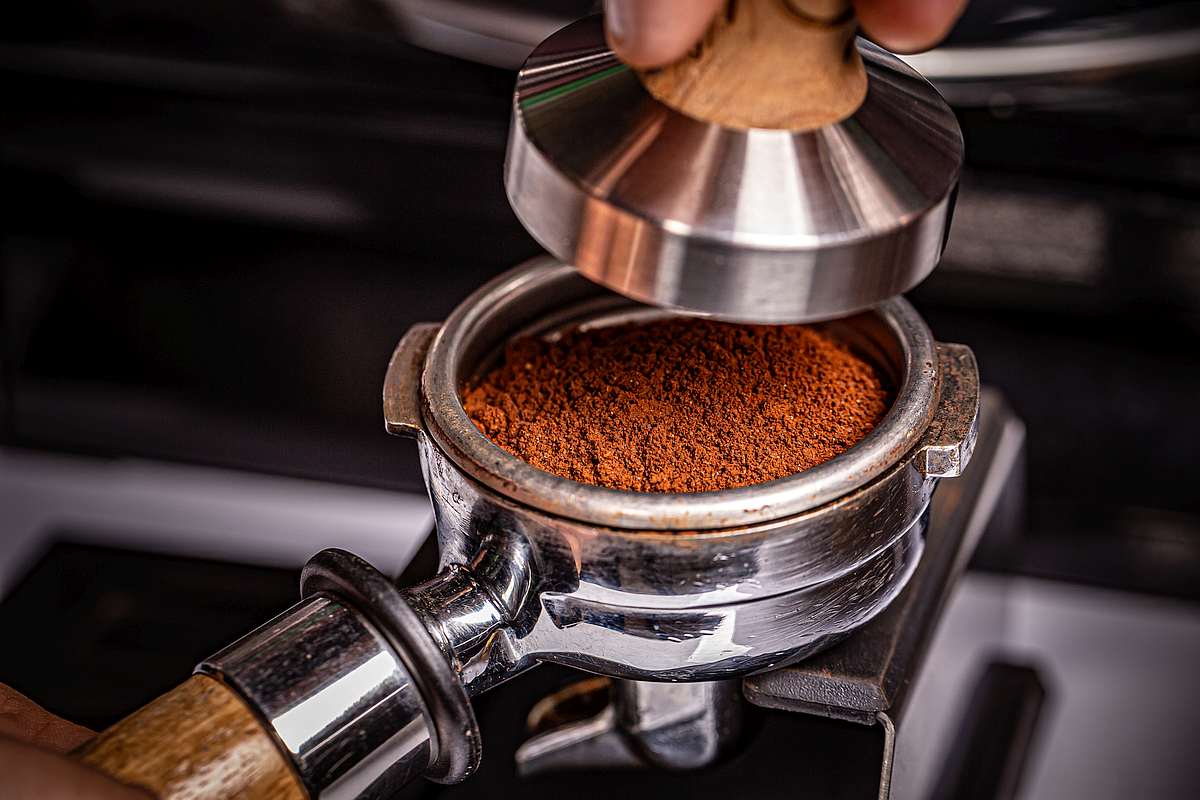
The tamper is not merely a blunt instrument; it is a specialized tool designed to facilitate the technical process of espresso tamping. Its design, materials, and ergonomics are all critical to achieving consistent and effective results.
Tamper Design and Materials
A typical tamper consists of a handle and a base. The handle provides leverage and comfort for the user, while the base is the part that directly interacts with the coffee grounds. Tamper bases are typically made of stainless steel or polished aluminum, designed to be perfectly flat and smooth. This flatness is crucial for ensuring even pressure distribution across the entire surface of the coffee puck.
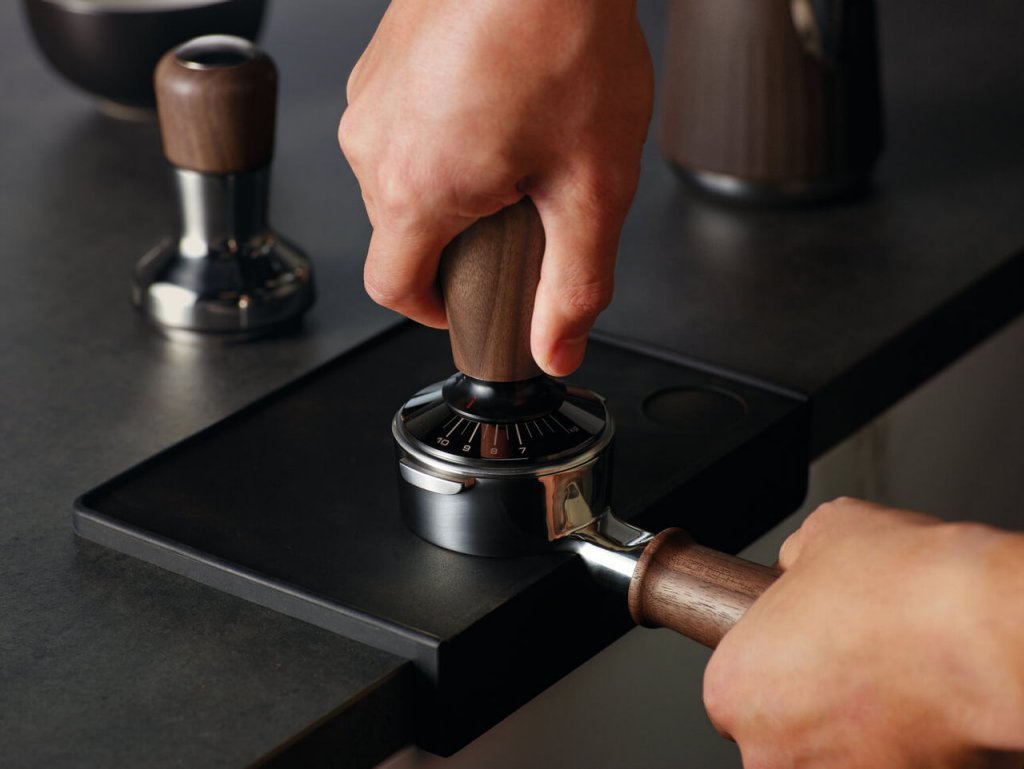
The diameter of the tamper base is also important. It needs to fit snugly within the portafilter basket to minimize any gaps where water could escape or channel. Most common portafilters are 58mm in diameter, though variations exist. Some tampers are designed to be calibrated, offering visual or tactile feedback to indicate the correct pressure has been applied.
Ergonomics and Technique
Beyond the physical design of the tamper, the user’s technique is also a crucial aspect of this technological process. While the goal is to apply consistent pressure, the ergonomics of the tamper play a significant role in enabling this. A well-designed tamper allows for a natural wrist position, reducing strain and promoting stability.
The “calibrated tampers” are an interesting technological development in this area. These tampers often incorporate a mechanism that stops the downward motion once a predetermined pressure is reached, providing an objective measure of consistency. This takes some of the guesswork out of the process and helps users develop a more reliable technique. However, even with a calibrated tamper, understanding the principles of even distribution and a firm, level tamp remains essential.
Troubleshooting Tamping: Diagnosing Extraction Issues
Understanding what espresso tamping is also involves recognizing how its execution or misexecution can lead to common problems in espresso extraction. By analyzing the output, one can often trace back the issue to the tamping process.
Channeling and Its Manifestations
As mentioned earlier, channeling is the most significant consequence of poor tamping. It’s characterized by the water finding preferential paths through the coffee bed, leading to uneven extraction. The tell-tale signs of channeling include:
- Fast shot times: Water flows through too quickly, resulting in an under-extracted, sour shot.
- Erratic flow: The espresso might spurt from one side of the portafilter basket before the other.
- Blonde streams: The espresso streams can appear pale and watery, indicative of incomplete extraction.
- Uneven crema: The crema might be patchy or disappear quickly, lacking the rich, persistent layer expected from a well-extracted shot.
Diagnosing channeling often points to issues with coffee distribution (ensuring an even bed of grounds before tamping) or the tamping itself (uneven pressure, insufficient compression, or a tilted tamp).
Over-extraction and Under-extraction Related to Tamping
The density of the tamped puck directly influences the rate of extraction.
-
Under-extraction: This occurs when the water passes through the coffee too quickly. A common cause is a tamp that is too light, too uneven, or simply insufficient to create adequate resistance. The resulting espresso will taste sour, acidic, and lack body.
-
Over-extraction: This occurs when the water is in contact with the coffee grounds for too long, or when the resistance is too high, causing the machine to struggle to push water through. A tamp that is excessively hard or uneven can contribute to this. The espresso will taste bitter, astringent, and can have a burnt or rubbery character.
By carefully observing the extraction time, the appearance of the espresso streams, and the taste of the final shot, one can often diagnose whether the tamping pressure or technique needs adjustment. This iterative process of tamping, brewing, and tasting is a fundamental aspect of mastering espresso technology.
Conclusion: Tamping as a Technical Cornerstone
Espresso tamping, therefore, transcends a mere ritualistic step. It is a critical technical intervention that directly manipulates the physics of water flow, pressure, and heat transfer within the portafilter. It is the barista’s primary method for controlling the resistance of the coffee bed, thereby dictating the efficiency and quality of the extraction process. From the sophisticated pumps of the espresso machine to the precisely engineered tamper, every element of the espresso-making apparatus is designed to work in concert with a properly tamped coffee puck. Mastering espresso tamping is not just about applying force; it’s about understanding the underlying principles of fluid dynamics, thermodynamics, and the chemistry of coffee extraction, making it a true cornerstone of the technological art of making exceptional espresso.
aViewFromTheCave is a participant in the Amazon Services LLC Associates Program, an affiliate advertising program designed to provide a means for sites to earn advertising fees by advertising and linking to Amazon.com. Amazon, the Amazon logo, AmazonSupply, and the AmazonSupply logo are trademarks of Amazon.com, Inc. or its affiliates. As an Amazon Associate we earn affiliate commissions from qualifying purchases.